
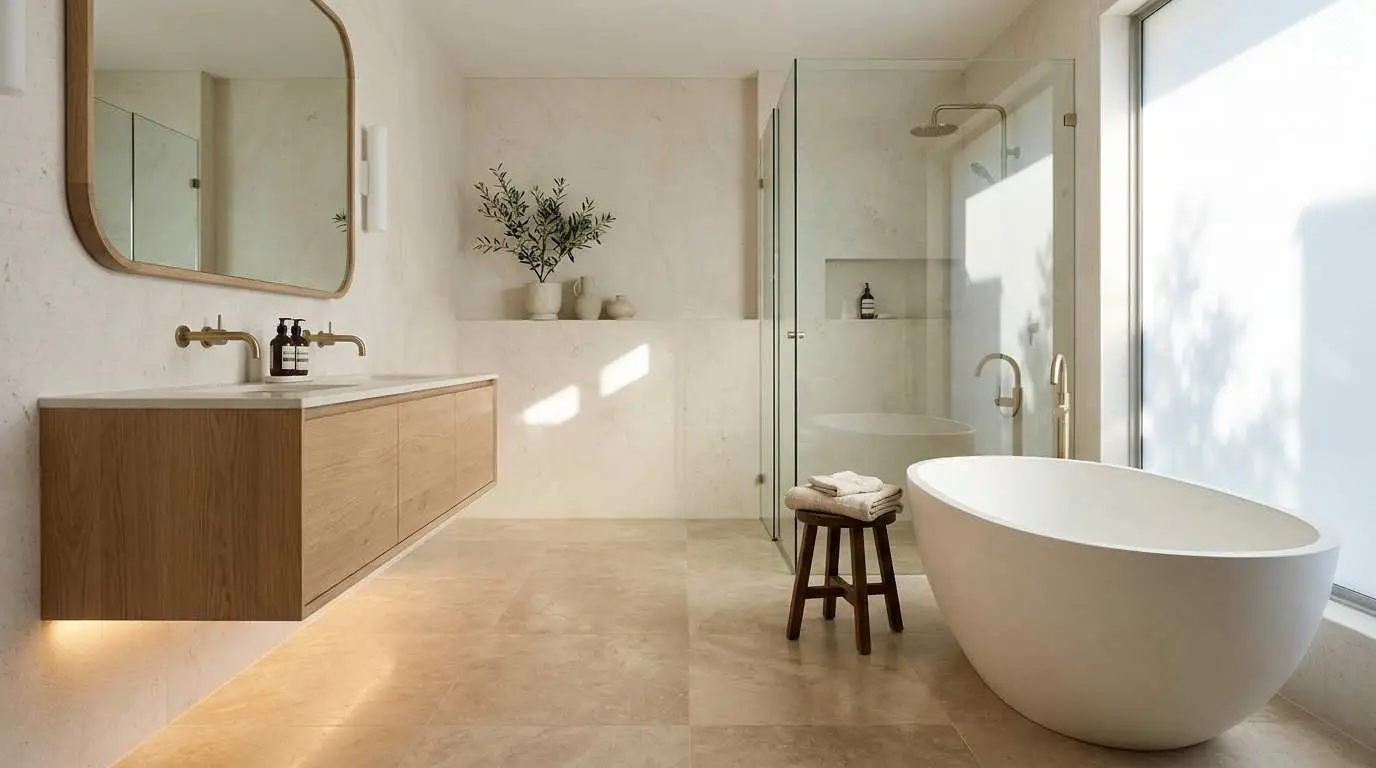

A Japandi bathroom turns everyday routines into quiet rituals through warm wood, natural stone, soft lighting, uncluttered surfaces, and a restrained color palette. The style blends Japanese simplicity with Scandinavian warmth, creating a bathroom that feels calm, refined, and surprisingly luxurious without relying on excessive decoration.
The secret is restraint. A beautiful Japandi bathroom gives every material, fixture, and object enough space to be appreciated.
Whether you’re planning a complete renovation or refreshing a small powder room, the same principles work. Choose fewer materials, soften the lighting, bring in natural textures, and make storage part of the architecture.
Table of Contents
What Is Japandi Bathroom Design?
Japandi bathroom design combines Japanese minimalism with Scandinavian warmth. Japanese interiors contribute simplicity, natural materials, quiet colors, and a strong connection with nature. Scandinavian design adds practical storage, warm woods, comfortable textures, and an inviting atmosphere. Together, they create a bathroom that feels peaceful, functional, and sophisticated.
Think of a boutique wellness hotel translated into a private home.
The look usually centers on:
- Warm oak, walnut, or teak
- Natural stone and stone-look surfaces
- Cream, beige, taupe, sand, and soft gray
- Matte black or brushed metal fixtures
- Floating vanities
- Frameless or minimal glass shower screens
- Soft, layered lighting
- Simple ceramic accessories
- Open space with carefully controlled visual clutter
- Plants and natural textures
Japandi works particularly well in bathrooms because the room already benefits from a clean visual structure. There are relatively few large furniture pieces, so material choices become the main design statement.
The Japandi Bathroom Color Palette
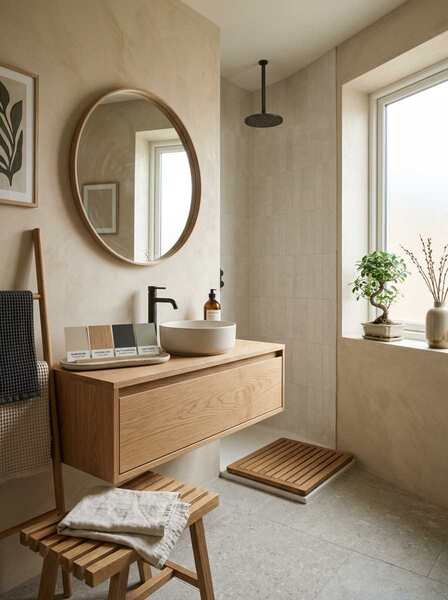
Color establishes the mood before you add a single accessory.
A luxury Japandi bathroom generally favors warm neutrals rather than stark white. Cream, limestone, oatmeal, mushroom, warm gray, muted beige, and soft taupe create a softer backdrop for wood and stone.
A Simple Japandi Color Formula
Try using three levels of color:
| Design Element | Suggested Colors |
|---|---|
| Main walls | Warm white, cream, limestone, light beige |
| Flooring | Natural stone, warm gray, taupe |
| Wood | Light oak, walnut, teak |
| Fixtures | Brushed brass, brushed nickel, matte black |
| Accessories | Sand, charcoal, ivory, muted green |
| Accent color | Olive, clay, terracotta, or deep brown |
For a more luxurious appearance, keep the walls and major surfaces quiet and let natural materials provide the variation.
A cream plaster-style wall beside oak cabinetry can feel richer than a room filled with multiple decorative colors.
Should a Japandi Bathroom Be White?
Warm white works beautifully, especially when paired with wood and textured surfaces. Pure, cool white can feel clinical, so warmer whites usually create a more comfortable result.
If you already have a white bathroom, you don’t necessarily need to replace the tiles. A wood vanity, woven storage basket, stone accessories, warm bulbs, and natural textiles can shift the mood considerably.
Natural Materials Create the Japandi Mood
Materials carry much of the visual character in Japandi interiors.
Wood introduces warmth. Stone adds weight and texture. Ceramic brings a handmade quality. Linen and cotton soften the harder bathroom surfaces.
Wood
Oak is one of the easiest choices for a light Japandi bathroom. Its pale grain works naturally with cream walls and stone surfaces.
Walnut creates a deeper, more dramatic look. It works particularly well when the bathroom has good natural light.
Teak is another strong choice for bathroom accessories because it has traditionally been used in wet environments, although any wood product should be selected and maintained according to the manufacturer’s instructions.
Use wood through:
- Vanity cabinetry
- Shelving
- Bath trays
- Stool seating
- Framed mirrors
- Storage boxes
- Small decorative objects
The key is consistency. One beautiful wood tone repeated throughout the room usually feels more sophisticated than several competing finishes.
Stone
Stone gives a Japandi bathroom its grounded character.
Consider limestone, travertine, marble, slate, terrazzo, or porcelain surfaces that reproduce natural stone patterns.
For a particularly calm effect, choose stone with subtle movement rather than dramatic veining.
A large-format beige stone-look porcelain tile can create a continuous visual field while being easier to maintain than some natural stones.
Ceramic
Handmade-looking ceramic accessories add a small amount of organic variation.
A simple ceramic soap dispenser, toothbrush holder, vase, or planter can introduce the slightly imperfect character associated with Japanese-inspired interiors.
Choose pieces with tactile surfaces and understated shapes.
Japandi Bathroom Vanity Ideas
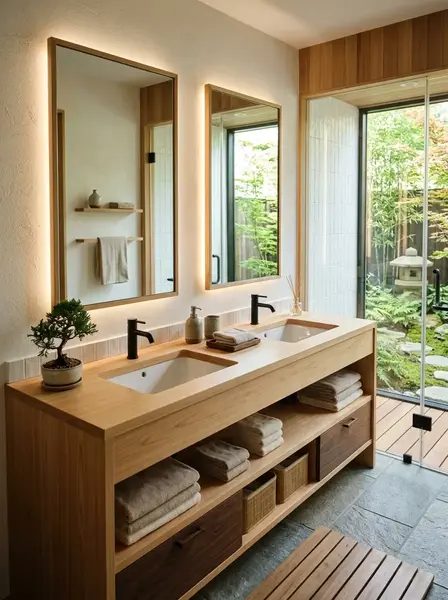
The vanity is often the visual anchor of the room.
A floating wood vanity is one of the strongest choices for this style because the gap underneath creates visual breathing room. It also makes the floor easier to see, which can make a compact bathroom feel more spacious.
1. Floating Oak Vanity
Pair a natural oak vanity with:
- Cream walls
- A stone countertop
- Round mirrors
- Brushed metal faucets
- Minimal hardware
This is the classic light Japandi combination.
2. Walnut Vanity
For a moodier luxury bathroom, use walnut cabinetry against warm beige or gray walls.
Add soft lighting beneath the vanity and keep accessories sparse.
The result feels more like an upscale private suite than a conventional family bathroom.
3. Minimal Handleless Vanity
Handleless cabinetry keeps the visual field quiet.
Push-latch doors or integrated pulls can work well, provided the cabinetry remains practical for everyday use.
Storage still matters. A beautiful bathroom quickly loses its calm appearance when toiletries cover every surface.
Japandi Bathroom Lighting Ideas
Lighting can completely change the character of the room.
A bathroom designed with beautiful stone and wood can still feel cold under a single bright ceiling fixture.
Use several light sources instead.
Layer Your Lighting
Ambient lighting: Provides general illumination throughout the room.
Task lighting: Illuminates the vanity and mirror area.
Accent lighting: Adds atmosphere around architectural features, shelving, niches, or beneath cabinetry.
Warm-white bulbs are generally a better match for Japandi interiors than very cool lighting.
Wall sconces positioned beside a mirror can provide more flattering illumination than a single light directly above it.
For an upscale hotel-inspired effect, consider concealed LED lighting beneath a floating vanity or inside an architectural niche.
The light should feel present without becoming the focal point.
Bring Nature Into a Japandi Bathroom
Japanese-inspired interiors often maintain a strong relationship with natural materials and the outdoors. A bathroom can capture that feeling without becoming a jungle of houseplants.
One carefully chosen plant can be enough.
Good possibilities include plants suited to your bathroom’s actual humidity and light conditions. A small fern, bamboo-inspired arrangement, eucalyptus stems, or another moisture-tolerant plant can introduce organic texture.
Natural materials can also provide the connection with nature:
- River stones
- Wooden stools
- Woven baskets
- Linen towels
- Ceramic vessels
- Small branches
- Stone trays
If your bathroom has limited natural light, choose accessories that provide the same visual feeling rather than forcing a plant into unsuitable conditions.
Create a Spa-Like Japandi Shower
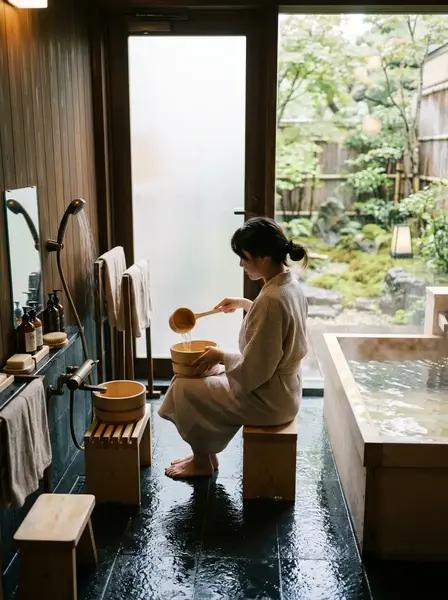
The shower deserves special attention because it can become the most relaxing part of the bathroom.
A large walk-in shower with clear glass helps maintain an open visual flow.
For the walls, consider:
- Large-format stone-look porcelain
- Microcement-style finishes
- Warm beige tile
- Travertine-inspired surfaces
- Subtle textured tile
A recessed shower niche provides practical storage without introducing another piece of furniture.
Keep bottles organized inside the niche rather than scattered across the shower floor.
A rainfall showerhead can contribute to the spa atmosphere, while a separate handheld shower provides everyday practicality.
For a luxury feel, coordinate the shower hardware with the vanity faucet and other visible metal finishes.
The Freestanding Bathtub Moment
If your bathroom has enough space, a freestanding bathtub can become the centerpiece.
A simple oval or softly curved tub works particularly well with Japandi design because the silhouette feels sculptural without being overly decorative.
Place it near a window when privacy and architecture allow.
Add a small wooden bath stool or tray nearby rather than surrounding the tub with numerous accessories.
A folded linen towel, ceramic vessel, and single botanical arrangement can be enough.
The goal is to create a composition that feels considered without looking staged.
Japandi Bathroom Storage: Hide the Visual Noise
Storage is one of the most important practical elements in this design style.
Bathrooms contain a surprising amount of visual clutter: skincare bottles, cosmetics, cleaning supplies, hair tools, towels, toilet paper, and everyday toiletries.
Japandi design gives these objects a home.
Use Closed Storage for Everyday Items
Floating cabinetry, mirrored medicine cabinets, vanity drawers, and tall storage units can hide the products you use every day.
Keep only a few attractive objects visible.
For example:
- A ceramic soap dispenser
- One small plant
- A folded hand towel
- A stone tray
- A simple candle
This creates a much calmer countertop.
Use Baskets Carefully
Woven baskets can add warmth, particularly beneath a floating vanity or on open shelving.
Choose one consistent material rather than collecting baskets in several colors and patterns.
Natural fiber baskets pair especially well with oak and beige stone.
Japandi Bathroom Mirrors
Mirror shape has a major influence on the room.
Round and softly curved mirrors work especially well because they introduce organic shapes against the straight lines of cabinetry and tile.
A large round mirror above a floating vanity can become a subtle focal point.
For a more architectural look, consider a thin-framed rectangular mirror.
Keep the frame finish coordinated with the bathroom hardware.
If you’re using brushed brass faucets, repeating that finish in the mirror frame can create visual continuity.
Japandi Bathroom Accessories
Accessories should feel useful first and decorative second.
Consider:
- Stone soap dishes
- Ceramic containers
- Wooden bath trays
- Linen towels
- Woven baskets
- Minimal candle holders
- Small ceramic vases
- Natural bath mats
- Wooden stools
- Simple countertop organizers
Amazon can be useful for sourcing small accessories such as bamboo bath trays, stone-style soap dispensers, linen-look towels, wooden stools, and compact storage baskets. For affiliate products, choose pieces that genuinely fit the room rather than adding products simply to increase the number of recommendations.
A good rule is simple: if an accessory doesn’t serve a purpose or contribute meaningful texture, leave it out.
Luxury Japandi Bathroom Ideas
Japandi can feel extremely luxurious when the materials are carefully selected.
Luxury doesn’t require an abundance of expensive decoration. It often comes from proportion, consistency, craftsmanship, and the way materials interact.
Use Large-Format Tile
Large-format tile creates fewer grout lines and gives walls and floors a calmer appearance.
Warm stone tones work particularly well.
Upgrade the Hardware
The faucet, shower controls, cabinet pulls, towel bars, and other metal elements are small details that influence the entire room.
Good finish choices include:
- Brushed brass
- Brushed nickel
- Matte black
- Aged bronze
Choose one primary finish and repeat it consistently.
Add Under-Vanity Lighting
A subtle light beneath a floating vanity can create a gentle nighttime glow.
It also gives the vanity a lighter visual presence.
Use Textured Walls
A plaster-inspired finish, limewash-style surface, microcement look, or subtly textured tile can provide depth without introducing busy patterns.
Always choose bathroom-appropriate products and follow the installation requirements for wet areas.
Small Japandi Bathroom Ideas
You don’t need a large bathroom to use the style.
In a small room, focus on visual simplicity.
Choose a Floating Vanity
Seeing more floor beneath the vanity can make the room feel more open.
Use One Dominant Material
Repeating the same stone or tile across several surfaces can make a compact room feel more cohesive.
Install a Large Mirror
A generously sized mirror can visually expand the room and bounce available light around the space.
Keep the Palette Warm and Simple
Cream walls, light oak, warm gray flooring, and one metal finish can create a sophisticated small bathroom without visual overload.
Use Vertical Storage
A tall cabinet can provide substantial storage while using less floor area than a wide unit.
Japandi Bathroom Mistakes to Avoid
A successful Japandi bathroom depends as much on editing as on selecting beautiful materials.
Too Many Colors
A collection of beige, gray, black, green, brass, terracotta, and several wood tones can quickly become visually busy.
Choose a controlled palette.
Too Much Open Shelving
Open shelves look beautiful in photographs, but they can become cluttered during daily life.
Use open shelving for a small selection of attractive objects and closed storage for everything else.
Mixing Too Many Wood Finishes
Oak vanity + walnut stool + bamboo accessories + dark teak shelving can create unnecessary competition.
Choose one dominant wood and perhaps one complementary tone.
Overdecorating the Countertop
Leave breathing room around the sink.
A single tray and soap dispenser often look better than ten small decorative objects.
Ignoring Practicality
The bathroom has to survive water, humidity, cleaning, and everyday use.
Before choosing a material, confirm that it is appropriate for the location where you plan to install it.
Beautiful design works best when maintenance remains manageable.
How to Create a Japandi Bathroom on a Budget
You can change the atmosphere without replacing the entire bathroom.
Start with the elements that have the largest visual effect.
Step 1: Remove clutter.
Clear countertops, shelves, and shower ledges.
Step 2: Replace mismatched accessories.
Use a coordinated set of ceramic, stone, wood, or neutral accessories.
Step 3: Introduce warm textiles.
Replace brightly colored towels with cream, beige, taupe, or muted gray.
Step 4: Add wood.
A small stool, bath tray, bamboo organizer, or wood-framed mirror can introduce warmth.
Step 5: Improve lighting.
Use warmer bulbs and add task or accent lighting where practical.
Step 6: Upgrade storage.
Move everyday clutter behind cabinet doors or into coordinated containers.
Step 7: Add one natural element.
A suitable plant, branch arrangement, stone tray, or natural-fiber basket can finish the room.
These smaller changes can shift the overall character of an existing bathroom without a full renovation.
A Complete Japandi Bathroom Design Formula
If you want a simple formula to follow, start here:
Walls: Warm cream or beige
Floor: Natural stone or warm stone-look porcelain
Vanity: Floating natural oak
Countertop: Light stone
Mirror: Large round mirror
Faucet: Brushed brass or brushed nickel
Shower: Frameless glass
Lighting: Warm layered lighting
Textiles: Linen-look or cotton in neutral shades
Accessories: Ceramic, stone, and wood
Plants: One carefully chosen natural accent
Storage: Mostly closed cabinetry
The beauty of this combination comes from repetition. The same few materials appear throughout the room, creating a visual rhythm that feels calm and intentional.
Japandi Bathroom Design for Different Home Styles
Japandi doesn’t have to mean creating a completely Japanese or Scandinavian-looking room.
It can adapt to different homes.
Modern Apartment
Use pale oak, warm white walls, stone-look porcelain, frameless glass, and brushed nickel.
Keep the furniture compact and storage generous.
Luxury Contemporary Home
Use walnut, large-format stone, sculptural lighting, a freestanding bathtub, and premium hardware.
Keep decorative pieces minimal so the materials remain the stars.
Traditional Home
Preserve architectural features such as paneling or existing proportions while introducing Japandi elements through the vanity, lighting, textiles, and accessories.
Small Rental Bathroom
Focus on removable accessories, textiles, storage containers, lighting where permitted, and a cohesive color palette.
A wood bath tray, neutral towels, ceramic dispensers, and a large framed mirror can make a surprising difference.
Key Takeaways
- Japandi bathroom design combines Japanese simplicity with Scandinavian warmth.
- Warm neutrals create the foundation for the style.
- Natural wood and stone provide most of the visual character.
- Floating vanities can make bathrooms feel lighter and more spacious.
- Round mirrors add softness to rooms dominated by straight lines.
- Layered warm lighting creates a more relaxing atmosphere.
- Closed storage keeps everyday bathroom clutter out of sight.
- A small number of carefully selected accessories usually works better than excessive decoration.
- Luxury comes from thoughtful materials, consistent finishes, proportion, and restraint.
- Japandi can work in large master bathrooms, compact apartments, guest bathrooms, and rental spaces.
Frequently Asked Questions
What is Japandi bathroom design?
Japandi bathroom design combines Japanese minimalism with Scandinavian warmth. It typically uses natural wood, stone, warm neutral colors, simple forms, practical storage, soft lighting, and a restrained selection of decorative objects.
What colors work best in a Japandi bathroom?
Warm white, cream, beige, taupe, mushroom, sand, warm gray, muted green, and natural brown are strong choices. The palette should remain relatively restrained so wood and stone textures can provide visual interest.
What type of wood is best for a Japandi bathroom?
Oak, walnut, and teak can all work well depending on the application. Oak creates a light Scandinavian feeling, walnut gives the room more depth, and teak can work well for suitable bathroom accessories. Always check the manufacturer’s care and installation requirements.
Can Japandi bathroom design work in a small bathroom?
Yes. Floating vanities, large mirrors, simple surfaces, vertical storage, frameless shower glass, and a limited color palette can make a small bathroom feel more open and organized.
What lighting should I use in a Japandi bathroom?
Use layered lighting with warm ambient illumination, practical vanity lighting, and subtle accent lighting. Wall sconces beside a mirror and concealed lighting beneath a floating vanity can create a softer atmosphere.
How can I make a bathroom feel more Japandi without renovating?
Start by removing clutter and replacing mismatched accessories. Add warm neutral towels, a wooden bath tray or stool, ceramic containers, natural textures, coordinated hardware, and warmer lighting.
What tiles are best for Japandi bathrooms?
Large-format tiles in limestone, travertine, concrete, slate, or other subtle stone-inspired finishes work well. Warm beige and soft gray are particularly versatile.
Is Japandi bathroom design expensive?
It can range from budget-friendly to highly luxurious. The style depends heavily on material selection and restraint, so you can create the overall look through accessories and lighting without replacing every surface.
Suggest Reads
- Japandi Interior Design: The Complete Luxury Guide (2026)
- Japandi Bedroom Design: A Serene Luxury Retreat Guide
- Japandi Living Room Ideas: 15 Luxury Designs That Balance Calm & Craft
- Japandi Kitchen Design: Minimalist Luxury for the Home Chef
- Japandi Dining Room Ideas for a Warm, Refined Home
- What Is Japandi Style? Wabi-Sabi & Hygge Design Guide