
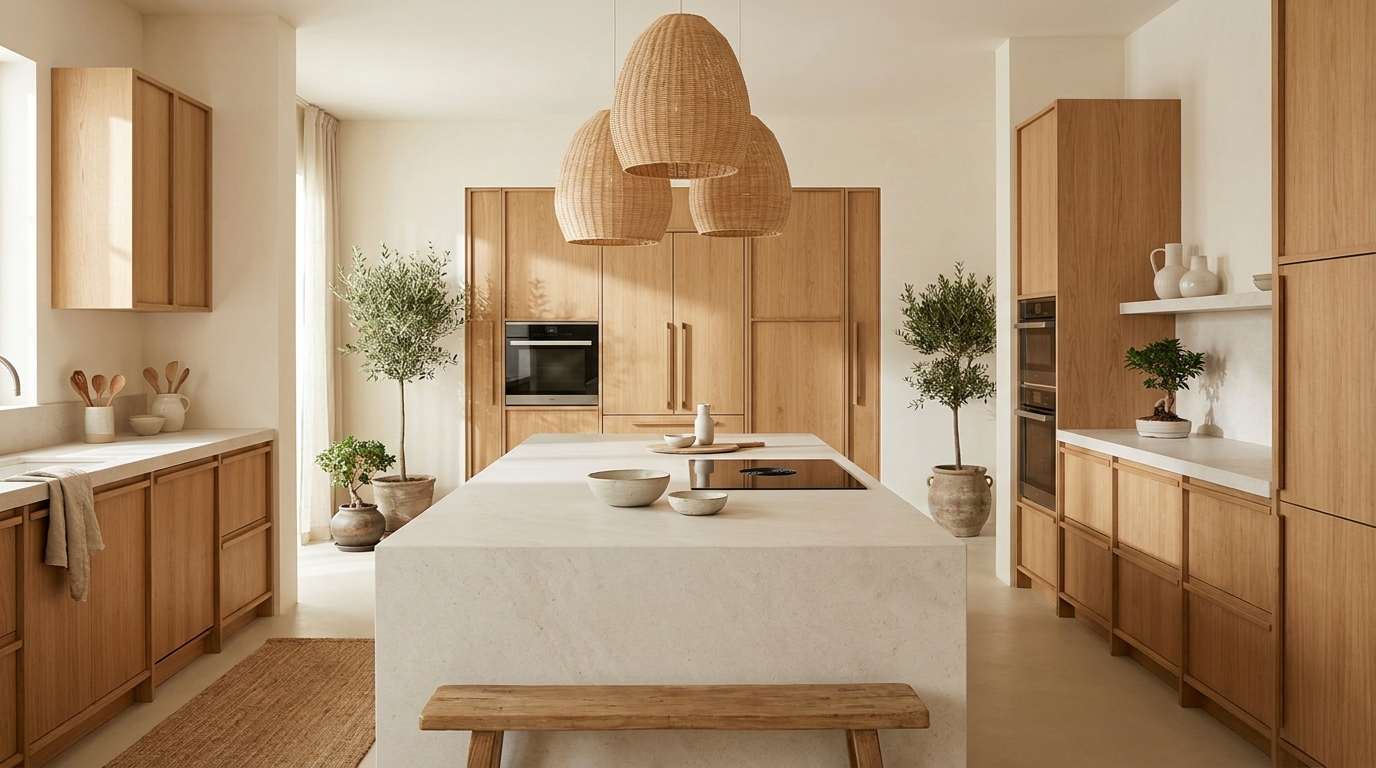

A Japandi kitchen design brings together Japanese restraint and Scandinavian warmth to create a kitchen that feels calm, refined, practical, and deeply livable. For the home chef, the style works especially well because every material, storage choice, lighting decision, and countertop detail can support cooking without creating visual clutter.
The strongest Japandi kitchens combine natural wood, quiet colors, tactile materials, clean cabinetry, thoughtful storage, and high-quality finishes. The result is a minimalist kitchen with enough warmth and character to feel luxurious rather than stark.
Table of Contents
What Is Japandi Kitchen Design?
Japandi kitchen design combines the simplicity of Japanese interiors with the warmth and functionality associated with Scandinavian design.
Japanese interiors tend to favor natural materials, restrained decoration, craftsmanship, and a strong relationship with space. Scandinavian kitchens commonly introduce pale woods, functional layouts, soft textures, practical furniture, and comfortable lighting.
When these ideas meet, the kitchen becomes exceptionally balanced.
| Japandi Kitchen Element | Recommended Approach |
|---|---|
| Cabinetry | Flat-panel, handleless, or discreet hardware |
| Wood | Oak, walnut, ash, or other natural timber |
| Colors | Warm white, beige, taupe, greige, clay, soft gray |
| Countertops | Quartz, natural stone, porcelain, or wood |
| Backsplash | Handmade-look tile, stone, plaster, or microcement |
| Hardware | Brushed metal, aged brass, black, or wood |
| Lighting | Warm layered lighting |
| Decor | Minimal, useful, handcrafted |
| Storage | Concealed and highly organized |
| Flooring | Natural wood, stone, or understated tile |
The guiding principle is simple: every visible element should have a purpose or contribute meaningful beauty.
How to Create a Luxury Japandi Kitchen
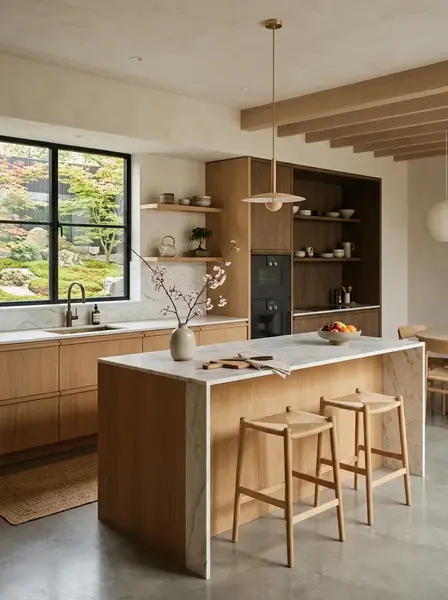
Luxury in a Japandi kitchen comes from proportion, craftsmanship, materials, and restraint.
We can create a sophisticated kitchen without filling the room with decorative objects. A beautifully grained oak cabinet, a stone countertop with subtle movement, sculptural lighting, and carefully selected hardware can provide more visual impact than dozens of accessories.
1. Choose Natural Wood Cabinetry
Wood is one of the defining materials of a warm Japandi kitchen.
Oak works particularly well because its grain adds texture while maintaining a light, relaxed appearance. Walnut creates a richer and more dramatic atmosphere, making it especially suitable for larger kitchens or lower cabinetry.
Ash offers a lighter, understated character.
For a refined result, we recommend choosing one dominant wood tone and repeating it selectively throughout the room. Cabinet fronts, open shelving, stools, or a dining table can share related timber tones without becoming overly coordinated.
Matte or low-sheen finishes generally suit the aesthetic better than highly reflective lacquer.
2. Use a Restrained Color Palette
A Japandi kitchen benefits from colors that feel connected to natural materials.
Consider:
- Warm white
- Soft beige
- Mushroom
- Greige
- Taupe
- Sand
- Clay
- Warm gray
- Muted olive
- Charcoal
- Natural wood tones
Pure white can feel too clinical in some kitchens. Warmer whites create a softer transition between cabinetry, walls, stone, and timber.
We can also introduce contrast through darker walnut cabinetry, charcoal fixtures, or a deep stone surface. The contrast should feel deliberate rather than dramatic.
3. Select Countertops With Natural Character
The countertop is one of the largest visual surfaces in a kitchen, so its material has a major effect on the overall atmosphere.
For a luxury Japandi kitchen, suitable options include natural stone, quartz, porcelain, and carefully selected wood.
A pale stone countertop can make a compact kitchen appear brighter. A darker stone can provide depth against light cabinetry.
Veining should generally remain restrained. Subtle movement works beautifully with Japandi interiors because it introduces character without overwhelming the simple architecture.
For serious home chefs, practical performance matters just as much as appearance. The countertop should tolerate frequent food preparation, accommodate appliances where necessary, and provide sufficient landing space around the cooking zone.
4. Keep Cabinetry Visually Quiet
Japandi kitchens typically benefit from cabinetry with simple geometric lines.
Flat-panel doors are an excellent starting point. Integrated handles, slim pulls, recessed grips, and small minimalist knobs can all work.
The goal is a continuous visual rhythm.
Tall cabinetry can conceal ovens, refrigerators, pantry storage, and small appliances. Lower drawers can organize cookware, utensils, spices, and preparation tools.
This approach is particularly valuable for home chefs. When equipment has a designated location, countertops remain available for actual cooking.
Open Shelving: Use It Carefully
Open shelving can introduce warmth, but excessive shelving quickly creates visual noise.
A single timber shelf displaying a few ceramic bowls, a wooden cutting board, or handmade cups may be enough.
We recommend treating open shelves as curated functional storage rather than decoration alone.
5. Design the Kitchen Around the Home Chef
A beautiful kitchen still needs to work.
The layout should make movement between the refrigerator, sink, preparation area, cooktop, and oven straightforward.
For frequent cooks, generous preparation space is particularly valuable. A wide section of uninterrupted countertop can be more useful than additional decorative features.
Deep drawers are excellent for pots and pans. Vertical dividers can organize baking trays and cutting boards. Pull-out pantry systems can make dry ingredients easier to access.
Small appliances can be stored behind appliance garages or inside dedicated cabinetry when they aren’t being used.
The result is a kitchen that looks composed while supporting serious cooking.
6. Choose a Japandi Kitchen Island With Purpose
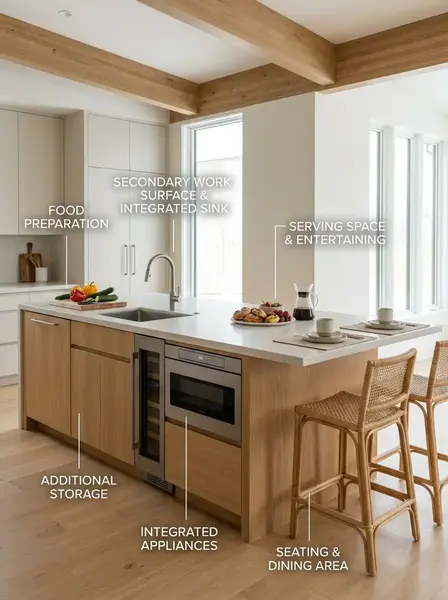
A kitchen island often becomes the visual and functional center of the room.
For a Japandi interior, we can use a wood island to introduce warmth against pale cabinetry. Alternatively, a stone-clad island can create a more architectural appearance.
The island should provide useful functions such as:
- Food preparation
- Additional storage
- Seating
- A secondary work surface
- Appliance storage
- Serving space
A thick countertop can create a sense of substance and luxury, while waterfall stone edges can produce a more contemporary appearance.
For smaller kitchens, a slim island or peninsula may provide the same practical benefits without overwhelming the room.
7. Use Handmade and Tactile Materials
Japandi design gains much of its character from texture.
Smooth cabinetry becomes more interesting beside tactile surfaces such as handmade-look ceramic tile, natural stone, timber, linen, woven fibers, or lightly textured plaster.
A backsplash made from slightly irregular ceramic tiles can provide subtle variation. Limewash or plaster-style walls can create depth without introducing a busy pattern.
Ceramics are particularly useful because they combine functionality and decoration naturally.
A collection of neutral bowls or handmade cups can sit comfortably within the design while remaining useful every day.
8. Install Warm, Layered Lighting
Lighting can completely change the atmosphere of a Japandi kitchen.
We recommend combining several lighting layers rather than depending on one central ceiling fixture.
A practical lighting plan can include:
- Ambient lighting for general illumination.
- Task lighting beneath cabinets and around preparation areas.
- Pendant lighting above an island or dining area.
- Accent lighting inside selected cabinetry or shelving.
Warm light generally complements natural wood and earthy colors particularly well.
Pendant lights should have simple silhouettes. Paper, linen, ceramic, glass, and matte metal fixtures can all complement the style.
9. Choose Japandi Kitchen Hardware
Hardware may appear small, but it affects the character of the entire kitchen.
Brushed stainless steel provides a practical contemporary look. Aged brass introduces warmth. Matte black creates stronger contrast.
Wooden pulls can create an especially natural appearance when paired with timber cabinetry.
We recommend using one primary hardware finish throughout the kitchen unless there is a clear architectural reason to introduce another.
Consistency helps maintain the quiet visual quality associated with Japandi design.
10. Add Luxury Through Appliances
Luxury for the home chef should include appliances that support the way the kitchen is actually used.
A built-in oven, induction cooktop, integrated refrigerator, efficient dishwasher, wine refrigerator, or concealed coffee station can all fit naturally into a Japandi kitchen.
The cleanest approach is to integrate large appliances into the cabinetry wherever practical.
A professional-style range can also work, particularly in a larger kitchen, but its visual presence should be considered carefully. The appliance should become part of the composition rather than dominate it.
Japandi Kitchen Design for Small Spaces
Japandi principles work remarkably well in compact kitchens because the style naturally favors simplicity and efficient storage.
For a smaller kitchen, we can use:
- Light oak cabinetry
- Warm white walls
- Handleless doors
- Full-height storage
- Reflective but understated surfaces
- One continuous countertop material
- Compact pendant lighting
- Minimal open shelving
- Integrated appliances
Vertical storage becomes especially valuable.
Tall pantry cabinetry can use otherwise wasted wall space. Deep drawers can replace several smaller cabinets, while pull-out organizers can make narrow areas more functional.
A limited material palette also helps a small kitchen feel visually calmer.
Japandi Kitchen Design Mistakes to Avoid
The aesthetic becomes less convincing when too many competing ideas are introduced.
Too Much Decoration
Japandi kitchens benefit from breathing room. A countertop covered with appliances, containers, plants, artwork, and accessories quickly changes the character of the room.
Excessive Wood
Wood creates warmth, but using several unrelated wood tones can make the kitchen feel fragmented.
Choose a primary timber and use complementary materials around it.
Cold White Lighting
Cool lighting can make warm wood and beige surfaces appear flat or gray. Warm, comfortable illumination generally produces a more inviting result.
Too Many Open Shelves
Open storage requires maintenance and visual discipline. We should reserve it for items that are frequently used or genuinely beautiful.
Ignoring Workflow
A minimalist kitchen still needs to support real cooking.
The location of knives, cutting boards, pans, ingredients, waste bins, and small appliances should be considered during the planning stage.
Best Materials for a Japandi Kitchen
Material selection determines much of the kitchen’s final character.
| Material | Best Use | Design Effect |
|---|---|---|
| Oak | Cabinetry and shelving | Light and warm |
| Walnut | Islands and cabinetry | Rich and sophisticated |
| Natural stone | Countertops | Organic luxury |
| Quartz | Countertops | Practical and clean |
| Ceramic tile | Backsplash | Handmade character |
| Microcement | Walls and surfaces | Minimal architectural finish |
| Linen | Window treatments | Soft texture |
| Wood | Flooring | Warmth and continuity |
| Brushed metal | Hardware | Subtle sophistication |
The most successful combinations usually contain two or three dominant materials, supported by smaller tactile details.
How to Make a Japandi Kitchen Feel Expensive
An expensive-looking kitchen doesn’t require every surface to be expensive.
We can create a high-end impression through careful proportions and selective investment.
Spend more on the surfaces that receive daily contact: cabinetry hardware, countertops, sinks, faucets, and appliances.
Keep decorative purchases selective.
A single sculptural pendant can have more impact than several inexpensive light fixtures. One beautifully made ceramic vase can look more considered than a shelf crowded with accessories.
The same principle applies to cabinetry. High-quality drawer mechanisms and carefully fitted doors contribute to the experience every time the kitchen is used.
Sustainable Japandi Kitchen Ideas
Natural materials and long-lasting design fit naturally with a more considered approach to kitchen renovation.
Where possible, we can select durable cabinetry, repairable hardware, timeless finishes, and materials that can remain attractive for many years.
Wood from responsible sources, energy-efficient appliances, reusable food-storage systems, and durable countertops can support a kitchen designed for long-term use.
The most sustainable design decision may also be avoiding unnecessary replacement.
A kitchen with a restrained visual language can remain attractive as tastes change because its foundation isn’t tied to a short-lived trend.
Key Takeaways
- Japandi kitchen design combines Japanese restraint with Scandinavian warmth.
- Natural wood is one of the most important materials for creating the look.
- Warm neutrals generally work better than harsh, clinical whites.
- Clean cabinetry and concealed storage keep the kitchen visually calm.
- Serious home chefs should prioritize workflow and preparation space.
- Natural stone, quartz, porcelain, and wood can all suit Japandi countertops.
- Warm layered lighting creates a softer and more luxurious atmosphere.
- Handmade ceramics and tactile materials add character without excessive decoration.
- High-quality hardware, cabinetry, and appliances can provide luxury through everyday use.
- The strongest Japandi kitchens balance beauty, functionality, craftsmanship, and restraint.
Suggest Reads
- Japandi Interior Design: The Complete Luxury Guide (2026)
- Japandi Bedroom Design: A Serene Luxury Retreat Guide
- Japandi Living Room Ideas: 15 Luxury Designs That Balance Calm & Craft
- Japandi Bathroom Design: Spa-Like Serenity at Home
- Japandi Dining Room Ideas for a Warm, Refined Home
- What Is Japandi Style? Wabi-Sabi & Hygge Design Guide
Frequently Asked Questions About Japandi Kitchen Design
What is a Japandi kitchen?
A Japandi kitchen combines Japanese simplicity with Scandinavian warmth. Typical features include natural wood, neutral colors, clean cabinetry, tactile materials, concealed storage, functional layouts, and restrained decoration.
What colors work best in a Japandi kitchen?
Warm whites, beige, taupe, greige, sand, muted gray, clay, soft olive, charcoal, and natural wood tones work particularly well. A restrained palette helps preserve the calm character of the design.
Is Japandi suitable for a luxury kitchen?
Yes. Japandi works particularly well in luxury kitchens when premium materials, quality cabinetry, natural stone, sophisticated lighting, and high-performance appliances are used selectively.
What wood is best for Japandi kitchens?
Oak, walnut, and ash are excellent choices. Oak produces a lighter appearance, while walnut offers greater depth and visual richness.
Can a small kitchen have Japandi style?
Yes. The style suits small kitchens because it favors clean surfaces, concealed storage, simple materials, and efficient layouts. Full-height cabinetry and integrated appliances can be especially useful.
Are open shelves suitable for Japandi kitchens?
Yes, when used sparingly. A small number of wooden shelves can add warmth and display frequently used ceramics without creating unnecessary visual clutter.
What countertop works best with Japandi cabinetry?
Natural stone, quartz, porcelain, and carefully selected wood can all work well. The best choice depends on cooking habits, maintenance preferences, budget, and the desired visual balance.
How do we make a Japandi kitchen warmer?
Natural wood, warm lighting, handmade ceramics, textured textiles, earthy colors, and subtle stone variation can add warmth while preserving the minimalist character.