
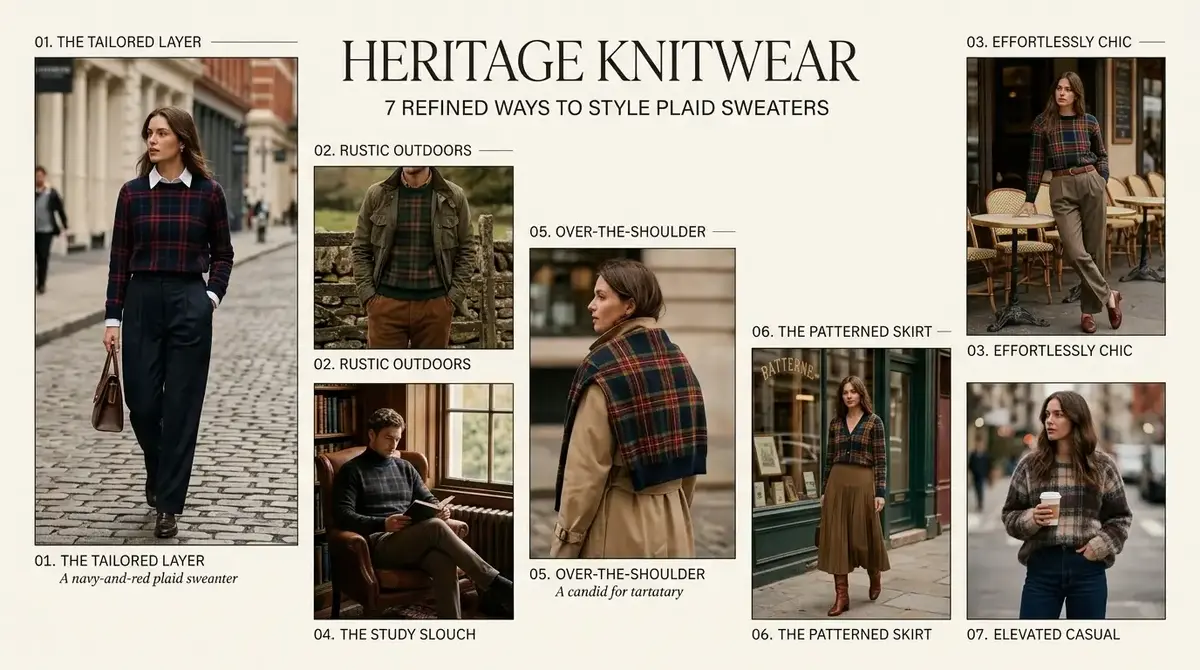

To style a plaid sweater with understated elegance, balance its pattern with tailored basics, considered proportions, and tactile fabrics. Pair neutral checks with cream wool trousers, classic tartan with a structured blazer, or a relaxed plaid knit with a fluid satin skirt. Keep accessories restrained, repeat one color from the pattern, and choose quality knitwear that suits your preferred silhouette.
Plaid has a long association with heritage dressing, traditional tailoring, and countryside style. In a contemporary wardrobe, a well-chosen plaid sweater can bring that character to everyday outfits, from polished office layers to refined evening combinations.
The key is to give the pattern a clear role in the outfit. Neutral trousers, clean footwear, structured outerwear, and carefully chosen textures help plaid knitwear feel considered throughout fall and winter.
Table of Contents
1. The Monochromatic Neutral
Outfit formula: Cream or beige plaid sweater + cream wide-leg wool trousers + minimalist gold jewelry.
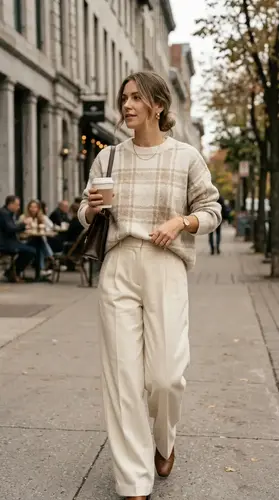
A muted plaid sweater paired with trousers in a similar shade creates a calm, cohesive silhouette. The tonal palette softens the contrast between the checks and the rest of the outfit, making this one of the most versatile plaid sweater outfits for a quiet-luxury wardrobe.
Choose a sweater with a fine or medium-scale pattern in ivory, oatmeal, camel, or soft taupe. Cream wide-leg trousers introduce movement and structure, while a simple leather belt and understated gold earrings keep the overall look polished.
How to get the proportions right: If the sweater is relaxed or slightly oversized, tuck just the front into the trousers or choose a clean, shorter silhouette. A more fitted knit can sit neatly inside a higher-rise waistband.
Best for: Brunch, casual office settings, gallery visits, and everyday city dressing.
Styling takeaway: Keep the palette within one tonal family and let subtle differences in texture give the outfit depth.
2. The Tailored Equestrian
Outfit formula: Classic tartan or windowpane sweater + structured blazer + dark denim or wool trousers + knee-high leather riding boots.
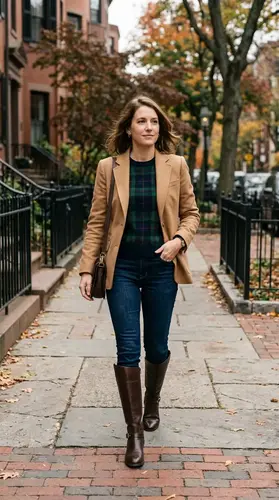
Heritage-inspired knitwear pairs naturally with the clean lines of traditional tailoring. A plaid sweater under a structured blazer creates a defined shoulder line and gives a familiar countryside reference a more urban finish.
For a versatile combination, choose a navy, forest-green, burgundy, or brown plaid knit. Layer it under a charcoal, navy, or camel blazer, then add dark straight-leg denim or tailored wool trousers. Knee-high leather boots reinforce the equestrian influence without requiring additional patterned pieces.
How to get the proportions right: A blazer with enough room through the sleeves and chest will accommodate knitwear without pulling. If your sweater has a thick cable-like texture or substantial volume, choose a more streamlined jacket and avoid bulky layers underneath.
Best for: Autumn walks, weekend lunches, smart-casual workdays, and travel.
Styling takeaway: Let the blazer provide structure while the plaid sweater supplies the heritage character.
3. Relaxed Cashmere and Slip Skirts
Outfit formula: Oversized fine-gauge plaid knit + charcoal or deep-navy silk or satin bias-cut skirt + pointed-toe boots.
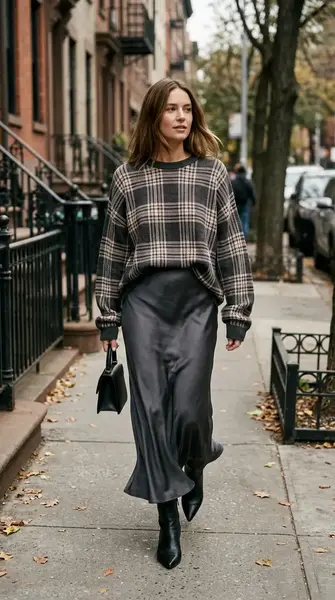
Pairing a relaxed plaid sweater with a fluid slip skirt creates an appealing contrast between substantial knitwear and lightweight fabric. The combination works particularly well when the colors remain restrained and the garments have distinct textures.
A charcoal satin skirt complements a muted grey plaid, while deep navy works with checks containing cream, burgundy, or forest green. Pointed-toe ankle boots add a defined finish, and a small structured bag keeps the silhouette from feeling overly relaxed.
Cashmere is one option for a fine, soft knit, although merino wool and suitable blended yarns can also work. Focus on the garment’s actual composition, weight, and fit rather than relying on the fiber name alone.
How to get the proportions right: With a voluminous sweater, allow the skirt to fall freely and avoid adding unnecessary layers around the hips. A partial front tuck can define the waist without removing the relaxed quality of the outfit.
Best for: Dinner dates, seasonal events, creative workplaces, and weekend evenings.
Styling takeaway: Contrast a relaxed knit with a fluid skirt to create movement without introducing another strong pattern.
4. The Elevated Casual Layer
Outfit formula: Plaid crewneck sweater + crisp white button-down shirt + straight-leg denim + leather loafers.
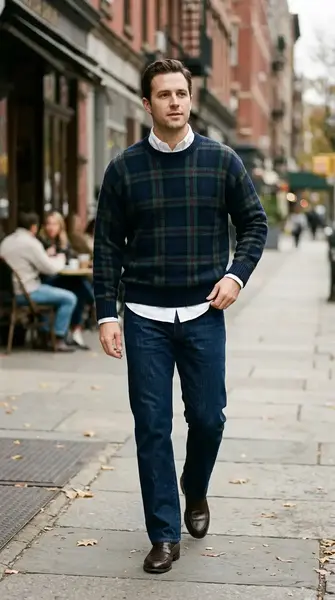
A white button-down shirt gives a plaid crewneck a crisp foundation. The visible collar and cuffs introduce a clean cotton texture that works particularly well with traditional checks and classic denim.
Choose a sweater with enough room to sit comfortably over the shirt without distorting the neckline. Straight-leg jeans keep the proportions uncomplicated, while black or brown leather loafers add a polished finish. A simple belt can connect the footwear to the rest of the outfit.
For a more traditional look, select a muted tartan with navy, cream, or burgundy. For a contemporary interpretation, try a small windowpane check in grey or brown.
How to get the proportions right: Keep the shirt collar neatly arranged above the crewneck and allow only a modest amount of cuff to show. If the sweater has a thick hem, leave it untucked rather than forcing excess fabric into the waistband.
Best for: Coffee meetings, campus-inspired dressing, errands, and relaxed office environments.
Styling takeaway: A crisp shirt gives patterned knitwear a clean frame and makes the combination easy to repeat.
5. Tonal Leather and Texture
Outfit formula: Dark plaid sweater in black or espresso + tailored leather trousers + cashmere scarf.
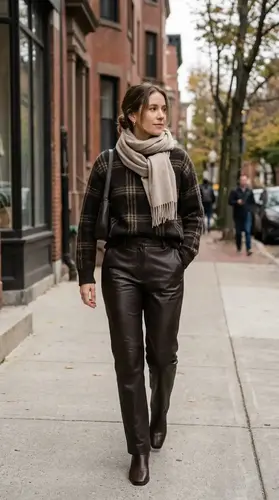
Dark plaid knitwear works well with leather trousers because the two materials create contrast while remaining within a controlled palette. The knit brings softness and visible texture; the leather introduces a smoother, more defined finish.
An espresso sweater with subtle camel checks pairs naturally with dark-brown or black trousers. A black-and-charcoal plaid can work with black leather, especially when the check remains visible without dominating the outfit.
Add a wool or cashmere scarf in a complementary solid shade if the weather calls for another layer. Keep jewelry simple and choose streamlined boots to maintain the outfit’s clean lines.
How to get the proportions right: If the leather trousers are wide-legged, a shorter or neatly tucked sweater can define the waist. With a slim trouser cut, a slightly relaxed knit provides balance.
Best for: Evening dinners, city outings, and contemporary fall-to-winter dressing.
Styling takeaway: Combine contrasting materials in a related color family for a sophisticated outfit with visual depth.
6. The Belted Statement
Outfit formula: Mid-thigh plaid cardigan or long sweater + slim leather belt + tailored trousers.
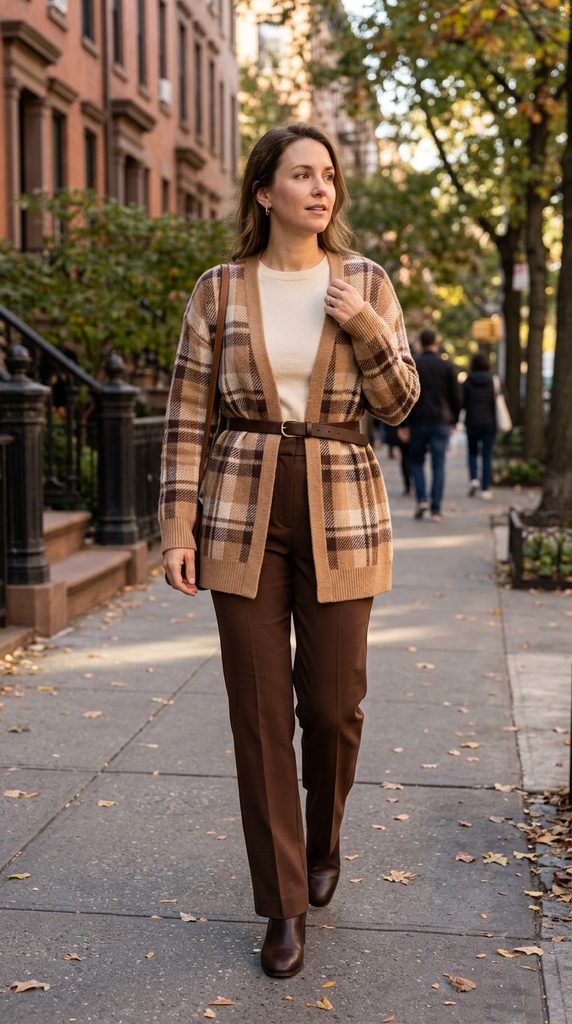
A long plaid cardigan can function as the central layer of an outfit when its volume is balanced with a defined waist. A narrow leather belt shapes the silhouette and creates a more intentional finish, particularly when the cardigan has a straight or softly relaxed cut.
Choose tailored trousers in a color already present in the plaid. Grey trousers work with charcoal checks, while camel or chocolate trousers complement warmer brown patterns. A simple knit top beneath the cardigan keeps the layers comfortable and avoids unnecessary bulk.
How to get the proportions right: Position the belt where it feels comfortable and allows the cardigan to fall naturally. Avoid cinching delicate or loose knits too tightly, as concentrated tension can distort the fabric or leave impressions.
If your cardigan is very thick, try a belt designed to sit comfortably over knitwear or leave the cardigan open and use a fitted base layer to create definition.
Best for: Office layering, travel, weekend lunches, and transitional weather.
Styling takeaway: Use a belt to shape the silhouette gently while allowing the knitwear to retain its natural drape.
7. Evening Minimalist Layering
Outfit formula: Fine-knit dark plaid sweater + tailored wool trench coat + structured leather handbag + slingback heels.

A fine-gauge plaid sweater can work for evening occasions when the rest of the outfit has a precise, understated finish. Dark checks in navy, black, charcoal, or deep brown sit comfortably alongside tailored outerwear and refined accessories.
Layer the sweater under a well-cut wool coat or trench-style coat, depending on the fabric and weather. Pair it with tailored trousers or a streamlined skirt, then introduce a structured leather handbag and slingback heels for a more formal finish.
Keep the pattern scale in proportion to the outfit. A subtle check often works well with sleek accessories because it adds visual interest without competing with the silhouette.
How to get the proportions right: A fine-knit sweater should sit comfortably under the coat without pulling across the shoulders or bunching at the sleeves. If the coat is oversized, keep the remaining pieces relatively streamlined.
Best for: Dinner reservations, evening events, theatre outings, and polished city dressing.
Styling takeaway: Refined outerwear and sharp footwear help a patterned knit transition from daytime wear to evening dressing.
How to Choose Quality Heritage Knitwear
A quality plaid sweater should have a comfortable fit, a pattern you enjoy wearing, and a construction suited to your wardrobe. Fiber content matters, but so do yarn quality, knit density, finishing, and care requirements.
Compare the main sweater fibers
| Fiber | What to look for | Practical consideration |
|---|---|---|
| Merino wool | A soft hand feel, even knitting, and a comfortable fit | Can suit regular layering; follow the care label |
| Cashmere | A consistent surface, well-finished seams, and a suitable knit weight | Often requires gentle handling and careful storage |
| Mohair blends | An intentional halo of fibers and an even-looking pattern | The fuzzy texture can soften the definition of small checks |
| Wool blends | Clear fiber labeling and a fabric weight suited to your climate | Performance and care vary with the blend |
| Synthetic blends | A comfortable hand feel, good recovery, and clear care instructions | May be practical for some budgets and routines, but properties vary by construction |
Natural fibers are often valued for their hand feel and thermal properties, but a natural-fiber label alone does not establish quality. Check the fiber percentages, fabric weight, finishing, and care instructions before making a decision.
Check the plaid pattern and construction
Look for a clear pattern. Checks should be easy to distinguish at the intended viewing distance. Fuzzy yarns can make the edges softer by design, while a smooth fine-gauge knit may produce sharper lines.
Inspect the seams and finishing. Look for secure joins, neat cuffs, and a hem that lies comfortably. If the pattern is made from separate knitted panels, examine how the checks meet at the side seams and other visible joins. Pattern alignment can vary with the garment’s design and construction method.
Choose the right pattern scale. Small checks generally read as subtle from a distance, while larger tartans create a stronger visual statement. Consider the colors already present in your wardrobe before selecting a dominant pattern.
Assess the fit with your usual layers. Try to account for the shirt, base layer, or coat you expect to wear with the sweater. A knit that pulls under outerwear or restricts arm movement may be less useful in everyday dressing.
A simple plaid sweater buying checklist
- Confirm the fiber composition and care instructions.
- Check the seams, cuffs, hem, and overall finish.
- Choose a pattern scale that suits your preferred outfits.
- Consider how the sweater fits over a shirt and under a coat.
- Compare the garment’s construction and comfort with its price.
- Choose a color palette that works with trousers, skirts, and footwear you already own.
How to Care for Wool and Cashmere Plaid Sweaters
Proper care helps knitwear retain its shape and appearance. Always check the garment’s care label first because fiber blends, knit construction, dyes, and finishing can require different treatment.
- Wash according to the label. Use the recommended washing method and a suitable detergent. Avoid assuming that every wool or cashmere garment is machine washable.
- Handle wet knitwear gently. Avoid twisting or wringing the sweater, which can stretch or distort the fabric.
- Dry flat when instructed. Reshape the garment gently and support its weight while it dries. Hanging a wet sweater can encourage stretching.
- Store knits folded. Fold sweaters on a shelf or in a drawer rather than hanging them for long periods, especially if the knit is heavy or prone to stretching.
- Remove pills carefully. Use a suitable fabric comb or de-pilling tool according to the garment’s construction, testing gently in an inconspicuous area first.
For further guidance, consult Woolmark’s wool-care advice and its guide to drying wool garments.
Suggested reads
Building a refined wardrobe begins with versatile pieces, thoughtful styling, and a focus on lasting quality. Explore our guide to Quiet Luxury Capsule Workwear: 15 Polished Outfits for elegant office looks that balance tailored essentials with understated sophistication. Complete your outfits with insights from Luxury Footwear: A Guide to Timeless Style & Quality, then discover Timeless Fashion and Heritage Style: The Art of Dressing Well for inspiration on building a wardrobe rooted in classic design and enduring appeal. Together, these guides offer practical ideas for dressing with confidence, investing in quality, and embracing quiet luxury season after season.
Frequently Asked Questions
How do you style a plaid sweater without making an outfit look too busy?
Pair a plaid sweater with solid-color trousers, skirts, or outerwear. Repeat one shade from the check in another garment or accessory, and keep additional patterns to a minimum. A restrained palette allows the sweater to remain the outfit’s focal point.
What bottoms go best with plaid sweaters?
Tailored wool trousers, straight-leg denim, satin slip skirts, and streamlined leather trousers all work well. The best choice depends on the sweater’s volume and the occasion. Balance a relaxed knit with a more fluid or structured bottom, and consider a neater sweater with wider trousers.
Can you wear a plaid sweater to work?
Yes. A plaid sweater can suit many smart-casual workplaces when paired with tailored trousers, a structured blazer, or a simple midi skirt. Muted checks and clean footwear usually create a more formal impression than high-contrast patterns and heavily distressed denim. Follow your workplace dress code.
Which colors pair well with a plaid sweater?
Cream, camel, charcoal, navy, chocolate, and black are versatile starting points. Look at the colors within the plaid and repeat one of them elsewhere in the outfit. Neutral checks work well with tonal combinations, while darker tartans can pair with navy, grey, or deep brown.
Is cashmere or merino wool better for a plaid sweater?
Neither is automatically better for every wardrobe. Cashmere is valued for its softness and light warmth, while merino is commonly used for comfortable, versatile knitwear. Compare the actual garment’s fiber content, construction, weight, care requirements, and price before deciding.
How should you wash a plaid wool or cashmere sweater?
Follow the care label because washing instructions differ by garment and blend. Use the recommended method, handle wet knitwear gently, and dry it flat when instructed. Store the sweater folded once fully dry to help reduce stretching.
Key Takeaways
- A plaid sweater looks refined when its colors work with the rest of the outfit.
- Cream and beige checks pair naturally with tonal wool trousers and understated accessories.
- Structured blazers and leather riding boots reinforce a classic equestrian look.
- Relaxed plaid knits work well with fluid satin skirts because the textures contrast.
- White button-down shirts and straight-leg denim provide a reliable casual formula.
- Fiber composition, construction, fit, and care instructions matter when choosing heritage knitwear.
- Gentle handling, label-led washing, and folded storage help maintain a sweater’s shape.
The most versatile plaid sweater is one that works with the clothes you already wear. Start with a considered color palette, choose a silhouette that suits your proportions, and let the pattern provide character while the remaining pieces keep the outfit balanced.