



Quiet luxury capsule workwear combines timeless office clothing, refined tailoring, quality fabrics, and a coordinated color palette to create multiple polished outfits from a small wardrobe. Start with a well-fitting blazer, tailored trousers, neutral shirts, fine knitwear, versatile shoes, and a structured work bag. Choose pieces that suit your workplace, budget, and climate, then combine them into repeatable outfits.
Quick Answer: What Is Quiet Luxury Capsule Workwear?
Table of Contents
What Is Quiet Luxury Capsule Workwear?
Quiet luxury capsule workwear is a coordinated collection of understated professional clothing designed to work together across multiple outfits. The style relies on fit, fabric, restrained colors, and thoughtful details rather than prominent branding or short-lived trends.
Think of a charcoal blazer over a white shirt, cream trousers with a fine-knit sweater, or a navy suit paired with understated leather loafers. Each piece looks appropriate on its own and works with several other items in your wardrobe.
The idea draws from classic tailoring and minimalist dressing. You can achieve it with high-street clothing, secondhand finds, contemporary labels, or designer garments. Your choices depend on your budget, workplace expectations, and the pieces you already own.
Why a capsule wardrobe works for professional life
A capsule wardrobe reduces the number of decisions you make before work. Coordinated colors and compatible silhouettes make it easier to get dressed when you’re preparing for an early commute, an important presentation, or a full day of meetings.
It also gives each purchase a clearer purpose. A blazer that works with two pairs of trousers, a skirt, and several tops offers more styling options than a statement jacket that suits only one outfit.
For a quiet luxury look, concentrate on three priorities:
- Fit: Shoulder seams, trouser length, sleeve length, and waist placement should suit your proportions.
- Versatility: Choose garments that work with at least two or three other pieces you own.
- Finish: Pay attention to fabric texture, clean seams, buttons, linings, and the condition of shoes and bags.
These details shape the overall impression more than a designer label alone.
The 12 Essential Pieces for a Quiet Luxury Workwear Capsule
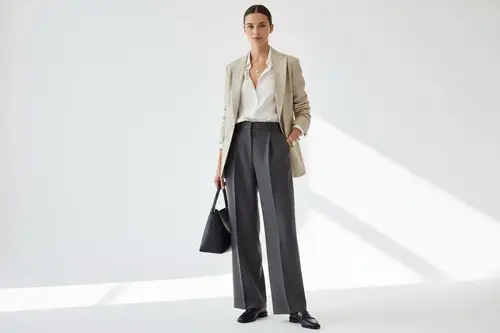
A practical quiet luxury workwear capsule can begin with 12 core pieces. The inventory below assumes a temperate climate and an office that accepts business-casual clothing. You can adjust the selection for formal corporate environments or warmer weather.
| Piece | Suggested color | Main role |
|---|---|---|
| 1. Tailored blazer | Navy or charcoal | Meetings, presentations, and polished layering |
| 2. Straight-leg trousers | Charcoal | Formal and business-casual outfits |
| 3. Wide-leg trousers | Black or taupe | Relaxed, contemporary tailoring |
| 4. White button-down shirt | White or ivory | A reliable base layer |
| 5. Fine-knit sweater | Cream or camel | Soft, refined layering |
| 6. Silk or satin-finish blouse | Ivory or muted blue | Client meetings and dressier days |
| 7. Fine-knit cardigan | Navy or beige | Flexible office layering |
| 8. Structured midi skirt | Charcoal or black | An alternative to trousers |
| 9. Dark, clean-cut jeans | Dark indigo | Casual workplaces that permit denim |
| 10. Leather loafers or refined flats | Black or dark brown | Everyday office footwear |
| 11. Low-heeled pumps or ankle boots | Black or brown | Formal meetings and colder days |
| 12. Structured work bag | Black, brown, or taupe | Practical storage with a polished finish |
You don’t need to buy all 12 pieces at once. Start with the garments that fit your existing wardrobe and workplace, then fill the gaps that prevent you from making complete outfits.
Choose the right blazer and trousers
The blazer is often the most useful piece in a professional capsule because it can make a simple shirt-and-trouser combination feel more deliberate. Look for a shoulder fit that allows comfortable movement, sleeves that sit at a suitable length, and a shape that works both open and buttoned.
Straight-leg trousers offer a dependable base for corporate outfits. Wide-leg trousers provide a softer silhouette and pair well with fitted knitwear or tucked-in shirts. Both styles benefit from a hem that works with your usual office shoes.
If tailoring is needed, consider the cost of alterations before buying. A moderately priced pair of trousers with a suitable rise and well-adjusted hem may be a better purchase than an expensive pair that never fits comfortably.
Select tops that work across the week
A white button-down shirt, a fine-knit sweater, and a dressier blouse cover several common work situations. Wear the shirt beneath a blazer, pair the sweater with trousers, or style the blouse with a midi skirt for a client-facing day.
A cardigan adds another layer for air-conditioned offices and transitional weather. Choose a knit that sits comfortably under your blazer without bunching at the arms or shoulders.
Fabric care matters here. Check the care label before purchasing silk, wool, or delicate knits. A garment that requires cleaning or maintenance you cannot reasonably manage may receive less wear than a simpler alternative.
Finish the capsule with shoes and a bag
Loafers and refined flats are practical choices for walking between meetings or commuting. Low-heeled pumps and ankle boots add options for formal settings and cooler months.
Choose footwear that fits comfortably and works with your trouser lengths. A shoe that looks elegant in a photograph may be unsuitable for a long day on your feet.
For your work bag, look for useful compartments, secure closures, comfortable handles or straps, and enough space for the items you actually carry. A clean silhouette and a well-maintained finish can complement an understated outfit without a conspicuous logo.
The Best Colors and Fabrics for Quiet Luxury Workwear
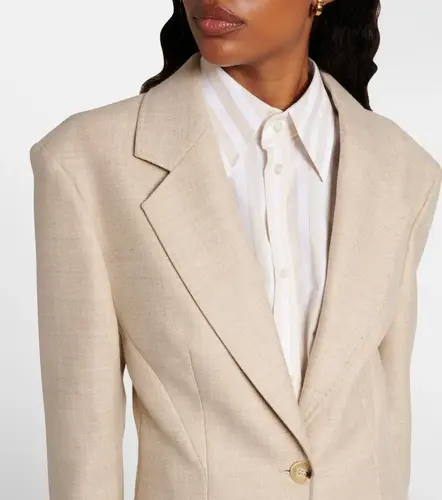
A quiet luxury office wardrobe usually works best with a small group of compatible colors. Navy, charcoal, black, ivory, cream, camel, and taupe provide a foundation for mixing garments across the week. Muted blue, burgundy, olive, or chocolate brown can add variation without making the wardrobe difficult to coordinate.
Build a three-color foundation
Choose one dark neutral, one light neutral, and one supporting color. For example, navy, ivory, and camel create a warm, professional palette. Charcoal, white, and burgundy offer a more formal appearance.
You can introduce a fourth color when it suits your personal style. The aim is to make your garments compatible, rather than follow a rigid color rule.
| Color combination | Overall effect | Useful pieces |
|---|---|---|
| Navy and ivory | Classic and professional | Blazer, shirt, trousers |
| Charcoal and white | Formal and clean | Suit separates, button-down shirt |
| Camel and cream | Soft and understated | Knitwear, trousers, coat |
| Black and taupe | Contemporary and versatile | Trousers, blouse, bag |
| Chocolate brown and pale blue | Subtle color contrast | Knitwear, shirt, accessories |
Understand fabric composition before buying
Natural fibers such as wool, cotton, linen, and silk have different properties, and the best choice depends on the garment and how you plan to wear it. Fabric composition alone cannot establish whether a piece is well made.
- Wool and merino wool: Useful for tailored garments and knitwear, depending on the weave and weight. Check the care requirements and how the garment feels against your skin.
- Cotton: A practical option for shirts and some trousers. Fabric weight, weave, and finishing affect opacity, structure, and how easily the garment wrinkles.
- Linen: Well suited to warm weather because of its lightweight construction. Natural creasing is part of its appearance, so consider whether that suits your office.
- Silk: Can add a fluid drape to blouses and other dressier pieces. Check care instructions and consider whether the garment requires special handling.
- Blended fabrics: Can combine different characteristics, such as stretch, wrinkle resistance, or easier care. Evaluate the actual garment rather than assuming a blend is inferior.
Read the fiber-content and care labels before purchasing. The Federal Trade Commission’s apparel labeling guidance explains what consumers can look for when checking clothing labels.
Look closely at construction and fit
Inspect seams, hems, buttons, closures, and the way a garment hangs. For a blazer, check whether the shoulders sit properly and whether the front closes without pulling. For trousers, check the rise, waistband, pocket placement, and fabric opacity.
A quality purchase should suit your real working day. If you spend hours sitting, bending, commuting, or walking, test the range of movement in the fitting room where possible.
15 Quiet Luxury Office Outfits to Copy
The following outfit formulas use the capsule pieces above. Adapt each combination to your office dress code, preferred fit, and local climate.
Corporate and client-facing outfits
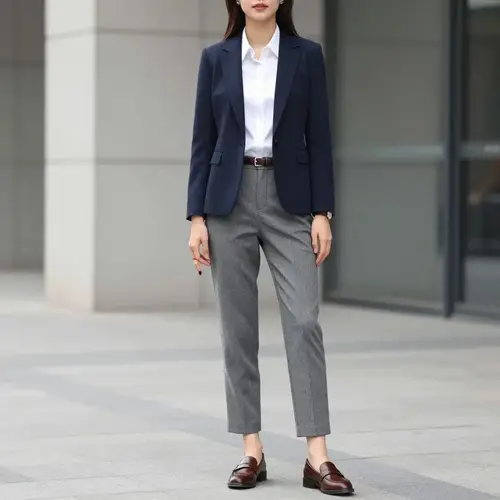
1. The navy blazer and tailored trouser combination
Pair a navy blazer with charcoal straight-leg trousers, a white button-down shirt, and black loafers. This is a dependable option for presentations, client meetings, and offices with a formal dress code.
Keep accessories simple, and check that the shirt collar and blazer lapels sit neatly together.
2. The monochrome charcoal outfit
Wear charcoal trousers with a matching or closely coordinated blazer and a white or pale grey top. Similar tones create a cohesive look while the lighter shirt introduces contrast.
This combination works well when you want a formal outfit that doesn’t rely on decorative details.
3. The ivory blouse and black midi skirt
Combine an ivory blouse with a black midi skirt and low-heeled pumps. A neatly tucked blouse gives the outfit structure, while a skirt with comfortable movement makes it practical for a day of meetings.
Check the skirt’s length and slit placement against your workplace dress code.
4. The navy suit with a fine-knit top
Style a navy blazer and matching trousers with a cream fine-knit sweater. This combination replaces the usual button-down shirt with a softer layer while maintaining a professional outline.
Choose a lightweight knit that sits comfortably beneath the jacket.
5. The polished presentation outfit
Wear charcoal trousers, an ivory blouse, a tailored blazer, and understated pumps. Add a structured work bag with enough space for a laptop, notebook, and meeting essentials.
This outfit works especially well when you need to move between a desk, a conference room, and external appointments.
Business-casual outfits
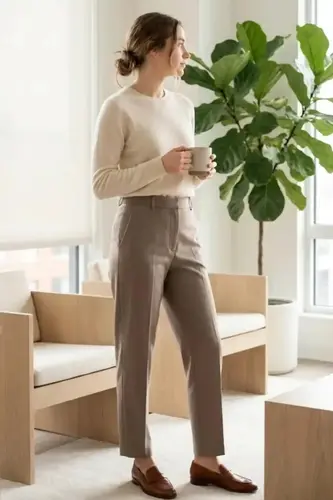
6. The cream knit and wide-leg trouser combination
Pair a cream sweater with black or taupe wide-leg trousers and loafers. Keep the sweater fitted enough to balance the trousers, or tuck in the front if the fabric allows.
This is an easy option for a regular office day.
7. The blue shirt and camel cardigan
Wear a pale blue shirt beneath a camel cardigan with charcoal trousers. The combination adds a subtle color variation while remaining easy to coordinate with neutral shoes and a work bag.
Roll the sleeves neatly if your workplace allows a more relaxed finish.
8. The taupe trousers and white shirt
Combine taupe trousers with a crisp white shirt and dark brown loafers. A brown belt, where appropriate, can connect the footwear to the rest of the outfit.
The contrast between the light shirt and deeper accessories gives the look definition.
9. The cardigan and midi skirt
Style a fine-knit cardigan with a structured midi skirt and refined flats. Button the cardigan as a top or layer it over a simple shirt, depending on the neckline and your preferred silhouette.
Choose fabrics that hang well together so the outfit feels balanced.
10. The dark-denim office look
For workplaces that permit jeans, wear dark, clean-cut denim with a blazer, white shirt, and loafers. Keep the denim free of conspicuous distressing and choose a cut that fits comfortably.
Check your company’s dress policy before wearing denim to meetings or client appointments.
Seasonal and creative-office outfits
11. The warm-weather linen outfit
Pair linen trousers with a cotton shirt or lightweight blouse and refined flats. Choose breathable layers and a color palette of cream, sand, and muted brown.
Linen creases naturally, so this outfit suits workplaces where a relaxed fabric texture is acceptable.
12. The cold-office layering formula
Wear tailored trousers, a fine-knit sweater, a cardigan, and a blazer when needed. Use thin layers that fit comfortably together rather than one bulky piece that restricts movement.
Keep an extra layer at your desk if office temperatures vary throughout the day.
13. The creative-office neutral outfit
Combine wide-leg trousers, a muted-blue blouse, loafers, and a structured bag. The restrained color adds personality while the tailoring keeps the outfit suitable for professional settings.
You can introduce a textured belt or understated earrings if accessories fit your personal style.
14. The polished Friday outfit
Pair dark denim with a cream sweater and a camel or navy blazer. Finish with loafers and a practical work bag.
This combination works for relaxed offices and casual Fridays where denim is permitted.
15. The understated all-black outfit
Wear black trousers with a black knit top and black flats or loafers. Introduce variation through texture, such as a smooth blouse with matte trousers or a fine knit beneath a structured jacket.
Check that the pieces are close enough in tone to feel coordinated, particularly when their fabrics reflect light differently.
How to repeat outfits without feeling repetitive
You can create variety by changing one or two components at a time. Keep the trousers and shoes, then switch the blouse and cardigan. Wear the same blazer with a skirt on one day and wide-leg trousers on another.
A useful planning method is to photograph your completed outfits and save them in a phone album. Before buying another item, check whether it creates a genuinely useful combination with pieces you already own.
How to Build a Quiet Luxury Workwear Capsule on a Budget
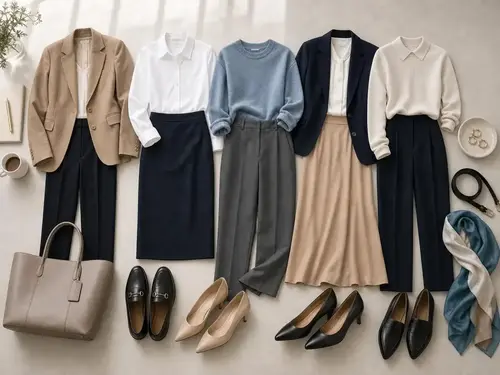
Building a quiet luxury capsule on a budget starts with a wardrobe audit. Identify the pieces you already wear, the garments that need repairs or alterations, and the gaps that prevent you from completing outfits.
Buy in order of usefulness
Start with a well-fitting pair of trousers, a versatile top, and a blazer if your office dress code calls for one. Add a second trouser option and another top before buying decorative accessories.
If you already own suitable shoes and a work bag, keep using them. Replacing functional items solely to create a matching aesthetic can consume money without improving the number of outfits available.
Secondhand stores and resale platforms can also be useful places to look for blazers, wool coats, knitwear, and bags. Inspect condition, fabric labels, seams, closures, and return policies before committing to a purchase.
Calculate cost per wear
Cost per wear estimates how much an item costs each time you use it.
Formula:
Cost per wear = purchase price ÷ estimated number of wears
For example, a hypothetical $120 blazer worn 60 times has a cost per wear of $2. A hypothetical $60 top worn 10 times has a cost per wear of $6.
These figures are illustrations, not current market prices or a promise of how long either item will last. The calculation is most useful when you compare items you expect to wear for similar purposes and account for maintenance costs.
Know when an expensive garment is worth considering
A higher-priced garment may be worth considering when it offers a noticeably better fit, a useful construction detail, a suitable fabric, or a style you will wear frequently. Price alone doesn’t guarantee better quality.
For a garment you plan to wear often, check how it moves, how it feels after several minutes of wear, and whether the care requirements fit your routine. For occasional pieces, a less expensive option may make more sense.
Use the same practical checklist for every purchase:
- Does the garment fit comfortably?
- Can you combine it with at least three pieces you own?
- Does its care label suit your schedule?
- Does the price fit your budget?
- Would you still choose it if the label were less recognizable?
A considered purchase should earn its place in your wardrobe through actual use.
Common Workwear Capsule Mistakes
Buying every item in the same shade. A wardrobe of entirely black or beige clothing can become restrictive. Introduce a small range of compatible neutrals and one or two supporting colors.
Choosing appearance over comfort. Shoes that hurt or trousers that restrict movement are unlikely to become reliable office staples. Try garments in realistic working positions before purchasing when possible.
Assuming natural fibers are always superior. Wool, cotton, linen, silk, and synthetic blends all have different characteristics. Suitability depends on the fabric construction, garment design, climate, and care requirements.
Buying a complete capsule in one shopping trip. Start with existing clothes and add pieces as real gaps become clear. A slower approach gives you time to learn which combinations suit your routine.
Ignoring workplace expectations. A creative office may welcome dark denim and relaxed tailoring, while a client-facing corporate role may require a suit or more formal footwear. Build the capsule around your actual dress code.
Overlooking alterations and maintenance. A good hem or a repaired button can make an existing garment more useful. Check care instructions and account for upkeep when comparing purchases.
Key Takeaways
- Quiet luxury capsule workwear uses coordinated professional clothing to create multiple office outfits.
- A 12-piece starter wardrobe can provide a practical foundation for many business-casual settings.
- Navy, charcoal, ivory, camel, and taupe make useful starting colors for a versatile work wardrobe.
- Fit, construction, comfort, and garment care matter when evaluating workwear quality.
- Fifteen outfit formulas can be built by combining core garments in different ways.
- A wardrobe audit helps you avoid buying duplicates and identify genuine gaps.
- Cost per wear offers a useful comparison when paired with realistic estimates of use and maintenance.
- Designer labels are optional; choose pieces that fit your workplace, budget, and everyday routine.
Quiet luxury capsule workwear is most useful when it reflects the way you actually work. Build around garments you enjoy wearing, keep the color palette practical, and add new pieces only when they create more useful combinations.
Suggested Reads: Old Money Winter Capsule Wardrobe: 15 Pieces
Frequently Asked Questions
1. What pieces belong in a quiet luxury workwear capsule?
Start with a tailored blazer, two pairs of trousers, a white shirt, a fine-knit sweater, a blouse, a cardigan, a midi skirt, dark denim where permitted, two shoe options, and a structured work bag. Adjust the selection for your dress code, climate, and existing wardrobe.
2. How many clothes do you need for a work capsule wardrobe?
A 12-piece starter capsule can provide a useful foundation when the garments coordinate well. You may need fewer pieces if you wear a uniform or more if your work requires formal suits, seasonal clothing, or specialized footwear. The number matters less than how well the items combine.
3. How do you dress in quiet luxury style for the office?
Choose clothing with a comfortable fit, clean lines, coordinated colors, and restrained details. Combine tailored trousers with a shirt or fine knit, then finish with suitable shoes and a practical bag. Good maintenance and appropriate proportions help create a polished appearance at different price points.
4. What colors work best for a minimalist work wardrobe?
Navy, charcoal, black, ivory, cream, camel, and taupe are useful foundation colors because many of them work together. Add muted blue, olive, burgundy, or chocolate brown for variety. Choose shades that complement your existing clothes and suit the level of formality at your workplace.
5. Which fabrics should you look for in quality workwear?
Consider wool for suitable tailoring and knitwear, cotton for shirts, linen for warm-weather clothing, and silk for dressier blouses. Blended fabrics can also be practical. Examine fiber content, weave, stitching, drape, opacity, and care requirements instead of judging quality from the fiber name alone.
6. Can you create a quiet luxury work wardrobe on a budget?
Yes. Start with clothes you already own, buy versatile pieces to fill specific gaps, and consider secondhand garments or alterations. Prioritize items you will wear frequently. Compare expected cost per wear and maintenance needs rather than assuming an expensive garment will automatically provide better value.
7. Are designer clothes necessary for quiet luxury style?
Designer clothing is optional. A well-fitting blazer, clean shoes, coordinated trousers, and a cared-for shirt can create the desired look at a range of prices. Focus on fit, construction, fabric suitability, and versatility when deciding which items deserve a larger portion of your budget.
8. How can you adapt quiet luxury workwear to hot weather?
Choose lightweight trousers, breathable shirts, and linen or cotton pieces suited to your climate. Use lighter colors if you prefer them, and keep a thin cardigan or jacket available for air-conditioned rooms. Check fabric opacity and care requirements before buying lightweight garments.