

When people talk about luxury fashion houses, they’re usually talking about far more than expensive clothing. The strongest maisons have built recognizable design languages around history, craftsmanship, materials, creative direction, and a distinctive relationship with their customers.
From Chanel’s Parisian couture tradition to Louis Vuitton’s origins in travel trunks and Gucci’s Florentine leather heritage, each house has developed its own visual vocabulary.
If you’re trying to understand the world of luxury fashion, these names provide a useful starting point.
Table of Contents
What Are Luxury Fashion Houses?
Luxury fashion houses are established fashion brands known for high-end clothing, accessories, leather goods, footwear, jewelry, or couture. Many have histories stretching back decades or more than a century, with recognizable signatures that remain connected to their origins.
The term fashion house can describe a company with several product categories, a couture atelier, ready-to-wear collections, accessories, fragrances, or a combination of these.
A house’s identity can come from many places: a founder, a signature material, a particular silhouette, an iconic logo, a historic workshop, or a long-standing relationship with specialist artisans.
What separates a luxury fashion house from an ordinary fashion brand?
A luxury fashion house generally builds its identity around a combination of heritage, craftsmanship, design codes, controlled distribution, premium materials, and brand history.
The exact mix varies considerably. Some houses are strongly associated with haute couture, while others have their deepest roots in leather goods, luggage, shoes, or accessories.
The Most Recognized Luxury Fashion Houses
There isn’t one official worldwide ranking of luxury fashion houses. Different publications, consumers, and industry groups use different criteria.
The following names are among the most recognizable houses in contemporary luxury fashion.
| Fashion House | Country / Origin | Known For | Historic Foundation |
|---|---|---|---|
| Chanel | France | Couture, tweed, handbags, fragrance | Paris, 1910s |
| Louis Vuitton | France | Travel goods, leather, handbags | Paris, 1854 |
| Dior | France | Couture, dresses, accessories | Paris, 1946 |
| Gucci | Italy | Leather goods, shoes, fashion | Florence, 1921 |
| Hermès | France | Leather goods, silk, equestrian heritage | Paris, 1837 |
| Prada | Italy | Ready-to-wear, leather goods, accessories | Milan, 1913 |
| Saint Laurent | France | Ready-to-wear, tailoring, leather goods | Paris, 1961 |
| Valentino | Italy | Couture, eveningwear, accessories | Rome, 1960 |
These dates describe the foundations of the respective houses and their early businesses; the modern companies have evolved considerably since then.
Chanel: Parisian Couture and Distinctive Design Codes
Chanel remains closely associated with Gabrielle Chanel’s influence on 20th-century fashion.
Chanel opened its couture house in 1915. The house says its Haute Couture remains centered at 31 Rue Cambon in Paris, where its ateliers continue to create made-to-measure pieces.
The Chanel visual language includes tweed, quilted leather, chain details, two-tone shoes, camellias, pearls, and the interlocking CC motif.
Its couture work also demonstrates how much labor can sit behind a single garment. Chanel says some Haute Couture pieces can require several hundred hours of work depending on their complexity.
The house’s Métiers d’art network includes specialist workshops working in embroidery, millinery, jewelry, featherwork, floral work, and shoemaking.
For someone building a luxury wardrobe, Chanel’s appeal often comes from the consistency of these recognizable design codes.
Louis Vuitton: From Travel Trunks to Global Fashion
Louis Vuitton has one of the clearest examples of a luxury house expanding from a specialist craft into a much broader fashion business.
Louis Vuitton established his first store in Paris in 1854, after years of working as a trunk maker and packer. The house later developed its Asnières workshop, which remains associated with its leather and special-order craftsmanship.
The brand’s early expertise was travel.
That history still appears in its modern products through trunks, luggage, leather goods, canvas patterns, and travel-inspired designs.
The famous Monogram canvas was introduced in the late 19th century after Georges Vuitton sought a distinctive pattern for the house.
Today, Louis Vuitton spans fashion, leather goods, accessories, shoes, watches, jewelry, fragrances, and travel-related products.
Its history also explains why the house has such a strong connection between luxury and travel.
Dior: Couture Built Around Silhouette
Dior opened its couture house at 30 Avenue Montaigne in Paris in 1946, with Christian Dior’s first collection following in 1947.
That debut collection introduced silhouettes that became associated with the period’s dramatic change in women’s fashion. Dior describes the collection through the Corolle and 8 silhouettes and the later association with the term “New Look.”
Dior’s identity has continued to change under different creative directors while retaining recurring house codes.
Couture remains an important part of that story. The house describes its Paris ateliers as places where cutting, draping, embroidery, and repeated fittings bring couture pieces to life.
Dior also provides an interesting example of how a fashion house can maintain a Parisian identity while manufacturing different product categories across specialist locations.
The company states that its leather goods are made in Europe, its shoes and ready-to-wear are manufactured in France and Italy, and its watches are made in Switzerland.
Gucci: Florentine Roots and Italian Leather Heritage
Gucci was founded in Florence in 1921 by Guccio Gucci.
Before opening his own shop, Guccio Gucci worked at London’s Savoy hotel. His experience observing wealthy travelers influenced the direction of his later luggage business.
That origin helps explain Gucci’s long relationship with luggage, leather goods, equestrian references, shoes, and travel accessories.
Over more than a century, Gucci expanded from a Florentine luggage business into a major international fashion house.
Its history remains strongly tied to Florence and Italian craftsmanship, while its modern collections cover clothing, handbags, footwear, accessories, jewelry, and other categories.
Hermès: Leather Craft and Equestrian Heritage
Hermès began in Paris in 1837 as a harness workshop founded by Thierry Hermès.
That origin matters because leather craftsmanship remains central to the house’s identity.
Hermès is associated with handbags, saddlery, silk scarves, belts, shoes, jewelry, watches, home products, and ready-to-wear. Its famous silk scarves and leather bags have become recognizable symbols of the house.
The Birkin and Kelly are among the most recognizable luxury handbags in the world, while the house’s equestrian background continues to influence its product vocabulary.
Hermès demonstrates how a specialized craft can become the foundation for a much broader luxury business without losing its original association with leatherwork.
Prada: Minimalism, Materials, and Modern Italian Fashion
Prada was founded in Milan in 1913 as a leather goods business.
The house became particularly influential for its approach to modern fashion, where restrained silhouettes, unusual materials, accessories, and a sometimes deliberately unconventional aesthetic have played major roles.
Prada is useful to study if you’re interested in the difference between classic luxury and contemporary luxury design.
Its pieces can look relatively simple at first glance, yet the material, proportion, construction, or styling may carry much of the visual impact.
That approach has helped make Prada one of the most recognizable Italian fashion names internationally.
Saint Laurent: Tailoring, Eveningwear, and Parisian Attitude
Saint Laurent was founded in Paris in 1961 by Yves Saint Laurent and Pierre Bergé.
The house became particularly influential for bringing elements traditionally associated with menswear into women’s wardrobes.
Sharp tailoring, tuxedo-inspired dressing, leather, eveningwear, and a strong black-and-white visual language remain important references when people discuss the house.
Saint Laurent also illustrates an important point about luxury fashion: a house can become famous because of an attitude as much as a particular product.
Valentino: Italian Couture and Evening Dressing
Valentino was founded in Rome in 1960 by Valentino Garavani.
The house became closely associated with couture, dramatic eveningwear, elaborate gowns, and refined Italian fashion.
The name Valentino is also strongly connected to the color commonly called Valentino red, although the house’s identity extends far beyond one shade.
Its couture heritage gives the brand a distinctive place among Italian luxury houses, particularly for formal dressing and occasionwear.
Why Heritage Matters in Luxury Fashion
Heritage gives a fashion house a collection of references that can be revisited season after season.
A historic trunk, a particular stitching technique, a famous silhouette, an archive print, or a signature fabric can become part of a brand’s continuing design vocabulary.
Louis Vuitton’s Asnières workshop is one example. The house has maintained the site since the 19th century, and it continues to associate the workshop with specialist craftsmanship and special orders.
Chanel provides another example through its specialist Métiers d’art workshops, where techniques such as embroidery, featherwork, floral work, millinery, jewelry, and shoemaking are maintained and passed between generations.
Heritage therefore has a practical role.
It gives designers an archive to work from.
Haute Couture vs. Luxury Ready-to-Wear
These terms are often used interchangeably in casual fashion discussions, but they describe different things.
| Feature | Haute Couture | Luxury Ready-to-Wear |
|---|---|---|
| Production | Highly specialized | Larger production runs |
| Fit | Made for individual clients | Standardized sizes |
| Craft labor | Often extremely intensive | Varies by garment |
| Availability | Very limited | Wider availability |
| Price | Generally extremely high | Wide range |
| Presentation | Couture shows and private fittings | Seasonal collections and retail |
| Customization | Very high | More limited |
Haute Couture involves garments created around individual clients and specific couture techniques.
Chanel, for example, describes its Haute Couture pieces as made according to individual measurements, with clients involved in a process that can take six to nine months.
Ready-to-wear follows a different production model.
A luxury ready-to-wear jacket may still involve excellent materials and specialist construction, but it is designed and produced in standardized sizes for retail.
What Makes a Luxury Fashion House Valuable to Collectors?
Several factors can affect how collectors view a fashion piece.
Brand history
A piece connected to a recognizable period in a house’s history can carry additional interest.
Design recognition
Some products are immediately associated with their house. Think of a Chanel quilted handbag, a Louis Vuitton Monogram canvas piece, or a Hermès silk scarf.
Craftsmanship
Construction, stitching, leather selection, hardware, lining, embroidery, and finishing can all affect how a piece feels and ages.
Condition
For vintage fashion, condition matters enormously.
A rare bag with heavy damage can be less desirable than a slightly less rare example in excellent condition.
Provenance
Original receipts, packaging, authentication records, and documented ownership history can matter for certain collectible pieces.
Scarcity
Limited production, discontinued designs, special collections, and unusual vintage examples can attract collector interest.
How to Choose Between Luxury Fashion Houses
Choosing a house usually comes down to your wardrobe, personal taste, and the type of item you’re buying.
Start with the category.
If you’re interested in handbags, compare leather, construction, size, hardware, interior organization, and how the design fits your everyday wardrobe.
For clothing, focus on silhouette, fabric, construction, tailoring, and whether the piece works with what you already own.
For shoes, pay close attention to fit and construction. A famous name won’t compensate for uncomfortable footwear sitting unworn in your closet.
For vintage pieces, research the specific model and production period rather than judging the item only by the current reputation of the house.
Luxury Fashion Houses and the Value of Craftsmanship
Craftsmanship remains one of the clearest links between historic fashion houses and their modern identities.
Louis Vuitton describes its savoir-faire as expertise passed from generation to generation and maintains specialist craft training within the company.
Chanel’s couture ateliers provide another example, with specialized teams working on tailoring, soft fabrics, braiding, embroidery, and other techniques.
Dior also maintains specialist production relationships and workshops across different categories and countries, reflecting the fact that luxury manufacturing often depends on highly specific regional skills.
For shoppers, this means the label tells only part of the story.
The material, construction, production location, finishing, and design history are worth examining too.
Common Mistakes When Buying Luxury Fashion
Buying the logo instead of the item
A recognizable logo can be appealing, but the item still needs to suit your wardrobe.
Ignoring construction
Look at seams, stitching, hardware, lining, closures, and material quality.
Buying a trend without considering your style
A dramatic seasonal piece may look fantastic on a runway and rarely leave your closet.
Forgetting maintenance
Leather bags, fine shoes, silk, and couture-inspired garments can require specific care.
Assuming expensive means indestructible
Luxury materials can still scratch, stain, crease, fade, or deteriorate when stored poorly.
Buying vintage without authentication research
Vintage luxury has a significant resale and collector market, which also means counterfeit products exist. Learn the specific authentication details for the model you’re considering.
Key Takeaways
- Luxury fashion houses combine design, heritage, craftsmanship, and brand identity.
- Chanel has a particularly strong connection to Parisian Haute Couture and specialist ateliers.
- Louis Vuitton’s origins lie in 19th-century travel trunks and specialist leather craftsmanship.
- Dior built its reputation around couture and distinctive silhouettes beginning with Christian Dior’s 1947 debut collection.
- Gucci grew from a Florentine luggage business founded in 1921.
- Hermès remains closely associated with its leather and equestrian roots.
- Haute Couture and luxury ready-to-wear follow different production models.
- When buying luxury fashion, examine construction, materials, fit, condition, provenance, and long-term use, not only the name on the label.
Frequently Asked Questions About Luxury Fashion Houses
What is the most famous luxury fashion house?
There is no single official answer. Chanel, Louis Vuitton, Dior, Gucci, Hermès, Prada, and other established houses have substantial international recognition, with different strengths in couture, leather goods, accessories, ready-to-wear, or other categories.
What is the oldest luxury fashion house?
The answer depends on how “fashion house” is defined. Hermès traces its origins to 1837, while Louis Vuitton was founded in 1854. Their original businesses were closely associated with specialist leather and travel-related craftsmanship.
What is the difference between a fashion brand and a fashion house?
A fashion house generally refers to an established luxury or designer label with a developed creative identity, history, design codes, and often multiple product categories. The terms overlap, however, and aren’t used according to one universal legal definition.
Is Chanel a luxury fashion house?
Yes. Chanel is a French luxury fashion house with a major couture heritage dating to Gabrielle Chanel’s couture house in 1915. Its modern business includes fashion, handbags, accessories, beauty, watches, and jewelry.
Is Louis Vuitton a fashion house?
Yes. Louis Vuitton began as a specialist trunk and travel-goods business in Paris in 1854 and later expanded into fashion, leather goods, accessories, watches, jewelry, fragrances, and other categories.
Why are luxury fashion houses so expensive?
Pricing can reflect materials, skilled labor, design development, limited production, retail operations, brand positioning, distribution, marketing, and other business costs. The proportion represented by each factor varies by product and house.
Are luxury fashion houses worth the money?
That depends on the individual purchase. Consider how often you’ll use the item, its construction, maintenance requirements, design longevity, resale market, and how well it fits your wardrobe.
Which luxury fashion houses make handbags?
Many do. Chanel, Louis Vuitton, Hermès, Gucci, Dior, Prada, Saint Laurent, Valentino, and numerous other houses produce handbags, with each using different designs, materials, construction methods, and price structures.
Publishing Asset Package
SEO Meta Title: Luxury Fashion Houses: Top Names & Heritage
Meta Description: Explore luxury fashion houses, from Chanel and Dior to Louis Vuitton and Gucci, and discover the heritage, craftsmanship, and style behind them.
URL Slug: luxury-fashion-houses
Amazon Affiliate Disclosure:
As an Amazon Associate, we may earn from qualifying purchases made through links on this page. This comes at no additional cost to you.
Featured Image Prompt
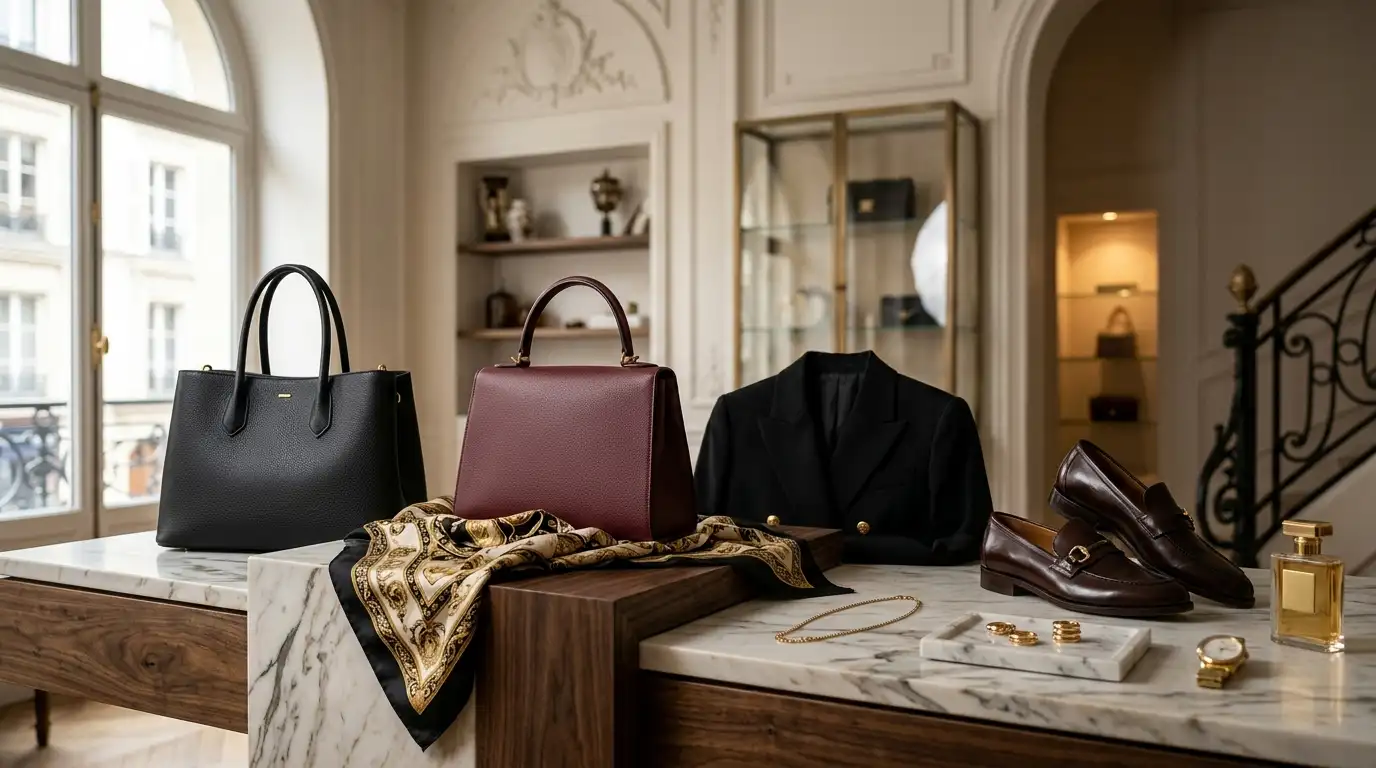
Photorealistic editorial fashion still life featuring a refined selection of luxury fashion-inspired elements: structured leather handbags, elegant silk scarf, tailored black jacket, premium leather shoes, gold-tone accessories, beautifully arranged on a sophisticated marble-and-dark-wood setting inside a Paris-inspired luxury boutique. Subtle architectural details, soft natural window light, rich neutral tones, sophisticated European fashion magazine aesthetic, realistic leather and textile textures, shallow depth of field, 35mm lens, f/2.8, high-end editorial photography, cinematic natural lighting, 8K detail, 16:9 aspect ratio, no people, no visible brand logos, no text, no watermark.
Featured Image Alt Text: Luxury fashion houses featuring elegant handbags, tailoring, and accessories
Featured Image Title: Luxury Fashion Houses and Their Heritage
Internal Linking Opportunities
- Luxury Handbags: How to Choose a Timeless Style
- How to Build a Luxury Capsule Wardrobe
- Classic Fashion Pieces Worth Investing In
- Luxury Accessories That Transform an Outfit
- How to Care for Leather Handbags and Shoes