
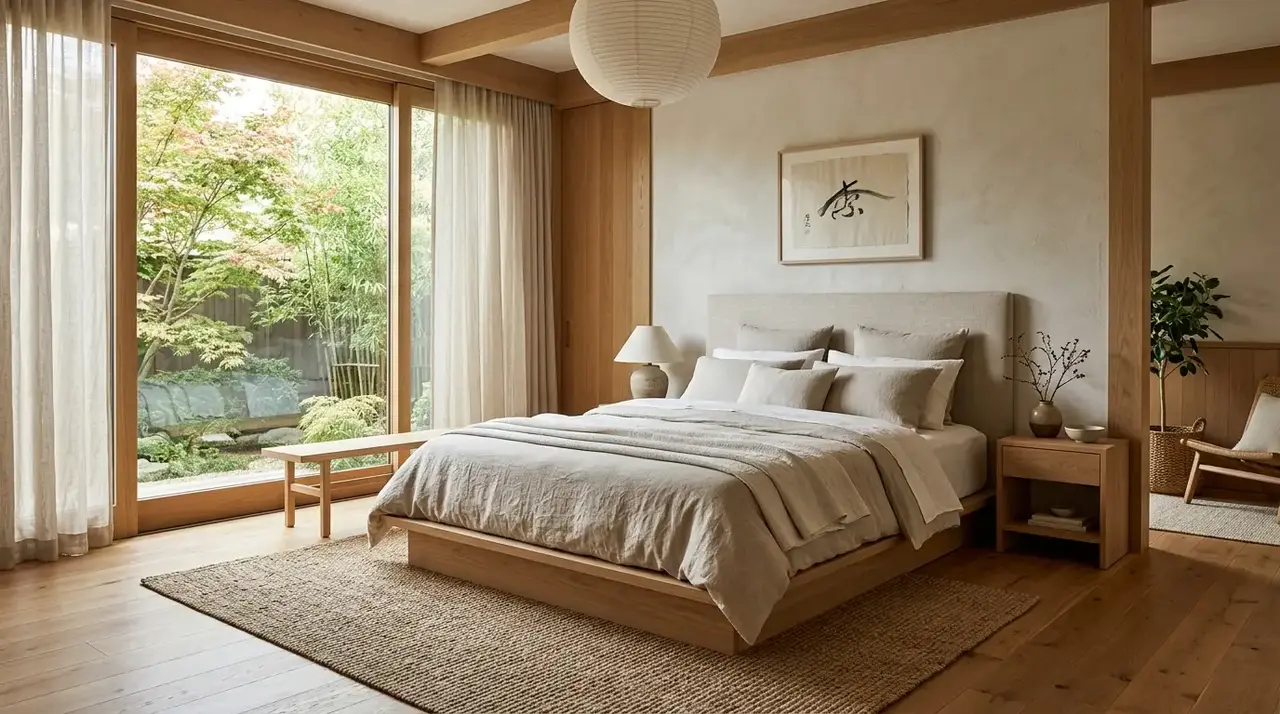

A bedroom has one job the living room doesn’t: it has to help you sleep. That’s what makes Japandi such a natural fit for this room — the low platform beds, the muted palette, and the deliberate lack of visual noise were built for rest, not for showing off.
A luxury Japandi bedroom is built around a low platform bed in solid wood, natural fiber bedding in undyed tones, dimmable warm lighting, and a wabi-sabi approach to imperfection — visible wood grain, hand-finished textiles, and asymmetry — instead of the matched, high-gloss furniture sets common to hotel-style bedrooms.
Table of Contents
The Platform Bed Is Non-Negotiable
A solid oak or walnut platform bed, low to the ground with a simple slatted or upholstered headboard, is the single defining piece of a Japandi bedroom. Skip the tall, tufted, footboard-and-headboard sets — the low horizontal line is what makes the room feel grounded and calm.
Bedding: Natural Fiber, Undyed Where Possible
Washed linen sheets in oatmeal, stone, or soft clay tones outperform crisp white cotton for this style — linen wrinkles in a way that reads as relaxed rather than unkempt. A wool or weighted blanket at the foot of the bed adds texture without pattern.
What to Avoid in Bedding
Printed patterns, high-thread-count sateen with a shine to it, and matching pillow-sham sets all pull a bedroom toward hotel-generic rather than Japandi. Mixed, slightly imperfect textures do more for the look than a coordinated set.
Lighting: Warm, Layered, and Dimmable
A pair of asymmetric bedside lamps — not identical twins — in paper, linen, or ceramic shades keeps the light warm and diffuse. If the budget allows, wall-mounted swing-arm sconces in blackened steel free up nightstand space entirely.
Storage That Disappears
Handleless wardrobe fronts in ash or walnut veneer, or woven rattan wardrobe doors, keep storage from becoming a visual focal point. Open shelving should be reserved for a small number of curated objects, not daily clutter.
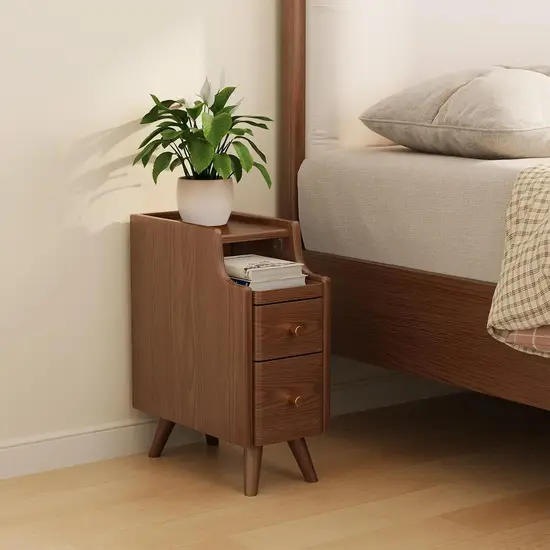
Wabi-Sabi Details That Make the Room Feel Considered
- A raw-edge wood nightstand with visible grain and knots, rather than a uniform veneer.
- An asymmetrical arrangement of two bedside lamps that don’t match.
- A single ceramic dish for jewelry or a watch, chosen for its handmade texture over its symmetry.
- A linen or wool bench at the foot of the bed, slightly worn-in rather than pristine.
Color Palette for a Japandi Bedroom
| Surface | Recommended Tone |
|---|---|
| Walls | Warm greige, soft clay, limewash white |
| Bed frame | Natural or lightly stained oak, walnut |
| Bedding | Oatmeal, stone, undyed linen |
| Rug | Wool flatweave in a muted neutral |
| Metal accents | Blackened steel, aged brass |
Where a Japandi Bedroom Can Add Real Softness
The risk with this style in a bedroom specifically is going too cold and monastic. In my experience, one plush textural element — a sheepskin throw, a boucle bench, a heavier wool rug underfoot — keeps the room from feeling like a showroom, without breaking the material palette.
Key Takeaways
- A low solid-wood platform bed is the defining piece of a Japandi bedroom.
- Linen bedding in undyed, muted tones outperforms crisp white cotton for this style.
- Use asymmetric, layered lighting rather than a single matched lamp pair.
- Handleless or rattan storage keeps the room visually quiet.
- One plush texture — sheepskin, boucle, heavy wool — prevents the room from feeling cold.
Suggested Reads
- Japandi Interior Design: The Complete Luxury Guide (2026)
- Japandi Living Room Ideas: 15 Luxury Designs That Balance Calm & Craft
- Japandi Kitchen Design: Minimalist Luxury for the Home Chef
- Japandi Bathroom Design: Spa-Like Serenity at Home
- Japandi Dining Room Ideas for a Warm, Refined Home
- What Is Japandi Style? Wabi-Sabi & Hygge Design Guide
Frequently Asked Questions
How low should a Japandi platform bed be?
Most Japandi platform beds sit noticeably lower than a standard Western bed frame, generally with the mattress top well below the height of a typical box-spring setup — low enough to visually ground the room.
Is white okay for Japandi bedroom walls?
A warm, slightly textured off-white (like limewash) works well; a stark, cool white reads closer to modern minimalism than Japandi.
Can I use a headboard in a Japandi bedroom?
Yes — a simple slatted wood or low upholstered linen headboard fits the style well. Avoid tall, tufted, or ornately shaped headboards.
What kind of curtains work best in a Japandi bedroom?
Unlined or lightly lined linen in a tone close to the wall color, sometimes layered with a simple blackout liner behind them for sleep quality without changing the visible texture.
Does a Japandi bedroom need a rug?
A low-pile wool or jute rug adds warmth underfoot and softens the room’s hard material surfaces, and is generally recommended even in rooms with warm wood flooring.