


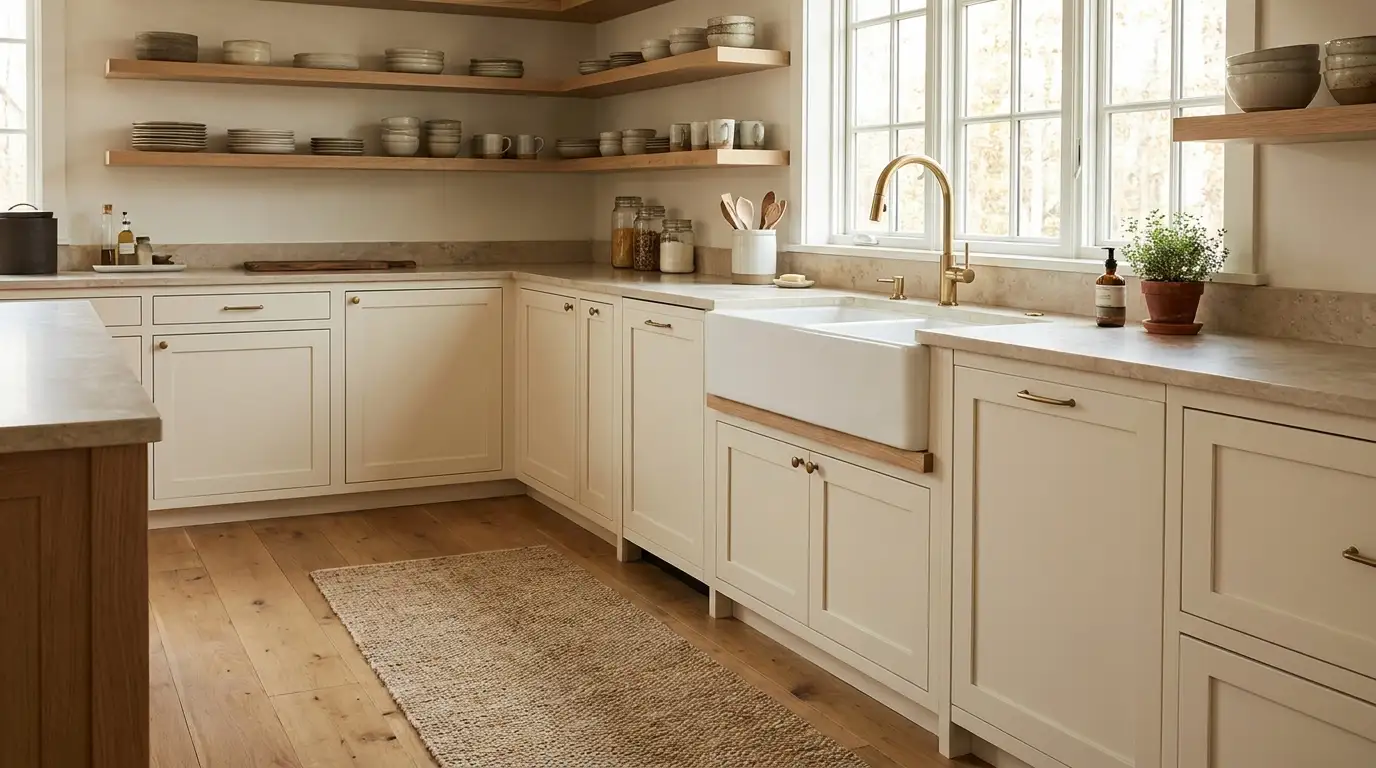
A double farmhouse sink combines the deep, practical design of a farmhouse sink with two separate basins for easier food preparation, washing, and cleanup. It can be an excellent choice for busy kitchens because you can soak dishes in one basin while rinsing produce or washing cookware in the other. But choosing the right size, material, configuration, and cabinet setup requires some planning.
Farmhouse sinks—also called apron-front sinks—are known for their exposed front panel and generous basin depth. A double-basin version adds flexibility without giving up the traditional or modern character that makes farmhouse sinks so popular.
If you’re considering one for a kitchen remodel or new installation, this guide explains the key options, benefits, drawbacks, installation requirements, and practical considerations before you buy.
Table of Contents
What Is a Double Farmhouse Sink?
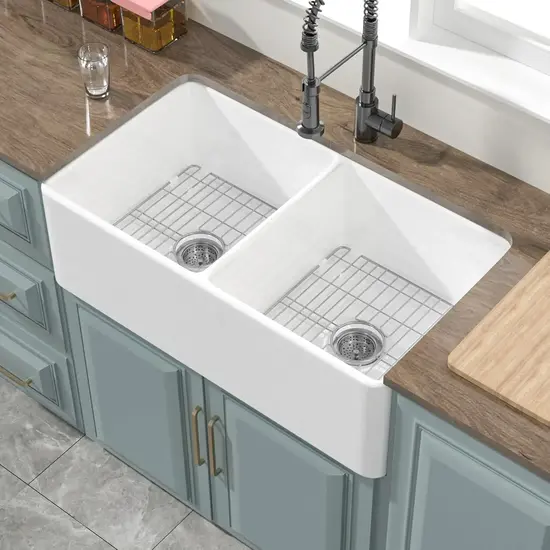
A double farmhouse sink is an apron-front kitchen sink divided into two separate basins. Unlike a traditional undermount or drop-in sink, the front of the sink remains visible after installation, creating the distinctive farmhouse appearance.
The two basins can be equal in size or divided into different proportions. Common configurations include:
- 50/50 split: Two similarly sized bowls
- 60/40 split: One larger basin and one smaller basin
- Low-divide designs: Two sections separated by a shorter divider
- Offset configurations: Basins with different shapes or dimensions
The best configuration depends on how you use your kitchen. A 50/50 sink provides balanced washing and rinsing areas, while a 60/40 sink gives you a larger basin for oversized cookware.
Why Choose a Double Farmhouse Sink?
The biggest advantage is flexibility. Two basins allow you to separate tasks instead of using one large open space for everything.
For example, you might use:
- One basin for washing dishes
- One basin for rinsing
- One side for soaking cookware
- One side for food preparation
- One side for dirty dishes while the other remains available
This makes a double farmhouse sink particularly useful in households where several kitchen tasks happen simultaneously.
The exposed apron front also creates a strong visual focal point. Depending on the material and style, a standard farmhouse sink can complement traditional, cottage, farmhouse, transitional, or contemporary kitchens.
Double vs. Single Farmhouse Sink
The decision between a single and double farmhouse sink often comes down to how you work in the kitchen.
| Feature | Double Farmhouse Sink | Single Farmhouse Sink |
|---|---|---|
| Separate washing areas | Excellent | Limited |
| Large cookware | Good to excellent | Excellent |
| Soaking and rinsing simultaneously | Excellent | Limited |
| Open basin space | Moderate | Excellent |
| Kitchen multitasking | Excellent | Good |
| Traditional farmhouse appearance | Excellent | Excellent |
| Cleaning flexibility | Excellent | Good |
A single farmhouse sink is often better if you frequently wash large baking sheets, roasting pans, stockpots, or oversized cookware.
A double farmhouse sink may be preferable if you value organization and frequently perform multiple tasks at once.
Which One Is Better?
Neither design is universally better.
Choose a double basin if you regularly separate washing, rinsing, soaking, or food-preparation tasks. Choose a single basin if large cookware and uninterrupted basin space are your highest priorities.
Popular Double Farmhouse Sink Materials
The material affects the sink’s appearance, durability, maintenance, and price. Several options are commonly considered for kitchen remodeling projects.
Fireclay
Fireclay is closely associated with classic farmhouse kitchen design. It has a smooth, substantial appearance and works particularly well with traditional cabinetry.
Advantages include:
- Classic farmhouse appearance
- Smooth surface
- Easy everyday cleaning
- Strong resistance to many common kitchen stains
- Available in popular neutral colors
However, fireclay sinks can be heavy, and installation requires appropriate cabinet support.
Stainless Steel
Stainless steel provides a more contemporary interpretation of the farmhouse sink.
Benefits include:
- Durable construction
- Modern appearance
- Resistance to corrosion
- Relatively easy maintenance
- Compatibility with many kitchen styles
A stainless steel double farmhouse sink can work especially well in transitional or modern kitchens.
Cast Iron
Enamel-coated cast iron offers a traditional appearance with a substantial feel.
It can provide:
- A classic finish
- Excellent visual appeal
- A durable enamel surface
- Multiple color choices
The major consideration is weight. Cast iron farmhouse sinks can be extremely heavy, so the cabinetry and support structure must be suitable.
Composite
Composite sinks can offer a contemporary alternative with a range of colors and finishes. Their appearance varies depending on the manufacturer and material composition.
They’re worth considering if you want something less traditional than white fireclay but still want a deep farmhouse-style basin.
Choosing the Right Double Farmhouse Sink Size
Sink dimensions should never be chosen based on appearance alone. Your cabinet size, countertop layout, plumbing configuration, and everyday kitchen habits all matter.
Before purchasing a sink, measure:
- The width of the sink cabinet
- The available depth
- The countertop opening
- Existing plumbing locations
- The clearance around the sink
- Door and drawer operation beneath the countertop
Remember that the listed sink dimensions don’t necessarily represent the exact size of the countertop cutout.
Always check the manufacturer’s installation specifications before cutting the countertop.
30-Inch vs. 33-Inch vs. 36-Inch Double Farmhouse Sink
These are among the sizes homeowners may encounter when shopping for a farmhouse sink.
30-Inch Double Farmhouse Sink
A 30-inch model can be useful when space is limited. It offers the benefits of two basins without requiring as much cabinet and countertop space as a larger sink.
The trade-off is that each basin may be relatively compact.
33-Inch Double Farmhouse Sink
A 33-inch sink provides a useful middle ground between compact and oversized designs. It can offer more practical basin space while remaining suitable for many standard kitchen layouts.
36-Inch Double Farmhouse Sink
A 36-inch sink can provide generous workspace and larger bowls. It’s attractive for spacious kitchens where cabinet width and countertop area aren’t major constraints.
However, larger sinks require more cabinet space and can become visually dominant in a smaller kitchen.
50/50 or 60/40 Double Farmhouse Sink?
The basin split is one of the most important design decisions.
50/50 Split
A 50/50 configuration provides two similarly sized bowls.
It’s a good choice if you:
- Wash and rinse frequently
- Like symmetrical designs
- Divide tasks evenly
- Want a balanced appearance
The disadvantage is that neither basin may be large enough for very large cookware.
60/40 Split
A 60/40 configuration provides one larger basin and one smaller basin.
This can be more versatile for households that wash large pots and pans while still wanting a separate rinsing area.
For many kitchens, a 60/40 arrangement provides a useful compromise between the spaciousness of a single bowl and the organization of a double bowl.
Low-Divide vs. Standard Divide
A low-divide sink has a shorter partition between the two bowls.
This design can make it easier to wash larger cookware because the divider doesn’t extend as high as it does in a conventional double-basin sink.
A standard divider provides clearer separation between the two work areas.
Consider a low divide if you want the flexibility of two basins without completely sacrificing access to a large washing area.
Pros and Cons of a Double Farmhouse Sink
Before making a purchase, consider both the benefits and limitations.
Pros
- Provides two separate work areas
- Excellent for washing and rinsing simultaneously
- Attractive focal point
- Deep basins can accommodate everyday cookware
- Works with many kitchen design styles
- Helps organize dishwashing tasks
- Available in multiple materials and configurations
Cons
- Takes up significant cabinet space
- Can be heavy depending on material
- Installation may be more complicated than a standard sink
- Dividers reduce uninterrupted basin space
- Large models can dominate smaller kitchens
- Some farmhouse designs require cabinet modifications
The right sink isn’t simply the most attractive model. It should match the way you actually use your kitchen.
Installation Considerations for a Double Farmhouse Sink
Farmhouse sinks are different from many conventional kitchen sinks because the front apron requires the cabinet to accommodate the sink’s exposed front.
Installation may involve modifying the sink cabinet and creating the correct countertop opening.
Important considerations include:
Cabinet Compatibility
The sink cabinet must be wide and deep enough for the selected model.
Don’t assume a sink will fit simply because its overall width appears compatible. Check the manufacturer’s minimum cabinet size.
Countertop Cutout
The countertop must be cut according to the manufacturer’s specifications.
The required opening can vary depending on whether the installation is flush, undermount, or another configuration.
Sink Support
Heavy materials such as fireclay and cast iron require adequate support.
A professional installer can determine how the sink should be supported and whether the existing cabinet requires reinforcement.
Plumbing
A double sink doesn’t necessarily require dramatically different plumbing, but the drain configuration and available space beneath the sink need to be considered.
If you’re replacing an existing sink, inspect the plumbing before finalizing your purchase.
How to Choose the Best Double Farmhouse Sink
Use this simple decision framework before buying.
1. Start With Your Cabinet
Measure the cabinet first. This prevents you from falling in love with a sink that cannot physically fit.
2. Consider Your Cookware
If you regularly clean oversized cookware, prioritize a large basin or low-divider configuration.
3. Choose Your Material
Select fireclay for a traditional farmhouse look, stainless steel for a modern aesthetic, or another material based on your maintenance and design preferences.
4. Decide on the Basin Split
Choose 50/50 for balanced tasks or 60/40 if you want one larger working basin.
5. Think About Maintenance
A beautiful sink still needs to fit your cleaning habits. Consider how easily the material shows water spots, food residue, scratches, or mineral deposits.
6. Check Installation Requirements
Verify cabinet dimensions, sink depth, countertop cutout requirements, faucet configuration, and support requirements before purchasing.
Common Mistakes to Avoid
Buying Before Measuring the Cabinet
This is one of the easiest mistakes to make. Always confirm the minimum cabinet size listed by the manufacturer.
Choosing Appearance Over Function
A large, dramatic farmhouse sink may look impressive but become frustrating if your kitchen doesn’t have enough room around it.
Forgetting Sink Depth
A deep basin can be useful, but an extremely deep sink may be uncomfortable depending on your height and countertop configuration.
Ignoring Weight
Heavy sinks need proper structural support. Don’t treat a heavy fireclay or cast-iron sink like a lightweight stainless steel model.
Choosing the Wrong Basin Configuration
Think about what you actually wash. If you frequently clean large roasting pans, a 50/50 split may be less useful than a 60/40 or low-divide configuration.
Skipping the Installation Specifications
The manufacturer’s specifications should guide cabinet preparation and countertop fabrication. Never rely solely on the product’s advertised overall dimensions.
How to Clean and Maintain a Double Farmhouse Sink
Daily maintenance is usually straightforward, but the correct approach depends on the sink material.
For routine cleaning:
- Remove food particles after use.
- Rinse both basins.
- Use a suitable non-abrasive cleaner.
- Wipe the sink dry when practical.
- Clean around the drain and corners regularly.
- Follow the manufacturer’s care instructions.
Avoid abrasive products or cleaning methods that aren’t recommended for the specific finish.
For white farmhouse sinks, promptly cleaning food, coffee, tea, or other staining substances can help keep the surface looking fresh.
Is a Double Farmhouse Sink Worth It?
For many households, a double farmhouse sink is worth considering because it combines useful functionality with a distinctive kitchen design statement.
It’s particularly appealing if you regularly wash dishes by hand, want separate washing and rinsing areas, or enjoy a traditional farmhouse aesthetic.
However, it may not be the ideal choice if your priority is washing very large cookware in one uninterrupted basin. In that situation, a single-basin farmhouse sink can provide greater flexibility.
The most important question isn’t simply, “Does a double farmhouse sink look good?” It’s “Does the basin configuration match the way I cook and clean?”
Double Farmhouse Sink: Quick Buying Checklist
Before ordering, make sure you’ve considered:
- Cabinet width
- Cabinet depth
- Sink dimensions
- Minimum cabinet size
- Basin configuration
- Sink depth
- Material
- Weight
- Drain position
- Faucet configuration
- Countertop compatibility
- Installation method
- Required cabinet modifications
- Sink support
- Cleaning requirements
- Your largest cookware
A few minutes spent checking these details can prevent expensive installation problems later.
Key Takeaways
- A double farmhouse sink combines an apron-front design with two separate basins.
- A 50/50 configuration provides balanced work areas.
- A 60/40 configuration provides one larger basin for bigger cookware.
- Low-divider designs can offer more usable space for large items.
- Fireclay, stainless steel, cast iron, and composite are potential material choices.
- Cabinet dimensions should be checked before purchasing.
- Heavy farmhouse sinks may require additional structural support.
- Countertop cutout specifications vary by sink and installation method.
- Choose the sink based on your actual cooking and cleaning habits.
- Always follow the manufacturer’s installation and care instructions.
Frequently Asked Questions
Are double farmhouse sinks practical?
Yes. A double farmhouse sink can be highly practical for households that frequently wash, rinse, soak, or prepare food at the same time. The two basins create separate work areas and can make kitchen cleanup more organized.
What is the best size for a double farmhouse sink?
The best size depends on your cabinet and kitchen layout. Smaller models can work in compact kitchens, while larger sinks provide more generous basin space. Always verify the manufacturer’s minimum cabinet requirements before purchasing.
Is a 50/50 or 60/40 farmhouse sink better?
A 50/50 sink is useful when you want two similarly sized work areas. A 60/40 configuration is often more versatile if you need one larger basin for pots, pans, and other cookware.
Are farmhouse sinks difficult to install?
They can require more planning than standard sinks because the cabinet and countertop must accommodate the exposed apron front. Heavy materials may also require additional structural support.
What material is best for a farmhouse sink?
There isn’t one universally best material. Fireclay is popular for classic farmhouse kitchens, stainless steel suits modern designs, and cast iron offers a traditional, substantial appearance. Your priorities should determine the choice.
Do double farmhouse sinks take up more cabinet space?
They can require a relatively wide sink cabinet, particularly larger models. Check the sink’s minimum cabinet requirement rather than relying only on its advertised width.
Are double farmhouse sinks better than single sinks?
It depends on your habits. Double sinks are better for separating tasks, while single sinks provide uninterrupted space for large cookware. Your washing and cooking style should determine the choice.
Can a farmhouse sink be installed in an existing kitchen?
Potentially, but the cabinet and countertop may require modification. Before purchasing, have the existing cabinet, countertop, plumbing, and available space evaluated.

