


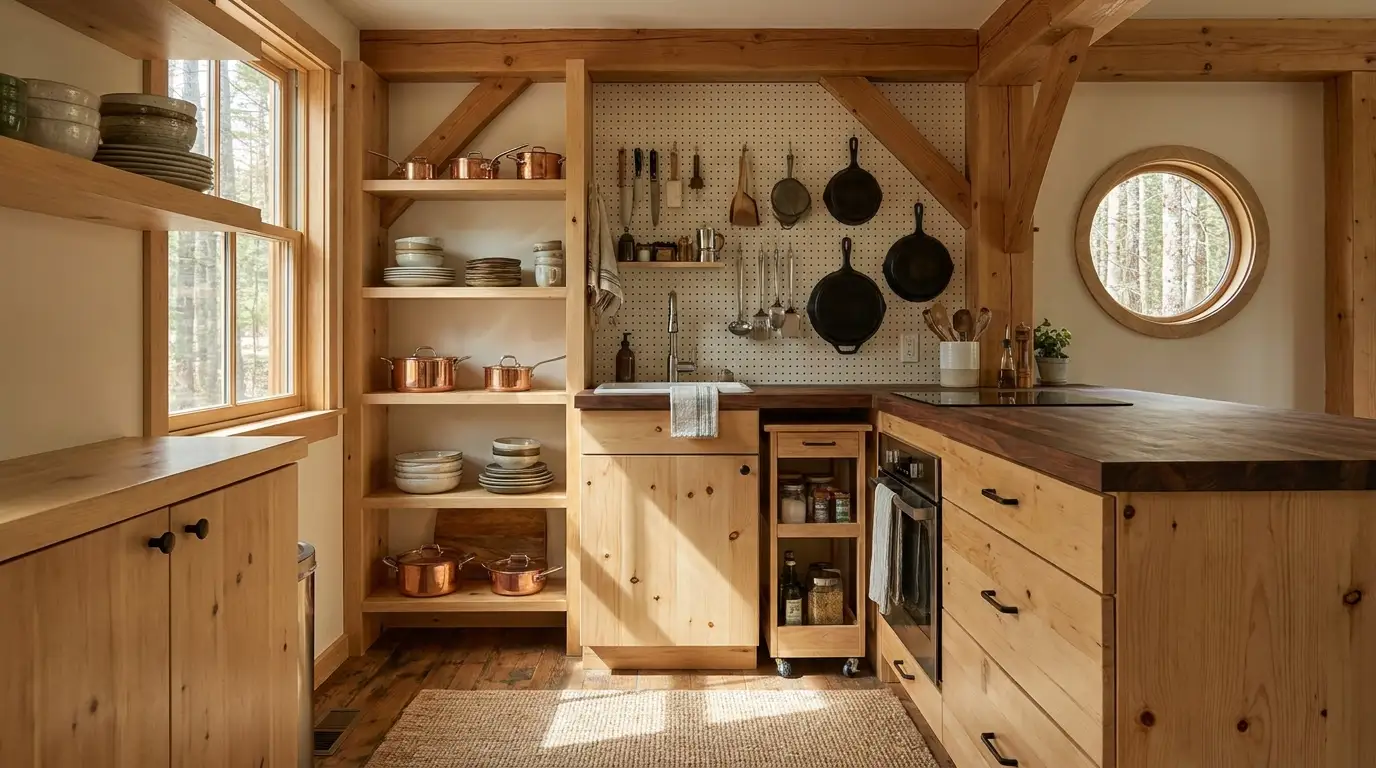
A tiny cabin kitchen can feel surprisingly spacious when every inch has a purpose. The best tiny kitchen cabin storage ideas don’t rely on adding more cabinets—they make better use of walls, corners, cabinet interiors, drawers, benches, stairs, and even overlooked spaces near the loft.
Whether you’re furnishing a weekend retreat, a rustic hunting cabin, an off-grid tiny home, or a compact vacation rental, smart storage can transform a cramped kitchen into an organized and functional space.
The key is to think in zones rather than square footage. Store frequently used items where they’re easiest to reach, move occasional-use cookware into less accessible areas, and use vertical space whenever possible.
Below are more than 25 practical cabin kitchen storage solutions, organized by the spaces you’re most likely to have available.
Table of Contents
Quick Answer: What Are the Best Tiny Kitchen Cabin Storage Ideas?
The best tiny kitchen cabin storage ideas include vertical wall storage, pegboards, open shelving, pull-out cabinet organizers, drawer dividers, under-sink baskets, rolling pantries, corner shelves, under-bench compartments, stair-tread drawers, and loft-adjacent storage.
For the biggest improvement on a small budget, start with hooks, baskets, magnetic organizers, shelf risers, and wall-mounted rails. If you’re renovating the kitchen, consider custom pull-outs, deep drawers, and built-in storage under seating or stairs.
The goal isn’t to maximize storage at any cost. It’s to make frequently used items easy to access while keeping countertops clear.
1. Use the Walls and Vertical Space
Tiny kitchens often have more unused vertical space than floor space. A wall that looks empty can become one of your most valuable storage areas.
1. Install a Pegboard on Cabin Beams
A pegboard is particularly useful in a rustic cabin because it combines organization with a workshop-inspired aesthetic.
Mount one against an exposed wall or cabin beam and use hooks to hold:
- Measuring cups
- Wooden spoons
- Scissors
- Small pans
- Kitchen towels
- Strainers
- Utensils
- Small baskets
The advantage is flexibility. You can move hooks and shelves as your storage needs change.
Pro tip: Leave some empty space between items. A pegboard works best when you can see everything immediately.
2. Add a Magnetic Knife Strip
A magnetic knife strip eliminates the need for a traditional knife block, which can take up valuable counter space.
It can also hold certain metal kitchen tools, such as:
- Measuring spoons
- Bottle openers
- Small metal utensils
- Kitchen shears
Install it somewhere convenient but safely away from children and high-traffic areas.
3. Install Open Shelving
Open shelves are one of the simplest ways to add storage without making a tiny kitchen feel boxed in.
Use them for attractive everyday items such as:
- Mugs
- Plates
- Bowls
- Jars
- Coffee supplies
- Cooking oils
- Spices
In a cabin, natural wood shelves can reinforce the rustic character of the room.
Keep the number of displayed items controlled. Too many objects can quickly make a small kitchen look cluttered.
4. Use the Space Above Cabinets
If your cabin has cabinets that don’t reach the ceiling, the area above them can hold items you don’t use every day.
Good candidates include:
- Large serving bowls
- Seasonal cookware
- Picnic supplies
- Extra paper products
- Decorative baskets
- Specialty appliances
Use matching baskets to hide visual clutter.
5. Add a Rail Under a Shelf
A simple rail mounted underneath a shelf can hold mugs, utensils, or small hanging baskets.
This is especially useful when you don’t have enough wall space for another shelf.
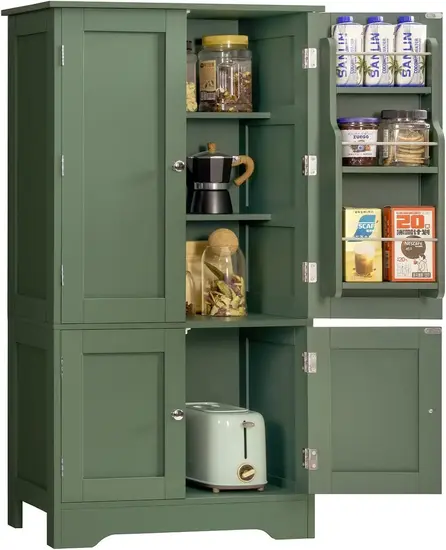
2. Make Cabinet Interiors Work Harder
Cabinet storage is often wasted because a deep cabinet becomes a black hole of cookware and supplies.
The solution is to organize the inside of the cabinet, not simply fill it.
6. Add Pull-Out Cabinet Shelves
A pull-out shelf brings the contents of a deep cabinet toward you instead of forcing you to reach into the back.
They’re particularly useful for:
- Pots
- Small appliances
- Canned goods
- Mixing bowls
- Heavy cookware
For a cabin kitchen renovation, built-in pull-outs can be one of the most valuable upgrades.
7. Use Shelf Risers
Shelf risers effectively create another level inside a cabinet.
Use them for:
- Plates
- Bowls
- Cups
- Food containers
Instead of stacking everything into one tall pile, you’ll be able to see and access more items.
8. Install Door-Mounted Organizers
The inside of a cabinet door is valuable real estate.
Depending on the cabinet, you can add a narrow organizer for:
- Spices
- Cleaning supplies
- Foil
- Plastic wrap
- Cutting boards
- Small containers
Always check door clearance before installing an organizer.
9. Store Cutting Boards Vertically
Instead of stacking cutting boards flat, use a vertical divider to store them upright.
This makes individual boards easier to remove and can free up horizontal cabinet space.
10. Create a Baking Tray Divider
A vertical divider can turn a narrow cabinet section into dedicated storage for:
- Baking sheets
- Cutting boards
- Cooling racks
- Pizza pans
- Serving trays
This prevents awkward piles that collapse whenever you remove one item.
11. Use Stackable Bins
Clear or labeled bins can turn one large cabinet into several manageable zones.
Group similar items together—for example, baking supplies in one bin and breakfast ingredients in another.
This is especially useful in cabins that aren’t visited every day because grouped storage makes inventory easier.
3. Don’t Waste Drawer Space
Drawers are often among the most efficient storage areas in a tiny kitchen because they provide easy access from above.
12. Use Adjustable Drawer Dividers
Adjustable dividers prevent utensils from becoming one tangled pile.
Create separate sections for:
- Cooking utensils
- Measuring tools
- Cutlery
- Gadgets
- Small kitchen accessories
Choose dividers that can be repositioned as your needs change.
13. Add a Deep Drawer for Pots and Pans
If you’re designing a new cabin kitchen, consider replacing some traditional lower cabinets with deep drawers.
A deep drawer can store cookware in a single layer, making everything visible.
This is often more convenient than stacking pots inside a standard cabinet.
14. Use a Drawer for Spices
A shallow drawer can become a dedicated spice drawer.
Store jars upright and arrange them alphabetically or by cooking frequency.
A small label on each jar makes finding the right spice much faster.
15. Create a Vertical Drawer for Trays
A narrow vertical drawer can hold cutting boards, baking sheets, and trays.
This is an excellent use of a small gap that might otherwise become unusable.
4. Under-Sink Storage and Awkward Corners
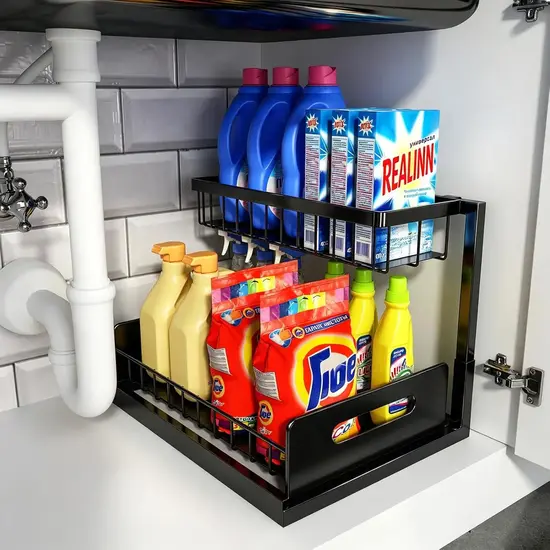
The areas underneath sinks and inside corners aren’t glamorous, but they’re often where tiny kitchens lose valuable storage potential.
16. Add a Two-Tier Under-Sink Organizer
The plumbing under a sink makes this cabinet awkward, but a tiered organizer can work around the pipes.
Store:
- Sponges
- Dish soap
- Cleaning products
- Trash bags
- Dishwasher supplies
Keep cleaning products separate from food storage.
17. Use Sliding Baskets Under the Sink
Sliding baskets make it easier to access supplies at the back of the cabinet.
Instead of kneeling down and reaching through several bottles, simply pull the basket forward.
18. Install a Narrow Corner Shelf
Corners can become dead space when they’re too small for standard cabinets.
A compact corner shelf can hold:
- Coffee supplies
- Spices
- Small plants
- Oils
- Mugs
19. Try a Corner Lazy Susan
A lazy Susan can make deep corner cabinets much easier to use.
It’s particularly effective for bottles, jars, condiments, and other small items.
20. Use Narrow Pull-Out Storage
A narrow pull-out cabinet can fit into surprisingly small gaps.
These units are ideal for:
- Spices
- Oils
- Vinegar
- Canned goods
- Kitchen towels
Before installing one, measure the available width carefully, including cabinet hardware and trim.
5. Beyond the Cabinets: Cabin-Specific Storage
This is where a small cabin kitchen can become genuinely clever.
Unlike a conventional apartment kitchen, cabins often have unique architectural features—benches, stairs, lofts, exposed beams, and unusual ceiling heights—that can become storage.
21. Build Storage Under a Bench
An under-bench compartment is one of the most useful cabin storage ideas.
If your kitchen includes a breakfast nook or built-in seating, the space underneath can store:
- Extra cookware
- Bulk pantry goods
- Small appliances
- Table linens
- Seasonal kitchen equipment
Use hinged lids for simple access or drawers for a more polished design.
Best practice: Store less frequently used items underneath the bench so you don’t have to open it several times a day.
22. Add a Rolling Pantry
A slim rolling pantry can fit between cabinets, a refrigerator, or another narrow gap.
Pull it out when you need something and slide it back afterward.
It’s particularly useful for storing:
- Canned food
- Spices
- Pasta
- Grains
- Snacks
- Bottles
Measure the opening carefully before purchasing or building one.
23. Use Open Shelving Near Rafters
Cabins frequently have high ceilings and exposed rafters.
Instead of allowing that vertical space to go unused, consider installing sturdy open shelving where practical.
Use upper shelves for things you don’t need frequently, such as:
- Seasonal dishes
- Large serving pieces
- Camping cookware
- Extra supplies
Avoid placing heavy objects overhead where they could fall into a walkway or work area.
24. Turn Stair Treads Into Drawers
If the kitchen is near a loft staircase, the stairs themselves may provide hidden storage.
Depending on the staircase design, individual stair treads or risers can be designed as pull-out compartments.
These spaces can hold surprisingly useful items such as:
- Pantry goods
- Linens
- Small appliances
- Kitchen accessories
This is best handled during construction or remodeling because the staircase must remain structurally safe.
25. Add Loft-Adjacent Pull-Outs
The area beside a loft staircase or under a sloped roof can be difficult to furnish with conventional cabinets.
Custom pull-outs can transform these narrow spaces into practical storage.
They’re ideal for items that don’t need daily access.
26. Use the Side of a Cabinet
A cabinet end panel can become an additional storage surface.
Add:
- Hooks
- Rails
- A narrow spice shelf
- Cutting-board storage
- Hanging baskets
This works especially well when the cabinet is exposed rather than positioned against another wall.
27. Build Storage Into a Window Seat
If your cabin kitchen has a window nook, turn the seat into a storage compartment.
A hinged top provides simple access, while drawers create a more convenient everyday solution.
Use the space for larger or less frequently used items rather than everyday plates and utensils.
28. Hang Pots From a Ceiling Rack
When cabinet space is extremely limited, move cookware upward.
A compact ceiling-mounted pot rack can keep frequently used pans within reach while freeing lower cabinets.
Choose a location that doesn’t interfere with head clearance or cooking ventilation.
29. Use the Back of a Door
A kitchen or pantry door can accommodate a slim hanging organizer.
Use it for lightweight items such as:
- Spices
- Snacks
- Cleaning cloths
- Foil
- Food storage bags
Avoid overloading the door, particularly if it’s lightweight.
30. Create a Hidden Coffee Station
A small appliance station can prevent coffee equipment from taking over the countertop.
Store mugs, coffee, filters, and accessories together in one cabinet or dedicated shelf.
If possible, use a lift-up or pocket-style cabinet door to conceal the station when it’s not being used.
6. The Budget vs. Pro Approach
Not every cabin kitchen needs expensive custom cabinetry.
Some of the biggest improvements can come from inexpensive organizational products, while certain upgrades are worth investing in during a remodel.
| Storage Upgrade | Budget Approach | Pro Approach |
|---|---|---|
| Wall storage | $5–$15 hooks | Custom rail system |
| Utensils | Pegboard | Built-in organizer |
| Cabinet access | Shelf risers | Pull-out shelves |
| Pantry | Baskets | Custom rolling pantry |
| Under sink | Plastic bins | Sliding drawer system |
| Corners | Small shelf | Custom corner pull-out |
| Pots | Wall hooks | Built-in pot storage |
| Bench | Storage baskets | Built-in drawers |
| Stairs | Freestanding bins | Structural drawer system |
| Drawers | Adjustable dividers | Custom drawer inserts |
Budget-Friendly Cabin Storage
If you’re working with a limited budget, start with solutions that require little or no remodeling.
A few inexpensive upgrades can include:
- Adhesive or screw-in hooks
- Wire baskets
- Shelf risers
- Drawer dividers
- Magnetic strips
- Stackable bins
- Tension rods
- Under-shelf baskets
The biggest mistake is buying organizers before measuring the space.
Measure first, purchase second.
Professional Cabin Storage
If you’re building or renovating the cabin, consider investing in storage that becomes part of the architecture.
High-value upgrades include:
- Full-extension drawers
- Custom cabinet pull-outs
- Built-in pantry systems
- Under-bench drawers
- Stair storage
- Custom corner cabinets
- Appliance garages
- Integrated recycling centers
These options cost more initially but can make a tiny kitchen dramatically easier to use for years.
7. How to Organize a Tiny Cabin Kitchen by Zone
Instead of organizing randomly, assign every storage area a job.
| Zone | Best Items to Store |
| Near cooktop | Pots, pans, utensils, oils |
| Near sink | Dish soap, towels, cleaning supplies |
| Near refrigerator | Food containers, snacks, pantry items |
| Upper shelves | Occasional-use dishes |
| Drawers | Cutlery, utensils, measuring tools |
| Under bench | Bulk and seasonal items |
| Pantry | Dry goods and canned food |
| Loft/stairs | Infrequently used equipment |
| Open shelves | Everyday dishes and attractive items |
This approach creates a working triangle—or working zone system—rather than simply filling every available space.
The closer an item is to where it’s used, the more convenient the kitchen becomes.
8. Five Mistakes That Make Tiny Cabin Kitchens Feel Smaller
Even excellent storage ideas can backfire if they’re poorly planned.
1. Filling Every Wall
More storage doesn’t automatically mean better storage.
Leave some visual breathing room to prevent the kitchen from feeling crowded.
2. Storing Everything in Open Shelves
Open shelving looks beautiful in cabin interiors, but too many exposed items create visual clutter.
Use open shelves for attractive everyday pieces and concealed storage for miscellaneous supplies.
3. Ignoring Accessibility
Storage at the very top of a wall may technically increase capacity, but it isn’t useful for items you need every day.
Reserve high storage for occasional-use items.
4. Buying Organizers Without Measuring
An organizer that is two centimeters too wide isn’t a storage solution—it’s another thing to find somewhere to store.
Measure width, depth, height, door clearance, plumbing, and hardware.
5. Sacrificing Counter Space
It’s tempting to install shelves everywhere, but the kitchen still needs a functional preparation area.
Protect your most useful counter space.
9. A Simple Tiny Cabin Kitchen Storage Formula
When deciding what belongs where, use this three-level system:
Level 1: Daily Use
Keep these items within easy reach:
- Coffee mugs
- Plates
- Cooking utensils
- Favorite pans
- Spices
- Everyday ingredients
Level 2: Weekly Use
These can go into cabinets, drawers, and moderately accessible shelves:
- Baking equipment
- Extra cookware
- Serving dishes
- Specialty ingredients
- Food storage containers
Level 3: Occasional Use
Move these into high or hidden storage:
- Seasonal cookware
- Large serving pieces
- Camping equipment
- Holiday dishes
- Bulk supplies
- Specialty appliances
This simple system prevents a common tiny-kitchen problem: storing everything according to size rather than frequency of use.
10. The Best Storage Strategy for a Tiny Cabin
If you only have a weekend to reorganize your cabin kitchen, don’t try to renovate everything.
Start with these five steps:
- Remove everything from the cabinets and drawers.
- Group items by how frequently you use them.
- Measure unused walls, gaps, corners, benches, and cabinet interiors.
- Add inexpensive organizers before considering major renovations.
- Reserve custom storage for the spaces that remain difficult to use.
This approach prevents you from spending money on storage products that don’t solve an actual problem.
Key Takeaways
- Think vertically before adding more floor-level cabinets.
- Use pegboards and exposed beams for flexible cabin-style storage.
- Turn cabinet interiors into active storage with pull-outs and dividers.
- Deep drawers are often more efficient than traditional lower cabinets.
- Don’t overlook under-sink areas, corners, and narrow gaps.
- Under-bench storage is especially valuable in cabin kitchens.
- Rolling pantries can turn tiny gaps into useful food storage.
- Loft stairs and stair treads can provide hidden storage when designed safely.
- Use high shelves and loft-adjacent spaces for occasional-use items.
- Start with inexpensive hooks, baskets, dividers, and shelf risers before investing in custom cabinetry.
- Protect countertop workspace rather than filling every available surface.
- Organize storage according to frequency of use, not simply item type.
Conclusion
A tiny cabin kitchen doesn’t need a huge footprint to be functional. It needs intentional storage.
The most effective approach combines visible and hidden solutions: pegboards and shelves for frequently used items, organized cabinets and drawers for everyday essentials, and creative architectural storage under benches, beside lofts, and around stairs.
If you’re working with a small budget, start with hooks, baskets, dividers, shelf risers, and magnetic organizers. If you’re remodeling, invest in the spaces that are hardest to reach—deep cabinets, corners, narrow gaps, benches, and stairs.
The real secret is simple: don’t ask where you can fit another cabinet. Ask which unused space can become useful storage.
That shift in thinking is what turns a tiny cabin kitchen from cramped and cluttered into compact, organized, and genuinely enjoyable to use.
Frequently Asked Questions
What is the best storage solution for a tiny cabin kitchen?
The best solution depends on the kitchen layout, but vertical wall storage, deep drawers, cabinet pull-outs, under-bench compartments, and rolling pantries offer some of the biggest improvements. Combining several small solutions usually works better than relying on one large storage unit.
How do you maximize storage in a small cabin kitchen?
Maximize storage by using vertical walls, cabinet doors, drawer interiors, narrow gaps, corners, under-sink areas, benches, stairs, and loft-adjacent spaces. Store everyday items in accessible zones and move occasional-use equipment into higher or hidden areas.
How can I add cabin kitchen storage without remodeling?
Use pegboards, hooks, magnetic strips, shelf risers, stackable baskets, drawer dividers, under-shelf baskets, and narrow rolling carts. These inexpensive solutions can significantly increase usable storage without changing the cabinetry.
Are open shelves good for tiny cabin kitchens?
Yes. Open shelves can make a small cabin kitchen feel lighter while providing convenient storage for everyday dishes, mugs, jars, and cookware. The key is limiting visible clutter and using concealed storage for miscellaneous items.
What can I store under a cabin kitchen bench?
Under-bench storage works well for cookware, small appliances, bulk pantry goods, table linens, seasonal dishes, and other items that aren’t needed constantly. Drawers or hinged compartments can be built into the bench depending on how frequently the items are accessed.
How do you use the space under cabin stairs?
Depending on the staircase design, the space beneath stairs can accommodate pull-out drawers, cabinets, pantry compartments, or storage bins. Stair storage should be incorporated carefully so it doesn’t compromise the structure or safe use of the staircase.
Is a rolling pantry worth it in a tiny kitchen?
A rolling pantry can be extremely useful when there is a narrow gap between cabinets or appliances. It turns otherwise wasted space into organized storage for canned goods, spices, dry ingredients, and bottles.
What should go in the highest kitchen cabinets?
Use the highest cabinets and shelves for items you don’t need frequently, such as seasonal dishes, specialty cookware, large serving pieces, and extra supplies. Everyday items should remain at comfortable, easily accessible heights.

