


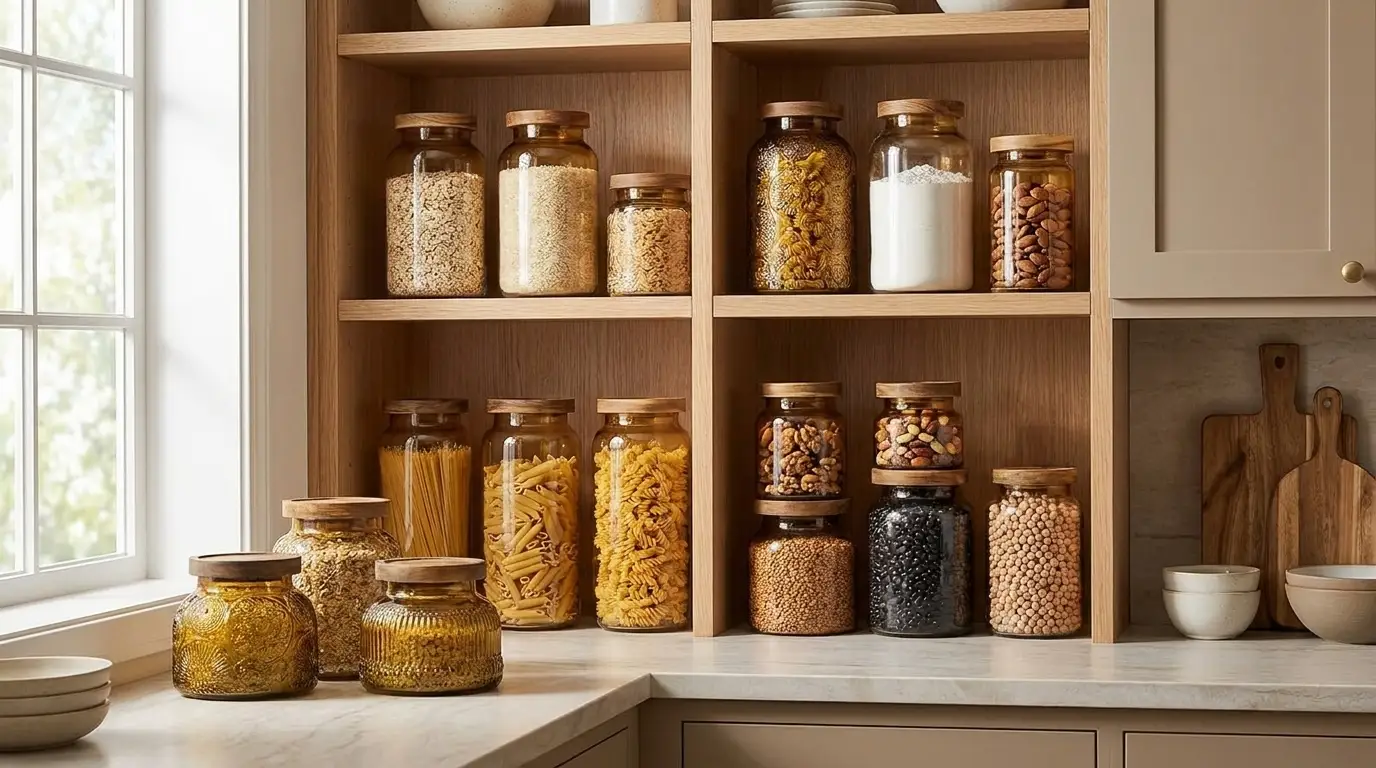
A well-organized pantry doesn’t have to look purely functional. Amber glass pantry storage containers with bamboo wood lids combine practical food organization with a warm, elevated aesthetic that can make everyday kitchen storage feel intentional. The amber color adds visual depth, while bamboo lids introduce a natural texture that works beautifully with modern, farmhouse, Scandinavian, organic, and contemporary kitchens.
Unlike mismatched plastic packaging, coordinated glass containers can create a cleaner visual system for storing dry goods such as flour, rice, pasta, oats, coffee, tea, grains, nuts, and spices. They also make it easier to see what you have, group similar ingredients, and turn an ordinary pantry into a more cohesive part of your kitchen design.
If you’re considering upgrading your pantry, this guide explains how to choose amber glass containers, what to store in them, how to organize them, and how to create a polished storage system without sacrificing practicality.
Table of Contents
What Are Amber Glass Pantry Storage Containers?
Amber glass pantry storage containers are reusable glass jars or canisters made from tinted amber-colored glass and typically paired with fitted lids. When the lids are made from bamboo or another natural wood, the combination creates a balance between transparent storage and warm, organic styling.
For pantry organization, they can be used for:
- Flour and baking ingredients
- Rice and grains
- Pasta
- Oats and cereal
- Coffee and tea
- Dried beans and lentils
- Nuts and seeds
- Sugar
- Spices
- Dried fruit
- Snacks
- Pet treats
The appeal isn’t only visual. Glass provides a durable, reusable alternative to disposable food packaging, while a well-fitted lid can help keep pantry ingredients contained and organized.
The key is choosing containers based on the food you actually store rather than buying a large set simply because it looks attractive.
Why Choose Amber Glass for Pantry Storage?
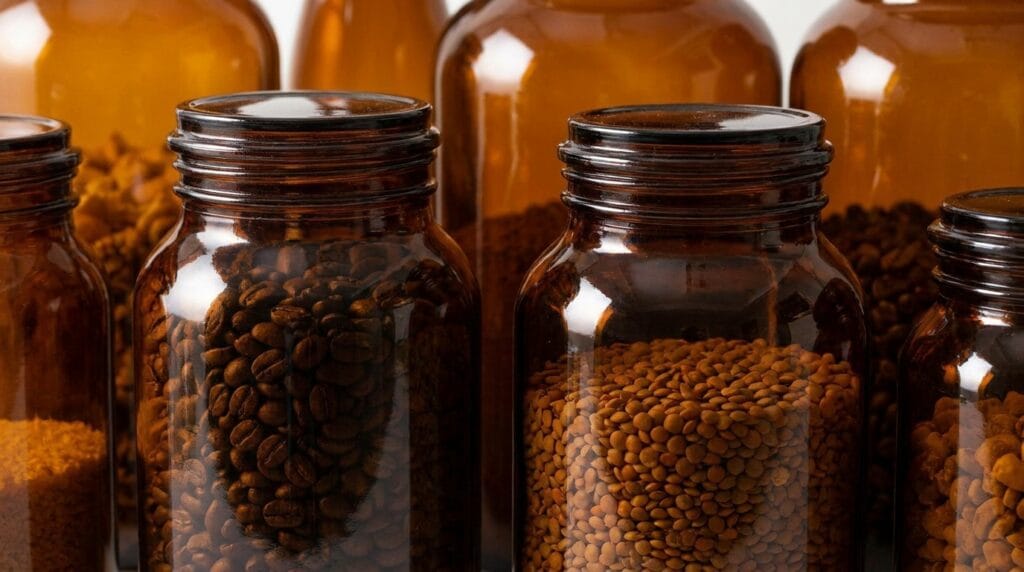
Clear glass is popular because it provides maximum visibility, but amber glass offers a distinctly different look.
The amber color creates a warmer, richer appearance and can make open shelving look more curated. It also pairs naturally with wood, stone, ceramic, linen, woven baskets, and neutral cabinetry.
There is another consideration: amber-colored glass can reduce the amount of visible light reaching the contents compared with clear glass. However, the degree of protection depends on the glass, its thickness, and how it is manufactured. It shouldn’t automatically be treated as a substitute for proper food-storage practices or opaque packaging for light-sensitive ingredients.
For everyday pantry organization, its biggest advantage may simply be aesthetic: amber glass turns ordinary ingredients into part of the kitchen’s visual design.
Amber Glass vs. Clear Glass
| Feature | Amber Glass | Clear Glass |
|---|---|---|
| Appearance | Warm, rich, decorative | Clean and minimalist |
| Ingredient visibility | Good | Excellent |
| Light exposure | Reduced compared with clear glass | Higher |
| Styling | Organic, vintage, modern, farmhouse | Contemporary, minimalist |
| Works with wood | Excellent | Excellent |
| Open-shelf appeal | High | High |
| Best for | Aesthetic pantry systems | Maximum ingredient visibility |
If your priority is a coordinated, warm pantry aesthetic, amber glass is particularly compelling.
Why Pair Amber Glass with Bamboo Wood Lids?
The combination of amber glass and bamboo works because the materials contrast without competing.
Glass feels smooth, clean, and refined. Bamboo introduces warmth, texture, and an organic character. Together, they create a storage solution that feels more like beautiful kitchenware than ordinary pantry equipment.
Bamboo lids can complement:
- Natural wood cabinetry
- White kitchens
- Cream kitchens
- Stone countertops
- Rattan and woven baskets
- Ceramic dishes
- Linen textiles
- Brass hardware
- Matte black fixtures
- Warm neutral interiors
This makes amber glass containers particularly useful if your kitchen follows an organic modern, Japandi, farmhouse, cottage, or quiet-luxury aesthetic.
The result is storage that can remain visible instead of being hidden behind cabinet doors.
Amber Glass Pantry Storage vs. Plastic Containers
Plastic remains popular because it is lightweight and often inexpensive. However, glass offers several qualities that make it attractive for a long-term pantry organization system.
| Consideration | Glass Containers | Plastic Containers |
| Reusable | Yes | Often |
| Odor retention | Generally low | Can vary by material |
| Appearance | Premium and timeless | Highly variable |
| Transparency | Excellent | Varies |
| Scratches | Less prone than many plastics | More prone to scratching |
| Weight | Heavier | Lightweight |
| Pantry styling | Excellent | Depends on design |
| Long-term visual appeal | High | Varies |
Glass is heavier and can break, so it isn’t automatically better for every household. If children frequently access the pantry or containers need to be transported often, lightweight alternatives may be more practical.
For a stationary pantry or open shelving system, however, glass can provide an especially polished solution.
How to Build a Coordinated Glass Pantry Storage System
The biggest mistake when organizing a pantry is buying containers without first considering the space.
Instead, start with the pantry itself.
1. Measure Your Shelves
Measure:
- Shelf width
- Shelf depth
- Vertical clearance
- Cabinet openings
- Corner spaces
Remember to account for the height of the lid.
A container that looks perfect online may become inconvenient if it barely fits beneath a shelf.
2. Identify Your Most-Used Ingredients
Don’t transfer every pantry ingredient into a jar.
Start with foods you use frequently, such as:
- Flour
- Sugar
- Rice
- Pasta
- Oats
- Cereal
- Coffee
- Tea
- Lentils
- Beans
- Nuts
This gives you an organized foundation without creating unnecessary work.
3. Choose Consistent Container Shapes
A collection looks more sophisticated when the containers share a visual language.
You don’t necessarily need every container to be identical. Instead, look for consistency in:
- Glass color
- Lid material
- Shape
- Label style
- Container proportions
This creates the visual effect of a coordinated kitchen storage set.
4. Organize by Frequency of Use
Place everyday ingredients at eye level.
Less frequently used ingredients can go on higher shelves, while heavier containers should generally remain lower and stable.
A simple hierarchy might look like:
Eye level: oats, coffee, flour, sugar, rice
Middle shelves: pasta, grains, snacks, baking supplies
Lower shelves: bulk ingredients and heavier containers
Upper shelves: occasional-use ingredients
This approach makes the pantry attractive and functional.
Glass Food Storage Ideas for an Amber Pantry
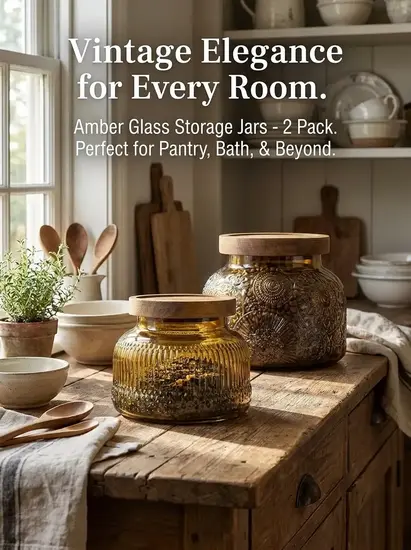
There are countless ways to use amber glass beyond basic dry-food storage.
Create a Baking Station
Group flour, sugar, oats, chocolate chips, baking powder, and other frequently used ingredients together.
Use similar containers and labels to create a dedicated baking zone.
Build a Breakfast Section
Store oats, granola, cereal, chia seeds, dried fruit, and nuts together.
This can make busy mornings easier because everything needed for breakfast is located in one area.
Create a Coffee and Tea Station
Amber jars are especially attractive for coffee beans, tea blends, cocoa, and related ingredients.
Pair the containers with a wooden tray, ceramic mugs, and a small scoop for a cohesive coffee station.
Organize Snacks
Use containers for crackers, pretzels, nuts, dried fruit, or individually portioned snacks.
Transparent glass makes it easy to see when supplies are running low.
Create a Spice Display
Smaller amber jars can be used for frequently used spices, provided the containers and lids are appropriate for that purpose.
Arrange them alphabetically or group them according to cuisine.
Stylish Food Storage Containers That Look Good on Open Shelves
Open shelving changes the way you think about food storage.
When containers are hidden inside cabinets, functionality can dominate. On open shelves, appearance becomes part of the decision.
Amber glass and bamboo create a particularly attractive combination because they provide:
Color: Amber adds warmth.
Texture: Bamboo introduces natural grain.
Transparency: The contents remain visually identifiable.
Consistency: Matching containers reduce visual clutter.
Contrast: Smooth glass balances natural wood.
This makes them ideal for people looking for stylish food storage containers that can function as part of the kitchen’s decor.
A useful styling rule is to avoid overcrowding shelves. Leave some breathing room between container groups so the pantry feels curated rather than packed.
How to Use Labels Without Losing the Natural Look
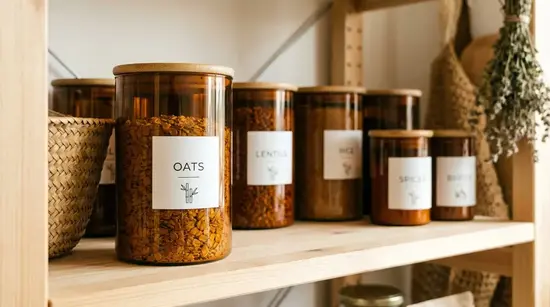
Labels can transform a collection of jars from attractive storage into an efficient organizational system.
For an amber-and-bamboo aesthetic, consider:
- Cream labels
- White labels
- Kraft-paper labels
- Minimal black typography
- Small handwritten labels
- Clear labels with understated lettering
Keep the wording simple.
Instead of:
Organic Whole Grain Rolled Oats
use:
OATS
Instead of:
Premium Long Grain Basmati Rice
use:
RICE
Short labels are easier to scan and create a cleaner visual appearance.
For containers where the contents are obvious, labels may not even be necessary.
Choosing the Right Container Sizes
One size rarely works for every pantry ingredient.
A versatile collection might include several capacities.
| Container Size | Good Uses |
| Small | Spices, seeds, toppings |
| Medium | Nuts, dried fruit, snacks |
| Large | Oats, rice, pasta |
| Extra large | Flour, sugar, bulk grains |
Think about package sizes before buying.
If you regularly purchase large bags of rice, a tiny container creates an unnecessary refill routine. If you rarely use an ingredient, an oversized container wastes shelf space.
The best pantry is designed around your actual shopping habits.
Food Storage: What to Check Before Buying
Not every decorative jar is automatically appropriate for food storage.
Before purchasing amber glass containers with bamboo lids, check the manufacturer’s specifications for:
- Food-contact suitability
- Intended use
- Lid construction
- Seal design
- Capacity
- Cleaning instructions
- Temperature limitations
- Dishwasher guidance
- Whether the bamboo lid should be hand-washed
- Whether the container is intended for hot or cold foods
This distinction matters because a decorative glass jar and a purpose-designed glass food storage container are not necessarily interchangeable.
For dry pantry ingredients, look for containers specifically marketed for food storage.
Can Amber Glass Containers Be Used for All Foods?
No. Their suitability depends on the container design and the food.
Dry ingredients are generally the easiest application for pantry containers, including grains, pasta, flour, sugar, nuts, and similar products.
For foods with high moisture content, liquids, refrigerated foods, or ingredients that require airtight conditions, follow the manufacturer’s instructions.
Also consider food safety basics: don’t store ingredients in containers that are cracked, chipped, damaged, or difficult to clean.
A beautiful pantry system should never compromise safe storage.
How to Care for Bamboo Lids
Bamboo requires somewhat different care from glass.
Glass is generally straightforward to clean, while natural bamboo should be treated more carefully.
Depending on the manufacturer’s instructions:
- Avoid prolonged soaking.
- Don’t assume the bamboo lid is dishwasher-safe.
- Dry the lid thoroughly.
- Keep moisture from accumulating around seals.
- Follow any care instructions supplied with the container.
- Replace damaged or deteriorated components.
A bamboo lid can remain attractive for years when it is properly maintained.
Unique Kitchen Container Inspiration: Think Beyond the Pantry
Amber glass storage doesn’t have to stop at the pantry.
The same aesthetic can be carried throughout the kitchen.
Consider using coordinated containers for:
- Coffee stations
- Baking stations
- Breakfast bars
- Open shelving
- Kitchen islands
- Beverage stations
- Home bars
- Utility shelves
You can also combine amber glass with ceramic canisters, wooden trays, woven baskets, and stoneware.
The goal isn’t to make every object match perfectly. It’s to establish a consistent material and color story.
Creating an Eco-Friendly Glassware Collection
If you’re interested in a more intentional kitchen, reusable glass storage can form part of an Eco-friendly Glassware Collection.
The environmental advantage shouldn’t be reduced to simply saying “glass is eco-friendly.” The real benefit depends on how a product is manufactured, transported, used, cleaned, reused, and eventually recycled.
A reusable container becomes more meaningful when you actually use it repeatedly rather than continually replacing storage products.
For that reason, prioritize durable containers that you genuinely like and will continue using.
You can also coordinate pantry storage with an Amber Glass Tableware Set or a Yellow Glassware Collection for a warm, vintage-inspired kitchen palette.
The result can feel cohesive without looking overly matched.
Amber Glass as Part of Beautiful Kitchenware
Storage containers are increasingly becoming part of kitchen styling.
A carefully designed pantry can function almost like a display area, particularly when the kitchen uses open shelving.
Amber containers work well with other pieces of Beautiful Kitchenware, including:
- Handmade ceramics
- Wooden cutting boards
- Linen towels
- Stoneware bowls
- Brass utensils
- Natural baskets
- Glass carafes
- Wooden serving boards
This creates a kitchen where organizational pieces contribute to the overall aesthetic.
The concept is simple: make the things you use every day beautiful enough to leave on display.
Common Mistakes to Avoid
Buying Containers Before Measuring
Always measure the shelves first.
Choosing Appearance Over Function
A beautiful lid is not useful if it doesn’t seal appropriately for the intended food.
Buying Too Many Containers
Start with your most-used ingredients and expand gradually.
Ignoring Weight
Large glass containers can become surprisingly heavy when filled.
Overfilling Open Shelves
A coordinated container collection can still look cluttered when every inch is occupied.
Forgetting Labels
If several ingredients look similar, labels save time and reduce confusion.
Treating Bamboo Like Glass
Bamboo generally needs more careful cleaning and drying.
A Simple Pantry Organization Formula
If you want a repeatable system, use this five-step formula:
1. Edit — Remove expired or unused products.
2. Group — Put similar ingredients together.
3. Measure — Determine the container sizes your shelves can accommodate.
4. Transfer — Move frequently used dry goods into appropriate storage containers.
5. Label — Make the contents easy to identify.
This approach works whether you have a large walk-in pantry or a few kitchen cabinets.
When Amber Glass Pantry Containers Are Worth It
Amber glass containers make the most sense when you value both organization and visual design.
They’re particularly appealing if you:
- Have open pantry shelving
- Want to reduce packaging clutter
- Prefer reusable storage
- Like natural materials
- Enjoy coordinated kitchen design
- Want ingredients to remain visible
- Prefer glass over many plastic storage options
- Are building a cohesive Glass Pantry Storage system
They may be less practical if you need extremely lightweight containers, frequently transport food, or have limited tolerance for breakable kitchenware.
The Bottom Line
Amber glass pantry storage containers with bamboo wood lids are more than a way to hold dry ingredients. Used thoughtfully, they can become part of a complete pantry organization and kitchen styling system.
The amber glass provides warmth and visual character, while bamboo introduces a natural element that works with a wide range of interior styles. More importantly, a coordinated collection can make everyday ingredients easier to identify, organize, and access.
The best approach is to start small. Measure your shelves, identify the ingredients you use most, select appropriately sized food-storage containers, and build your collection gradually.
Whether you’re creating a minimalist pantry, an organic modern kitchen, or simply looking for better Glass Food Storage Ideas, amber glass can turn ordinary organization into something that feels considered and beautiful.
Key Takeaways
- Amber glass adds warmth and character to pantry organization.
- Bamboo lids complement natural, modern, farmhouse, and minimalist kitchens.
- Choose containers based on your actual ingredients and shelf dimensions.
- Use matching shapes and labels to create a cohesive storage system.
- Dry pantry staples are particularly practical candidates for glass containers.
- Always check manufacturer instructions for food-contact suitability and lid care.
- Bamboo usually requires gentler cleaning than glass.
- Don’t overcrowd shelves just to display every container.
- Reusable storage is most valuable when containers are durable and used repeatedly.
- A thoughtfully designed pantry can combine organization, practicality, and beautiful kitchen styling.
Frequently Asked Questions
Are amber glass containers good for pantry storage?
Yes. Amber glass containers can be excellent for storing dry pantry staples such as flour, rice, pasta, oats, grains, nuts, and sugar, provided the containers are designed for food storage and used according to the manufacturer’s instructions.
Do bamboo lids make glass storage containers airtight?
Not necessarily. The seal depends on the specific lid and container design. If airtight storage matters for a particular ingredient, check the manufacturer’s specifications rather than assuming that every bamboo lid creates an airtight seal.
What should I store in amber glass containers?
Popular choices include flour, sugar, rice, oats, pasta, grains, lentils, beans, nuts, seeds, coffee, tea, and dried snacks. Choose containers based on the quantity and storage requirements of each ingredient.
Is amber glass better than clear glass?
Neither is universally better. Clear glass provides maximum visibility, while amber glass offers a warmer appearance and can reduce visible light exposure compared with clear glass. The best option depends on the ingredient, container design, and your pantry style.
How do you clean bamboo lids?
Follow the manufacturer’s care instructions. In general, bamboo components should not automatically be treated like dishwasher-safe glass. Avoid prolonged soaking and dry them thoroughly after cleaning.
Can amber glass containers replace plastic pantry containers?
They can replace many plastic containers for dry pantry storage, but glass is heavier and breakable. The best choice depends on your household, storage location, container design, and intended use.
How do I make glass pantry storage look organized?
Use containers with a consistent shape or material, group ingredients by category, choose complementary labels, and leave some empty space between groups. Repetition creates a more polished appearance.
How many pantry containers do I need?
There is no universal number. Start with the ingredients you use most frequently and choose container sizes based on your shelf dimensions and typical package quantities. Expanding gradually usually prevents wasted containers and space.

