
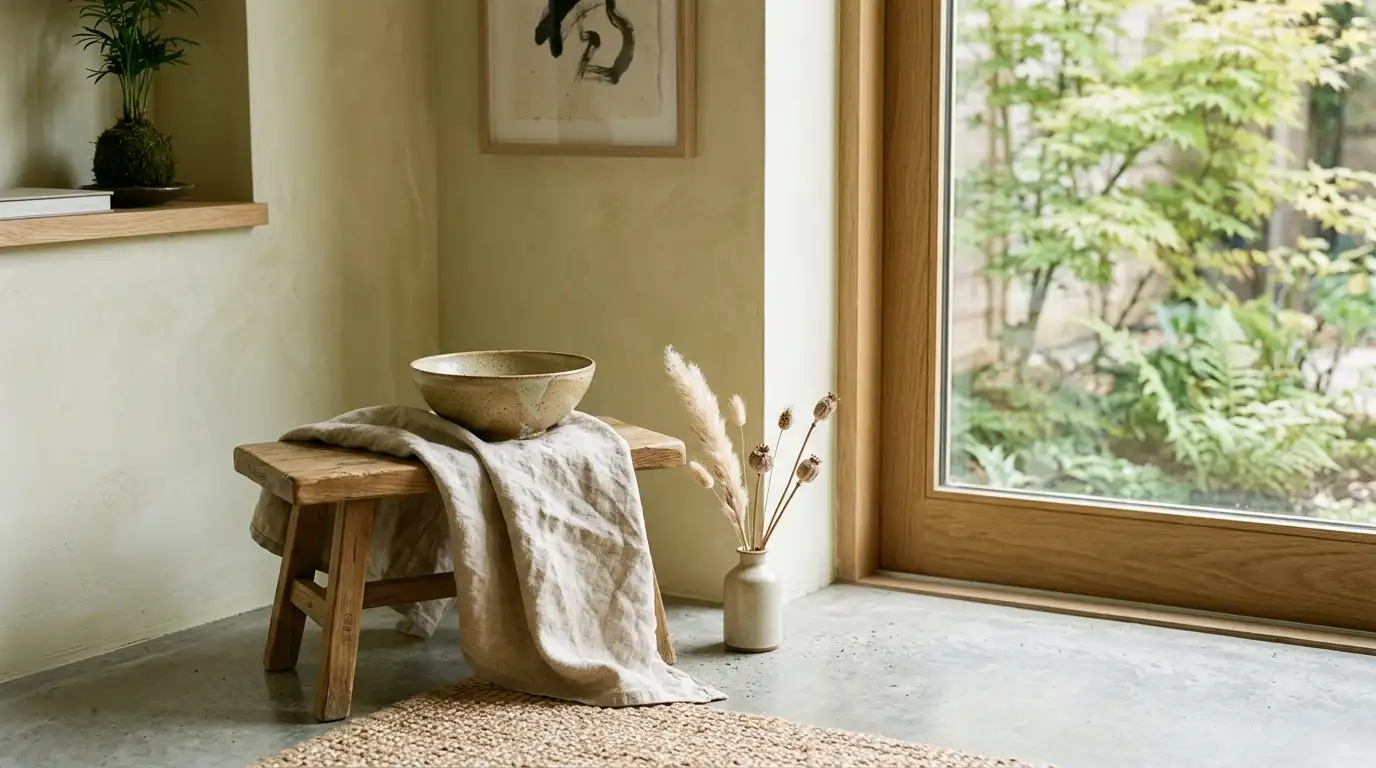

Japandi style gets its name from a straightforward mashup — Japanese plus Scandinavian — but the philosophy behind it runs deeper than the portmanteau suggests. It’s really a meeting of two design cultures that arrived at similar conclusions from opposite directions: Japanese wabi-sabi and Scandinavian hygge.
Japandi is an interior design style that combines Japanese wabi-sabi philosophy — finding beauty in natural imperfection and simplicity — with Scandinavian hygge, the pursuit of everyday comfort and coziness. The result favors natural materials, muted color palettes, functional furniture, and a considered, uncluttered approach to decorating.
Table of Contents
Where the Word “Japandi” Comes From
The term itself is recent, gaining traction in interior design media over the past several years, but the ideas behind it are not. Japan and the Nordic countries developed remarkably similar design values independently — both cultures prize craftsmanship, natural materials, and a certain quiet restraint, shaped in part by their shared history of long, dark winters that push daily life indoors.
Wabi-Sabi: The Japanese Half
Wabi-sabi is a Japanese aesthetic philosophy centered on accepting transience and imperfection. In a decorating context, that translates to:
- Visible wood grain, knots, and natural variation instead of uniform veneers.
- Hand-thrown ceramics with slightly irregular shapes and glaze pooling.
- Materials that age visibly and gracefully, like patinated brass or plaster that develops a slight sheen over time.
- Asymmetry over perfect symmetry in furniture arrangement.
Hygge: The Scandinavian Half
Hygge (pronounced roughly “hoo-gah”) is a Danish concept describing a feeling of cozy contentment, usually built through soft lighting, warm textiles, and simple pleasures shared with others. In interior terms:
- Layered, warm lighting rather than a single bright overhead source.
- Natural textiles — wool, linen, sheepskin — used generously for comfort.
- Functional, honestly made furniture designed for everyday use, not display.
- An emphasis on gathering spaces, particularly around a table or a low seating area.
How the Two Philosophies Combine
| Element | Japanese Influence | Scandinavian Influence |
|---|---|---|
| Materials | Natural wood, clay, paper, stone | Pale wood, wool, linen |
| Color | Muted earth tones, ink black | Soft neutrals, gentle contrast |
| Furniture | Low, floor-oriented pieces | Functional, honestly joined pieces |
| Mood | Quiet, contemplative | Cozy, welcoming |
Japandi vs. Related Styles
Japandi vs. Minimalism
Minimalism is defined mainly by restraint in quantity. Japandi shares that restraint but adds warmth and texture that pure minimalism often strips away — a Japandi room is meant to feel lived-in, not austere.
Japandi vs. Scandinavian Design
Scandinavian design on its own tends toward brighter whites, playful color pops, and a lighter overall palette. Japandi pulls that palette down into darker, earthier, more muted territory and adds the material philosophy of wabi-sabi.
Japandi vs. Wabi-Sabi Interiors
A purely wabi-sabi interior can lean rustic or even unfinished in feel. Japandi tempers that with Scandinavian functionality, resulting in something more polished and livable for a modern home.
Why Japandi Works So Well as a Luxury Style
The philosophy behind Japandi happens to reward exactly the kind of spending that defines quiet luxury: solid materials over synthetic ones, handmade objects over mass production, and fewer, better pieces over volume. A style built on valuing craftsmanship naturally points toward investment furniture and artisan-made goods rather than trend-driven decor.
Key Takeaways
- Japandi combines Japanese wabi-sabi (beauty in imperfection) with Scandinavian hygge (everyday coziness).
- Wabi-sabi contributes natural materials, visible imperfection, and asymmetry.
- Hygge contributes warm layered lighting, natural textiles, and functional furniture.
- Japandi is warmer and more textural than pure minimalism, and moodier than typical Scandinavian design.
- The style’s emphasis on craftsmanship naturally aligns with a luxury, investment-piece approach to furnishing a home.
Suggest Reads
- Japandi Bedroom Design: A Serene Luxury Retreat Guide
- Japandi Kitchen Design: Minimalist Luxury for the Home Chef
- Japandi Bathroom Design: Spa-Like Serenity at Home
- Japandi Living Room Ideas: 15 Luxury Designs That Balance Calm & Craft
Frequently Asked Questions
Is Japandi a real design tradition or a marketing term?
The word itself is a modern marketing-era coinage, but it describes a genuine overlap between two long-established design traditions — Japanese wabi-sabi aesthetics and Scandinavian functionalist design.
How do you pronounce hygge?
Roughly “hoo-gah,” though the exact Danish pronunciation varies slightly by region.
What colors are typically used in Japandi design?
Warm neutrals — oatmeal, sand, greige, soft clay — paired with darker accents like charcoal, walnut brown, and occasionally ink black.
Do I need to buy all-new furniture to achieve a Japandi look?
No — many Japandi rooms are built gradually, incorporating existing solid-wood pieces alongside new additions, which actually suits the style’s wabi-sabi, collected-over-time character.
Is Japandi suitable for a rental home?
Yes, with adjustments — furniture, textiles, and lighting can achieve most of the look without permanent changes like plaster walls, which are harder to do in a rental.
