
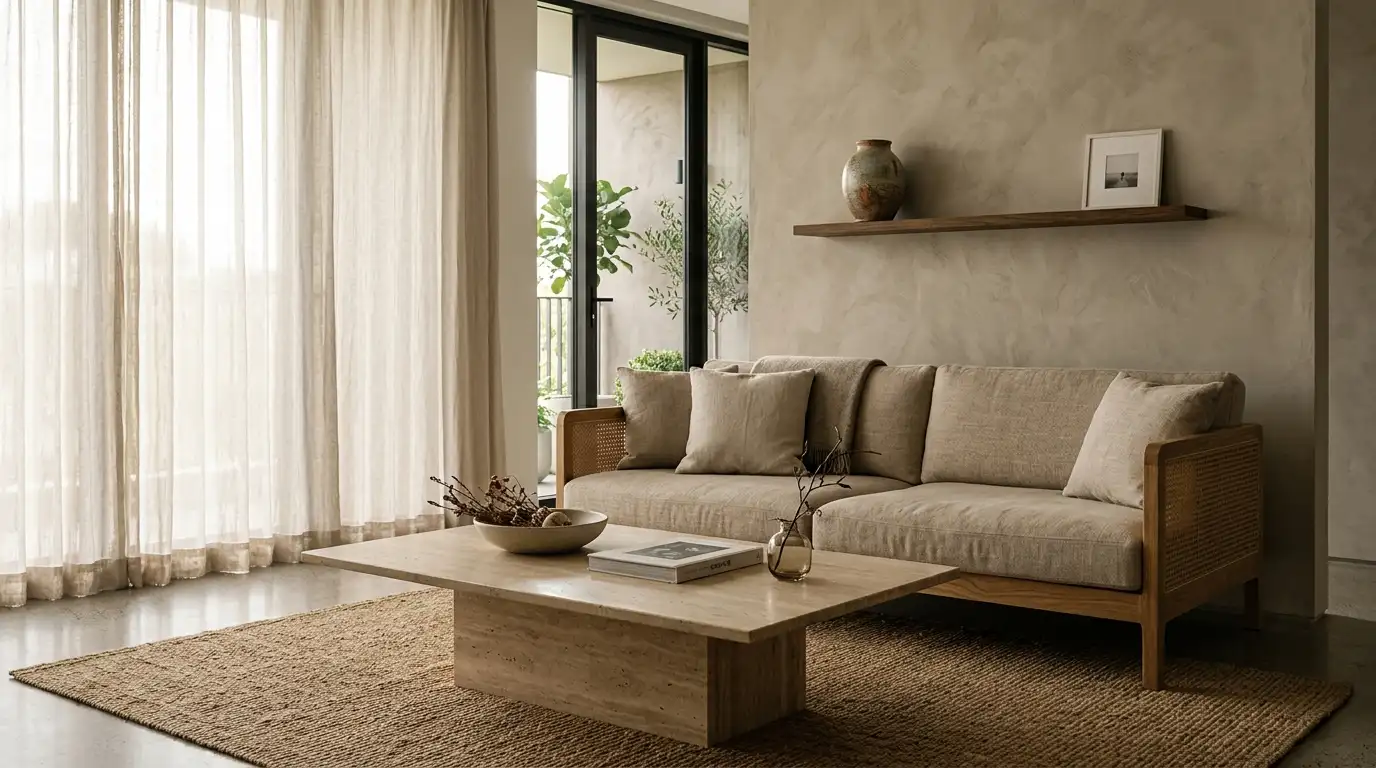

Japandi at its best isn’t a discount aesthetic built from flat-pack pine and stock throw pillows. It’s a design language built on restraint, and restraint is expensive — solid oak instead of veneer, hand-thrown ceramics instead of mass-produced bowls, plaster walls instead of paint. This guide covers what separates a genuinely luxury Japandi interior from the watered-down version flooding home decor feeds, room by room, material by material.
Japandi interior design blends Japanese wabi-sabi philosophy — the appreciation of natural imperfection and quiet craftsmanship — with Scandinavian functionalism and warmth. In a luxury context, that means investment furniture in solid wood, natural stone and lime plaster surfaces, a muted earth-and-neutral palette, and objects chosen for how they’re made rather than how many of them you can display.
Table of Contents
What Makes Japandi “Luxury” Rather Than Just Minimalist
Minimalism asks you to own less. Luxury Japandi asks you to own better. The two overlap, which is why the style gets misread as budget-friendly — a room with few objects in it can look identical whether those objects cost $40 or $4,000. The difference lives in the details you feel before you can name them.
Investment Pieces Over Flat-Pack Furniture
A luxury Japandi sofa is built on a solid hardwood frame, upholstered in undyed linen or boucle, and low enough to the ground that it changes how you sit in a room. It’s the kind of piece a good upholsterer can rebuild in twenty years. Flat-pack Scandinavian furniture was never designed with that in mind, and it shows the moment you sit down.
Natural, Imperfect Materials
Wabi-sabi runs through every surface choice. Hand-troweled lime plaster with visible trowel marks. Travertine with its natural pitting left unfilled. Oak with open grain and the occasional knot, rather than a uniform veneer. These materials age instead of degrading, which is part of the appeal — a plaster wall looks better at ten years than at one.
Bespoke and Artisan-Made Over Mass Production
A single hand-thrown stoneware vase from a working potter does more for a Japandi room than a shelf of matching ceramics from a big-box retailer. Scarcity and visible handwork are the actual luxury markers here, not brand logos.
The Japandi Color Palette: Building From the Ground Up
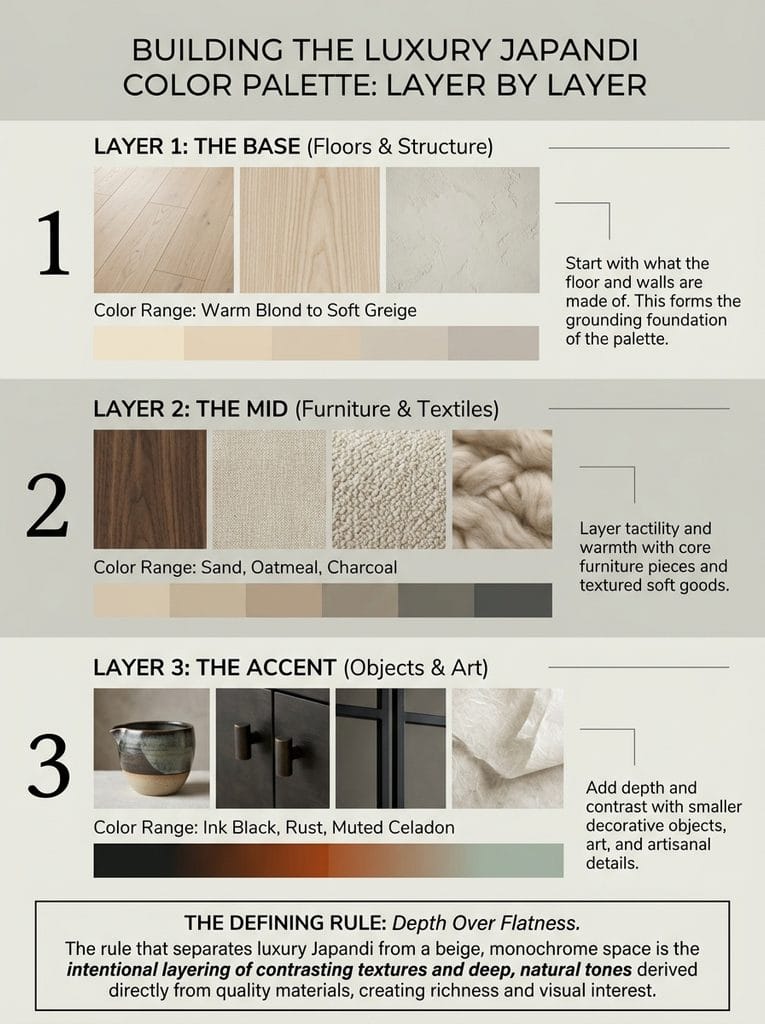
Luxury Japandi palettes are built from material color, not paint chips. Start with what the floor and walls are made of, then layer neutrals on top.
| Layer | Typical Materials | Color Range |
|---|---|---|
| Base (floors, structure) | White oak, ash, lime plaster | Warm blond to soft greige |
| Mid (furniture, textiles) | Walnut, linen, boucle, wool | Sand, oatmeal, charcoal |
| Accent (objects, art) | Stoneware, bronze, black steel, washi paper | Ink black, rust, muted celadon |
The rule that separates luxury Japandi from a beige rental: every color in the room should trace back to an actual material, not a can of paint mimicking one.
Core Materials of a Luxury Japandi Interior
Wood
White oak and ash dominate flooring and case goods for their pale, even grain. Walnut appears in dining tables and accent furniture where a darker, richer tone is wanted. Bamboo and rattan show up in lighting and smaller pieces, always solid rather than laminated.
Stone
Travertine and honed marble bring texture to coffee tables, bathroom vanities, and kitchen islands. The stone is left with a matte, honed finish rather than high polish — gloss reads as hotel lobby, not Japandi.
Plaster and Clay
Lime plaster (including tadelakt in wet areas) and microcement have become the signature wall treatment for Japandi interiors that want to feel handmade rather than drywalled. Both take on a soft, cloud-like variation in tone that flat paint can’t fake.
Textiles
Undyed or naturally dyed linen, raw silk, boucle wool, and jute. Pattern is nearly absent; texture carries the visual interest instead.
Room-by-Room: Where to Start
Every room needs its own approach to the same core principles. Explore the full breakdown for each space:
- Japandi Living Room Ideas: 15 Luxury Designs That Balance Calm & Craft
- Japandi Bedroom Design: How to Create a Serene Luxury Retreat
- Japandi Kitchen Design: Minimalist Luxury for the Home Chef
- Japandi Bathroom Design: Spa-Like Serenity at Home
- Japandi Dining Room: Where Japanese Craft Meets Scandinavian Warmth
- What Is Japandi Style? A Luxury Design Guide to Wabi-Sabi & Hygge
Common Mistakes That Cheapen a Japandi Room
The gap between a $200,000 Japandi renovation and a Pinterest board comes down to a short list of habits.
- Buying matching sets. Luxury Japandi rooms are collected over time, piece by piece, not ordered as a bundle.
- Faux wood and faux stone finishes. Laminate grain and printed marble read as cheap under any lighting, no matter how good the photo looks.
- Overfilling shelves. Negative space is doing real work in this style. A shelf with three objects on it is a design decision; a shelf with fifteen is clutter with good lighting.
- Cool-white LED lighting. Anything above 3000K flattens the warmth these materials are built to hold. Stick to warm, low, layered light sources.
- Skipping the imperfection. A perfectly smooth, machine-finished surface is the opposite of wabi-sabi. The hand-finished quality is the point, not a flaw to sand away.
How to Start a Japandi Renovation on a Real Budget
Full luxury execution doesn’t require redoing every room at once. In my experience, the highest-impact starting points are the ones that touch the most square footage: flooring in white oak or ash, a lime plaster feature wall, and one true investment furniture piece per room — a sofa, a bed frame, a dining table. Everything else can be layered in over a year or two as the right artisan pieces turn up.
Key Takeaways
- Luxury Japandi is defined by material quality and craftsmanship, not by owning fewer things.
- Build the palette from real materials — wood, plaster, stone — rather than paint colors alone.
- Solid wood furniture, honed natural stone, and lime plaster are the three pillars of the look.
- Wabi-sabi imperfection is intentional; over-polished, uniform surfaces work against the style.
- Start with flooring, one plaster wall, and a single investment furniture piece rather than a full room reset.
- Avoid matching furniture sets, faux-finish materials, and cool-toned LED lighting.
Frequently Asked Questions
Is Japandi the same as minimalism?
No. Minimalism is primarily about quantity — owning fewer objects. Japandi is about the character of the objects and materials you do own, and a Japandi room can be warm and layered rather than sparse.
What’s the difference between Japandi and Scandinavian design?
Scandinavian design leans toward pale woods, bright white walls, and playful color accents. Japandi pulls in a darker, more muted palette and Japanese material philosophy — plaster, stone, and wabi-sabi imperfection — for a moodier, quieter result.
Can Japandi work in a small apartment?
Yes, and arguably it works better there. The pared-back furniture count and low-profile pieces are well suited to smaller footprints; the focus should shift to fewer, higher-quality pieces rather than trying to fill every wall.
What wood tone is most “Japandi”?
Pale, warm woods like white oak and ash form the base, with walnut used selectively for contrast in dining tables or accent furniture. Avoid orange-toned honey oak and cool gray-washed finishes, both of which read as earlier design trends.
Is Japandi a passing trend?
The aesthetic label may fade, but the underlying principles — natural materials, restrained color, functional furniture — have been core to both Japanese and Scandinavian design for decades, which suggests longer staying power than a typical decor trend.
How much does a luxury Japandi renovation typically cost?
It varies enormously by scope, but the material choices in this guide — solid wood, natural stone, lime plaster — generally run well above standard drywall-and-laminate finishes, so budgeting at the higher end of your local renovation range is realistic.
