


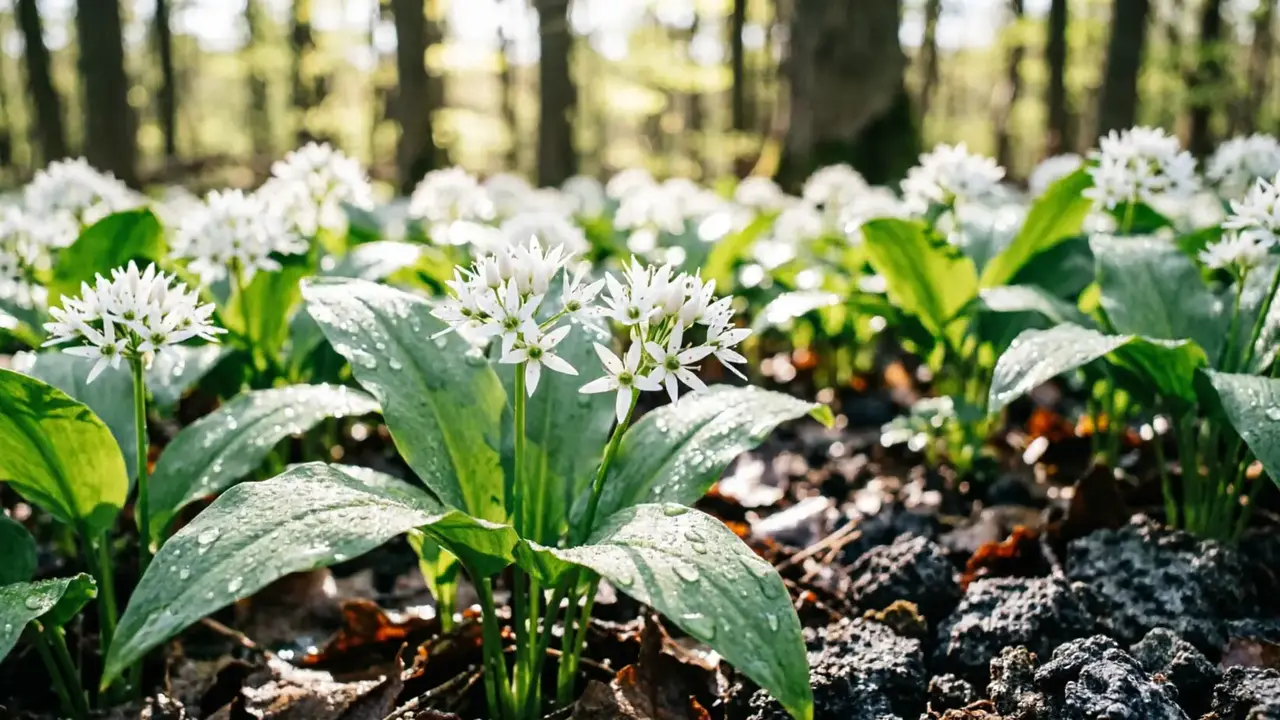

Okay, so if you’ve spent any time on food blogs, TikTok, or farmers’ markets lately, you’ve probably noticed wild garlic is everywhere right now. And honestly? It deserves every bit of the hype.
Wild garlic foraging has exploded in popularity over the last couple of years — and it’s not hard to see why. It’s free, it’s flavourful, it shows up reliably every spring, and finding a whole carpet of the stuff in the woods feels like stumbling onto some kind of secret treasure. Plus, in a world where everyone’s looking to eat more seasonally and connect with nature, foraging just hits differently.
But here’s the thing: wild garlic is also one of those plants where a tiny mistake can cause serious problems. There are some genuinely dangerous lookalikes out there, so going in blind isn’t really the vibe.
This guide covers everything — what wild garlic actually is, how to identify it step by step, what to watch out for, when and how to harvest it responsibly, and what to cook with it once you get home. Whether you’re a total beginner or you’ve done a bit of foraging before, you’re in the right place.
Table of Contents
What Is Wild Garlic and Where Does It Grow?
Wild garlic (Allium ursinum) — also known as ramsons, bear’s garlic, or wood garlic — is a wild edible plant in the same family as your regular kitchen garlic and onions. The Latin name ursinum actually comes from bears, who were reportedly spotted digging it up to eat after hibernation. Which, honestly, is solid foraging advice from bears.
It’s native to Europe and parts of Asia, and it thrives in damp, shaded woodland environments. Think ancient forests, riverbanks, the shady fringes of hedgerows, and the mossy floors of deciduous woodland. If you’re in the UK, Ireland, France, Germany, or most of central and western Europe, wild garlic is almost certainly growing somewhere near you.
It tends to grow in large, dense colonies — sometimes blanketing entire forest floors in a sea of bright green. That iconic sweeping green carpet you see all over Instagram in April? That’s wild garlic doing its thing.
How to Identify Wild Garlic: Step-by-Step
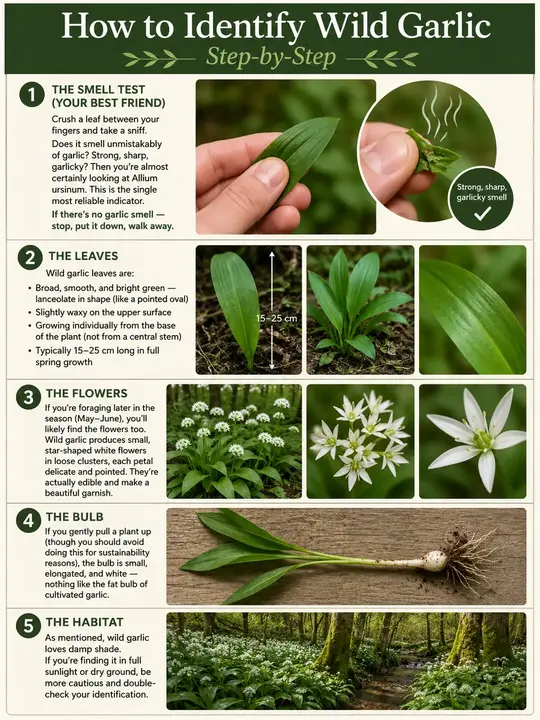
This is the most important part of the whole guide, so pay attention here. Identifying wild garlic correctly is non-negotiable before you eat anything. Here’s how to do it:
1. The Smell Test (Your Best Friend)
Crush a leaf between your fingers and take a sniff. Does it smell unmistakably of garlic? Strong, sharp, garlicky? Then you’re almost certainly looking at Allium ursinum. This is the single most reliable indicator. If there’s no garlic smell — stop, put it down, walk away.
2. The Leaves
Wild garlic leaves are:
- Broad, smooth, and bright green — lanceolate in shape (like a pointed oval)
- Slightly waxy on the upper surface
- Growing individually from the base of the plant (not from a central stem)
- Typically 15–25 cm long in full spring growth
3. The Flowers
If you’re foraging later in the season (May–June), you’ll likely find the flowers too. Wild garlic produces small, star-shaped white flowers in loose clusters, each petal delicate and pointed. They’re actually edible and make a beautiful garnish.
4. The Bulb
If you gently pull a plant up (though you should avoid doing this for sustainability reasons), the bulb is small, elongated, and white — nothing like the fat bulb of cultivated garlic.
5. The Habitat
As mentioned, wild garlic loves damp shade. If you’re finding it in full sunlight or dry ground, be more cautious and double-check your identification.
Dangerous Lookalikes: Don’t Skip This Section
Right, this is serious for a second. There are two plants that can grow near wild garlic that are genuinely toxic, and they can look similar to the untrained eye. Lives have been lost confusing these plants, so please read this carefully.
Lily of the Valley (Convallaria majalis) ⚠️
Highly toxic. It can share the same habitat as wild garlic and has similarly broad, oval leaves. Key differences:
- Leaves have parallel veins rather than a network of fine veins
- The leaves often appear in pairs, emerging from the same stem
- No garlic smell whatsoever when crushed
Lords and Ladies (Arum maculatum) ⚠️
Toxic. The leaves are arrow-shaped and darker, often with dark blotches — but in early spring the young leaves can look deceptively similar.
- Leaves have a distinctive arrow-shaped base
- No garlic smell
- Often has a slightly unpleasant, musty odour
The Golden Rule: If it doesn’t smell like garlic, don’t eat it. That’s it. No smell, no deal.
Best Time to Forage Wild Garlic
Wild garlic is a spring ephemeral — it appears, does its thing, and disappears before summer properly kicks in. Here’s roughly what to expect:
| Month | What You’ll Find |
|---|---|
| February–March | First tender young leaves pushing through |
| April | Peak leaf harvest — abundant and flavourful |
| May | Flowers appear — both leaves and flowers edible |
| June | Leaves yellowing, seeds forming — season ends |
The sweet spot for wild garlic foraging is April in most of the UK and central Europe, though this shifts a week or two earlier further south. Young leaves are the most tender and mild in flavour; older leaves get a bit tougher and more pungent.
How to Harvest Wild Garlic Responsibly
Foraging should always leave the environment better — or at least no worse — than you found it. Here’s how to harvest ethically:
- Only pick the leaves, not the bulbs. The bulb is what allows the plant to come back next year.
- Take no more than one-third of the leaves from any single plant or patch.
- Spread your picking across a wide area rather than stripping one spot bare.
- Use scissors or a sharp knife for a clean cut rather than ripping, which damages the plant.
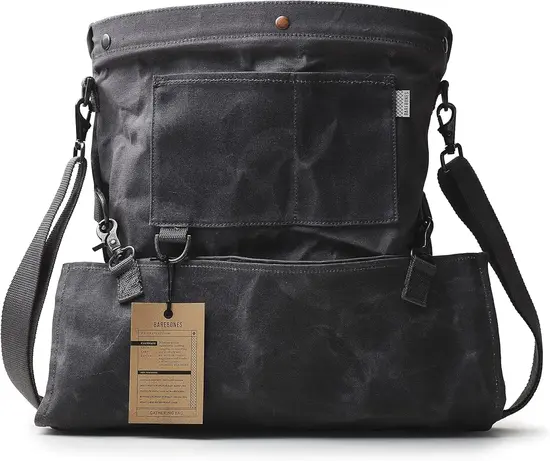
- Bring a bag — not a plastic bag, ideally. A cotton tote or a breathable foraging bag keeps leaves fresher.
- Check local regulations — in some countries and regions, foraging rules vary. In the UK, for example, picking for personal use on public land is generally fine, but commercial harvesting without landowner permission is not.
A good patch of wild garlic, properly managed, will come back richer every year. Treat it well.
Simple Ways to Use Wild Garlic in Food
So you’ve come home with a big, gloriously garlicky bundle of leaves — now what? Wild garlic is incredibly versatile in the kitchen. Here are some of the easiest and most delicious ways to use it:
Wild Garlic Pesto
Probably the most popular use, and for good reason. Just swap the basil in your regular pesto recipe for wild garlic leaves. Blend with olive oil, pine nuts or walnuts, parmesan, lemon juice, and a pinch of salt. Incredible on pasta, toast, or stirred into soup.
Wild Garlic Butter
Finely chop a handful of leaves and mix into softened butter with a squeeze of lemon and black pepper. Roll in cling film and freeze it. You’ll thank yourself in July when you put it on a steak.
Wild Garlic Soup
Sauté an onion in butter, add diced potato, stock, and a big bunch of wild garlic leaves. Simmer until soft, blend until smooth. Simple, seasonal, and gorgeous.
On Eggs
Finely chop and scatter over scrambled eggs, an omelette, or fried eggs. Five seconds of effort, massive payoff.
Fermented Wild Garlic (Lacto-Fermentation)
For the more adventurous: pack the leaves in a jar with a 2% salt brine and leave them to ferment for a few weeks. You get a funky, umami-rich condiment that lasts for months.
Conclusion: Get Out There and Forage
Wild garlic foraging really is one of the most accessible and rewarding ways to get into foraging — it’s abundant, unmistakable when you know what you’re doing, and genuinely delicious. The key things to remember: smell every leaf before you pick it, learn the lookalikes cold before you head out, harvest lightly and responsibly, and enjoy the fact that spring has handed you a free ingredient that chefs would charge a fortune for.
Quick recap before you go:
- Wild garlic = broad smooth leaves, strong garlic smell, white star flowers, damp woodland habitat
- Season: late February to early June (peak in April)
- Never eat it if it doesn’t smell like garlic
- Watch out for Lily of the Valley and Lords and Ladies
- Harvest leaves only, leave the bulbs, take no more than a third
- Use it in pesto, butter, soup, eggs, or ferment it
Now grab a your foraging bag, find your nearest ancient woodland, and go enjoy the best free ingredient spring has to offer. Happy foraging! 🌿
Frequently Asked Questions About Wild Garlic Foraging
Does wild garlic always smell like garlic?
Yes — always. Crushing a fresh leaf between your fingers should release a clear, unmistakable garlic scent. If there’s no smell, do not eat the plant. This is the most reliable safety check you have.
Is wild garlic in season all year?
No — it’s a spring plant. In most of the UK and Europe, the season runs roughly from late February to early June, with April being peak season. It completely dies back in summer and doesn’t reappear until the following late winter.
How do I store wild garlic after foraging?
Keep leaves unwashed in a damp cloth or loosely wrapped in paper towel inside a plastic bag in the fridge. They’ll stay fresh for 3–5 days this way. For longer storage, make pesto or butter and freeze it, or try lacto-fermentation.
Is it legal to forage wild garlic?
In the UK, picking plants for personal use is generally permitted under the Wildlife and Countryside Act 1981, but uprooting plants or foraging on private land without permission is not. Laws vary across Europe — always check local regulations and stick to public land or get explicit landowner permission.
Can you eat wild garlic flowers?
Yes! The white star-shaped flowers are completely edible and taste mildly of garlic. They make a beautiful garnish on salads and soups, and they’re perfectly safe to eat.
Is wild garlic the same as regular garlic?
They’re relatives — both in the Allium family — but they’re different plants. Wild garlic (Allium ursinum) has a milder, more herbaceous flavour than cultivated garlic (Allium sativum). You use the leaves, not a bulb. Think of it more like a garlic-flavoured herb than a direct substitute.
Disclaimer: This guide is for educational purposes. Always be 100% certain of your identification before consuming any wild plant. When in doubt, leave it out — or consult a qualified foraging expert in person.