
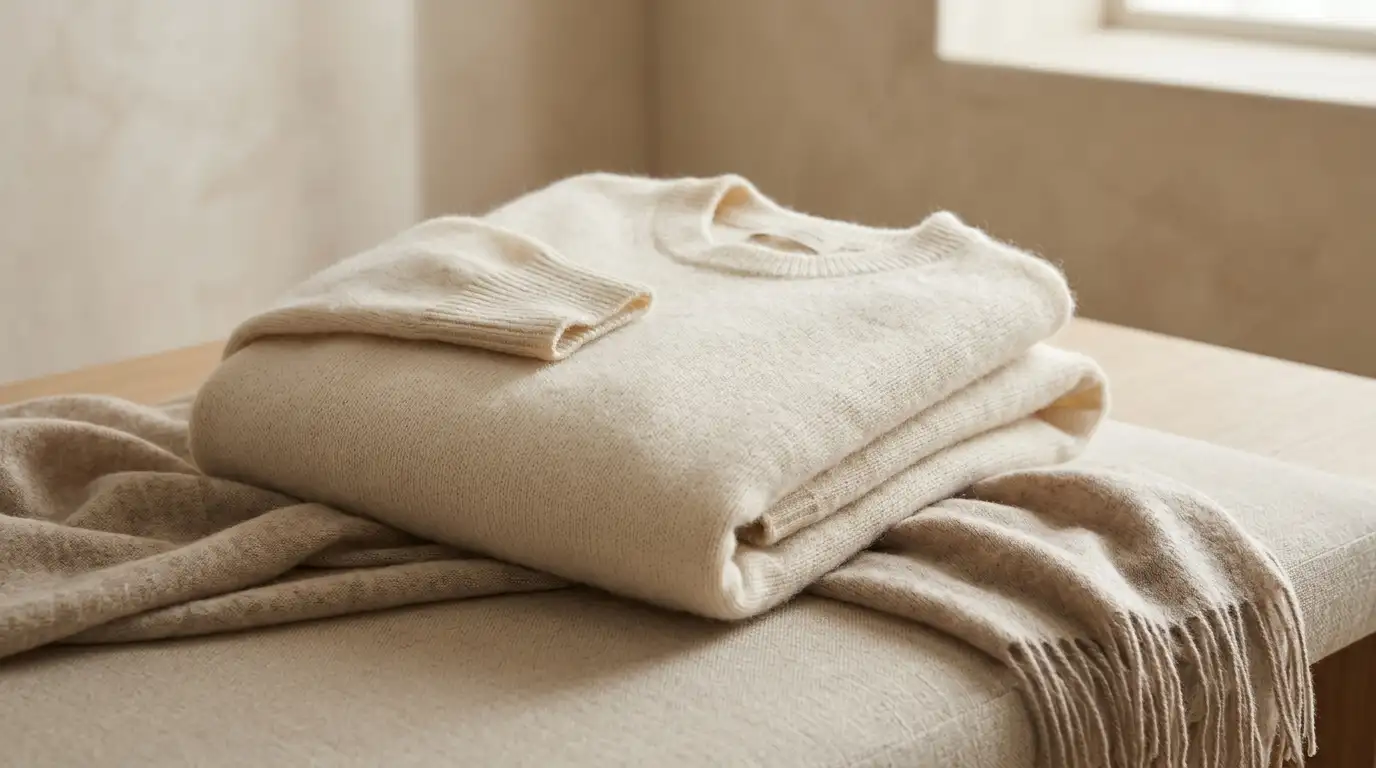

Cashmere is one of the most sought-after natural fibers in the fashion industry, prized for its exceptional softness, lightweight warmth, elegant appearance, and timeless appeal. From luxurious sweaters and scarves to sophisticated coats and accessories, cashmere has become synonymous with comfort and understated elegance. However, its price is considerably higher than that of ordinary wool, cotton, and many other fabrics.
Why is cashmere so expensive? The answer lies in the rarity of the fiber, the limited amount produced by each goat, the demanding harvesting process, and the extensive craftsmanship required to transform raw cashmere into a finished garment.
Unlike conventional sheep’s wool, cashmere comes from the exceptionally fine undercoat of specific goat breeds that live in regions with harsh winters and dramatic temperature changes. Producing high-quality cashmere requires careful collection, sorting, cleaning, processing, and manufacturing.
Understanding these factors helps explain why an authentic cashmere sweater can cost significantly more than a standard wool sweater and why premium cashmere remains a valuable investment in a well-considered wardrobe.
Table of Contents
Cashmere Comes From a Rare Natural Fiber
One of the primary reasons cashmere is expensive is the limited availability of its raw material.
Cashmere is obtained from the soft undercoat of cashmere-producing goats, particularly those raised in Mongolia, Inner Mongolia, China, Afghanistan, Iran, and other parts of Central Asia. These animals have developed a remarkably fine insulating layer beneath their coarser outer coats to protect themselves against extremely cold temperatures.
This delicate undercoat is what makes cashmere so desirable.
Unlike ordinary wool, which is harvested from sheep, cashmere fibers are exceptionally fine, lightweight, and soft against the skin. Their natural structure provides insulation without creating the heaviness associated with thicker wool fabrics.
The fiber is also seasonal. Goats naturally develop their insulating undercoat during colder months and shed it as temperatures rise. Farmers collect the valuable fibers during this limited period, rather than producing cashmere continuously throughout the year.
Because the material depends on specific animals, climates, and seasonal harvesting conditions, its supply is naturally restricted.
The rarity of the raw fiber is the foundation of cashmere’s high price.
Each Goat Produces Only a Small Amount of Cashmere
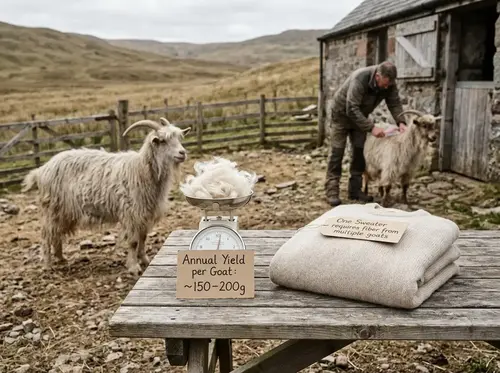
Another important reason cashmere is expensive is the surprisingly small quantity of usable fiber obtained from an individual goat.
A cashmere goat may produce a relatively substantial amount of hair, but only a small portion consists of the fine, valuable undercoat suitable for luxury textiles. The remaining outer hair is coarser and must be separated during processing.
Depending on the animal, climate, breed, and harvesting method, a goat may provide approximately 150–200 grams of usable cashmere fiber annually, although yields vary considerably.
This limited production creates a significant difference between cashmere and conventional wool.
Sheep can produce several kilograms of fleece in a single shearing, whereas cashmere goats provide much smaller quantities of their precious undercoat.
Consequently, manufacturers need fibers collected from numerous goats to produce a single garment.
For example, a cashmere sweater can require the usable undercoat collected from several animals, depending on its weight, size, construction, and fiber quality.
This limited yield makes it difficult to manufacture large quantities of genuine cashmere without increasing production costs.
Cashmere Harvesting Requires Careful Manual Work
The harvesting process also contributes significantly to the price of cashmere.
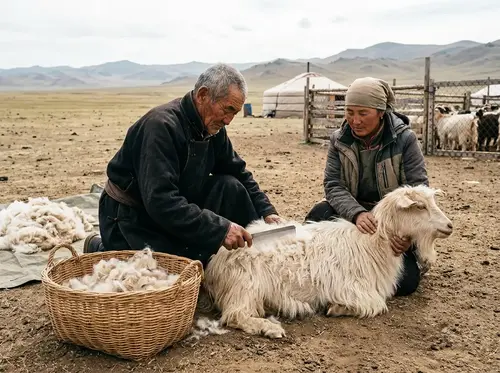
Unlike ordinary sheep’s wool, which is generally obtained through shearing, cashmere is traditionally collected by combing the goats during their natural shedding season.
The process requires patience because the valuable undercoat must be separated from the coarser outer guard hairs.
Farmers carefully comb the animals to remove the soft fibers without unnecessarily damaging the coat or causing discomfort.
In some production systems, shearing is also used, but the resulting fleece must undergo additional sorting and separation.
Once collected, the raw material is inspected and sorted according to several characteristics, including:
- Fiber fineness: Finer fibers generally produce softer and more luxurious fabrics.
- Fiber length: Longer fibers are often desirable because they can produce smoother yarns with fewer exposed ends.
- Color: Natural white, grey, and brown shades influence the material’s appearance and processing requirements.
- Cleanliness: Fibers containing less dirt and vegetable matter require less intensive cleaning.
- Consistency: Uniform fibers help manufacturers achieve more consistent yarn quality.
This labor-intensive process requires experience and specialized knowledge.
The careful handling of a relatively small amount of valuable raw material adds to the final cost of cashmere garments.
Separating Fine Cashmere From Coarse Guard Hairs Is Expensive
Raw cashmere does not arrive ready to be transformed into a luxury sweater.
After collection, the fibers contain coarse guard hairs, dirt, natural oils, and other unwanted materials. These impurities must be removed before spinning and manufacturing can begin.
One of the most important stages is dehairing, a process that separates the fine insulating undercoat from the thicker outer hairs.
This stage is essential because guard hairs can make the finished textile feel rough, uneven, and less comfortable.
The separation process requires specialized machinery and careful quality control. Manufacturers must ensure that the remaining fibers meet the required standards for fineness, softness, and consistency.
The material is subsequently washed and prepared for spinning.
The amount of usable fiber decreases during these stages because unwanted materials are removed. Therefore, manufacturers cannot simply convert every kilogram of collected raw fleece into finished cashmere fabric.
This loss of usable material increases the effective cost of producing each garment.
Premium cashmere requires particularly careful processing because even small amounts of coarse fibers can affect the final texture.
Cashmere Quality Depends on Fiber Fineness and Length
Not all cashmere is created equal.
The quality of cashmere depends on several technical characteristics, especially fiber diameter, staple length, cleanliness, and consistency.
Two cashmere sweaters may look similar at first glance but feel very different when worn. Their prices can also vary substantially because the underlying fibers may have different qualities.
Fiber Diameter
Fiber diameter is measured in microns, with one micron equal to one-millionth of a meter.
Fine cashmere commonly measures approximately 14–19 microns in diameter, although specifications vary among producers and quality classifications.
Generally, finer fibers feel softer and are more comfortable against sensitive skin.
Coarser fibers may still be suitable for certain products, but they typically do not provide the same delicate sensation associated with premium cashmere.
Fiber Length
Fiber length is another important consideration.
Longer fibers are generally easier to spin into smooth, consistent yarns. They can also help reduce the number of loose fiber ends on the fabric surface, which may contribute to pilling.
Shorter fibers can produce attractive garments, but they may require different spinning techniques and can be more prone to shedding.
Natural Color
Cashmere naturally comes in shades such as white, beige, brown, and grey.
White cashmere is particularly valued by some manufacturers because it can be dyed into a wider range of colors without the underlying natural shade influencing the result.
However, natural darker cashmere can also be desirable for garments that celebrate the original color of the fiber.
The combination of fineness, length, and careful processing determines much of the quality behind a premium cashmere garment.
Cashmere Production Requires Skilled Craftsmanship
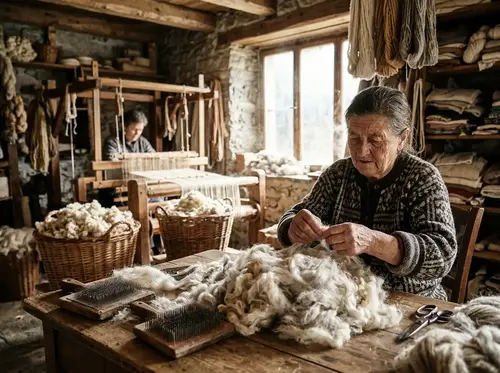
The journey from raw fiber to finished clothing involves several manufacturing stages, each requiring technical expertise.
After cleaning and dehairing, the fibers are prepared and spun into yarn. The yarn is then knitted or woven into products such as sweaters, scarves, cardigans, coats, and blankets.
The quality of the final garment depends not only on the raw material but also on the manufacturing techniques used.
For instance, knitting tension, yarn thickness, garment construction, finishing, and quality inspection all influence the appearance and durability of cashmere clothing.
Luxury manufacturers often pay particular attention to details such as:
- Smooth and consistent stitching.
- Carefully finished seams.
- Well-constructed collars and cuffs.
- Balanced garment proportions.
- Comfortable weight and drape.
- Consistent texture throughout the garment.
Some premium products also undergo additional finishing treatments to improve softness and appearance.
These processes require specialized machinery, experienced workers, and strict quality control.
A well-made cashmere sweater is therefore the result of both a valuable natural material and considerable manufacturing expertise.
Cashmere Provides Exceptional Warmth Without Excessive Weight
One of the most appealing characteristics of cashmere is its ability to provide warmth while remaining remarkably lightweight.
Its fine fibers create a soft textile structure that traps insulating air close to the body. This helps retain warmth without requiring the thickness or weight associated with some traditional wool garments.
For this reason, cashmere is particularly popular for autumn and winter clothing.
A lightweight cashmere sweater can provide considerable comfort underneath a tailored coat, while a cashmere scarf adds warmth without feeling bulky around the neck.
This combination of warmth, softness, and lightness makes cashmere especially attractive for people who appreciate refined clothing that feels comfortable throughout the day.
Unlike heavy winter fabrics, cashmere can create an elegant silhouette without adding unnecessary volume.
Its natural drape also contributes to its sophisticated appearance.
These qualities explain why cashmere remains a preferred material for luxury knitwear and cold-weather accessories.
Cashmere Is Soft, Comfortable, and Naturally Breathable
Softness is one of the defining characteristics of cashmere.
The exceptionally fine fibers create a smooth surface that feels gentle against the skin. Unlike some traditional wool fabrics, which can feel scratchy or irritating, high-quality cashmere generally offers a more comfortable wearing experience.
This is particularly important for garments worn directly against the body, such as sweaters, lightweight cardigans, and scarves.
Cashmere also offers natural breathability. Its fiber structure helps regulate warmth and moisture, making it comfortable in different indoor and outdoor environments.
Although cashmere is particularly associated with winter, lighter-weight cashmere garments can also be worn during transitional seasons.
For example, a fine-gauge cashmere sweater can complement tailored trousers during autumn, while a lightweight cashmere cardigan works beautifully over a simple cotton shirt in spring.
Its versatility makes it more than a seasonal luxury.
Sustainable Cashmere Production Can Increase Costs
The environmental impact of cashmere production is another important consideration.
Cashmere goats are naturally adapted to cold and often fragile environments. However, increasing demand for cashmere has contributed to pressure on some grazing landscapes, particularly in parts of Mongolia.
When too many animals graze the same land, vegetation can struggle to regenerate. This can contribute to soil degradation, erosion, and desertification.
Responsible cashmere production therefore requires careful management of grazing areas, herd sizes, and animal welfare.
More responsible producers may invest in:
- Sustainable grazing practices.
- Better pasture management.
- Responsible herd management.
- Animal welfare monitoring.
- Fiber traceability.
- Improved harvesting methods.
- Transparent relationships with local farming communities.
These measures can increase production expenses, but they are important for protecting the landscapes and communities involved in cashmere production.
Consumers increasingly want to understand where their clothing comes from and how its materials are obtained.
For this reason, traceability and responsible sourcing have become valuable considerations when purchasing premium cashmere.
However, a high price alone does not guarantee sustainable production. Buyers should look for meaningful sourcing information and credible certifications rather than relying exclusively on luxury branding.
Why Cashmere Sweaters Cost More Than Regular Wool Sweaters
The difference between cashmere and ordinary wool becomes particularly noticeable when comparing sweaters.
Both materials provide warmth, but they have different characteristics and production requirements.
| Feature | Cashmere | Regular sheep’s wool |
|---|---|---|
| Source | Cashmere goat undercoat | Sheep fleece |
| Fiber availability | Relatively limited | Generally more abundant |
| Texture | Exceptionally soft | Varies from soft to coarse |
| Weight | Lightweight | Varies by construction |
| Warmth | Excellent insulation | Excellent insulation |
| Processing | Requires specialized dehairing | Generally simpler fiber preparation |
| Price | Usually more expensive | Available at a wider range of prices |
| Typical use | Luxury knitwear and accessories | Everyday knitwear and outerwear |
The most important difference is the availability and processing of the raw material.
Sheep produce considerably more fleece than cashmere goats produce usable undercoat. This makes ordinary wool more accessible for large-scale textile manufacturing.
Cashmere also requires additional processing to separate the fine fibers from coarse guard hairs.
Consequently, manufacturers must invest more resources to produce a comparable quantity of finished material.
However, regular wool should not automatically be considered inferior. Fine merino wool, for example, can also be exceptionally soft, comfortable, and suitable for premium clothing.
The right choice depends on your priorities, budget, and intended use.
Does More Expensive Cashmere Always Mean Better Quality?
Not necessarily.
The price of a cashmere garment reflects several factors, including fiber quality, manufacturing costs, brand positioning, design, and retail margins.
A designer cashmere sweater may cost several times more than a comparable garment from a specialist knitwear manufacturer, even when both use high-quality fibers.
Brand reputation, country of manufacture, exclusivity, and marketing can all influence the final retail price.
This is why we should look beyond the price tag when evaluating cashmere.
A genuinely high-quality garment should demonstrate good fiber characteristics, careful construction, and consistent finishing.
Before purchasing, consider the following:
- Check the fiber composition. Look for clear labeling indicating 100% cashmere if that is what you want. Blended garments can still be attractive, but their composition should be transparent.
- Examine the texture. Quality cashmere should feel soft and comfortable. Excessive roughness may indicate coarser fibers or inferior processing.
- Inspect the stitching. Look for even knitting, clean seams, and well-finished edges.
- Consider the garment’s weight. A heavier sweater is not automatically better. Weight should be appropriate for its intended construction and use.
- Research the manufacturer. Established knitwear specialists often provide more useful information about fiber sourcing, construction, and manufacturing than vague luxury marketing descriptions.
- Compare the actual specifications. Fiber fineness, length, composition, and construction are more meaningful than descriptions such as premium, exclusive, or ultra-luxury.
Paying attention to these details can help us distinguish genuine quality from expensive branding.
Why Does Mongolian Cashmere Have Such a Strong Reputation?
Mongolia is one of the world’s most important cashmere-producing regions.
Its harsh continental climate, characterized by extremely cold winters and significant seasonal temperature changes, encourages goats to develop dense insulating undercoats.
These conditions contribute to the country’s reputation for producing fine cashmere.
Mongolian cashmere is particularly appreciated in the luxury textile industry for its softness, warmth, and traditional production heritage.
However, not all Mongolian cashmere is identical. Quality varies according to the animal, the region, the fiber characteristics, and the processing methods.
The same principle applies to cashmere produced in other countries.
A garment’s quality should never be judged solely by the geographical origin printed on its label.
Instead, we should consider the actual fiber specifications, manufacturing standards, and transparency of the supplier.
How Long Does Cashmere Last?
One reason people are willing to pay more for cashmere is its potential longevity.
A well-made cashmere garment can remain a wardrobe staple for many years when properly maintained.
However, durability depends on several factors, including fiber quality, yarn construction, knitting density, frequency of wear, and care.
Cashmere is naturally delicate compared with many heavier textile materials. It can develop small fiber balls, commonly called pilling, particularly in areas exposed to friction.
This is a normal characteristic of many fine natural fibers and does not automatically mean that a garment is defective.
To help preserve cashmere, we recommend the following care practices:
- Wash gently: Follow the manufacturer’s care label. Hand washing or an appropriate wool or cashmere washing cycle may be suitable.
- Use a specialist detergent: Choose a mild detergent formulated for delicate wool and cashmere.
- Avoid excessive heat: Hot water and high-temperature drying can damage delicate fibers and affect garment shape.
- Dry flat: Gently remove excess water without twisting the garment, then reshape and dry it flat.
- Store carefully: Keep clean cashmere in a dry, breathable storage space.
- Protect against moths: Use appropriate storage protection, particularly when putting winter garments away for warmer months.
- Remove pills gently: Use a suitable cashmere comb or fabric tool without applying excessive pressure.
Cashmere should also be given time to rest between wears. This helps the fibers recover their shape and reduces unnecessary friction.
With appropriate care, a quality cashmere sweater can become one of the most frequently worn and appreciated pieces in a wardrobe.
Is Cashmere Worth the Money?
Whether cashmere is worth the investment depends on how much you value comfort, natural materials, craftsmanship, and long-term wardrobe versatility.
For someone who wears knitwear frequently during colder months, a high-quality cashmere sweater can offer considerable value.
Its lightweight warmth makes it easy to layer, while its refined appearance works with both casual and sophisticated outfits.
A neutral cashmere sweater in beige, charcoal, navy, cream, or camel can complement numerous wardrobe combinations.
It can be styled with tailored trousers, denim, wool skirts, or elegant outerwear.
Rather than purchasing several inexpensive sweaters that may lose their appearance quickly, investing in a carefully selected cashmere piece can be a more considered approach to building a wardrobe.
However, cashmere is not essential for everyone.
Merino wool and other high-quality natural fibers can provide excellent comfort and warmth at more accessible prices.
The best purchase is one that meets your needs, fits your budget, and offers genuine quality.
How to Make Cashmere Look Elegant Without Spending a Fortune
Enjoying the aesthetic of cashmere does not require filling an entire wardrobe with expensive knitwear.
A more intentional approach is to invest in a few versatile pieces that can be worn repeatedly.
A simple cashmere crewneck sweater, for example, can create several sophisticated combinations.
Consider these styling ideas:
- Quiet luxury: Pair a cream cashmere sweater with tailored beige trousers, leather loafers, and a structured handbag.
- Casual elegance: Combine a grey cashmere sweater with dark denim and minimalist ankle boots.
- Office sophistication: Layer a fine-gauge cashmere cardigan over a crisp white shirt with tailored trousers.
- Winter layering: Wear a cashmere sweater beneath a long wool coat with a coordinating scarf.
- Weekend comfort: Choose a relaxed cashmere knit with straight-leg trousers and understated leather sneakers.
The secret is to focus on quality, fit, and coordination rather than visible logos or excessive decoration.
Cashmere naturally complements a minimalist wardrobe because its texture and drape provide visual interest without requiring elaborate styling.
This is one reason it remains closely associated with timeless fashion and understated sophistication.
Frequently Asked Questions About Cashmere
Why is cashmere more expensive than wool?
Cashmere is more expensive because it comes from the limited fine undercoat of specific goats. Each animal produces relatively little usable fiber, and additional processing is required to separate the fine undercoat from coarse guard hairs.
Is 100% cashmere worth buying?
Yes, 100% cashmere can be an excellent purchase when the fiber quality and construction are good. However, the label alone does not guarantee softness, durability, or superior craftsmanship.
Why is Mongolian cashmere so expensive?
Mongolian cashmere is valued for its natural fiber characteristics and the region’s traditional cashmere production. Its limited supply, harvesting requirements, and processing contribute to its cost.
Does cashmere keep you warmer than wool?
Cashmere offers excellent insulation for its weight, making it particularly attractive for lightweight winter garments. However, warmth depends on fiber characteristics, fabric construction, thickness, and garment design. Some wool garments can be equally or more insulating.
Does cashmere pill easily?
Cashmere can develop pills through friction, particularly when new or frequently worn. Higher-quality, longer fibers and good yarn construction can help reduce excessive pilling, but no cashmere garment is completely immune.
How can you tell if cashmere is genuine?
Start by checking the fiber composition label and purchasing from a reputable manufacturer. Examine the texture, construction, and product information. Softness alone is not proof of authenticity, and reliable laboratory fiber testing provides stronger confirmation when necessary.
What is the difference between cashmere and merino wool?
Cashmere comes from the undercoat of cashmere goats, whereas merino wool comes from Merino sheep. Both can be soft, lightweight, and insulating. Cashmere is generally more expensive because its usable fiber supply is more limited and requires specialized processing.
Can cashmere be worn all year?
Yes. Lightweight cashmere garments can be comfortable during spring and autumn, while heavier knits are better suited to winter. The most appropriate choice depends on the garment’s weight, construction, and local climate.
Is expensive cashmere always better than affordable cashmere?
No. Higher prices may reflect designer branding, retail positioning, or exclusivity rather than superior fiber quality. Compare the material specifications, construction, and manufacturer before making a decision.
Final Thoughts: Why Is Cashmere So Expensive?
Cashmere is expensive because it combines a rare natural fiber with limited annual production, careful harvesting, specialized processing, and skilled textile craftsmanship.
Its exceptional softness, lightweight warmth, natural breathability, and elegant appearance distinguish it from many conventional fabrics.
However, the value of cashmere goes beyond its luxurious reputation. A well-made garment can become a long-lasting part of a thoughtfully curated wardrobe, offering comfort and versatility across different seasons.
When choosing cashmere, we should look beyond designer labels and focus on fiber quality, construction, responsible sourcing, and proper care.
Ultimately, cashmere is expensive because producing exceptional quality requires both a precious natural material and considerable expertise.