



So, you’ve looked at your suitcase before a trip and thought, “Do I really need all of this?” — and the answer, spoiler alert, is almost always no.
Whether you’re planning a weekend escape or a three-month adventure, this step by step guide to minimalist travel is your permission slip to stop overpacking, over-planning, and overthinking.
Minimalist travel isn’t about suffering or showing off how little you can survive on (although, yeah, there’s a tiny bit of that satisfying feeling involved).
It’s about traveling lighter — in your bag and your head — so you can actually enjoy the journey instead of dragging it around.
Let’s break down this guide to minimalist travel, step by step.
Table of Contents
What Even Is Minimalist Travel?
Minimalist travel is the philosophy of taking only what you genuinely need on a trip and ditching the rest. Think: one bag, intentional packing, slower itineraries, and fewer decisions weighing you down every morning.
It’s closely related to ideas like slow travel, one-bag travel, and intentional travel — all of which prioritize experience over stuff. And honestly? Once you try it, going back to checked luggage feels like a punishment.
The goal isn’t to be miserable with three t-shirts forever. It’s to figure out what actually adds value to your trips versus what’s just taking up space in your bag — and your brain.
Step 1: Start With a Clear “Why”
Before you even open your closet, get honest with yourself about why you travel. Are you chasing new experiences? Rest? Connection? Adventure?
Your “why” shapes everything — your destination choices, how long you stay, how much you bring. Minimalist packing starts with minimalist thinking. If you’re traveling to disconnect and recharge, you probably don’t need five outfit options for “just in case” dinners that might not even happen.
Actionable tip: Write down three things you want to feel on this trip. Let those guide every packing decision. Anything that doesn’t support those feelings? Leave it behind.
Step 2: Choose the Right Bag (And Commit to It)
Here’s where things get real: choose one bag and make it your entire universe.
Most minimalist travelers swear by a carry-on sized backpack — somewhere in the 20–40 liter range. Brands like Osprey, Peak Design, and Aer make incredible one-bag travel packs that are TSA-friendly, comfortable, and surprisingly roomy when packed with intention.
Why just one bag? Because when you have checked luggage, you fill it. It’s like the travel version of Parkinson’s Law — your stuff expands to fill whatever space you give it.
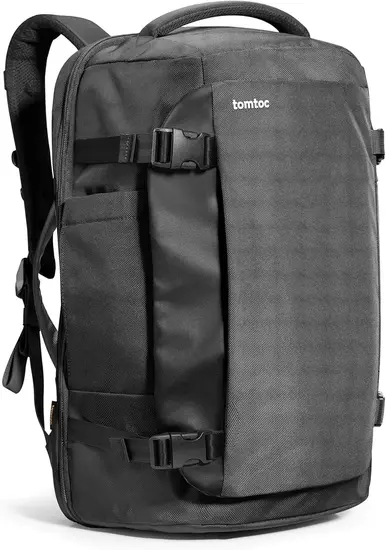
Pro tips for choosing your bag:
- Look for a pack that fits under 45 linear inches (standard carry-on size)
- Padded laptop sleeve is a game-changer if you work remotely
- Hip straps matter if you’ll be doing any walking
- Pick a neutral color. You’ll be wearing this bag in every photo for the foreseeable future.
Step 3: Build Your Minimalist Packing List
Okay, this is the part everyone comes here for. Let’s talk clothes — specifically, how to not bring your entire wardrobe.
The golden rule of minimalist packing: everything must mix and match. Every item of clothing you pack should work with at least two other items. If it doesn’t play well with others, it doesn’t make the team.
A solid Guide to Minimalist Travel list for 1–4 weeks:
Clothing
- 2–3 t-shirts or tops (neutral tones work best)
- 1 versatile button-down or light layer
- 2 pairs of pants/shorts (one casual, one slightly nicer)
- 1 packable rain jacket or light jacket
- 3–5 pairs of underwear (merino wool if your budget allows — it dries fast and doesn’t smell)
- 3 pairs of socks
- 1 pair of walking shoes + 1 pair of sandals or slip-ons
Toiletries
- Solid shampoo bar + conditioner bar (no liquid rules = no stress)
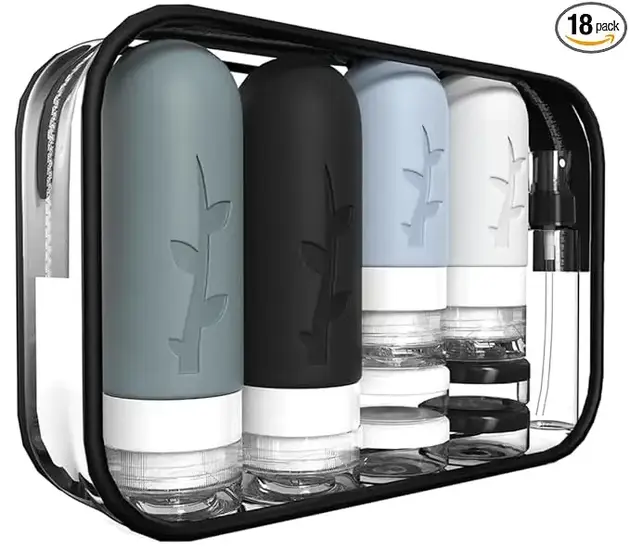
- Travel-sized toiletries in a small clear bag
- Sunscreen, deodorant, and whatever skincare you actually use daily (be ruthless here)
- Microfiber towel if your accommodation doesn’t provide one
Tech & Extras
- Phone + charger + universal adapter
- Earbuds or headphones
- Portable power bank
- One good book or e-reader (e-reader wins, always)
- Travel journal if you’re into that (it’s a good thing to be into)
Documents & Money
- Passport + digital + physical copies stored separately
- A small amount of local cash + travel-friendly debit/credit card
- Lightweight document wallet
That’s it. Seriously. That list has gotten people through month-long trips across multiple continents.
Step 4: Apply the “One Week Rule”
Here’s a mindset shift that changes everything: you don’t pack for the length of your trip, you pack for one week and do laundry.
Even if you’re traveling for six weeks, you only ever need about seven days’ worth of items — because laundromats, hotel sinks, and Airbnb washing machines exist.
Most destinations have laundry facilities, and doing a quick wash every 5–7 days becomes weirdly satisfying. It’s part of the rhythm of slow, intentional travel.
Merino wool items are a minimalist traveler’s best friend here — they’re naturally odor-resistant, dry quickly, and can be hand-washed in a sink and ready to wear in a few hours.
Step 5: Simplify Your Itinerary
Minimalist travel isn’t just about what you pack — it’s about how you plan. And the honest truth is: most of us over-plan our trips to the point where we’re exhausted before they even start.
The minimalist travel approach to itinerary planning? Fewer destinations, deeper experiences.
Instead of hitting five cities in ten days (been there, done that, remember nothing), pick two or three places and actually hang out in them. Eat at spots the locals go to. Walk without a destination. Sit in a café for two hours. Get lost on purpose.
This slower style of travel — sometimes called slow travel — is not only more fulfilling, it’s almost always cheaper. You spend less on transport, you negotiate better rates on longer stays, and you actually have time to find the good food (which is always hidden somewhere that requires walking fifteen extra minutes).
Practical tips:
- Leave at least one full “blank” day per week in your itinerary
- Use apps like Rome2Rio to find affordable, local transport options
- Stay in one place for at least 3–4 nights to start feeling like a local
- Book accommodation with a kitchen when possible — cooking occasionally saves money and is genuinely fun
Step 6: Do the “10-Day Test” Before Every Trip
Before you zip up your bag, do this: lay everything out and ask yourself, “Would I still want this after 10 days on the road?”
If the answer is “meh, maybe,” it doesn’t go. Full stop.
You’d be amazed how many things that feel essential at home become dead weight by day three of a trip. That backup pair of shoes? You’ll wear the same ones every day anyway. The “just in case” formal outfit? You’ll find something at a local market if you actually need it — and it’ll be more interesting anyway.
Also, here’s a fun exercise: after your last trip, look at what you barely touched. That’s your packing list for next time.
Step 7: Embrace the “Buy There, Leave There” Philosophy
One of the most freeing parts of minimalist travel is accepting that you don’t need to bring everything from home. Most things you might need — a cheap umbrella, extra sunscreen, a forgotten charger — exist at your destination. Often cheaper.
And if you fall in love with something on your trip — a scarf, a book, a ceramic mug — you can buy it, use it, enjoy it, and either mail it home or leave it for the next traveler at your hostel. No guilt. That is the philosophy.
This mindset also makes you more spontaneous. When you’re not worried about fitting things into a packed bag, you’re free to say yes to the local artisan market, the unexpected detour, the pottery class in a small town you almost didn’t stop in.
The Unexpected Perks of Minimalist Travel Nobody Talks About Enough
Look, most articles will tell you minimalist travel saves money (true) and reduces stress (also true). But here are the under-talked-about wins:
- You move faster. Trains, buses, metro systems — all of it becomes effortless when your only bag fits overhead.
- You look like you know what you’re doing. (Confidence level: local. Actual knowledge level: still Googling things.)
- You waste less time at airports. No checked bags = no waiting 40 minutes at baggage claim. This alone is worth it.
- Your trip becomes the story, not your stuff. You stop thinking about what to wear and start thinking about where to go.
- You get better at decisions in general. Minimalist thinking, once you practice it in travel, tends to quietly improve other areas of life too. No promises. But also, yes.
Guide to Minimalist Travel Final Thoughts: Start Small, Stay Curious
You don’t have to nail this all at once. The best thing about a step by step guide to minimalist travel is that every trip is a chance to refine your approach.
Maybe this time you bring one fewer pair of shoes. Next time, you ditch the full-size toiletries. The trip after that, you stay somewhere for two weeks instead of bouncing around.
Minimalist travel, at its core, is just a way of asking: what do I actually need to be happy on the road? And the answer, almost always, is less than you think — and more of what already surrounds you when you travel with intention.
Pack light. Stay curious. Go slow.
Have you tried minimalist travel? What’s one thing you always thought you needed but learned to leave behind? Drop it in the comments — the community always loves a good “why did I ever pack that” story.

