


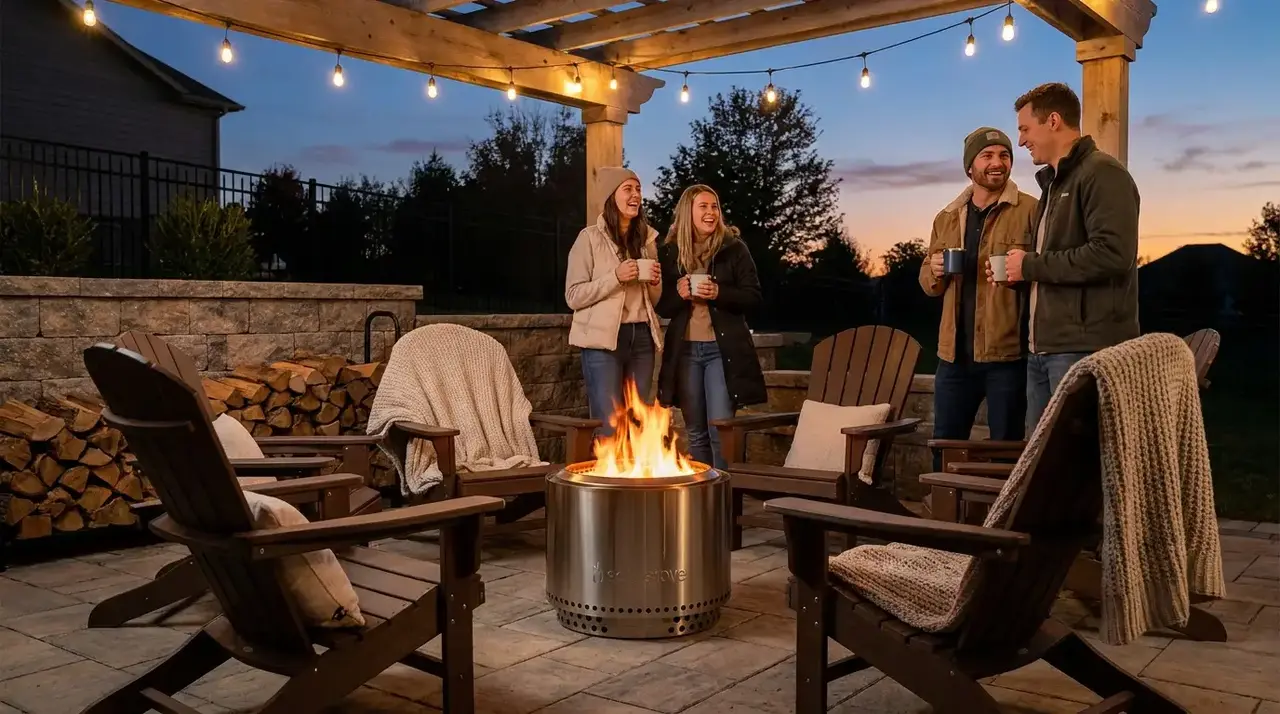
A Solo Stove transforms outdoor gatherings with efficient airflow, reduced smoke, and sleek design—but unlocking its full potential requires more than simply lighting wood.
Whether we are using a Solo Stove Bonfire, Yukon, Ranger, or Mesa, mastering the right techniques dramatically improves heat output, fuel efficiency, and overall fire pit performance.
With the right strategies, we can enjoy cleaner burns, easier ignition, longer-lasting fires, and a safer backyard experience.
Table of Contents
Choosing the Best Wood for a Solo Stove
The foundation of an exceptional Smokeless fire pit experience begins with selecting premium firewood. Since Solo Stove’s signature secondary combustion system depends on proper airflow and dry fuel, poor wood choices reduce performance.
Use Seasoned Hardwood for Optimal Burn
The best firewood options include:
- Oak
- Maple
- Hickory
- Ash
- Birch
These hardwoods burn hotter, longer, and cleaner than softwoods. They produce less smoke and create consistent coals that maximize the stove’s airflow technology.
Avoid Green or Wet Wood
Fresh-cut or damp wood introduces moisture into the fire, causing:
- Excessive smoke
- Difficulty igniting
- Reduced heat
- More ash buildup
For the best results, wood moisture should remain below 20%. Kiln-dried firewood often delivers the cleanest and most efficient portable fire pit burn.
Mastering the Perfect Solo Stove Fire Setup
Efficient fire building ensures the Smokeless fire pit’s vent system operates as designed.
Start with a Bottom-Up Fire Structure
We should begin with:
- Fire starter or cotton balls coated with petroleum jelly
- Dry tinder such as small twigs
- Kindling
- Small split logs
- Larger hardwood pieces
This layered approach encourages quick ignition while feeding oxygen through the lower vents.
Do Not Overload the Fire Pit
A common mistake is stacking wood too high. Logs should remain below the top vent holes to preserve airflow. Overloading blocks secondary combustion and increases smoke.
Lighting a Solo Stove Quickly and Easily
Best Fire Starters
Reliable options include:
- Wax cubes
- Fatwood sticks
- Dryer lint with petroleum jelly
- Commercial fire starters
Avoid lighter fluid or gasoline, as these can damage the stainless steel and create dangerous flare-ups.
Use a Long Lighter
A butane wand or long fireplace lighter provides safer ignition while keeping hands away from flames.
Reducing Smoke Even Further
Although wood-burning stove is designed for low smoke, improper use can still produce noticeable smoke.
Key Smoke Reduction Tips
- Burn only dry hardwood
- Keep vents unobstructed
- Avoid overpacking
- Allow fire to establish before adding larger logs
- Clean ash regularly
Position Matters
Wind direction affects airflow. Place the stove in an open area where lower vents are not blocked by walls, furniture, or dense grass.
Cleaning and Maintaining Your Outdoor Fire Pit
Routine maintenance preserves efficiency and appearance.
How to Remove Ash Properly
After the stove cools completely:
- Turn it upside down
- Shake out ash
- Use a soft brush for remaining residue
Frequent ash removal prevents vent blockage.
Cleaning Stainless Steel Exterior
For discoloration or soot:
- Use warm water and mild soap
- Apply stainless steel cleaner for shine
- Avoid abrasive steel wool
Heat marks are normal and do not affect function.
Cooking Tips for Smokeless fire pit Owners
While Fire bowl excels as a fire pit, it also offers cooking versatility.
Use Accessories
Popular additions include:
- Grill top
- Cast iron pans
- Tripod systems
- Pie irons
Wait for Coals, Not Flames
Cooking directly over large flames can scorch food. We should wait until wood burns down into hot embers for more controlled heat.
Best Foods for Solo Stove Cooking
- Burgers
- Sausages
- Marshmallows
- Vegetables
- Foil packet meals
Smokeless fire pit Safety Tips Every Owner Should Follow
Safety remains essential even with advanced fire pit design.
Proper Placement
Always position Fire bowl on:
- Stone
- Gravel
- Concrete
- Heat-resistant mats
Avoid wooden decks without a protective stand.
Keep Distance
Maintain at least 6 feet from structures, furniture, or flammable materials.
Supervise Constantly
Never leave a burning outdoor fire pit unattended, especially around children or pets.
Using Solo Stove in Different Weather Conditions
Windy Days
Moderate airflow can improve combustion, but excessive wind may create sparks. Use a spark screen when needed.
Cold Weather
Solo Stove performs exceptionally well in winter. Dry air often enhances combustion, making it ideal for colder evenings.
Rain and Moisture
Never store uncovered outdoors long-term. Use a weather-resistant cover to prevent rust spots and water accumulation.
Maximizing Heat Output
Many users want stronger warmth from their outdoor fire pit.
Choose the Right Stove Size
- Ranger: Portable, ideal for small groups
- Bonfire: Balanced heat and versatility
- Yukon: Maximum heat for larger gatherings
Reflect Heat
Arrange seating closer in a circle and consider wind barriers that do not block vents.
Solo Stove Accessories Worth Considering
The right accessories enhance usability significantly.
Top Recommended Accessories
- Stand
- Shelter cover
- Fire pit tools
- Heat deflector
- Spark screen
A heat deflector especially increases warmth by redirecting rising heat outward.
Common Solo Stove Mistakes to Avoid
Burning Trash or Treated Wood
Pressure-treated lumber, painted wood, or garbage can release toxic fumes and damage the stove.
Ignoring Airflow Design
Blocking vents with ash, debris, or oversized logs compromises performance.
Using Charcoal Incorrectly
Solo Stove is engineered primarily for wood. Charcoal may not optimize airflow the same way unless using designated cooking attachments.
Portable Solo Stove Tips for Camping
Pack Smart
For Ranger or Mesa users:
- Carry dry wood or pellets
- Bring fire starters
- Use carrying case
- Clean before transport
Follow Local Fire Regulations
Always verify campsite burn restrictions before use.
Extending the Life of Your Solo Stove
Storage Best Practices
- Store indoors or covered
- Keep dry
- Clean after each use
- Avoid saltwater exposure
Prevent Cosmetic Wear
Though stainless steel is durable, repeated moisture exposure can accelerate surface imperfections.
Creating the Best Solo Stove Backyard Experience
To elevate gatherings:
Atmosphere Enhancers
- Adirondack chairs
- Outdoor blankets
- String lights
- S’mores station
- Firewood rack
Combining comfort with efficient fire design transforms a simple fire pit into a premium outdoor living centerpiece.
Final Thoughts on Solo Stove Mastery
Using a Solo Stove effectively means understanding fuel quality, airflow, maintenance, and safety.
By choosing seasoned hardwood, building fires correctly, cleaning regularly, and adding practical accessories, we can dramatically improve performance while enjoying nearly smokeless flames.
Whether for backyard relaxation, camping adventures, or social gatherings, these Solo Stove tips ensure every fire burns brighter, cleaner, and more efficiently.

