

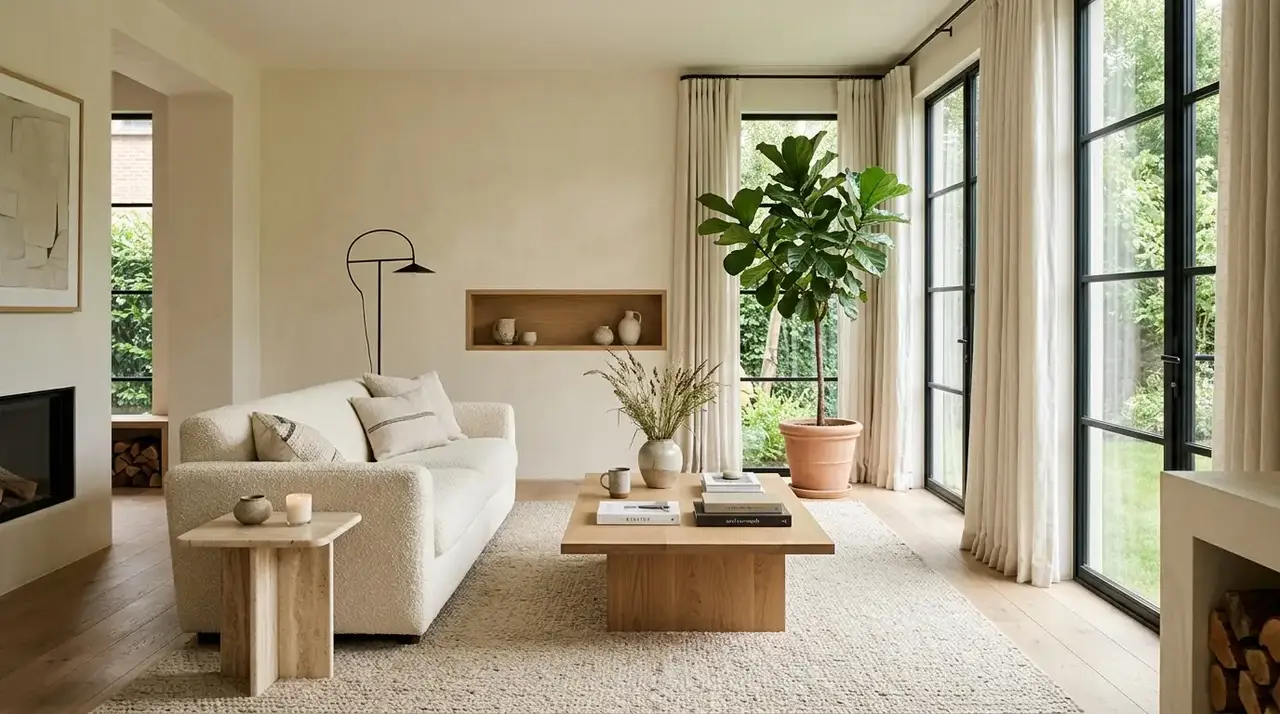

modern organic interior design brings together clean-lined furniture, natural materials, earthy colors, soft textures, and plenty of breathing room. The result feels polished enough for a contemporary home while retaining the warmth and comfort that make a room inviting.
The style works beautifully in living rooms, bedrooms, kitchens, dining areas, and even small apartments. Its appeal comes from balance: a streamlined sofa beside a rough wood table, smooth plaster walls against woven accents, or a sculptural lamp paired with linen curtains.
If you want a home that feels calm, sophisticated, and connected to nature, organic modern interior design gives you a practical framework to achieve it.
Table of Contents
What Is Organic Modern Interior Design?
Modern organic interior design is a decorating style that combines contemporary simplicity with natural materials, earthy colors, tactile surfaces, and relaxed shapes.
The modern side comes through in uncluttered layouts, simple silhouettes, restrained decoration, and functional furniture. The organic side comes through in wood, stone, linen, wool, clay, rattan, plants, and imperfect handmade details.
The Core Elements of Organic Modern Style
| Element | What to Choose |
|---|---|
| Color | Warm white, beige, taupe, sand, clay, olive, brown |
| Wood | Oak, walnut, ash, reclaimed or lightly finished timber |
| Textiles | Linen, cotton, wool, boucle |
| Furniture | Clean lines with rounded or softened edges |
| Lighting | Paper, linen, ceramic, wood, or sculptural fixtures |
| Decor | Pottery, branches, books, baskets, plants |
| Surfaces | Stone, plaster, limewash, travertine, textured wood |
| Overall mood | Calm, warm, uncluttered, natural |
The key is restraint. A room can contain several natural materials without feeling busy when the colors and forms remain connected.
How to Create an Modern Organic Interior Design
Start with a warm neutral foundation, then build the room through natural materials, varied textures, gentle curves, and carefully chosen decorative pieces.
The easiest formula is:
Warm neutral base + natural material + soft texture + sculptural shape + greenery + breathing room.
You don’t need to replace everything in a room. Changing the lighting, adding a larger natural-fiber rug, introducing wood accents, and removing visual clutter can shift the entire atmosphere.
1. Build a Warm Neutral Color Palette
Organic modern rooms usually begin with colors inspired by nature.
Think warm ivory rather than stark white. Consider mushroom, oatmeal, sand, camel, taupe, muted brown, clay, olive, and soft charcoal.
A useful starting palette might look like this:
- 50% warm white or cream
- 30% beige, taupe, or natural wood
- 15% deeper earthy tones
- 5% accent color
The percentages aren’t a decorating rule. They’re simply a useful way to keep the room visually balanced.
Best Organic Modern Color Combinations
Cream + oak + camel: Soft and welcoming.
Warm white + walnut + olive: Richer and more grounded.
Taupe + travertine + brown: Sophisticated and earthy.
Sand + black + natural wood: A slightly sharper contemporary look.
Ivory + clay + linen: Relaxed and Mediterranean-inspired.
Keep strong colors limited to a few pieces. A terracotta vase or olive cushion can have more impact when the rest of the room stays quiet.
2. Bring in Natural Wood
Wood is one of the easiest ways to make a modern room feel warmer.
Choose furniture with visible grain rather than heavily glossy finishes. Oak creates a lighter Scandinavian feel, while walnut adds depth and contrast.
Try using wood in several different places:
- Coffee table
- Dining table
- Bed frame
- Floating shelves
- Side tables
- Cabinet fronts
- Decorative stools
- Ceiling beams
Mixing wood tones can work well when the undertones feel compatible. You don’t need every wooden object to come from the same collection.
For a small room, lighter wood can help keep the space visually airy. Darker walnut works particularly well when you want a more intimate, sophisticated mood.
3. Choose Furniture With Soft, Simple Shapes
Organic modern furniture often has clean construction with softened edges.
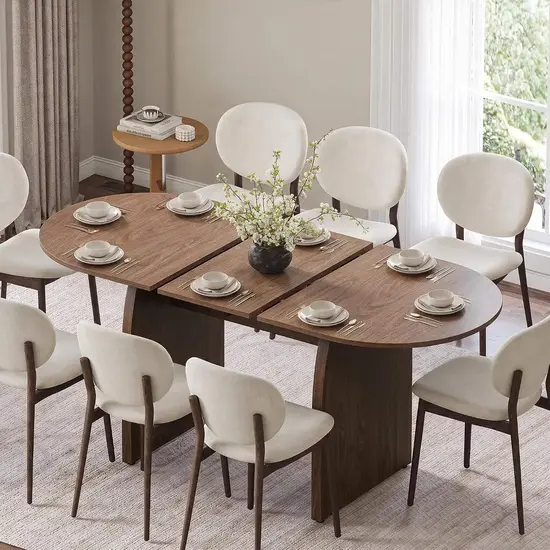
A curved sofa, rounded coffee table, arched floor lamp, or oval dining table can prevent a minimalist room from feeling rigid.
Look for:
- Rounded coffee tables
- Curved sofas
- Boucle accent chairs
- Low-profile beds
- Sculptural side tables
- Oval dining tables
- Rounded ottomans
The shape should feel deliberate. One or two sculptural pieces can create a strong focal point without filling every corner.
4. Layer Natural Textures
Texture gives neutral interiors their personality.
A room filled with beige furniture can feel flat when every surface has the same finish. Mixing rough, smooth, soft, and tactile materials creates visual depth.
Try combining:
- Linen curtains
- Wool rugs
- Boucle upholstery
- Woven baskets
- Raw or lightly finished wood
- Handmade ceramics
- Stone surfaces
- Chunky cotton throws
- Textured plaster
For example, pair a smooth plaster wall with a chunky wool rug and a rough wooden coffee table. Each surface interacts differently with light, making the room feel more interesting throughout the day.
5. Use Stone for an Earthy Contemporary Feel
Stone brings weight and permanence to organic modern interiors.
Travertine is especially popular for coffee tables, side tables, bathroom surfaces, and decorative objects. Limestone, marble, soapstone, and slate can also work beautifully.
You don’t need a full stone kitchen island to introduce the material.
A small travertine tray, stone lamp base, marble vessel, or limestone accessory can create the same visual connection on a smaller scale.
Choose finishes with natural variation when possible. Subtle veining and irregularity add character.
6. Add Curves Without Overdoing Them
Curved forms soften the straight lines commonly associated with contemporary furniture.
You can introduce curves through:
- Arched mirrors
- Round mirrors
- Circular rugs
- Curved sofas
- Rounded cabinets
- Globe lighting
- Organic-shaped coffee tables
- Sculptural pottery
Use curves as accents rather than repeating the same shape throughout the room.
A rectangular sofa with a rounded coffee table and an arched mirror can create enough contrast to make the layout feel considered.
7. Bring Nature Indoors
Plants are a natural fit for organic modern interiors, but greenery isn’t mandatory.
Large leafy plants can add height beside a sofa or empty corner. Smaller plants work well on shelves, consoles, and bathroom counters.
For a more restrained approach, use:
- Olive branches
- Dried grasses
- Eucalyptus
- Sculptural branches
- A single large plant
Choose simple planters in ceramic, stone, terracotta, or woven materials.
The goal is to introduce natural shapes and color without turning the room into a greenhouse.
8. Use Lighting as Part of the Design
Lighting has a major effect on how organic materials look.
Warm lighting tends to complement wood, linen, clay, and stone better than harsh cool-white bulbs.
Create several layers:
Ambient lighting: Ceiling fixtures or general room lighting.
Task lighting: Reading lamps, desk lamps, or kitchen lighting.
Accent lighting: Table lamps, wall sconces, or small decorative fixtures.
Paper lanterns, linen shades, ceramic lamps, and wood details work particularly well with the style.
Place lamps at different heights. A floor lamp beside the sofa, table lamp on a console, and pendant above the dining table create a more relaxed evening atmosphere.
9. Keep the Walls Simple
Walls provide a large visual backdrop, so they have a major influence on the overall mood.
Warm white paint is an easy choice. For more texture, consider limewash, plaster-effect finishes, or subtle mineral-inspired colors.
Good wall colors include:
- Soft ivory
- Warm white
- Mushroom
- Greige
- Pale taupe
- Sand
- Muted clay
Artwork should complement the natural palette.
Abstract landscapes, botanical prints, monochrome photography, handmade textiles, and simple line drawings can all work well.
Large-scale artwork often looks stronger than many small pieces scattered across the wall.
Organic Modern Living Room Ideas
The living room is one of the easiest spaces for this style because furniture, textiles, lighting, and natural materials all have a strong visual role.
Start with a comfortable sofa in cream, beige, taupe, or warm gray.
Add a natural-fiber rug beneath the main seating area. Then introduce a wood or stone coffee table with a rounded shape.
Finish with:
- Linen cushions
- A textured throw
- Ceramic vessels
- One large plant
- A sculptural floor lamp
- A few carefully selected books
Leave some open space around the furniture. The room should feel easy to move through.
A Simple Organic Modern Living Room Formula
Cream sofa + wool rug + oak or travertine coffee table + linen curtains + ceramic lamp + large plant.
This combination works because the palette stays calm while the materials provide variation.
Organic Modern Bedroom Ideas
The bedroom should feel softer than the rest of the home.
Choose a low-profile wooden bed or upholstered frame. Layer natural bedding in cream, oatmeal, beige, or muted brown.
Linen bedding works particularly well because its relaxed texture adds character without introducing a busy pattern.
Consider adding:
- Rounded bedside tables
- Ceramic lamps
- A woven bench
- Linen curtains
- A wool rug
- A large neutral artwork
- Simple branches in a ceramic vase
Keep bedside surfaces relatively clear. One lamp, a book, and a small ceramic object can be enough.
Organic Modern Kitchen Ideas
Organic modern kitchens combine contemporary cabinetry with warm natural details.
Flat-panel cabinets in warm white, mushroom, taupe, or natural wood create a clean foundation. Pair them with stone countertops and understated hardware.
Good combinations include:
Oak cabinetry + creamy stone + brushed metal hardware
Warm white cabinetry + walnut island + stone counters
Taupe cabinetry + travertine + natural wood accents
Open shelving can work, particularly when used sparingly. Display handmade bowls, cutting boards, ceramics, and a few everyday pieces rather than filling every shelf.
Organic Modern Bathroom Ideas
Bathrooms benefit from the style’s natural palette and simple materials.
Consider warm stone-look surfaces, plaster-style walls, oak cabinetry, rounded mirrors, and soft lighting.
A successful organic modern bathroom might combine:
- Warm beige walls
- Stone vanity
- Oak cabinetry
- Rounded mirror
- Brushed metal fixtures
- Linen towels
- Handmade ceramic accessories
- A small plant
Keep accessories limited. Bathrooms can quickly look cluttered when too many decorative objects compete with the fixtures.
Organic Modern Decor on a Budget
You can create the look without buying an entire room of designer furniture.
Focus on high-impact changes first.
Start With Textiles
Swap synthetic-looking cushions for linen or cotton covers. Add a textured throw and a natural-fiber rug.
Change the Lighting
A sculptural lamp can completely change the character of a side table or console.
Add Secondhand Wood
Vintage stools, old cutting boards, wooden bowls, and small tables can bring warmth at a fraction of the cost of new furniture.
Use Handmade Ceramics
A few imperfect ceramic pieces can make a carefully styled shelf feel more personal.
Edit the Room
Remove objects that don’t serve the space. Then give the remaining pieces more room around them.
This simple step costs nothing and can make a surprisingly large difference.
Common Organic Modern Design Mistakes
Using Too Much Beige
A neutral palette needs contrast.
Add darker wood, charcoal, olive, black accents, or deeper brown to prevent the room from becoming visually flat.
Buying Everything as a Matching Set
A perfectly coordinated furniture collection can remove personality from a room.
Mix contemporary pieces with vintage finds, handmade objects, and different wood textures.
Overloading the Room With Decor
Organic modern design depends on breathing room.
Give statement pieces space to work. A single large vase can have more visual presence than a shelf packed with small accessories.
Choosing Cold White Lighting
Cool lighting can make warm materials look washed out.
Warm-toned bulbs generally create a more comfortable atmosphere, particularly in bedrooms and living rooms.
Adding Too Many Natural Materials
Wood, stone, rattan, linen, jute, clay, and wool can all work together. Using every material in one room can create visual noise.
Choose three or four main materials and repeat them throughout the space.
How to Mix Organic Modern With Other Styles
Organic modern design is flexible.
Organic Modern + Scandinavian
Use pale woods, simple furniture, soft textiles, and plenty of natural light.
Organic Modern + Japandi
Introduce Japanese-inspired restraint, low furniture, natural wood, ceramics, and a quieter color palette.
Organic Modern + Mediterranean
Add terracotta, limewashed walls, arched forms, textured plaster, and rustic wood.
Organic Modern + Quiet Luxury
Use richer woods, refined stone, elegant lighting, and high-quality textiles while keeping the overall palette understated.
Organic Modern + Boho
Add woven pieces, handmade ceramics, patterned textiles, and plants while keeping the furniture silhouettes simple.
How to Style an Organic Modern Room Step by Step
- Clear the room. Remove unnecessary furniture and decorative objects.
- Choose the color palette. Start with warm white, beige, taupe, or another natural neutral.
- Add the largest furniture pieces. Keep silhouettes simple and comfortable.
- Introduce wood. Use one or more substantial timber pieces.
- Layer textiles. Add rugs, linen curtains, cushions, and throws.
- Bring in stone or ceramic. Small objects can be enough.
- Add greenery. Choose one or two plants or natural branches.
- Install warm lighting. Layer ceiling, floor, table, and wall lights.
- Add artwork. Choose pieces that complement the room’s colors and shapes.
- Edit again. Remove anything that feels unnecessary.
The final step matters. Walk through the room from the doorway and remove one or two pieces that make the space feel crowded.
Key Takeaways
- Organic modern interior design combines contemporary simplicity with natural warmth.
- Warm neutrals create the foundation for the style.
- Wood, stone, linen, wool, ceramic, and plaster add tactile interest.
- Curved furniture can soften a room filled with straight architectural lines.
- Plants and natural branches introduce organic shapes and color.
- Warm layered lighting works especially well with natural materials.
- Editing clutter is just as important as adding decor.
- You can create the look gradually instead of replacing everything at once.
A beautiful organic modern home usually comes down to a handful of thoughtful decisions: warm color, natural material, comfortable furniture, soft texture, good light, and enough empty space for the room to breathe.
Style Guides
Explore regional warmth with Mediterranean Home Decor and Mediterranean Style Home Interior Designs. Compare rustic aesthetics in Farmhouse vs Rustic Interior Style and What Is a Modern Farmhouse Style?. Discover Spanish Mediterranean Homes, Modern French Country Decor, and Retro Home Decor. For Nordic minimalism, see Scandinavian Furniture. For more decor inspiration, explore our full Home Decor collection.
Frequently Asked Questions
What is organic modern interior design?
Organic modern interior design combines contemporary furniture and uncluttered layouts with natural materials, earthy colors, soft textures, organic shapes, and greenery. The style creates rooms that feel warm, calm, functional, and visually refined.
What colors are best for organic modern interiors?
Warm white, cream, beige, taupe, sand, brown, clay, olive, and muted charcoal are excellent choices. Natural wood and stone provide additional variation without overwhelming the palette.
What materials are used in organic modern design?
Common materials include natural wood, stone, linen, cotton, wool, clay, ceramic, rattan, jute, and plaster. Combining smooth and tactile finishes gives neutral rooms more character.
Is organic modern design expensive?
It can be expensive, but the style works well with different budgets. Secondhand wood furniture, vintage ceramics, affordable linen textiles, plants, and simple lighting can create the look without requiring a complete renovation.
Can organic modern design work in a small apartment?
Yes. The style works particularly well in small spaces because it favors simple furniture, limited clutter, light neutral colors, and multifunctional pieces. Choose fewer, larger decorative elements rather than many small accessories.
What is the difference between organic modern and minimalist design?
Organic modern interiors use minimalist principles such as clean layouts and limited clutter, while adding more warmth through natural materials, varied textures, earthy colors, and curved forms.
How do I make an organic modern room feel less boring?
Add contrast through darker wood, sculptural furniture, handmade ceramics, textured textiles, greenery, artwork, and warm lighting. Keep the main palette restrained while varying the shapes and surfaces.
Can I use black in organic modern interiors?
Yes. Small amounts of black create definition against warm neutrals and natural materials. Black can work especially well in lighting, window frames, furniture legs, hardware, and picture frames.