
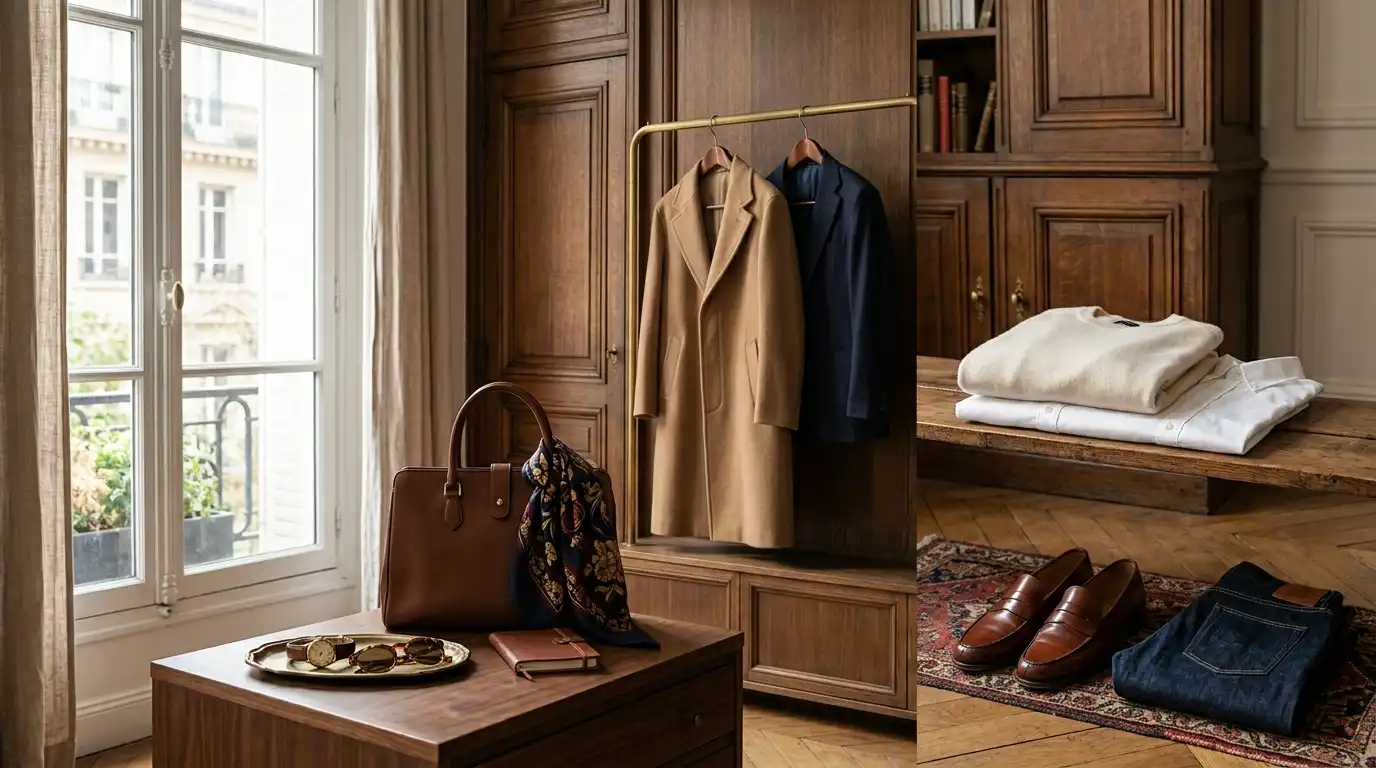

Some clothes become dated within a season. Others seem to get better every time you wear them. That difference sits at the heart of timeless fashion and heritage style.
A timeless wardrobe is built around pieces with lasting visual appeal, useful construction, quality materials, and enough versatility to move through different stages of your life. Heritage style adds another layer: clothing and accessories connected to traditional craftsmanship, established design houses, regional techniques, and generations of wear.
Think of a beautifully cut wool coat, a leather handbag with character, a cashmere sweater, a silk scarf, polished loafers, or a well-made watch. These pieces can feel luxurious without shouting for attention.
The result is a wardrobe that feels personal, composed, and quietly expensive.
Table of Contents
What Is Timeless Fashion and Heritage Style?
Timeless fashion and heritage style combine enduring silhouettes, quality materials, traditional craftsmanship, and understated luxury to create a wardrobe that remains relevant across seasons and years.
Timeless fashion focuses on longevity of design. Heritage style adds history, craftsmanship, cultural influence, and recognizable traditions.
Together, they create a way of dressing that feels considered rather than disposable.
| Timeless Fashion | Heritage Style |
|---|---|
| Classic silhouettes | Traditional craftsmanship |
| Neutral and versatile colors | Historic fabrics and techniques |
| Long-lasting wardrobe appeal | Connection to a brand, region, or craft |
| Simple, refined styling | Pieces with character and history |
| Season-independent design | Generational influence |
| Investment-minded shopping | Appreciation for craftsmanship |
The two ideas work beautifully together because both reward thoughtful buying.
A heritage-inspired wardrobe might include British wool tailoring, Italian leather accessories, Scottish knitwear, French silk scarves, Japanese denim, or traditional equestrian-inspired pieces. You don’t need to dress head-to-toe in one tradition. The beauty comes from mixing references naturally.
Why Timeless Style Continues to Appeal
Fashion cycles move quickly. Personal style develops much more slowly.
A classic wardrobe gives you a stable foundation while allowing room for seasonal changes. You can add a current handbag, modern shoe, or contemporary piece without rebuilding your entire closet every few months.
There’s also a practical advantage.
When your wardrobe contains pieces that work together, getting dressed becomes easier. A cream cashmere sweater can work with tailored trousers, dark denim, a midi skirt, or beneath a structured blazer.
One excellent garment can create dozens of outfits.
That versatility gives timeless fashion its staying power.
Timeless Style Ages With You
A good wardrobe should accommodate changes in your lifestyle.
The blazer you wear to the office at 28 might become your favorite travel layer at 38. A leather tote can move from workdays to weekend trips. A classic trench can work through changing trends, occupations, and personal tastes.
The best pieces develop a relationship with their owner.
A small crease in leather, a softened wool jacket, or a beautifully worn pair of loafers can add personality. These marks tell a story.
The Foundations of a Heritage-Inspired Wardrobe
Building this style starts with a few dependable categories.
1. The Tailored Blazer
A well-cut blazer instantly gives structure to an outfit.
For a timeless wardrobe, look toward navy, charcoal, camel, chocolate brown, or black. A single-breasted design with clean lines offers enormous flexibility.
Wear it with:
- Straight-leg trousers
- Dark denim
- A silk blouse
- A fine knit
- A simple white shirt
- A flowing skirt
Fabric matters. Wool, wool blends, linen, and quality cotton can each serve different seasons.
The fit should allow comfortable movement while keeping the shoulders and sleeves clean.
2. The Wool Coat
A beautiful wool coat can become the visual anchor of an entire winter wardrobe.
Camel, navy, charcoal, and deep brown have enduring appeal. Look for a balanced length, restrained hardware, and enough room for knitwear underneath.
Double-breasted coats offer a more traditional appearance. Single-breasted versions often feel lighter and more versatile.
A good coat also demonstrates why heritage style values construction. Dense wool, strong seams, quality lining, and well-finished buttons can make a noticeable difference after years of use.
3. Fine Knitwear
Cashmere, merino wool, lambswool, and quality cotton knits fit naturally into a refined wardrobe.
Start with simple shapes:
- Crew-neck sweaters
- Fine cardigans
- Polo-neck knits
- V-neck sweaters
- Sleeveless knit vests
Cream, oatmeal, navy, grey, camel, and black create a useful foundation.
A fine knit can sit beneath a blazer, over a shirt, or alongside tailored trousers. That flexibility makes it one of the hardest-working categories in a classic wardrobe.
4. Quality Leather Accessories
Leather has a natural connection with heritage dressing because traditional leatherworking has shaped fashion for centuries.
A structured leather handbag, belt, wallet, loafer, boot, or watch strap can bring depth to a simple outfit.
Look for:
- Strong stitching
- Quality hardware
- Good edge finishing
- Durable construction
- Leather that develops character with use
Color also matters.
Cognac, dark brown, burgundy, black, and tan can work beautifully with classic wardrobes.
A single well-made leather bag can often become more useful than several inexpensive seasonal bags.
5. The White Shirt
The white shirt has earned its place in timeless fashion for a reason: it works almost everywhere.
Wear it tucked into tailored trousers for a polished look. Leave it slightly relaxed over denim for a casual weekend outfit. Layer it beneath knitwear when temperatures drop.
Fabric changes the character.
Poplin feels crisp and polished. Oxford cotton feels more relaxed. Silk creates a softer, more luxurious effect.
6. Dark Denim
Heritage style doesn’t require formal clothing.
Dark, straight-leg denim can provide a relaxed foundation while keeping the overall appearance polished.
Look for a clean finish, comfortable construction, and a cut that suits your proportions.
Avoid chasing every denim trend. A dependable pair that fits beautifully will earn far more wear.
The Role of Color in Timeless Fashion
Color can determine whether an outfit feels classic or heavily tied to a particular season.
A refined wardrobe often begins with a restrained base.
Core neutrals
- Ivory
- Cream
- Beige
- Camel
- Taupe
- Navy
- Charcoal
- Black
- Chocolate brown
- Soft grey
These shades work well together and allow accessories to provide visual interest.
You can then introduce burgundy, forest green, dusty blue, muted red, or deep plum when you want more personality.
The goal is balance.
A camel coat with a burgundy handbag can feel rich without becoming visually loud. Navy trousers with an ivory sweater create a classic combination with almost no effort.
Fabrics Matter More Than Logos
Luxury becomes easier to recognize when you start paying attention to fabric.
Wool has warmth, structure, and natural texture. Cashmere has softness and lightness. Linen has a relaxed, slightly irregular character. Silk catches light differently from synthetic fabrics.
Heritage style places value on these physical qualities.
When shopping, run your hand across the fabric. Look at the stitching. Check the lining. Examine the buttons and hardware.
A garment can have a famous label and still feel poorly made.
Another piece from a lesser-known maker can have exceptional construction.
The material and workmanship deserve your attention first.
How to Recognize Heritage Style
Heritage style can come from many sources.
British tailoring, French maison traditions, Italian leatherwork, Scottish knitwear, Japanese denim, American workwear, and equestrian clothing all offer different interpretations.
Some common characteristics include:
Traditional Materials
Wool, tweed, leather, cotton, linen, silk, denim, and waxed fabrics frequently appear in heritage clothing.
Established Silhouettes
Heritage garments often retain recognizable shapes because they were originally designed around practical needs.
Think field jackets, riding boots, trench coats, tailored jackets, fisherman sweaters, loafers, and structured handbags.
Craftsmanship
Visible stitching, strong construction, natural materials, hand-finishing, and traditional production techniques can all contribute to heritage appeal.
History
The strongest heritage pieces usually have a story.
Perhaps a fabric originated in a particular region. Maybe a shoe shape has been produced for generations. A jacket could have evolved from military or workwear.
That background adds meaning to the garment.
Timeless Fashion Doesn’t Mean Wearing Only Basics
This is where personal taste becomes essential.
A wardrobe made entirely of beige sweaters and navy trousers can become predictable.
Timeless dressing still needs personality.
You can introduce character through:
- Vintage jewelry
- Silk scarves
- Statement watches
- Textured handbags
- Interesting belts
- Artisan shoes
- Antique-inspired accessories
- Subtle prints
- Vintage pieces
The foundation remains restrained while individual details tell your story.
A vintage brooch on a simple black jacket can have more personality than an entire outfit covered in obvious branding.
How to Create a Quiet Luxury Heritage Look
The quiet-luxury side of heritage dressing works best when the outfit feels effortless.
Start with three elements:
A strong base + quality texture + one distinctive detail.
For example:
Look 1: City Classic
Navy blazer + ivory knit + dark denim + brown leather loafers.
Look 2: Winter Heritage
Camel wool coat + charcoal knit + tailored trousers + leather boots.
Look 3: Weekend Country
Cream sweater + straight-leg denim + suede loafers + leather belt.
Look 4: Evening Refinement
Black trousers + silk blouse + structured handbag + understated jewelry.
These outfits share a common principle: each piece has a clear purpose.
How to Shop for Timeless Fashion
Shopping for timeless clothing requires a different mindset.
Before buying something, ask five questions.
Does It Work With What I Already Own?
A beautiful garment that works with only one outfit may have limited value.
A versatile piece that works with ten existing items deserves more consideration.
Will I Want to Wear It in Three Years?
Imagine the garment hanging in your wardrobe several seasons from now.
Would you still reach for it?
Is the Fabric Appropriate?
Read the composition label.
Natural fibers aren’t automatically superior in every situation, but fabric quality has a major influence on comfort, appearance, and durability.
Is the Construction Good?
Check seams, buttons, zippers, hems, lining, and hardware.
Turn the garment inside out if necessary.
Does It Fit My Actual Life?
A beautiful silk dress isn’t a useful wardrobe investment if you rarely attend occasions where you’d wear it.
Luxury becomes practical when the item fits your lifestyle.
The Difference Between Expensive and Luxurious
Price and luxury can overlap, but they aren’t identical.
A luxury wardrobe can include vintage finds, independent makers, carefully selected secondhand pieces, and garments bought during sales.
The common thread is intention.
A $1,000 coat worn twice has little practical value compared with a beautifully made coat that becomes part of your life for ten years.
Cost per wear can be a useful way to think about wardrobe spending.
If a quality jacket becomes a weekly favorite for years, its value becomes easier to understand.
Vintage and Secondhand Pieces
Vintage clothing fits naturally into heritage style.
Older garments can introduce materials, cuts, hardware, and details that are difficult to find in modern mass-market collections.
Secondhand shopping also gives you access to established labels at different price points.
When buying vintage, inspect carefully.
Check:
- Fabric condition
- Lining
- Seams
- Odors
- Stains
- Hardware
- Zippers
- Alterations
- Measurements
Measurements are particularly useful because vintage sizing can differ considerably from current sizing.
A tailor can sometimes transform a good vintage piece into a wardrobe favorite.
Caring for Timeless Clothing
Longevity depends partly on maintenance.
Follow the care instructions. Store knitwear folded. Give coats enough space. Use appropriate hangers for structured garments. Rotate shoes rather than wearing the same pair every day.
Leather benefits from appropriate conditioning. Wool benefits from careful brushing and proper storage.
Small repairs also matter.
Replacing a button, repairing a seam, resoling shoes, or refreshing a lining can extend the useful life of a garment.
This is one reason heritage style feels connected to slower consumption. The relationship with the item continues after the purchase.
Common Mistakes With Heritage Style
Buying Too Many “Classic” Pieces
You don’t need five camel coats simply because camel is timeless.
Buy according to your actual wardrobe.
Confusing Branding With Heritage
A visible logo can communicate brand identity, but heritage style is much broader.
Look at the construction, material, history, and design.
Making Every Outfit Match
A polished wardrobe still needs contrast.
Mix tailored pieces with relaxed denim. Pair polished leather with textured knitwear. Add vintage jewelry to modern clothing.
Ignoring Fit
Even exceptional fabric can look ordinary when the cut is wrong.
A skilled alteration can dramatically change how a garment sits on the body.
Treating Timelessness as a Uniform
Your wardrobe should reflect your personality.
Timeless style provides the foundation. You provide the character.
Building a Timeless Wardrobe Step by Step
If you’re starting from scratch, take it slowly.
Step 1: Edit Your Current Wardrobe
Keep the pieces you genuinely wear.
Notice which colors, cuts, and fabrics appear repeatedly.
Step 2: Identify Your Gaps
You may discover that you need a good coat rather than another sweater.
Or perhaps your wardrobe has plenty of casual clothing but lacks versatile shoes.
Step 3: Buy One Strong Piece at a Time
Prioritize quality over quantity.
A beautiful blazer can be more useful than three mediocre ones.
Step 4: Add Heritage Details
Introduce leather, vintage accessories, traditional knitwear, classic tailoring, or other craft-led pieces.
Step 5: Allow Your Style to Develop
Don’t try to create an entire identity in one shopping trip.
The most convincing wardrobes evolve naturally.
Timeless Fashion and Heritage Style for Different Seasons
A timeless wardrobe can work throughout the year.
Spring: Linen shirts, lightweight knitwear, loafers, cotton trousers, silk scarves.
Summer: Linen dresses, relaxed tailoring, woven accessories, leather sandals, lightweight cotton.
Autumn: Tweed jackets, suede loafers, wool trousers, cashmere sweaters, leather bags.
Winter: Wool coats, heavy knitwear, leather boots, tailored trousers, scarves, gloves.
The materials change.
The underlying principles remain.
Key Takeaways
- Timeless fashion and heritage style center on enduring design, quality materials, craftsmanship, and personal expression.
- A refined wardrobe begins with versatile foundations such as wool coats, tailored blazers, knitwear, leather accessories, white shirts, and dark denim.
- Heritage style can draw inspiration from British tailoring, Italian leatherwork, Scottish knitwear, Japanese denim, French fashion traditions, and many other sources.
- Fabric quality and construction deserve as much attention as the brand name.
- Vintage and secondhand pieces can bring history and individuality into a modern wardrobe.
- Fit often matters more than the price or label attached to a garment.
- Timeless dressing still leaves plenty of room for personality, color, jewelry, prints, and contemporary pieces.
- The finest wardrobe is one that develops with you rather than being replaced every season.
Timeless style ultimately comes down to knowing what deserves a place in your wardrobe.
Choose pieces with character. Learn to recognize good materials. Take care of what you own. Mix old and new.
The result is a personal style that feels luxurious because it has substance behind it.
For more fashion inspiration explore Cleopatra Historical Fashion: How to Style Egyptian Opulence
Frequently Asked Questions
What is timeless fashion?
Timeless fashion refers to clothing and accessories with enduring designs that remain wearable across changing trends and seasons. Classic silhouettes, versatile colors, quality materials, and strong construction are common characteristics.
What is heritage style in fashion?
Heritage style draws from traditional craftsmanship, historic garments, established design traditions, regional materials, and clothing with a strong connection to its origins.
Is heritage fashion expensive?
It can be, but heritage style doesn’t require a luxury budget. Vintage, secondhand, independent makers, and carefully selected mid-range pieces can all contribute to a heritage-inspired wardrobe.
What colors work best for timeless fashion?
Navy, cream, camel, beige, grey, charcoal, black, brown, ivory, and burgundy are particularly versatile. They can be combined easily and adapted across seasons.
Are logos part of heritage style?
Logos can be part of a brand’s heritage, but the broader style centers on craftsmanship, design history, materials, and lasting appeal.
How do you make an outfit look timeless?
Start with a simple silhouette, choose quality-looking fabrics, keep the color palette cohesive, and add one or two distinctive accessories. Good fit makes a major difference.
Can modern clothes work with heritage style?
Absolutely. Modern pieces can sit comfortably beside traditional garments. A contemporary trouser, minimalist handbag, or clean sneaker can provide contrast against tweed, wool, leather, or vintage pieces.
Is timeless fashion sustainable?
Longer-lasting garments can reduce the need for frequent replacement, especially when they’re maintained and repaired. The environmental impact of fashion also depends on material production, manufacturing, transportation, care, and eventual disposal.