
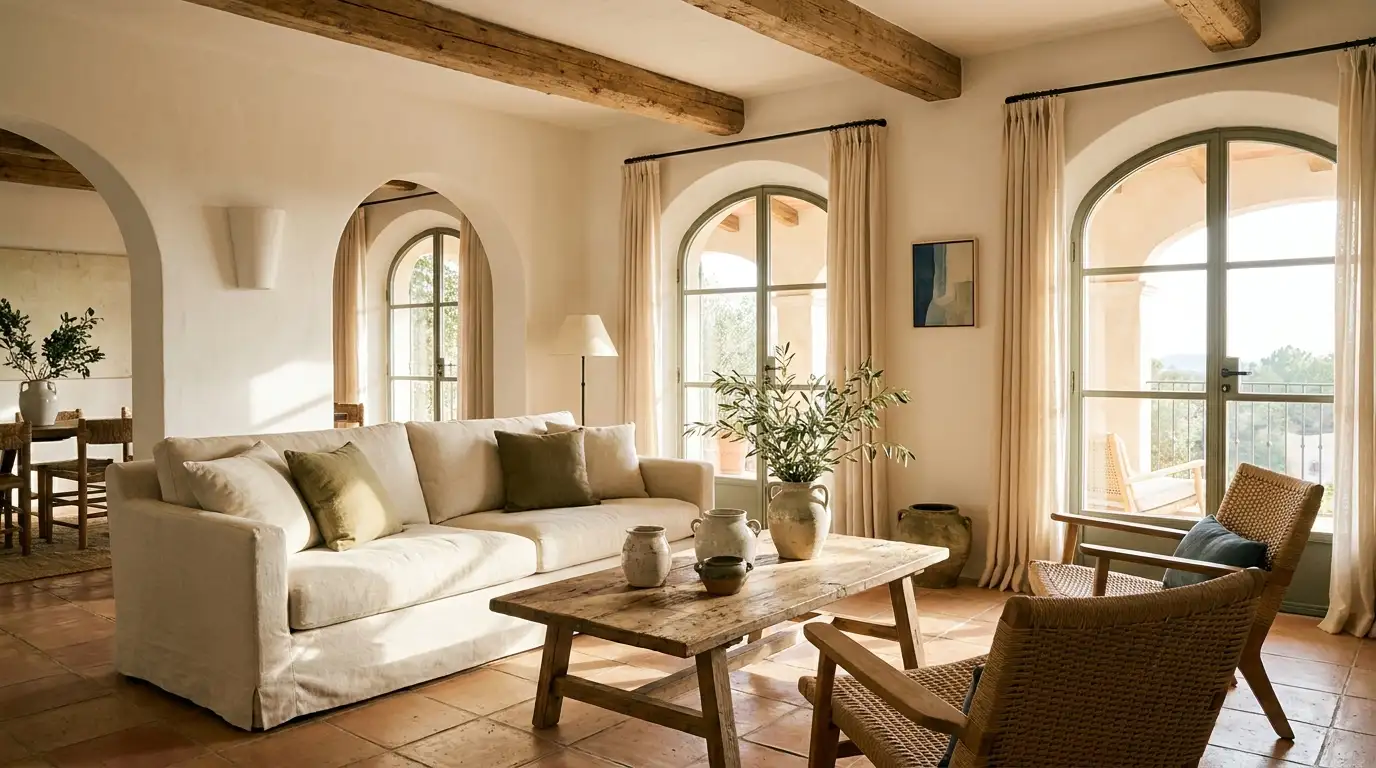

Mediterranean style home interior designs bring together the relaxed character of coastal living, timeless architectural details, natural materials, and warm colors. Inspired by homes across Greece, Spain, Italy, southern France, and the broader Mediterranean region, this interior style creates spaces that feel welcoming, sun-filled, comfortable, and effortlessly elegant.
Rather than following a rigid decorating formula, Mediterranean interiors focus on natural textures, handcrafted details, practical furniture, and a connection to the outdoors. We can achieve the look in a modern apartment, traditional house, villa, or compact urban home by combining the right colors, materials, lighting, and decorative elements.
Table of Contents
What Is Mediterranean Interior Design?
Mediterranean interior design is a decorating style inspired by the coastal regions surrounding the Mediterranean Sea. Its character comes from the architecture and lifestyles of countries such as Greece, Italy, Spain, and France.
The style traditionally emphasizes natural materials, earthy colors, rustic textures, simple furniture, and indoor-outdoor living. Walls may feature textured plaster, floors can incorporate terracotta or stone, and ceilings often showcase exposed beams or other architectural details.
Modern Mediterranean interiors retain these characteristics while introducing cleaner silhouettes and contemporary conveniences. The result is a home that feels sophisticated without becoming overly formal.
At its best, Mediterranean design balances:
- Warmth and simplicity
- Rustic and refined materials
- Old-world character and modern comfort
- Neutral backgrounds and earthy accents
- Indoor comfort and outdoor living
- Minimal clutter and handcrafted decoration
Mediterranean Style Home Color Palette
Color is one of the easiest ways to establish a Mediterranean atmosphere. Instead of relying on stark whites or highly saturated colors throughout the home, we can build the design around warm neutrals inspired by the natural landscape.
Warm White and Cream
Warm white provides a beautiful foundation for Mediterranean interiors. Cream, ivory, limestone, and soft beige create an airy appearance while maintaining more warmth than cool white.
These shades work particularly well on walls because they reflect natural sunlight and make rooms feel spacious.
Terracotta and Burnt Orange
Terracotta is strongly associated with Mediterranean architecture. It can appear through floor tiles, pottery, cushions, rugs, artwork, or decorative accessories.
We do not need to cover an entire room in orange. A few carefully selected terracotta elements can introduce warmth without overwhelming the space.
Olive and Sage Green
Muted greens reflect olive trees, herbs, and Mediterranean landscapes. Olive green, sage, eucalyptus, and dusty green can be incorporated through upholstery, curtains, plants, cabinetry, or accent walls.
Mediterranean Blue
Blue is particularly effective for creating a coastal Mediterranean interior. We can use dusty blue, cobalt, turquoise, or soft sea blue depending on the desired mood.
For a Greek-inspired room, white walls combined with blue accents create an instantly recognizable coastal aesthetic.
Earthy Brown and Natural Wood
Wood introduces depth and prevents neutral Mediterranean rooms from feeling flat. Walnut, oak, reclaimed wood, and darker rustic timber can all work beautifully.
Natural Materials for Mediterranean Style Home
Authentic-looking Mediterranean interiors depend heavily on texture. Natural materials create visual interest even when the color palette remains relatively restrained.
Terracotta
Terracotta tiles are a classic choice for Mediterranean homes. Their irregular coloring and handmade appearance contribute warmth and character.
For a contemporary interpretation, terracotta can be limited to a kitchen floor, entryway, fireplace surround, or small decorative details.
Stone
Natural stone is another important Mediterranean material. Limestone, travertine, marble, and textured stone can be used for flooring, countertops, walls, fireplaces, and architectural features.
Stone works particularly well alongside wood because the contrast between hard mineral surfaces and warm timber creates a balanced environment.
Linen
Linen is ideal for Mediterranean bedrooms and living spaces. Its slightly imperfect texture reinforces the relaxed nature of the style.
We can use linen for:
- Curtains
- Bedding
- Sofa covers
- Cushion covers
- Tablecloths
- Upholstered chairs
Choose relaxed, natural shades such as oatmeal, ivory, sand, beige, and soft gray.
Rattan and Woven Fibers
Rattan, wicker, jute, cane, and other woven materials add an organic quality to the interior. They work especially well in coastal-inspired Mediterranean rooms.
A rattan pendant light, woven basket, or jute rug can provide enough texture to make a simple room feel layered and intentional.
Mediterranean Style Living Room Ideas
The living room should feel comfortable rather than overly decorated. We can create this atmosphere with a neutral sofa, natural textiles, rustic wood furniture, and carefully selected accessories.
A cream or beige sofa provides an excellent foundation. Add linen cushions in terracotta, olive, or muted blue for subtle color.
A wooden coffee table can introduce warmth, while a stone or plaster fireplace can become the room’s architectural focal point.
Instead of filling the walls with numerous decorative objects, consider one large piece of artwork, a traditional mirror, or a collection of handmade ceramics.
Large windows should remain relatively unobstructed whenever possible. Natural daylight is an important part of Mediterranean interiors.
Mediterranean Kitchen Interior Design
Mediterranean kitchens combine functionality with a warm, lived-in appearance. They often feature natural wood, stone, ceramic tile, plaster walls, and open shelving.
For cabinetry, we can choose:
- Natural oak
- Warm white
- Cream
- Olive green
- Muted blue
- Rustic painted finishes
A stone or marble countertop complements the aesthetic beautifully. Handmade-looking ceramic backsplash tiles can add personality without making the kitchen feel overly contemporary.
Open shelving is another useful feature. Instead of displaying large collections of objects, we can use shelves for attractive ceramics, wooden boards, glassware, bowls, and small plants.
For lighting, choose pendant fixtures made from woven fibers, aged metal, ceramic, or natural wood.
Mediterranean Bedroom Design Ideas
A Mediterranean bedroom should feel calm, breathable, and comfortable.
We can begin with a warm neutral wall color and layer the room with natural textiles. A linen duvet, oversized pillows, woven rug, and wooden bedside tables create a relaxed foundation.
A wooden or upholstered bed works well with the aesthetic. For a more rustic interpretation, reclaimed wood can add character and a sense of history.
Keep window treatments lightweight. Linen curtains allow sunlight to filter through while preserving privacy.
For decoration, consider ceramic lamps, handmade pottery, woven baskets, olive branches, and understated artwork.
The goal is not to make every element obviously Mediterranean. Instead, the combination of materials should create the atmosphere naturally.
Mediterranean Bathroom Interior Ideas
Bathrooms are particularly well suited to Mediterranean design because stone, ceramic, plaster, and natural wood perform beautifully in these spaces.
Consider combining:
- Travertine or limestone
- Handmade ceramic tiles
- Warm plaster walls
- Brass fixtures
- Natural wood cabinetry
- Stone countertops
- Arched mirrors
A walk-in shower with textured tile can become the centerpiece of the bathroom.
For a luxurious interpretation, marble can be combined with warm brass and natural wood. The result feels elegant while maintaining the relaxed character associated with Mediterranean homes.
Arches and Architectural Details
Arches are among the most recognizable architectural features associated with Mediterranean interiors.
We can incorporate arched shapes through doorways, niches, mirrors, windows, shelving, and furniture.
An arched wall niche can provide a decorative focal point without requiring additional furniture. It can be styled with ceramics, candles, artwork, or small plants.
If structural renovations are not practical, an arched mirror or doorway-inspired decorative feature can provide a similar visual effect.
Other architectural details worth considering include:
- Exposed wooden beams
- Textured plaster
- Rounded doorways
- Stone walls
- Decorative niches
- Vaulted ceilings
- Rustic flooring
Mediterranean Outdoor Living Spaces
Mediterranean design is strongly connected to outdoor living. Balconies, patios, terraces, and courtyards should feel like extensions of the interior.
Use natural outdoor furniture, woven seating, terracotta pots, textured cushions, and Mediterranean plants to create continuity.
Olive trees, lavender, rosemary, citrus trees, and herbs can contribute to the atmosphere while adding natural fragrance and greenery.
A simple outdoor dining table can become the heart of the space. Add linen-inspired textiles, ceramic tableware, lanterns, and warm lighting for evening gatherings.
Modern Mediterranean Style Home
Modern Mediterranean design simplifies traditional elements while preserving their warmth.
Instead of heavily rustic furniture, we can combine contemporary sofas with natural stone, plaster walls, oak furniture, and handmade accessories.
The modern interpretation often features:
- Clean furniture silhouettes
- Minimal decoration
- Neutral walls
- Natural textures
- Organic shapes
- Contemporary lighting
- Traditional materials
The key is to avoid making the room feel like a themed space. Modern Mediterranean interiors should feel natural, sophisticated, and lived-in.
Mediterranean Decor Accessories
Accessories help establish the personality of the room, but moderation is important.
Useful Mediterranean-inspired accessories include:
- Handmade ceramic vases
- Terracotta pots
- Woven baskets
- Rustic wooden bowls
- Linen cushions
- Stone sculptures
- Vintage mirrors
- Ceramic tableware
- Wrought-iron lanterns
- Olive branches
- Textured rugs
Handcrafted objects are particularly valuable because small imperfections give the room a more authentic appearance.
Mediterranean Lighting Ideas
Lighting should emphasize warmth and texture.
During the day, maximize natural light by using lightweight curtains and avoiding unnecessary window obstructions.
At night, layer several sources of warm lighting rather than relying on one bright ceiling fixture.
Consider:
- Woven pendant lights
- Ceramic table lamps
- Wall sconces
- Lantern-style fixtures
- Candlelight
- Floor lamps
Warm bulbs help enhance wood, terracotta, plaster, and natural textiles.
How to Create a Mediterranean Style on a Budget
We do not need to completely renovate a home to achieve this aesthetic.
Start with the largest visual elements. Replace cool-toned accessories with warm neutrals, introduce linen textiles, add a woven rug, and incorporate terracotta or ceramic pieces.
Next, focus on lighting. Replacing overly modern fixtures with woven or ceramic designs can immediately transform the atmosphere.
Plants can also make a significant difference. Olive branches, herbs, lavender, and other Mediterranean-inspired greenery provide color and texture at relatively little cost.
Finally, remove unnecessary clutter. Mediterranean interiors generally benefit from intentional simplicity rather than excessive decoration.
Common Mediterranean Interior Design Mistakes
One common mistake is using too many stereotypical coastal elements at once. Blue-and-white decor, seashells, nautical accessories, and beach-themed artwork can quickly make a room feel more like a coastal theme than a sophisticated Mediterranean interior.
Another mistake is relying exclusively on beige. Although neutral colors are important, a successful Mediterranean room needs contrast through wood, stone, terracotta, greenery, or muted accent colors.
We should also avoid making every surface perfectly polished. Natural materials look more authentic when they retain texture and subtle variation.
Finally, excessive decoration can undermine the relaxed character of the style. Choose fewer, more meaningful pieces.
Final Thoughts on Mediterranean Style Home Interior Designs
Mediterranean style home interior designs offer a timeless approach to creating spaces that feel warm, relaxed, natural, and elegant. The style works because it focuses on fundamental design principles rather than short-lived trends.
By combining warm neutrals, terracotta, natural stone, wood, linen, handmade ceramics, organic shapes, and abundant natural light, we can create interiors with genuine character.
Whether we prefer a rustic Spanish-inspired home, an elegant Italian villa aesthetic, a bright Greek-inspired interior, or a contemporary Mediterranean apartment, the essential idea remains the same: create a home that feels connected to nature, comfortable to live in, and beautiful without appearing overly designed.
Style Guides
For nature-inspired design, see Modern Organic Interior Design. Explore regional warmth with Mediterranean Home Decor. Compare rustic aesthetics in Farmhouse vs Rustic Interior Style and What Is a Modern Farmhouse Style?. Discover Spanish Mediterranean Homes, Modern French Country Decor, and Retro Home Decor. For Nordic minimalism, see Scandinavian Furniture. For more decor inspiration, explore our full Home Decor collection.