


Affiliate Disclosure: As an Amazon Associate, we earn from qualifying purchases. If you purchase through links on this page, we may earn a commission at no additional cost to you.
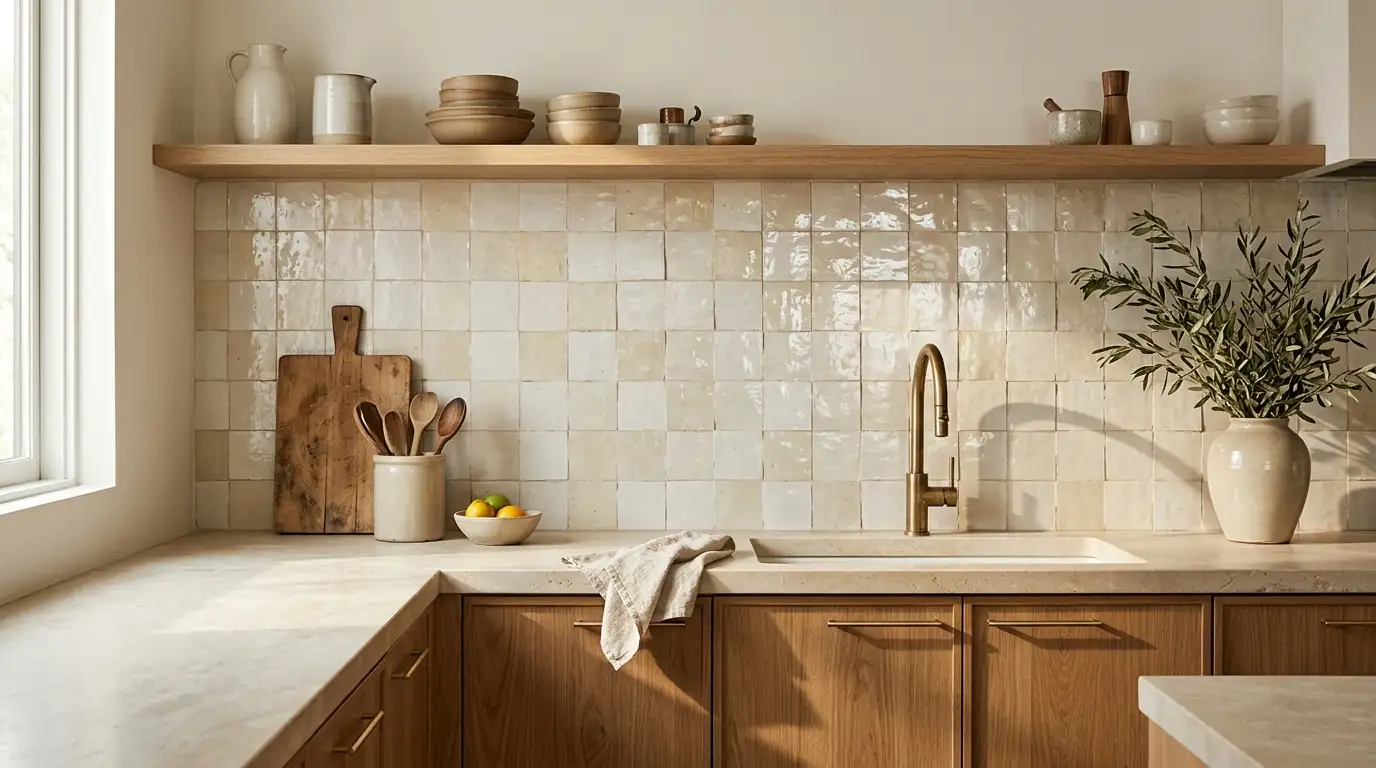
Zellige tile brings hand-finished Moroccan character to kitchens, bathrooms, fireplaces, backsplashes, and feature walls. Each tile has slight variations in color, surface, shape, and thickness, creating the irregular look that makes zellige so distinctive.
If you’re considering zellige for your home, the three questions that matter most are how much it costs, which colors work best, and where it makes practical sense to install it. This guide covers all three, plus sizing, grout, installation, maintenance, and common mistakes.
Quick answer: Authentic zellige is handmade glazed terracotta tile traditionally associated with Morocco. Expect variation between individual tiles, including uneven edges, subtle color shifts, and small surface imperfections. Those variations are part of the finished appearance and should be considered when planning your layout.
Table of Contents
What Is Zellige Tile?
Zellige is a handmade glazed tile traditionally produced in Morocco. Craftspeople shape clay tiles, dry them, fire them, apply glaze, and fire them again to create the finished surface.
The result has a distinctive handmade appearance. Even tiles from the same batch can vary slightly in shade, texture, thickness, and edge shape.
That variation gives zellige its visual character.
Traditional zellige is commonly associated with small square tiles, although contemporary collections offer different dimensions, shapes, and finishes.
What Makes Zellige Look Different?
Several details create the classic zellige appearance:
- Uneven edges: Hand-cut edges create small variations between tiles.
- Color variation: Glaze can produce several shades within one color family.
- Irregular surfaces: Individual tiles may have subtle dips and raised areas.
- Reflective glaze: Light moves differently across each tile.
- Visible grout lines: Small grout joints can reinforce the handmade appearance.
The finished wall has more movement than a mass-produced ceramic tile installation.
Zellige Tile Cost: How Much Should You Budget?
Zellige tile costs vary considerably depending on whether you’re buying authentic handmade Moroccan tile, a handmade-inspired product, or a factory-produced ceramic alternative.
As a broad planning guide, material prices can range from roughly $10 to $40+ per square foot, with high-end handmade collections sometimes costing more. Installation, shipping, preparation, grout, waterproofing, and waste can add substantially to the final project cost.
| Cost factor | What affects the price |
|---|---|
| Tile itself | Handmade vs. factory-produced |
| Origin | Moroccan handmade tiles may carry higher shipping costs |
| Color | Specialty glazes can cost more |
| Size | Unusual formats may cost more |
| Installation | Uneven handmade tiles require an experienced installer |
| Waste | Extra tiles may be needed because of variation and breakage |
| Shipping | International or specialty shipping can add significantly |
| Wall preparation | Damaged or uneven surfaces require more preparation |
Why Do You Need Extra Zellige Tile?
Buy around 10–15% more tile than your measured area as a starting point.
Complex layouts, corners, niches, angled cuts, and fragile handmade tiles can increase waste. Keep several spare tiles after installation too. If a tile gets damaged years later, finding the same shade and batch may be difficult.
Popular Zellige Tile Colors
Color is one of the biggest reasons homeowners choose zellige.
The glaze catches natural and artificial light differently across the uneven surface, so the same color can look dramatically different throughout the day.
White Zellige
White zellige creates a bright, clean backdrop while retaining plenty of texture.
It’s especially effective in:
- Kitchen backsplashes
- Shower walls
- Bathroom walls
- Fireplace surrounds
- Small kitchens
- Minimalist interiors
White also works well when you want the handmade texture to provide most of the visual interest.
Green Zellige
Green is one of the most recognizable choices for Moroccan-inspired interiors.
Deep emerald, olive, moss, sage, and softer green glazes can create very different moods.
Deep green zellige works particularly well around fireplaces, kitchen ranges, and dramatic bathroom walls.
Blue Zellige
Blue zellige has strong Moroccan design associations and works beautifully in bathrooms and kitchens.
Consider:
- Deep cobalt for dramatic spaces
- Soft blue for bathrooms
- Teal for Mediterranean interiors
- Muted blue-green for a quieter look
Blue can become the main color feature of a room, so keep surrounding finishes relatively restrained.
Neutral Zellige
Cream, beige, ivory, sand, taupe, and earthy tones suit homes with natural wood, stone, linen, and warm metal finishes.
They’re particularly useful when you want texture without introducing a strong accent color.
Black Zellige
Black zellige creates a dramatic surface with plenty of reflection.
Use it selectively around:
- Fireplace surrounds
- Powder rooms
- Kitchen backsplashes
- Bar areas
- Small feature walls
Because dark tile absorbs more visual weight, lighting matters.
Where Can You Use Zellige Tile?
Zellige works in many areas of a home, but the best application depends on the tile’s specifications and the manufacturer’s recommendations.
1. Kitchen Backsplash
The kitchen backsplash is one of the easiest places to use zellige.
Its handmade variation adds character behind a range, sink, or countertop without requiring an entire wall to be tiled.
White, cream, green, and blue are particularly versatile choices.
For a calmer kitchen, pair zellige with natural wood cabinetry, stone countertops, or simple painted cabinets.
2. Bathroom Walls
Zellige can create a beautiful bathroom wall because its reflective glaze interacts with water, daylight, and bathroom lighting.
Popular applications include:
- Shower walls
- Vanity walls
- Bathtub surrounds
- Full-height feature walls
- Shower niches
Always check that the specific tile is suitable for the intended wet-area application and follow the manufacturer’s installation instructions.
3. Fireplace Surround
A fireplace is an excellent location for a strong zellige color.
Deep green, blue, cream, and charcoal can all work, depending on the surrounding furniture and architectural style.
Before installation, confirm that the chosen tile and setting system are appropriate for the fireplace application and required heat exposure.
4. Powder Room
A small powder room gives you room to be more adventurous.
A saturated green or blue zellige wall can turn a compact space into a memorable design feature.
Because powder rooms typically have less wall area, a statement tile can have a major visual effect without dominating the rest of the house.
5. Kitchen Island
For a more unusual application, consider zellige on the vertical sides of a kitchen island.
This works particularly well when the cabinetry is simple and the tile provides the decorative detail.
6. Shower Niche
A small amount of zellige can introduce handmade texture without covering an entire bathroom.
Use it inside a shower niche, behind a vanity, or as a narrow accent strip.
Zellige Tile Sizes and Shapes
Traditional-looking zellige is often associated with small square tiles, but modern collections offer much more variety.
Common formats include:
- Small squares
- Rectangles
- Long narrow tiles
- Hexagons
- Fish-scale shapes
- Arched or geometric formats
Rectangular zellige can create a different visual rhythm depending on how it’s installed.
Should You Install Zellige in a Straight Grid?
A straight grid gives zellige a clean architectural appearance while allowing the handmade surface to remain the star.
It’s a strong choice for:
- Contemporary kitchens
- Minimalist bathrooms
- Simple backsplashes
- Modern fireplaces
Other layouts can produce a more decorative effect, but the more complicated the pattern, the more carefully your installer needs to account for tile variation.
How Should Zellige Tile Be Grouted?
Grout can dramatically change the appearance of zellige.
A similar-color grout creates a quieter, more continuous surface.
A contrasting grout makes individual tiles and their irregular edges more visible.
For example:
| Tile color | Grout direction |
|---|---|
| White | White, warm white, or soft neutral |
| Cream | Warm ivory or beige |
| Green | Matching green or understated neutral |
| Blue | Similar blue or soft neutral |
| Black | Black or dark gray |
| Terracotta | Warm beige or earthy neutral |
Your tile manufacturer or installer should determine the appropriate grout and joint size for the specific product.
Should Zellige Have Uneven Grout Lines?
Yes, variation can be part of the look.
Traditional handmade tiles don’t behave like perfectly calibrated factory-made porcelain. Slight differences in size and edge shape can create natural movement across the wall.
Still, there’s a difference between intentional handmade variation and poor installation.
An experienced installer should understand how to work with irregular tiles rather than forcing every piece into a perfectly uniform grid.
Zellige Tile Installation: What You Need to Know
Zellige deserves an installer who has worked with handmade tile before.
The installation process requires more judgment than simply placing identical machine-cut tiles in rows.
The installer needs to account for:
- Tile thickness variation
- Uneven edges
- Color distribution
- Tile orientation
- Cuts around outlets and corners
- Grout-joint variation
- Surface preparation
Mix Tiles Before Installation
If your tiles contain substantial shade variation, mix pieces from different boxes before installing them.
This helps prevent an obvious patch of one shade from appearing in one section of the wall.
Lay several tiles out on the floor first and look at the overall color distribution.
Common Zellige Tile Mistakes
Choosing Only From One Small Sample
A single sample can’t always show how a handmade glaze will look across an entire wall.
Ask to see multiple tiles from the same collection and, where possible, view them under the lighting conditions of your room.
Treating Variation as a Defect
If you’re buying handmade zellige, variation is part of the product.
Decide before ordering whether you genuinely like that irregular appearance.
Ordering Exact Square Footage
Ordering exactly what you need leaves little room for cuts, breakage, or future repairs.
Buy additional material and keep the remaining tiles safely stored.
Using an Installer Without Handmade-Tile Experience
A perfectly calibrated porcelain installation and a handmade zellige installation require different approaches.
Ask your installer to show you previous handmade-tile work.
Ignoring Lighting
Glossy zellige can look completely different under daylight, warm pendant lighting, recessed lights, or sconces.
Look at samples in the actual room at different times of day.
How Do You Clean Zellige Tile?
Routine cleaning is usually straightforward, but the correct method depends on the glaze, grout, and manufacturer’s care instructions.
For regular cleaning:
- Remove loose dust and debris.
- Use a soft cloth or sponge.
- Use a suitable mild cleaner when required.
- Avoid abrasive tools that can scratch or damage the finish.
- Wipe away residue rather than allowing cleaning products to dry on the surface.
Always follow the care instructions supplied with your specific tile.
The grout deserves attention too, particularly in bathrooms and shower areas.
Is Zellige Tile Good for a Modern Home?
Yes. Zellige can work beautifully in modern interiors because it adds tactile variation to otherwise clean architectural surfaces.
The key is controlling the surrounding finishes.
Try pairing zellige with:
- Simple cabinetry
- Natural wood
- Limestone
- Marble
- Brushed brass
- Matte black hardware
- Linen textiles
- Minimal lighting
A handmade tile wall can become the room’s decorative feature while the rest of the space remains restrained.
Zellige vs. Standard Ceramic Tile
| Feature | Zellige | Standard ceramic |
|---|---|---|
| Production | Often handmade | Usually machine-produced |
| Surface | Irregular | More uniform |
| Color | Natural variation | Usually consistent |
| Edges | May be uneven | Usually precise |
| Appearance | Handmade and reflective | More predictable |
| Installation | Requires more skill | Generally simpler |
| Maintenance | Depends on glaze | Depends on finish |
| Cost | Often higher | Wide range |
Zellige makes sense when you value variation, craftsmanship, and a handmade appearance.
Standard ceramic tile can be the better fit when precise dimensions, consistent color, or a lower installation complexity matter more.
Key Takeaways
- Zellige is handmade glazed tile traditionally associated with Morocco.
- Expect variation in color, thickness, edges, and surface.
- Material costs vary widely depending on craftsmanship, origin, size, and glaze.
- White, green, blue, cream, and earthy neutrals are versatile choices.
- Kitchens, bathrooms, powder rooms, fireplaces, and feature walls are popular applications.
- Buy extra tile for cuts, breakage, and future repairs.
- Use an installer familiar with handmade tile.
- Grout color and joint treatment can substantially change the finished appearance.
- Always verify wet-area, floor, and heat-related suitability with the tile manufacturer.
- Sample multiple tiles under the lighting conditions of your actual room.
If you’re interested in Moroccan-inspired interiors, Tadelakt Bathroom: The Complete Guide is a great next read. It covers this traditional Moroccan wall finish, including its distinctive look, practical benefits, and how it can be used to create a calm, spa-like bathroom.
For another look at Moroccan-inspired design, Tadelakt Bathroom: The Complete Guide explores how this traditional plaster finish can bring warmth, texture, and a refined handcrafted feel to modern bathrooms.
Frequently Asked Questions
Is zellige tile expensive?
Zellige is generally more expensive than basic mass-produced ceramic tile because authentic handmade products involve greater craftsmanship and variation. Material, shipping, installation, and waste can all affect the final project cost.
Why is zellige tile so popular?
Zellige has a distinctive handmade appearance created by variations in glaze, edges, thickness, and surface texture. Its reflective finish also changes as natural and artificial light moves across the tiles.
Is zellige tile Moroccan?
Traditional zellige is strongly associated with Moroccan craftsmanship and architecture. Moroccan zellige has a long history of handmade production and is widely used in decorative architectural surfaces.
Is zellige suitable for a shower?
Some zellige products are suitable for shower walls, but suitability depends on the specific tile and installation system. Always check the manufacturer’s specifications before using it in a wet area.
Does zellige tile need grout?
Yes. Zellige installations generally use grout, although the appropriate joint size and grout type depend on the specific tile and installation requirements.
Does zellige tile crack easily?
Handmade tiles can have more variation and may require careful handling during transportation and installation. Proper substrate preparation, cutting, setting, and handling are important.
Can zellige be used on floors?
Some products may be suitable for flooring, while others are intended for walls. Check the manufacturer’s specifications for slip resistance, durability, and approved applications before using zellige on a floor.
How much extra zellige should I buy?
A starting allowance of around 10–15% extra is reasonable for many installations, although complicated layouts may require more. Keep spare tiles for future repairs.