

⏱ 7 min read🍚 Serves 4–6⚡ Ready in 30 min🌺 Hawaiian Classic
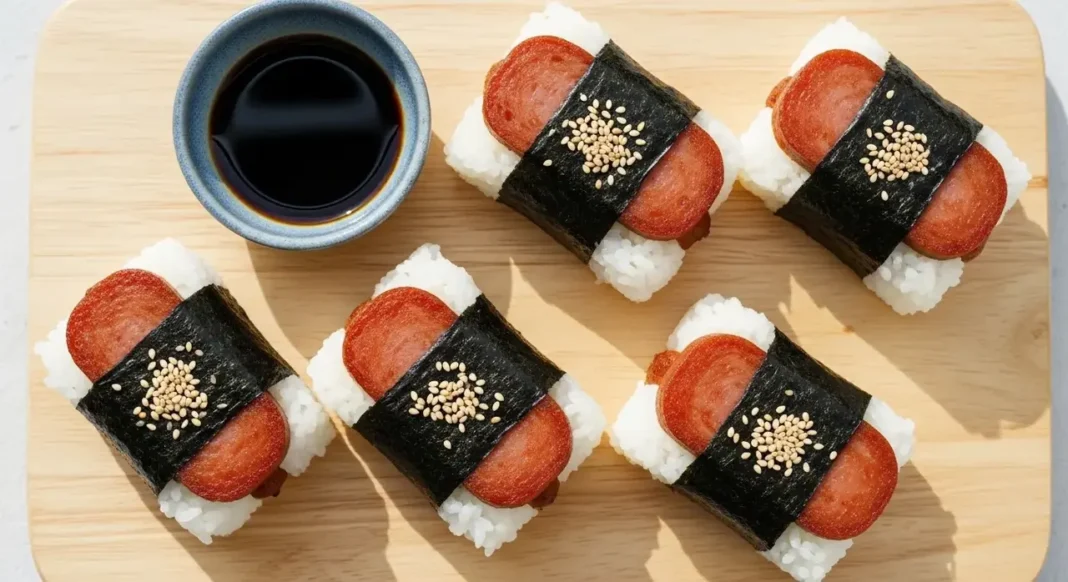
If you’ve never had spam musubi, you’re honestly missing out on one of the greatest grab-and-go snacks ever invented. Imagine a slice of savory, caramelized Spam sitting on a block of perfectly seasoned sushi rice, all wrapped snugly in a strip of nori seaweed — it’s like a sushi roll and an onigiri had a delicious baby.
No wonder this Hawaiian street food staple shows up at every gas station, school lunchbox, and beach picnic across the islands.
The good news? A great spam musubi recipe is incredibly easy to pull off at home. You don’t need fancy equipment or chef-level skills — just a handful of ingredients, a musubi mold (or a cleaned empty Spam can), and about 30 minutes. Let’s get into it.
Quick fact: Spam musubi is deeply rooted in Hawaii’s multicultural history, blending Japanese onigiri traditions with the canned meat that became a staple during World War II. It’s as cultural as it is delicious.
Table of Contents
What Is Spam Musubi?
Spam musubi (pronounced “moo-SOO-bee”) is a popular Hawaiian snack and comfort food that combines a slice of grilled or pan-fried Spam with sushi-style rice, bound together by a strip of dried seaweed called nori. Think of it as Hawaii’s answer to the onigiri — portable, satisfying, and packed with umami flavor.
It’s not just a snack — for many Hawaiian locals, spam musubi is a form of edible nostalgia. It’s the food you grew up eating, the thing your grandma packed for road trips, and the item you immediately crave when you’re far from home.
The combination of salty Spam, sticky rice, and oceany nori hits every savory note your taste buds are looking for.
Ingredients for Spam Musubi
One of the best things about this recipe is how short the shopping list is. Here’s everything you need to make a classic batch at home:
- 1 can Spam Classic (12 oz) Or low-sodium if you prefer
- 3 cups cooked short-grain rice Japanese or sushi rice works best
- 5–6 sheets nori Full seaweed sheets, cut in half
- 3 tbsp soy sauce Low-sodium optional
- 2 tbsp sugar For the glaze
- 1 tbsp mirin Adds a subtle sweetness
- 1 tbsp rice vinegar For seasoning the rice
- Sesame seeds (optional) For garnish and crunch
About the seaweed for musubi: Not all nori is created equal. Go for full-size, unseasoned roasted nori sheets (the kind you’d find in the sushi aisle).
The thicker, darker sheets hold up better against the moisture of the rice without getting soggy too quickly. Cheap, thin nori tends to tear and stick to your fingers — frustrating and messy.
How to Make Spam Musubi in 7 Easy Steps
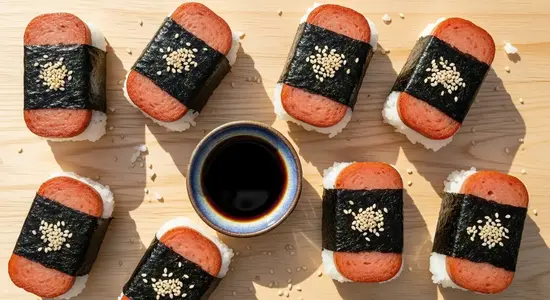
Ready to learn how to make spam musubi? Here’s the full step-by-step process, from prepping the rice to wrapping the nori. Follow these steps and you’ll have a beautiful batch ready in under 30 minutes.
- Cook and season your rice. Use a rice cooker or stovetop to prepare 3 cups of short-grain Japanese rice. While still warm, mix in rice vinegar, a pinch of salt, and a small amount of sugar. Stir gently to avoid smashing the grains. Seasoned rice clings together beautifully and tastes so much better than plain rice — don’t skip this step.
- Slice the Spam. Open your Spam can and slice it lengthwise into about 8 even slices. Each slice should be roughly 1/3-inch thick. Too thin and they’ll dry out; too thick and they’ll overpower the rice.
- Make the teriyaki glaze. In a small bowl, whisk together soy sauce, sugar, and mirin. This glaze is what transforms plain Spam into something genuinely crave-worthy — glossy, slightly sweet, and deeply savory.
- Pan-fry the Spam slices. Heat a non-stick pan over medium-high heat (no oil needed — Spam has plenty of fat). Lay the slices in the pan and cook for 2–3 minutes per side until golden brown and slightly crispy on the edges. Pour your soy glaze over the slices in the final minute, letting it caramelize and coat each piece. The smell at this point is absolutely incredible.
- Prep your musubi mold. If you have a musubi press, great! If not, use the cleaned, empty Spam can with both ends removed as a DIY mold. Press a layer of rice into the bottom, about 1 inch thick. You want it compact enough to hold its shape but not so packed it becomes a rice brick.
- Layer the Spam on the rice. Place a glazed Spam slice on top of the pressed rice layer. You can add a thin layer of furikake (Japanese rice seasoning) or a smear of mayo between the rice and Spam for extra flavor — totally optional but highly recommended.
- Wrap with nori. Cut your nori sheets in half lengthwise. Place the rice-and-Spam block near one end of a nori strip, then roll it up tightly, pressing the seam to seal it. The moisture from the rice helps the nori stick together. Let it sit for 1–2 minutes seam-side down before slicing.
Pro tip: Wet your hands lightly with water before pressing the rice — it prevents sticking and makes the whole process a lot smoother. Same rule as making onigiri!
The Spam Musubi Mold: Your Secret to Perfect Shape Every Time
If you’ve ever tried to shape spam musubi by hand and ended up with a sad, lopsided rice blob — you’re not alone. That’s exactly what a spam musubi mold is for. It’s a simple pressing tool that gives your musubi that clean, restaurant-quality rectangular shape every single time, without the frustration.
The good news is you don’t necessarily need to buy anything. You’ve already got the world’s most perfect musubi mold sitting in your recycling bin — the empty Spam tin itself. But if you’re planning to make musubi regularly (and once you taste it, you will be), a dedicated mold is absolutely worth the few dollars it costs.
The word “musubi” comes from the Japanese onigiri tradition — and just like onigiri molds, the musubi press is all about creating consistent shape, even compression, and easy release. Simple tool, big difference in results.
Types of spam musubi molds
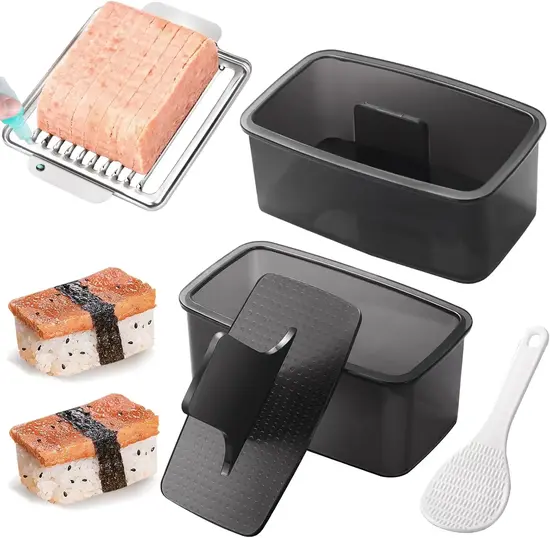
Most popular: Plastic musubi press
The classic dedicated tool. A rectangular mold with a removable press lid. Easy to use, dishwasher safe, and costs around $5–$10. Perfect for beginners and regular home cooks.
Free DIY: Empty Spam can
Remove both lids with a can opener, wash thoroughly, and you’ve got a perfectly sized mold — because it’s literally the exact shape Spam comes in. Zero cost, works brilliantly.
Best for batches: Multi-cavity mold
Makes 2–4 pieces at once. Great if you’re meal-prepping for the week or feeding a crowd. Slightly pricier at $12–$18 but saves serious time when making large batches.
Creative option: Onigiri triangle mold
Not traditional, but fun! Swap the rectangle for a triangle shape using a standard onigiri mold. Still wraps great in nori and makes a cute variation for lunchboxes and parties.
How to use a spam musubi mold step by step
- Wet the mold lightly — dampen the inside of the mold with water before adding rice. This prevents sticking and makes the rice slide out cleanly when you’re ready to release it.
- Add your rice layer — spoon warm seasoned rice into the mold, filling it about halfway. Spread it evenly across the base so the block holds a flat, even shape.
- Press firmly with the lid — push the press lid down with steady, even pressure. You want the rice compact enough to hold shape but not so crushed it becomes dense and gummy. Think “gentle but firm.”
- Add your Spam slice — lift the press lid, lay your glazed Spam slice directly on top of the compressed rice, then press the lid back down gently once more to bond the layers together.
- Release and wrap — hold the mold over your nori strip and push the press through to slide the block out cleanly. Wrap immediately while the rice is still warm — it seals the nori perfectly.
Musubi mold tips for best results
- Always wet your hands and the mold before each press — rice sticks aggressively to dry surfaces and you’ll lose a chunk of your block every time you try to release it.
- Use warm rice, not hot or cold. Hot rice steams and softens the nori before you can wrap; cold rice won’t compress properly and crumbles when you try to release it from the mold.
- Add a layer of furikake or a smear of spicy mayo inside the mold on top of the rice before pressing — it gets locked right into the block and adds flavor in every single bite.
- Clean the mold between every 2–3 uses if making a big batch. Rice residue builds up quickly and causes uneven pressing and sticking on subsequent pieces.
Spam Musubi Calories: What You’re Actually Eating
Let’s talk about spam musubi calories honestly — because yes, this is a calorie-dense snack. It’s not diet food. But it’s also real, satisfying fuel that keeps you going, and if you’re active (or just really hungry), that’s not a bad thing.
| Ingredient | Approx. Calories (per musubi) |
|---|---|
| Spam slice (1/8 can) | ~90 kcal |
| Cooked white rice (~½ cup) | ~100 kcal |
| Nori sheet (half) | ~5 kcal |
| Soy glaze (per musubi) | ~20 kcal |
| Total per piece | ~215–230 kcal |
So one piece of spam musubi runs about 215–230 calories. Most people eat two, which puts you around 430–460 calories for a solid, portable meal.
To cut calories, try using low-sodium, reduced-fat Spam, swap white rice for cauliflower rice (controversial, we know), or make smaller, thinner pieces.
Nori for Musubi: Choosing the Right Seaweed
The nori you pick can make or break your musubi experience. Here’s a quick breakdown of what to look for when buying seaweed for musubi:
✅Look for full-size roasted nori sheets — usually sold in packs of 10–50. Brands like Nagai, Yamamotoyama, or Daechun are all solid choices widely available at Asian grocery stores or online.
🚫Avoid flavored or seasoned nori snack sheets — those thin snack packs are too small and the seasoning can clash with your glaze. Save those for snacking on their own.
⚡Check for freshness — nori should be crisp, dark green-black, and have a clean ocean smell. If it smells musty or looks brownish, toss it. Stale nori ruins the texture completely.
📦Store it right — once opened, keep nori in an airtight container or resealable bag. Humidity is its enemy. If it goes soft, a quick 30 seconds in a dry skillet over low heat can crisp it back up.
Fun Spam Musubi Variations to Try
Once you’ve mastered the classic recipe, it’s time to get creative. The basic spam musubi format is endlessly customizable — here are some crowd-pleasing twists:
Furikake Musubi: Sprinkle a generous layer of furikake between the rice and Spam. Adds sesame, dried fish, and seaweed flavor in every bite.
Spicy Sriracha: Mix sriracha and mayo, spread a thin layer on the Spam before wrapping. Creamy heat that pairs perfectly with salty pork.
Egg Musubi: Add a thin layer of tamagoyaki (Japanese rolled omelette) between the Spam and rice. Rich, eggy, and absolutely filling.
Teriyaki Chicken: Swap Spam for a glazed chicken thigh slice for a lighter but equally delicious take on the classic.
Avocado & Spam: Thin slices of creamy avocado layered on top of the Spam add a buttery richness that’s borderline addictive.
Brown Rice Musubi:Healthier swap using brown or multigrain rice. Nuttier flavor and more fiber — worth trying at least once.
Pro Tips for the Best Spam Musubi Every Time
A few extra pointers to take your musubi from “pretty good” to “people are asking you for the recipe” good:
🍚Rice temperature matters. Use warm (not hot, not cold) rice when pressing. Hot rice steams everything and tears the nori; cold rice won’t stick properly and falls apart.
🔥Don’t rush the caramelization. Let the soy-sugar glaze bubble and thicken before removing the Spam from the pan. That sticky, lacquered finish is what makes the Spam irresistible.
🕐Eat it fresh. Spam musubi is best within 2–3 hours of making it. After that, the nori starts to get chewy and the rice dries out. If you’re meal-prepping, wrap them individually in plastic wrap to slow moisture loss.
✂️Slice cleanly. Use a sharp, wet knife to cut your musubi in half for serving. Wipe the blade between cuts. Clean cuts make for a much prettier presentation.
Frequently Asked Questions
Can I make spam musubi ahead of time?
Yes, but they’re best when fresh. Wrap tightly in plastic wrap and refrigerate for up to 24 hours. Bring to room temperature before eating — don’t microwave or the nori gets rubbery.
What kind of rice is best for musubi?
Short-grain Japanese sushi rice is ideal — it’s sticky enough to hold its shape but not gummy. Medium-grain Calrose rice (super common in Hawaii and California) is an excellent and more widely available alternative.
Is spam musubi a meal or a snack?
Both! One piece is a hearty snack, two or three pieces with a simple salad or miso soup makes a satisfying lunch. In Hawaii, it’s genuinely eaten as a quick breakfast or between-meal fuel.
Can I make it without a musubi mold?
Absolutely. The cleaned, empty Spam tin with both lids removed works perfectly as a DIY mold — it’s literally the exact right size since that’s what Spam musubi was originally shaped around.
What does spam musubi taste like?
Think salty, savory, slightly sweet from the glaze, with that subtle oceany flavor from the nori. The rice is soft and mildly tangy. Every bite is a balance of textures — crispy Spam, chewy nori, sticky rice. It’s truly greater than the sum of its parts.
Final Thoughts: Why You Need to Make This Today
Look, spam musubi recipes have survived decades because they work. They’re cheap, fast, portable, endlessly customizable, and flat-out delicious.
Whether you’re making them for a beach day, meal-prepping for the week, or just craving something different for lunch — this recipe delivers every single time.
The next time someone tells you “oh, it’s just Spam,” you can smile knowingly. Because anyone who’s had a properly glazed, freshly wrapped spam musubi knows the truth: this thing is a little masterpiece of simplicity. Give it a try — you might just find yourself making a second batch before the first one’s even gone.
Tried this spam musubi recipe?
Share your creations, tag your variations, and let us know which twist is your favorite. Happy cooking — and aloha! 🌺