

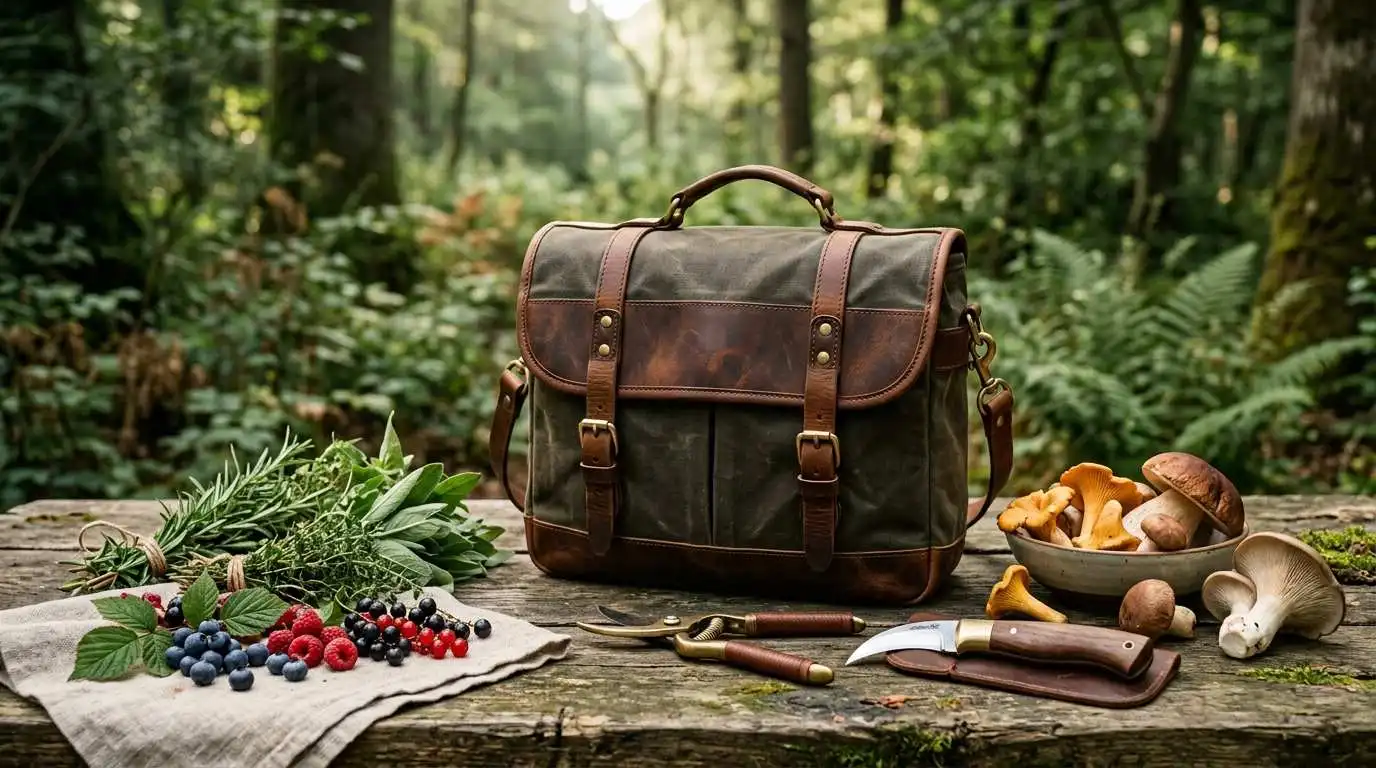

Foraging becomes a different kind of experience when the equipment is chosen with the same care as the ingredients being gathered. A well-designed foraging bag is more than a container for mushrooms, herbs, berries, and woodland finds. It becomes part of the ritual—something practical enough for the trail, yet beautiful enough to reflect an appreciation for craftsmanship, natural materials, and intentional living.
The finest foraging bags combine waxed canvas, full-grain leather, breathable mesh, solid hardware, and thoughtful construction. Rather than relying on disposable synthetic materials, these traditional fabrics and leathers are designed to develop character through use. Scratches, creases, color changes, and patina become part of the story.
For those who approach outdoor pursuits through a quiet-luxury lens, the ideal bag balances durability with understated elegance. It should work comfortably in a woodland setting while complementing a carefully considered foraging kit.
Table of Contents
What Makes a Luxury Foraging Bag Different?
A luxury foraging bag does not necessarily need a recognizable designer label or an extravagant price. The distinction is usually found in materials, construction, functionality, and longevity.
Traditional materials are particularly well suited to outdoor use. Heavy waxed canvas can resist light moisture and abrasion, while full-grain leather provides exceptional durability for straps, handles, pockets, and fastening systems.
Hardware matters as well. Brass buckles, rivets, snaps, and D-rings can provide strength while developing a distinctive aged appearance over time.
The best designs also consider how the bag will actually be used. A mushroom hunter may need a breathable compartment, while someone gathering berries may prefer a wide opening that makes it easy to reach inside without stopping repeatedly.
A beautiful bag is valuable, but a beautiful bag that performs exceptionally well is far more compelling.
1. Waxed Canvas Foraging Bag
A waxed canvas foraging bag is one of the most versatile choices for woodland gathering. Canvas provides a sturdy structure without making the bag unnecessarily heavy, while the waxed finish adds a degree of resistance to moisture and dirt.
The material also develops an attractive character through regular use. Instead of looking worn immediately, quality waxed canvas can develop subtle creases, changes in tone, and variations in texture.
Look for a generous opening, reinforced seams, a comfortable shoulder strap, and pockets for smaller tools.
For everyday foraging, a medium-sized canvas bag can accommodate mushrooms, edible leaves, berries, pinecones, and other lightweight discoveries without becoming cumbersome.
2. Full-Grain Leather Foraging Pouch
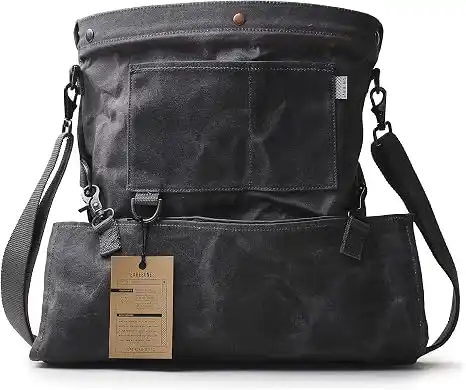
For minimalist gathering trips, a full-grain leather foraging pouch can be an elegant alternative to a large basket or backpack.
Full-grain leather retains the natural surface of the hide, making every piece visually distinctive. Over time, exposure to sunlight, handling, and natural oils can create a deeper patina.
A leather pouch works particularly well when the objective is to carry a small collection of tools or a limited harvest. Belt attachment points can make the pouch convenient when both hands need to remain free.
For a refined outdoor aesthetic, vegetable-tanned leather paired with aged brass hardware offers an especially timeless combination.
3. Mesh Mushroom Foraging Bag
Mushroom gathering requires slightly different considerations from collecting durable objects such as nuts or pinecones. A mesh mushroom foraging bag allows air to circulate through the contents and prevents delicate specimens from sitting in an enclosed, humid compartment.
Breathable construction can also help protect freshly collected mushrooms from excessive moisture and compression.
A sophisticated design may combine a durable canvas or leather exterior with a breathable mesh interior. This creates a useful compromise between traditional craftsmanship and the practical requirements of mushroom hunting.
When selecting any mushroom bag, capacity should match the scale of the outing. An oversized bag can encourage overfilling, while a compact design is easier to carry through dense woodland.
4. Crossbody Foraging Bag
A crossbody foraging bag is ideal for those who want freedom of movement while walking through uneven terrain.
The weight is distributed across the body rather than concentrated entirely at the waist. A properly positioned adjustable strap also allows the bag to sit securely while bending, climbing, or reaching for plants.
For everyday use, we favor a design with a broad opening, secure closure, internal organization, and a reinforced base.
Waxed canvas and leather are particularly attractive in this format because they combine a relaxed outdoor character with a refined appearance.
5. Leather-and-Canvas Harvest Bag
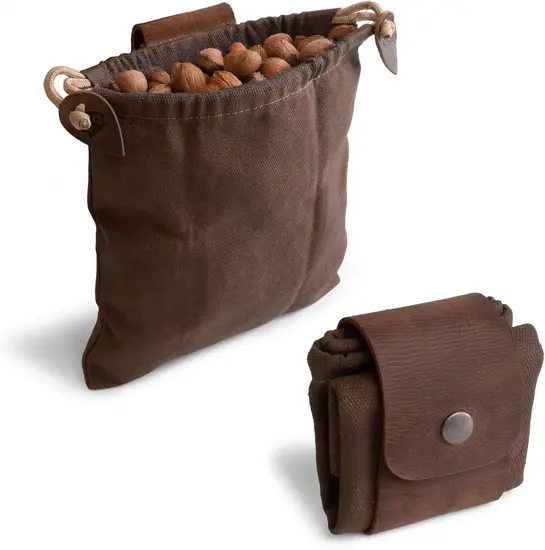
Combining waxed canvas and full-grain leather can create one of the most practical and visually appealing foraging bags.
Canvas provides the main body with flexibility and relatively low weight. Leather can reinforce high-stress areas such as corners, handles, straps, and attachment points.
This combination also produces a distinctive heritage aesthetic. The canvas gradually develops its own surface character while the leather darkens and gains patina.
For a long-term investment, examine the stitching carefully. Double-stitched stress points, reinforced handles, and securely attached hardware can make a significant difference to durability.
6. Belt-Mounted Foraging Pouch
For short walks and minimalist outings, a belt-mounted foraging pouch can be remarkably useful.
The compact format keeps essential items close to the body without requiring a full-size shoulder bag. It can accommodate pruning shears, a small notebook, gloves, a folding tool, or a modest quantity of gathered material.
A quality pouch should remain stable when walking. Wide belt loops and reinforced attachment points are preferable to flimsy clips when the pouch will be used regularly.
Leather is particularly well suited to this format because it provides structure while remaining comfortable against outdoor clothing.
7. Heritage-Style Foraging Basket Bag
A traditional foraging basket bag offers a different experience altogether. Woven natural materials can provide excellent ventilation while creating a distinctly rustic aesthetic.
A basket-style design is particularly appealing for larger, delicate harvests that benefit from being loosely arranged rather than compressed inside a soft bag.
Some contemporary designs combine woven construction with leather handles and canvas covers. This approach preserves the visual appeal of traditional harvesting equipment while adding practical features for modern outdoor use.
Choosing the Right Material for a Foraging Bag
Material selection should begin with the intended use.
Waxed canvas is well suited to regular outdoor use because it combines durability, flexibility, and resistance to light moisture.
Full-grain leather is exceptionally attractive for handles, straps, pouches, and reinforcement panels. Its greatest aesthetic advantage is its ability to develop patina.
Mesh is particularly useful where ventilation is important, especially for mushroom gathering.
Woven natural fibers offer excellent airflow and a traditional appearance, although they may require more care when exposed to prolonged moisture.
The most versatile designs often combine several materials rather than relying on one material throughout.
The Quiet-Luxury Foraging Kit
A refined foraging experience does not require dozens of specialized accessories. A carefully selected collection of durable essentials is usually more useful.
A considered kit might include:
- A waxed canvas or leather foraging bag
- A compact mushroom knife where appropriate
- Small pruning shears for suitable plant harvesting
- Lightweight gardening or foraging gloves
- A reusable linen or cotton produce wrap
- A small notebook for recording observations
- A refillable water bottle
- A weather-resistant field guide
- A simple cleaning cloth for maintaining equipment
The goal is not to accumulate equipment. It is to select pieces that are useful, durable, repairable, and pleasant to use.
That philosophy is at the heart of quiet luxury: fewer objects, chosen better.
What to Look for in a High-Quality Foraging Bag
Before purchasing a foraging bag, examine the construction rather than focusing exclusively on appearance.
Reinforced Stress Points
Handles and straps experience considerable tension. Reinforced stitching and additional leather or canvas panels can increase longevity.
Secure Closures
A drawstring, buckle, flap, snap, or combination closure should keep the contents secure without making access unnecessarily complicated.
Comfortable Carrying System
A poorly positioned strap can quickly become uncomfortable. Adjustable shoulder straps and appropriately sized handles provide greater flexibility.
Easy Cleaning
Outdoor equipment inevitably encounters soil, leaves, moisture, and plant material. Materials that can be brushed, wiped, or gently cleaned are preferable.
Useful Capacity
The largest bag is not necessarily the best bag. A container that is too large can become uncomfortable when fully loaded.
Repairability
Traditional materials have an important advantage: many can be repaired. Canvas can often be patched, leather can be conditioned, and hardware can sometimes be replaced.
Caring for Waxed Canvas and Leather
Good equipment becomes more valuable when it is maintained correctly.
Waxed canvas should generally be brushed or wiped clean rather than aggressively washed. Depending on the manufacturer’s instructions, the fabric may eventually require rewaxing to restore its protective finish.
Leather benefits from keeping dirt and excessive moisture under control. A suitable leather conditioner can help maintain flexibility, but excessive conditioning can alter the appearance or texture.
Wet equipment should be allowed to dry naturally in a well-ventilated place. Direct high heat can damage leather and affect waxed fabrics.
With proper care, a quality canvas and leather foraging bag can become a long-term companion rather than a seasonal purchase.
Foraging With a More Intentional Approach
The appeal of foraging extends beyond the harvest itself. Walking slowly through woodland, observing seasonal changes, identifying plants, and collecting only what is appropriate can turn a simple outdoor activity into a more deliberate ritual.
The equipment should support that experience rather than distract from it.
A well-made bag disappears into the activity. It sits comfortably against the body, opens easily when needed, protects the harvest, and becomes more distinctive with every outing.
That is where artisanal craftsmanship and practical outdoor design meet.
Final Thoughts
The best luxury foraging bag is not necessarily the most expensive option. It is the one that brings together durability, thoughtful design, natural materials, comfort, and timeless character.
Waxed canvas offers rugged practicality. Full-grain leather introduces structure and develops a beautiful patina. Breathable mesh can improve functionality for mushroom gathering, while woven materials provide the ventilation and traditional character associated with classic harvesting baskets.
For those who appreciate quiet luxury, these details matter. A carefully made foraging bag can transform an ordinary outdoor accessory into something more enduring—a functional object that becomes more beautiful through use.
The art of the harvest is ultimately about paying attention: to the landscape, to the season, to what we carry, and to the objects we choose to keep. A thoughtfully designed foraging bag belongs naturally within that philosophy.