

A beautiful life starts with knowing what deserves your time, attention, money, and space.
Mindful living and lifestyle design brings those choices together. It means creating daily routines, surroundings, purchases, relationships, and experiences around what genuinely matters to you. The result can be a calmer home, a less crowded schedule, more meaningful experiences, and a personal style that feels unmistakably yours.
You don’t need to redesign your entire life overnight.
A few deliberate changes can shift how your days feel. Clear a surface. Remove a commitment that drains you. Create a morning ritual you actually enjoy. Buy fewer things, but choose pieces you’ll appreciate for years.
For PureLuxy, mindful living sits at the intersection of intentionalism, essentialism, and aesthetic living. The goal is a life that feels considered without becoming rigid or overly complicated.
Quick answer: Mindful living and lifestyle design means deliberately shaping your environment, routines, possessions, spending, and experiences around your values. Start by identifying what matters most, removing unnecessary commitments, and designing simple daily rituals that support the life you want to live.
Table of Contents
What Is Mindful Living and Lifestyle Design?
Mindful living means paying deliberate attention to how you spend your days. Lifestyle design takes that awareness one step further by intentionally shaping your surroundings, habits, schedule, possessions, and experiences.
Together, they create a practical philosophy:
Decide what matters. Make room for it. Build your life around it.
This can look different for everyone.
One person might prioritize slow mornings, beautiful interiors, regular travel, and long dinners with friends. Another might value fitness, creative work, a quiet home, and weekends outdoors.
There isn’t a universal formula.
The common thread is intentional choice.
Instead of allowing every purchase, invitation, notification, trend, and obligation to compete for your attention, you begin making decisions according to a personal set of priorities.
The Three Ideas Behind the Approach
Mindfulness asks:
Am I paying attention to how I’m living?
Essentialism asks:
What deserves a place in my life?
Lifestyle design asks:
How can I structure my days around those priorities?
Aesthetic living adds another dimension:
Can my surroundings reflect the way I want to feel?
When these ideas work together, even ordinary routines can feel more personal.
Your coffee cup matters because you chose it.
Your bedroom matters because you designed it for rest.
Your wardrobe matters because every piece earns its place.
Your Sunday afternoon matters because you protected it.
That’s lifestyle design in everyday form.
Why Intentional Living Can Change the Way Your Days Feel
Your surroundings and routines influence how you move through the day.
A cluttered kitchen can make breakfast feel rushed. A phone beside your bed can pull your attention toward messages before you’ve even stood up. A wardrobe packed with clothes you rarely wear can turn getting dressed into a daily chore.
Small sources of visual and mental noise accumulate.
Intentional living gives you an opportunity to remove some of that noise.
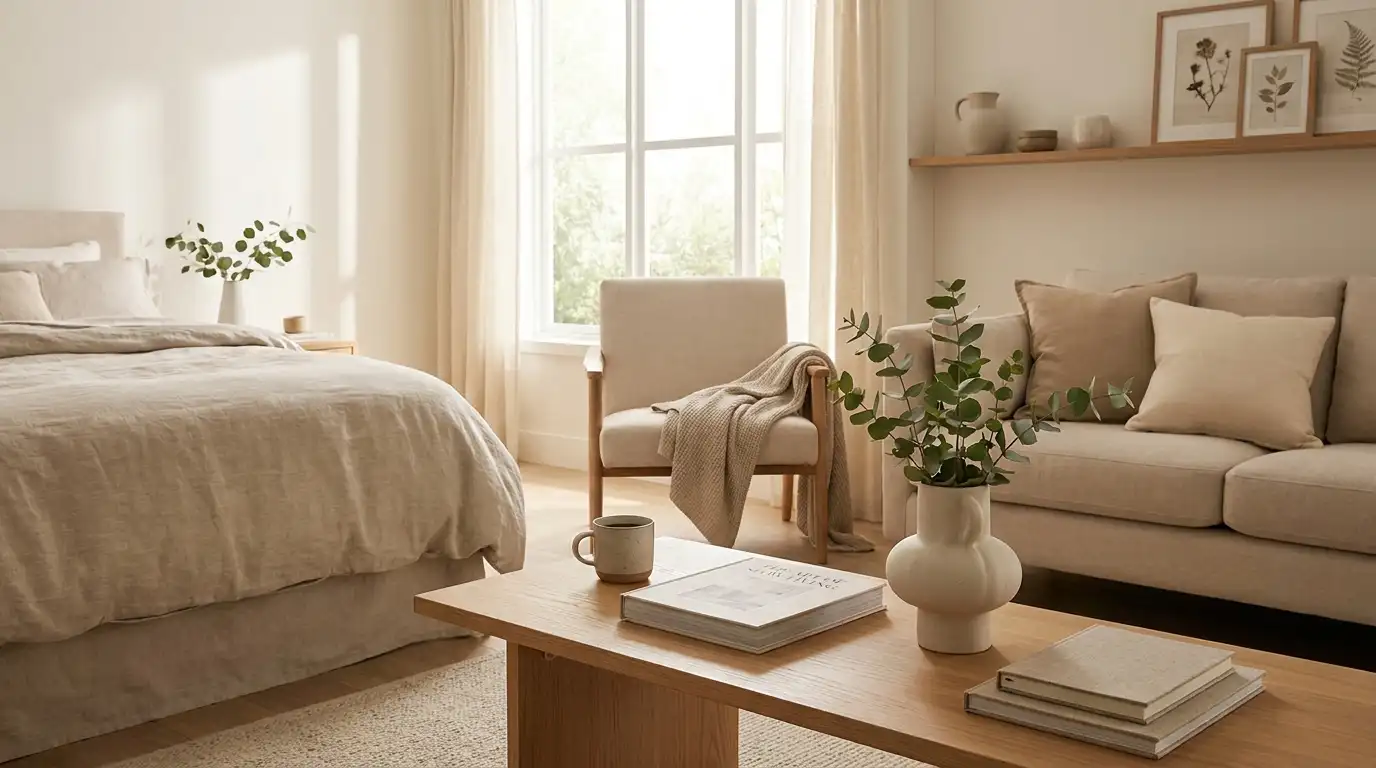
Imagine waking up to a bedroom with clear surfaces, natural light, comfortable bedding, and only the objects you actually enjoy seeing.
Your morning hasn’t become dramatically different.
The setting has.
The same principle works with your calendar.
A week filled with back-to-back obligations leaves little room for spontaneous experiences, exercise, cooking, reading, or simply doing nothing.
Lifestyle design asks you to treat time as something worth arranging carefully.
How to Start Designing a More Intentional Lifestyle
You don’t need a dramatic reset.
Start with observation.
For seven days, pay attention to the moments when you feel energized, calm, distracted, rushed, or satisfied.
Write down what was happening around those moments.
You may notice patterns surprisingly quickly.
Perhaps you feel best after an uninterrupted morning. Maybe you enjoy cooking when your kitchen is tidy. Perhaps shopping online leaves you with more clutter and less satisfaction than expected.
Use those observations as design clues.
1. Define Your Personal Priorities
Choose five areas that matter most right now.
For example:
- Health
- Relationships
- Career
- Travel
- Creativity
Then ask yourself a simple question:
Does my current week reflect these priorities?
If health is one of your top priorities but your calendar leaves no room for movement, something needs adjusting.
If relationships matter deeply but every evening is filled with work, entertainment, and errands, your schedule isn’t reflecting your values.
Your priorities become useful when they influence actual decisions.
2. Create a Personal Definition of Luxury
Luxury means something different to each person.
For one person, it’s a beautifully designed hotel suite. For another, it’s having an uninterrupted hour to read every morning.
It could be:
- Fresh flowers at home
- High-quality bedding
- A quiet breakfast
- A weekend escape
- Tailored clothing
- A beautifully prepared meal
- A home with fewer possessions
- More time with family
- A slower morning routine
This distinction matters because intentional luxury focuses on quality of experience rather than quantity of possessions.
Ask yourself:
What makes an ordinary day feel special to me?
Those answers can become the foundation of your lifestyle design.
Essentialism: Making Space for What Matters
Essentialism is particularly useful when designing an intentional lifestyle because physical and mental space are limited.
Every possession requires some combination of money, storage, maintenance, cleaning, attention, or emotional energy.
That doesn’t mean you should own as little as possible.
It means each item should have a reason for being there.
Use the “Would I Choose This Again?” Test
Walk through your home and pick up an item.
Ask:
If I didn’t already own this, would I buy it today?
If the answer is no, consider why you’re keeping it.
Some possessions have sentimental value. Others serve a practical purpose. Some simply occupy space because you’ve never questioned them.
You don’t have to eliminate everything that doesn’t meet a strict functional standard.
A beautiful object can earn its place through pleasure alone.
The point is conscious ownership.
Choose Quality Where It Matters
Mindful consumption doesn’t require buying the most expensive option.
It means understanding where quality genuinely improves your experience.
A mattress can affect your sleep.
A well-made coat can become a decade-long wardrobe staple.
A comfortable chair can change how you read, work, or relax.
A good chef’s knife can make cooking more enjoyable.
Spend thoughtfully on the things you use frequently.
Save on things that don’t matter much to you.
That’s a more sustainable approach to luxury than buying expensive versions of everything.
Designing a Beautiful Home for Everyday Living
Your home is one of the strongest tools available for lifestyle design because you interact with it every day.
A mindful home doesn’t need to look empty or sterile.
It should feel considered.
Start With Visual Calm
Look at the surfaces you see most often.
Your kitchen counter.
Bedside table.
Coffee table.
Bathroom vanity.
Desk.
Remove anything that doesn’t need to remain there.
Then introduce a few elements that create pleasure:
- A ceramic vase
- Fresh flowers or greenery
- A beautiful lamp
- Natural textiles
- Framed artwork
- A sculptural object
- A tray for everyday essentials
- A favorite candle
The objective is simple: fewer competing objects, more meaningful ones.
Create Dedicated Spaces for Daily Rituals
Give important activities a physical home.
A small reading corner can make reading easier to return to.
A beautiful coffee station can turn a five-minute morning drink into a ritual.
A meditation cushion placed in a quiet corner creates a visual reminder to pause.
A well-organized wardrobe makes dressing easier.
Your environment can quietly encourage the behaviors you want.
Mindful Consumption: Buy With Intention
Modern shopping makes impulse purchases remarkably easy.
A product appears on your screen. You imagine owning it. You click.
The excitement often lasts longer than the usefulness of the item.
Mindful consumption introduces a pause between wanting and buying.
Before purchasing something, ask:
- Do I genuinely need or deeply appreciate it?
- Will I use it regularly?
- Do I already own something that serves the same purpose?
- Does it fit my home, wardrobe, or lifestyle?
- Would I still want it after waiting 48 hours?
- Can I afford it without creating financial pressure?
- Is the quality appropriate for how often I’ll use it?
The pause doesn’t eliminate pleasure.
It makes your purchases more deliberate.
Build a “Beautiful Basics” Collection
A refined lifestyle can be built around a relatively small collection of things you use constantly.
Think:
- Quality towels
- Comfortable bedding
- A versatile wardrobe
- Everyday glassware
- Reliable kitchen tools
- A comfortable robe
- A well-designed travel bag
- A beautiful notebook
- Good lighting
These objects become part of your daily experience.
Choose them accordingly.
Designing Mindful Daily Routines
A routine works best when it fits your real life.
You don’t need a two-hour morning ritual involving twelve separate steps.
Start with three anchors.
A Simple Morning Ritual
Try:
Wake → Hydrate → Move → Pause
Drink water.
Open the curtains.
Stretch or walk.
Spend a few quiet minutes without your phone.
Then begin the day.
The ritual can take 15 minutes.
Its value comes from consistency.
A Simple Evening Ritual
Try:
Reset → Prepare → Disconnect → Rest
Tidy the main living area.
Prepare what you’ll need tomorrow.
Put your phone away for a while.
Dim the lights.
Read, stretch, take a bath, or simply sit quietly.
A good evening routine creates a physical transition between doing and resting.
Digital Minimalism for a More Present Life
Your phone is part of your environment too.
That makes digital organization a lifestyle-design issue.
Start with your home screen.
Remove apps you rarely use.
Turn off unnecessary notifications.
Move social media away from the first screen.
Create periods during the day when your phone stays out of reach.
You can also establish simple boundaries:
- No phone during meals
- No notifications during focused work
- No scrolling immediately after waking
- No phone beside the bed
- One screen-free evening each week
You don’t need to abandon technology.
Use it deliberately.
Design Your Calendar Around Energy, Not Just Tasks
A calendar can become a list of obligations.
Lifestyle design turns it into a picture of the life you’re actually creating.
Look at a typical week.
Where are the quiet spaces?
Where is exercise?
Where are relationships?
Where is creative time?
Where is boredom?
Where are enjoyable experiences?
Where is recovery?
A schedule containing only work and errands doesn’t leave much room for living.
Protect White Space
Leave some empty space in your calendar.
That space might become:
- A long walk
- An impromptu lunch
- Reading
- Cooking
- A museum visit
- A nap
- Time with someone you love
- Absolutely nothing
Empty time has value.
You don’t have to fill every available hour.
Mindful Travel and Experience Design
Travel can become part of intentional living when you choose experiences based on how you want to feel.
Instead of collecting destinations simply for the sake of collecting them, ask:
What experience am I looking for?
Perhaps it’s:
- Rest
- Culture
- Nature
- Food
- Architecture
- Adventure
- Romance
- Solitude
- Connection
This changes how you plan.
A restorative trip may need fewer activities and more time in one beautiful location.
A food-focused trip might revolve around markets, restaurants, cooking classes, and local producers.
A design-focused escape could center on architecture, galleries, hotels, and interiors.
The destination becomes part of a larger personal story.
How to Practice Mindful Living Without Becoming Rigid
Intentional living should leave room for spontaneity.
You can have a carefully designed home and still order takeout.
You can practice mindful spending and occasionally buy something simply because you love it.
You can follow a morning routine and sleep late on Sunday.
You can value minimalism while keeping sentimental objects.
The goal is awareness.
Rules can help, but personal judgment matters more.
Your lifestyle should support you rather than become another performance you have to maintain.
Common Mistakes in Lifestyle Design
Trying to Change Everything at Once
A complete life makeover sounds exciting.
It rarely lasts.
Change one area at a time.
Start with your bedroom, morning routine, wardrobe, spending habits, or calendar.
Build from there.
Copying Someone Else’s Aesthetic
A beautiful home on Pinterest or Instagram can inspire you.
It can’t tell you how you want to live.
A room can look wonderful while being completely impractical for your lifestyle.
Use visual inspiration as a starting point.
Then adapt it to your own habits.
Confusing Expensive With Meaningful
Price doesn’t determine personal value.
A handmade mug bought on a memorable trip can mean more than an expensive decorative object.
A simple linen shirt you wear constantly can be more useful than a designer piece that sits untouched.
Choose according to use, beauty, craftsmanship, and personal meaning.
Treating Decluttering as the Whole Philosophy
Removing possessions can create space.
What you do with that space matters more.
Use the extra room for the things you value.
Use the saved money for experiences.
Use the extra time for relationships.
Use the quieter home for rest.
The purpose of simplification is a richer everyday life.
A 30-Day Mindful Lifestyle Design Challenge
You can begin with one month.
Week 1: Observe
Write down:
- What energizes you
- What drains you
- What you spend money on
- What consumes your attention
- Which parts of your home feel peaceful
- Which routines feel rushed
Don’t change anything yet.
Just observe.
Week 2: Simplify
Choose one area each day.
Declutter a drawer.
Clear your bedside table.
Review your wardrobe.
Clean your digital home screen.
Cancel an unnecessary subscription.
Remove one commitment that no longer serves your priorities.
Week 3: Design
Introduce small rituals.
Create a morning coffee ritual.
Prepare your bedroom for better sleep.
Set aside an evening for cooking.
Schedule a weekly walk.
Create a reading corner.
Protect one block of empty time.
Week 4: Refine
Review what changed.
Ask:
What made my days feel better?
Keep those changes.
Discard the ones that felt forced.
Then continue building gradually.
Key Takeaways
- Mindful living and lifestyle design means deliberately shaping everyday life around your values.
- Intentionalism helps you make conscious decisions about time, money, attention, and possessions.
- Essentialism encourages you to make room for what genuinely matters.
- A beautiful home can support calmer, more enjoyable daily routines.
- Luxury can come from time, craftsmanship, comfort, beauty, and memorable experiences.
- Mindful consumption creates more thoughtful purchasing habits.
- Your calendar deserves as much attention as your home.
- Start with small changes and allow your lifestyle to evolve naturally.
Frequently Asked Questions
What is mindful living and lifestyle design?
Mindful living and lifestyle design means deliberately shaping your routines, environment, possessions, spending, and schedule around your personal values. It combines awareness with practical decisions that make everyday life feel more intentional.
How do I start living more intentionally?
Start by identifying your top priorities and observing how you currently spend your time, money, attention, and physical space. Choose one area to simplify and introduce one small routine that supports what matters most to you.
Is mindful living the same as minimalism?
They overlap, but they aren’t identical. Minimalism often focuses on reducing possessions and distractions, while mindful living covers a broader range of choices, including relationships, routines, spending, work, travel, technology, and experiences.
Can mindful living be luxurious?
Absolutely. Luxury can be defined through quality, comfort, beauty, craftsmanship, time, and memorable experiences. Intentional luxury focuses your resources on the things that genuinely improve your life.
How can I make my home feel more intentional?
Start by reducing visual clutter, improving lighting, choosing useful objects you enjoy seeing, and creating dedicated spaces for activities you value. Your home should support the way you actually live.
How does essentialism fit into lifestyle design?
Essentialism encourages you to identify what deserves your attention and resources. In lifestyle design, this can guide decisions about possessions, commitments, purchases, routines, and even travel.
How can I practice mindful consumption?
Pause before buying, consider whether you’ll use the item regularly, check whether you already own something similar, and think about its quality and longevity. A short waiting period can also reduce impulse purchases.
Does intentional living require a strict routine?
No. A flexible routine often works better than a rigid one. The purpose of routines is to support your priorities while leaving enough room for spontaneity, rest, and unexpected experiences.