


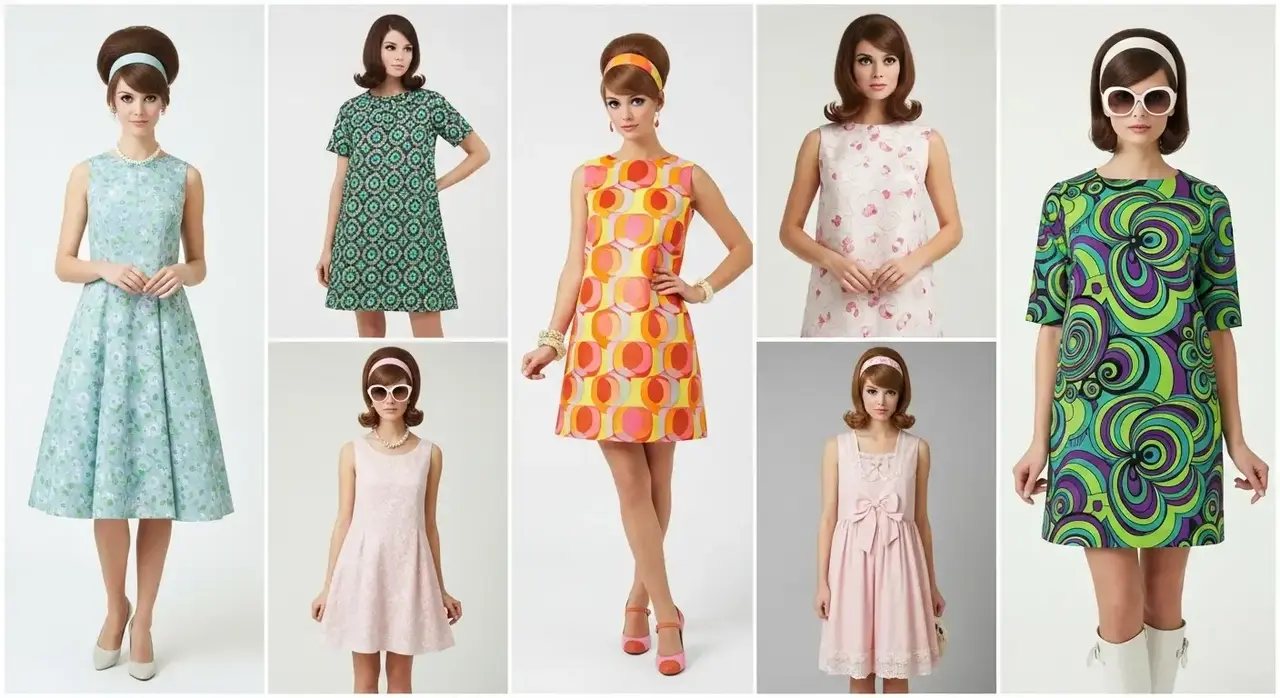
1960s dress outfits are defined by clean silhouettes, bold colors, and youthful designs such as shift dresses, A-line styles, and mini dresses. Originating during a cultural fashion revolution, these iconic looks remain popular today for their timeless elegance, flattering fit, and versatile styling options.
The 1960s was a revolutionary decade for fashion, and nowhere is this more evident than in the iconic dresses that defined the era.
Whether you’re drawn to the sophisticated mod styles of early ’60s London or the free-spirited bohemian looks that closed out the decade, understanding authentic 1960s dress outfits can transform your wardrobe with timeless elegance.
Table of Contents
Understanding the 1960s Dress Revolution
The 1960s marked a dramatic shift in women’s fashion. Hemlines rose, silhouettes simplified, and bold colors replaced the restrained palette of the 1950s. This wasn’t just about clothes changing—it reflected a complete cultural transformation.
Early in the decade, women wore structured dresses with defined waistlines and conservative hemlines. By 1969, the mini dress had become a symbol of liberation, and fashion had splintered into multiple distinct styles that gave women unprecedented choice in how they presented themselves.
Why 1960s Dress Styles Matter Today
These vintage-inspired pieces offer something rare in modern fashion: true individuality combined with flattering silhouettes. Unlike fast fashion trends that come and go within months, a well-chosen 1960s dress outfit provides lasting style that works across seasons and occasions.
The clean lines and quality construction methods from this era create garments that photograph beautifully and feel comfortable throughout the day. This makes them perfect for women who want to stand out at events without sacrificing practicality.
Key 1960s Dress Styles You Should Know
Understanding the main dress categories from this decade helps you identify which styles will work best for your body type and lifestyle.
The Shift Dress
The shift dress became the defining silhouette of the 1960s. This simple, straight-cut garment hangs from the shoulders without a defined waistline, creating a youthful and modern look.
Fashion designer Mary Quant popularized this style in London, and it quickly spread worldwide. The beauty of the shift dress lies in its versatility—it works equally well for office settings and evening events when styled appropriately.
Key characteristics:
- Straight, boxy silhouette
- No defined waist
- Usually falls above the knee
- Simple construction with minimal seaming
- Often features bold geometric prints or solid colors
The A-Line Dress
The A-line dress offers a more forgiving silhouette than the shift. It fits at the shoulders and gradually widens toward the hem, creating a flattering shape that works on multiple body types.
This style dominated the mid-1960s and remains one of the most wearable vintage-inspired options today. The slight flare provides movement and femininity without the structured formality of earlier decades.
The Mini Dress
Nothing says 1960s quite like the mini dress. Hemlines that ended well above the knee shocked conservative observers but thrilled younger women seeking fashion freedom.
The mini dress came in countless variations—from simple shift styles to more elaborate designs with pleats, buttons, and decorative details. British model Twiggy became the face of this movement, and the style defined youth culture throughout the late ’60s.
The Mod Dress
Mod fashion originated in London and emphasized clean geometric shapes, bold color blocking, and futuristic details. Mod dresses often featured:
- Color blocking in black and white or primary colors
- Geometric patterns and optical prints
- Peter Pan collars
- Three-quarter or short sleeves
- Minimalist decoration
- Structured fabrics that held their shape
The Babydoll Dress
As the decade progressed, the babydoll dress emerged as a softer alternative to structured mod styles. These dresses feature:
- Empire waistline (just below the bust)
- Loose, flowing skirt
- Often made from lightweight fabrics
- Feminine details like lace, bows, or ruffles
- Youthful, innocent aesthetic
Fabrics and Materials That Define Authentic 1960s Dresses
The fabrics used in 1960s dresses played a crucial role in achieving the era’s distinctive looks. Understanding these materials helps you identify quality pieces and understand how they’ll wear.
Popular 1960s Dress Fabrics
| Fabric Type | Characteristics | Best Used For | Care Requirements |
|---|---|---|---|
| Cotton | Breathable, comfortable, holds prints well | Casual day dresses, shift dresses | Machine washable, may require ironing |
| Wool Crepe | Structured, holds shape, professional appearance | Work dresses, A-line styles | Dry clean recommended |
| Polyester | Wrinkle-resistant, holds vibrant colors | Mod dresses, geometric prints | Easy care, machine washable |
| Silk | Luxurious, drapes beautifully, sophisticated | Evening dresses, special occasions | Dry clean only |
| Brocade | Rich texture, formal appearance, structured | Cocktail dresses, formal events | Professional cleaning required |
| Jersey Knit | Stretchy, comfortable, form-fitting | Bodycon styles, casual wear | Machine washable, gentle cycle |
The Synthetic Revolution
The 1960s saw widespread adoption of synthetic fabrics. Polyester, acrylic, and nylon allowed designers to create bright, colorful dresses that maintained their shape and required less maintenance than natural fibers.
While some fashion purists dismissed these materials, they democratized fashion by making stylish dresses affordable and practical for everyday women. Today, vintage polyester dresses often survive in excellent condition because the fabric is incredibly durable.
Colors and Patterns That Defined the Decade
The 1960s embraced color in ways previous decades hadn’t. Understanding the era’s color palette helps you choose authentic-looking pieces.
Early 1960s Color Schemes
The early part of the decade favored:
- Pastels like baby pink, mint green, and powder blue
- Classic navy and white combinations
- Soft neutrals with pops of color
- Sophisticated jewel tones for evening wear
Late 1960s Psychedelic Era
By the late ’60s, color choices became bolder:
- Bright orange, hot pink, and electric blue
- Psychedelic multicolor patterns
- Earthy tones as bohemian influences grew
- Op art black and white geometric designs
Pattern Guide
Geometric prints: Sharp lines, circles, squares, and abstract shapes dominated mod fashion. These patterns made strong visual statements and photographed dramatically.
Florals: Flower patterns ranged from small ditsy prints to large psychedelic blooms. The style of floral changed throughout the decade, with later years featuring more abstract, artistic interpretations.
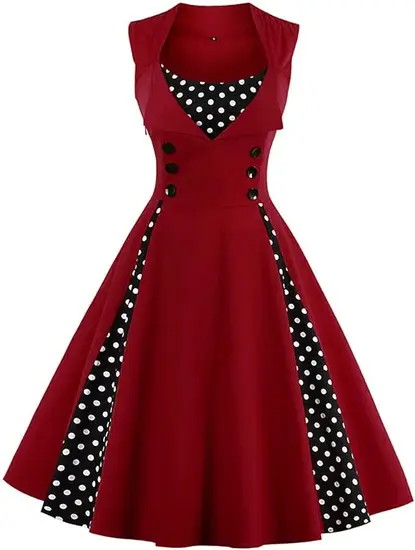
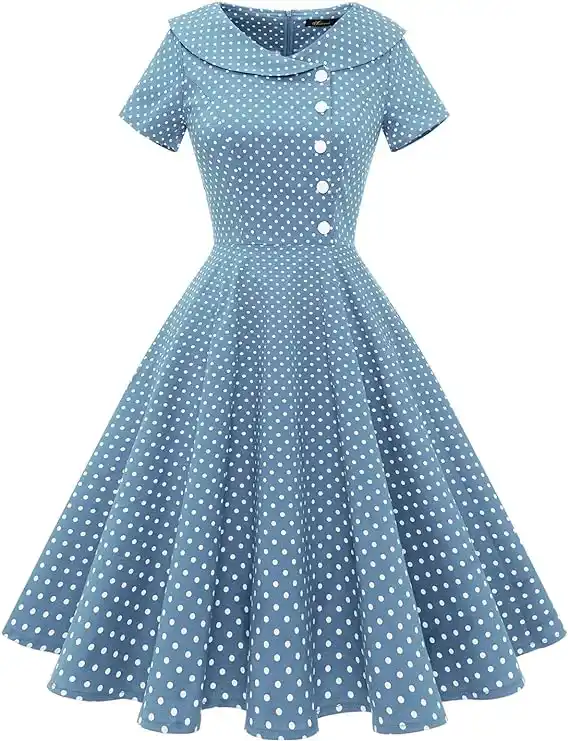
Polka dots: This classic pattern remained popular throughout the decade, especially in black and white or navy and white combinations.
Paisley: As Eastern influences grew in the late ’60s, paisley patterns became increasingly popular, especially for bohemian-inspired dresses.

How to Build a Complete 1960s Dress Outfit
A 1960s dress alone doesn’t create an authentic outfit. The accessories, shoes, and styling details complete the look.
Essential Accessories for 1960s Dress Outfits
Go-go boots: White or colored knee-high boots became synonymous with 1960s fashion. These boots work perfectly with mini dresses and create an instantly recognizable silhouette.
Mary Jane shoes: Low-heeled shoes with a single strap across the instep provided a more demure option for shift and A-line dresses.
Structured handbags: Small, boxy handbags in patent leather or vinyl complemented the geometric aesthetic of mod fashion.
Statement jewelry: Large plastic or geometric earrings, chunky bracelets, and bold necklaces added visual interest without overwhelming the clean dress lines.
Headbands and hair accessories: Wide headbands, often matching the dress fabric, helped create the era’s signature hairstyles.
Outerwear Options
The right coat or jacket completes your 1960s dress outfit for cooler weather:
- Cropped jackets: Short, boxy jackets that hit at the natural waist or just below
- Peacoats: Classic double-breasted coats in navy or camel
- Swing coats: A-line coats that mirrored dress silhouettes
- Fur or faux fur stoles: For evening elegance
Hosiery and Tights
Legs were rarely bare in the 1960s. Options included:
- Textured tights in bold colors
- Patterned stockings with geometric or floral designs
- Sheer nude hosiery for professional settings
- White or colored tights for mod looks
Choosing the Right 1960s Dress for Your Body Type
Not every 1960s style flatters every figure. Here’s honest guidance on selecting styles that will work for you.
For Petite Figures
Best choices: Shift dresses and mini dresses create length and don’t overwhelm smaller frames. Vertical stripes and solid colors work better than large, busy prints.
Avoid: Very full A-line styles that may swallow your figure, and extremely bold patterns that can look disproportionate.
For Curvy Figures
Best choices: A-line dresses provide structure while accommodating curves comfortably. Empire waist babydoll dresses highlight the narrowest part of your torso. Dresses with some stretch in the fabric offer better fit.
Avoid: Very tight shift dresses without any stretch, which may feel restrictive and uncomfortable.
For Athletic or Straight Figures
Best choices: You can wear the straight shift dress beautifully. Dresses with waist details, color blocking, or embellishment at the bust or hips can create curves.
Avoid: Nothing—most 1960s styles were designed for straighter figures, so you have the most options.
For Tall Figures
Best choices: You can wear longer versions of any 1960s style. A-line dresses and shift dresses in bold prints look particularly striking on taller frames.
Avoid: Very short mini dresses that may not provide adequate coverage. Look for midi-length interpretations of 1960s styles instead.
Where to Find Quality 1960s Dresses Today
You have several options for adding authentic 1960s dress styles to your wardrobe. Each approach has distinct advantages.
Vintage and Secondhand Shopping
Advantages:
- Authentic period pieces with genuine construction
- Unique finds that nobody else will have
- Often made with better materials than modern reproductions
- Sustainable fashion choice
Challenges:
- Sizing can be inconsistent or different from modern standards
- May require alterations or repairs
- Limited availability in specific sizes or styles
- Higher price points for excellent condition pieces
Where to look: Estate sales, vintage boutiques, online platforms like Etsy and eBay, vintage clothing fairs, and specialized vintage dealers.
Modern Reproduction Brands
Several contemporary brands specialize in vintage-inspired clothing:
Advantages:
- Consistent modern sizing
- New condition with no wear issues
- Often incorporate modern comfort features
- Return policies and customer service
Challenges:
- May lack the quality construction of true vintage
- Can look costume-like if not well-designed
- Price doesn’t always reflect quality
What to look for: Brands that focus on accurate period details rather than costume versions. Check fabric content, construction quality, and customer reviews before purchasing.
Custom and Semi-Custom Options
Working with a dressmaker or using semi-custom services allows you to get the exact style and fit you want.
Advantages:
- Perfect fit for your measurements
- Choice of fabrics and colors
- Can incorporate period details you love
- Made specifically for you
Challenges:
- Higher cost than ready-made options
- Requires time for creation
- Need to find a skilled maker who understands vintage construction
Important Note: When shopping for vintage dresses, always check measurements rather than relying on size labels. Vanity sizing didn’t exist in the 1960s, and a size 12 from 1965 might fit like a modern size 6 or 8.
Styling Your 1960s Dress for Different Occasions
The versatility of 1960s dress styles means you can wear them across various settings with appropriate styling.
Office and Professional Settings
A structured shift dress or A-line dress in solid colors or subtle patterns works perfectly for professional environments. Pair with:
- Low-heeled pumps or Mary Janes in classic colors
- Simple stud earrings or small hoops
- A structured handbag
- A coordinating cardigan or blazer for warmth
- Neutral tights or bare legs depending on your workplace culture
Keep makeup natural and hair neat. The clean lines of 1960s dresses already make a statement, so you don’t need dramatic styling for the office.
Casual Daywear
For weekend activities, shopping, or lunch with friends:
- Cotton shift or A-line dresses in cheerful prints
- Flat sandals, ballet flats, or low-heeled boots
- A crossbody bag for hands-free convenience
- Sunglasses with vintage-inspired frames
- A denim jacket or cardigan for layering
This approach feels relaxed and approachable while still looking polished.
Evening Events and Parties
Transform your 1960s dress for evening with:
- Statement jewelry—bold earrings or a chunky necklace
- Metallic or patent leather heels
- A small clutch or vintage-inspired evening bag
- Dramatic eye makeup in the classic ’60s style
- An updo or sleek hairstyle
Dresses in luxe fabrics like silk, brocade, or velvet automatically elevate your look for formal occasions.
Special Events and Theme Parties
If you’re attending a 1960s-themed event or want to create a more costume-accurate look:
- Go all-in with period-accurate accessories
- Consider a vintage-style wig or hairpiece if you can’t achieve the era’s hairstyles
- White go-go boots for a true mod look
- False eyelashes and graphic eyeliner
- A vintage coat or jacket
Caring for Your 1960s Dress
Proper care ensures your vintage or vintage-inspired dresses remain beautiful for years.
Cleaning Guidelines
| Dress Type | Cleaning Method | Frequency | Special Considerations |
|---|---|---|---|
| Vintage cotton dresses | Hand wash or gentle machine wash | After 2-3 wears | Test colors first for bleeding |
| Vintage synthetic dresses | Machine wash cold, gentle cycle | After 2-3 wears | Air dry to prevent heat damage |
| Silk or delicate fabrics | Professional dry cleaning | As needed | Find a cleaner experienced with vintage |
| Beaded or embellished dresses | Professional dry cleaning only | Sparingly | Store properly between wears |
| Wool dresses | Dry clean or hand wash in cool water | Seasonally | Use wool-safe detergent |
Storage Recommendations
For regular rotation pieces:
- Hang on padded hangers to prevent shoulder dimples
- Use breathable garment bags for protection
- Avoid wire hangers that can distort fabric
- Store in a cool, dry place away from direct sunlight
For special occasion or delicate vintage dresses:
- Fold with acid-free tissue paper to prevent creasing
- Store flat in acid-free boxes when possible
- Never use plastic bags for long-term storage
- Check periodically for any signs of damage or pests
Minor Repair Tips
Learning basic repairs extends the life of your dresses:
- Loose seams: Hand-stitch with thread matching the original color
- Missing buttons: Save any original buttons and have a tailor match them if replacements are needed
- Small holes: Use fusible interfacing on the wrong side for tiny holes in inconspicuous areas
- Stuck zippers: Rub a graphite pencil along the zipper teeth or use specialized zipper lubricant
Important Note: For valuable vintage pieces, always consult a professional specializing in vintage clothing repair rather than attempting complex fixes yourself.
Common Mistakes to Avoid
Even enthusiasts sometimes make errors when incorporating 1960s dresses into modern wardrobes.
Mistake #1: Creating a Costume Look
Wearing every 1960s element at once creates a costume rather than a stylish outfit. Mix period pieces with modern accessories for a contemporary feel that nods to the past without being stuck in it.
Mistake #2: Ignoring Proper Fit
A vintage dress that’s too tight or too loose won’t look good regardless of its style. Always prioritize fit over label size. Alterations are worth the investment for pieces you love.
Mistake #3: Neglecting Undergarments
The smooth lines of 1960s dresses require appropriate undergarments. Modern shapewear or period-appropriate slips help achieve the correct silhouette.
Mistake #4: Overdoing the Makeup
While dramatic eye makeup characterized the 1960s, applying it with a heavy hand can look dated rather than vintage-inspired. Adapt the techniques with modern products and application methods for a fresh take.
Mistake #5: Forgetting Your Personal Style
Don’t force a style that doesn’t feel like you. The 1960s offered diverse fashion options—find the elements that align with your existing aesthetic rather than adopting an entirely foreign look.
Investment Considerations
Quality 1960s dresses and well-made reproductions represent a significant wardrobe investment. Here’s how to make smart decisions.
Price Ranges to Expect
Authentic vintage in excellent condition: $75-$500+ depending on designer, rarity, and condition
High-quality modern reproductions: $100-$300 for well-constructed pieces from specialty brands
Fast fashion vintage-inspired: $30-$80, but expect lower quality and shorter lifespan
Custom-made options: $200-$600+ depending on fabric choices and complexity
Signs of Quality
Look for these indicators whether buying vintage or new:
- Finished seams that won’t unravel
- Quality zippers that operate smoothly
- Fabric with good weight and structure
- Even, straight stitching throughout
- Buttons sewn securely with reinforcement
- Lining in dresses where appropriate
- No loose threads or puckering
Building Your Collection Strategically
Rather than buying many mediocre pieces, invest in fewer high-quality dresses in versatile colors and styles. Start with:
- One excellent black shift or A-line dress for versatile wear
- One printed dress in colors that flatter you
- One special occasion dress in a luxe fabric
These three pieces provide a foundation you can build upon as your budget allows.
The Modern Appeal of 1960s Dress Styles
Why do these styles remain relevant more than sixty years after they first appeared?
Timeless Silhouettes
The clean, simple lines of 1960s dresses create shapes that transcend trends. A well-cut shift dress looks as modern today as it did in 1965 because the silhouette is fundamentally flattering and elegant.
Quality Construction
Vintage 1960s dresses were often made before the fast fashion era. Even moderately priced dresses from this period feature construction techniques rarely seen in contemporary mass-market clothing—bound seams, hand-finished details, and quality fabrics.
Versatile Styling
These dresses work across contexts. Change your accessories and a shift dress transitions seamlessly from office to evening. This versatility makes them excellent value despite higher initial costs.
Sustainable Fashion Choice
Choosing vintage or vintage-inspired classic styles aligns with growing interest in sustainable fashion. A well-made 1960s-style dress can serve you for decades rather than a single season.
Individual Expression
In an era of mass-produced fashion, vintage and vintage-inspired pieces help you develop a distinctive personal style. You’re unlikely to encounter someone wearing the exact same dress at an event.
Finding Your Perfect 1960s Dress Outfit
The journey to finding your ideal 1960s dress outfit should be enjoyable rather than stressful. Start by identifying which elements of 1960s style appeal to you most.
Are you drawn to the structured elegance of early ’60s mod fashion? The youthful energy of mini dresses? The romantic details of babydoll styles? There’s no wrong answer—the decade offered such variety that everyone can find elements that resonate.
Try on different silhouettes to see what makes you feel confident. Don’t be swayed by what “should” work for your body type according to general rules. Your own comfort and confidence matter more than fashion guidelines.
Consider your lifestyle honestly. If you rarely attend events requiring formal dress, investing heavily in cocktail-style 1960s pieces doesn’t make practical sense. Choose dresses you’ll actually wear regularly.
Most importantly, remember that fashion should bring joy. If a particular dress makes you smile when you put it on, that’s worth more than perfectly following any era’s style rules.
Conclusion
The 1960s dress remains one of fashion’s most enduring and versatile legacies. Whether you choose authentic vintage pieces or contemporary interpretations, these styles offer timeless elegance that works beautifully in modern wardrobes.
The key lies in understanding the different silhouettes, choosing quality over quantity, and styling pieces in ways that feel authentic to your personal aesthetic rather than creating a costume. With proper care and thoughtful accessorizing, a well-chosen 1960s dress outfit provides years of wear and countless compliments.
Start with one piece that truly speaks to you. Learn how it fits into your existing wardrobe. Experiment with different styling approaches. Over time, you’ll develop confidence in wearing these beautiful vintage-inspired styles in ways that feel uniquely yours.
The elegance, quality, and timeless appeal of 1960s dress styles continue to captivate fashion lovers for good reason. These aren’t just clothes from the past—they’re wearable pieces of design history that remain remarkably relevant today.
FAQ: 1960s Dress Outfits
What defines 1960s dress outfits?
1960s dresses feature shift, A-line, and mini silhouettes with bold colors, geometric prints, and clean mod-inspired designs.
What are the most popular 1960s dress styles?
The most popular styles include shift dresses, A-line dresses, mini dresses, mod dresses, and babydoll dresses.
What shoes go best with 1960s dresses?
Go-go boots, Mary Janes, low heels, and vintage flats are the most authentic footwear choices for 1960s outfits.
Can 1960s dresses be worn today?
Yes, they remain timeless and can be styled for modern fashion, workwear, casual looks, or themed events.
What fabrics were used in 1960s dresses?
Common fabrics include cotton, polyester, wool crepe, silk, jersey, and brocade for both casual and formal styles.
Are 1960s dresses flattering for all body types?
Yes, styles like A-line and shift dresses suit most body types with the right fit and styling.
How do you style a 1960s dress modernly?
Pair with minimal accessories, modern shoes, and light makeup to balance vintage charm with a contemporary look.

