


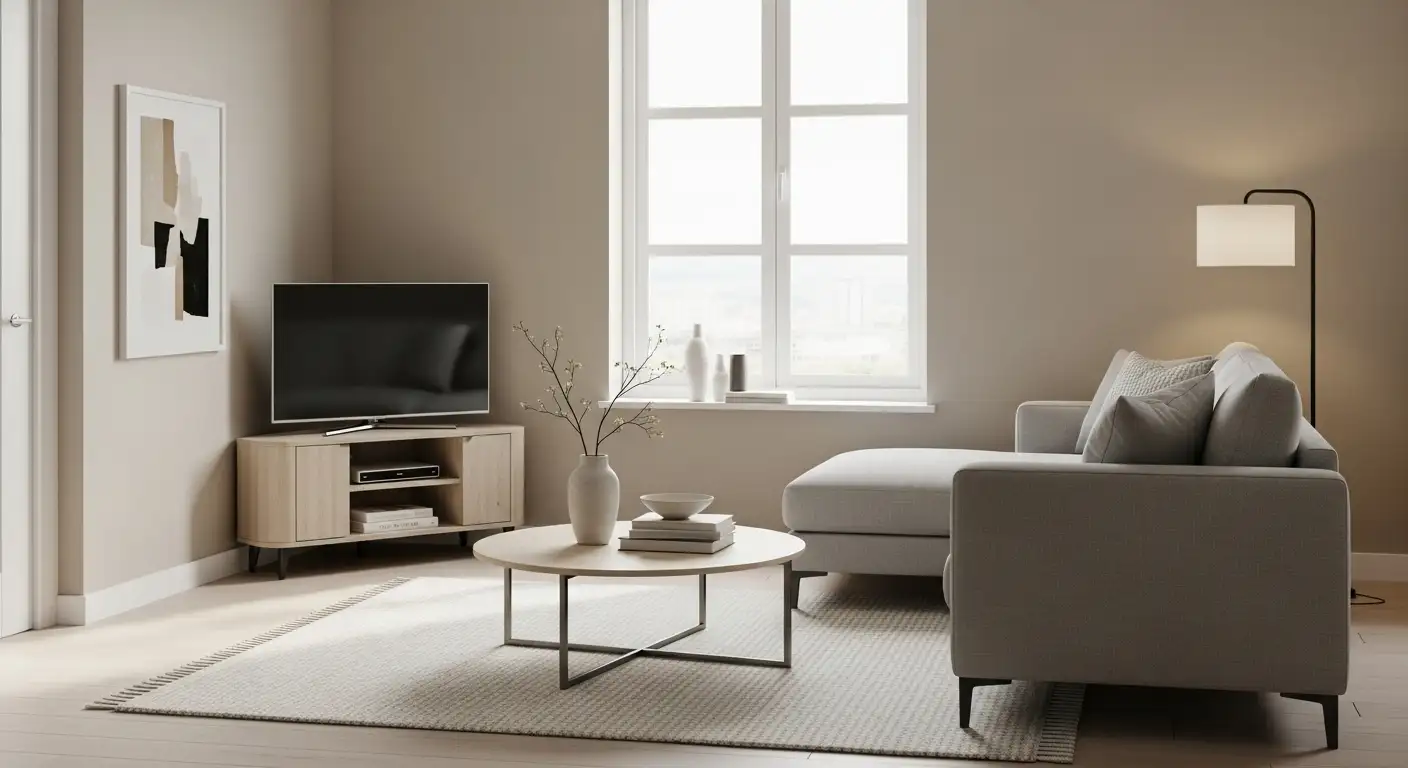

For homes where space matters and design expectations are high, a small corner TV unit for the living room offers a refined solution.
It uses overlooked corners, reduces visual clutter, and supports a balanced layout without compromising style.
This guide focuses on helping discerning homeowners select a small corner TV unit with confidence.
We address real layout challenges, material choices, proportions, and long-term value. Every detail is practical, honest, and grounded in everyday use.
Table of Contents
Why a Small Corner TV Unit Makes Sense in Modern Living Rooms
Corners are often underused. When a television is placed along a main wall, it can dominate the room and limit furniture flow. A compact corner placement shifts the visual weight, opening the space for seating, lighting, and decor.
We see this choice working especially well in apartments, city homes, and refined compact residences where elegance depends on restraint. A well-chosen corner unit allows the television to exist without becoming the room’s main feature.
Key advantages include improved circulation, softer sightlines, and better balance between technology and design.
Understanding the Real Pain Point: Limited Space Without Compromise
Many homeowners want a clean and luxurious living room but face practical limits. Large media consoles overwhelm small rooms. Wall mounting is not always suitable due to wall quality, viewing height, or personal preference.
A small corner TV unit solves this by offering support, storage, and proportion control. It respects the room’s scale. It also avoids the temporary feel that comes with improvised stands or mismatched furniture.
How We Define a Quality Small Corner TV Unit
Not every compact unit is well designed. Size alone does not guarantee suitability. We evaluate quality based on proportion, stability, finish, and adaptability.
A good unit fits the corner naturally without forcing angles and supports the screen securely. Discreet cable management keeps the setup clean, while the design complements existing furniture instead of competing with it.
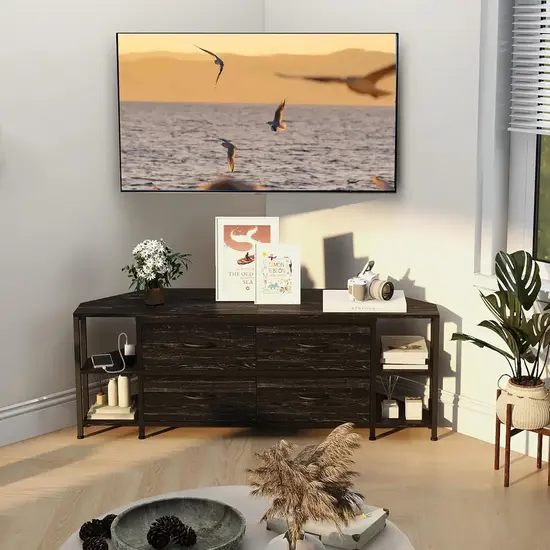
Size and Proportion Guidelines That Actually Work
Choosing the wrong size is the most common mistake. A unit that is too narrow looks unstable. One that is too deep intrudes into the room.
We recommend measuring the corner from both walls and noting the diagonal depth. The unit should leave breathing room on each side. The television should not exceed the unit width by more than a few centimeters on each side.
Below is a practical size comparison table.
| Room Size | Recommended TV Size | Ideal Unit Width | Ideal Unit Depth |
|---|---|---|---|
| Small living room | 32–43 inch | 80–100 cm | 40–50 cm |
| Medium living room | 43–50 inch | 100–120 cm | 45–55 cm |
| Compact open plan | 50–55 inch | 120–140 cm | 50–60 cm |
These dimensions support visual balance and safe placement.
Material Choices That Reflect Long-Term Value
Material selection affects both appearance and durability. For affluent homes, finishes matter as much as function.
Solid wood offers warmth and longevity. Engineered wood with premium veneer provides consistency and cost control. Metal accents add structure and modern contrast. Glass shelves should be tempered and used sparingly to avoid visual noise.
We advise avoiding lightweight plastics or thin laminates. They tend to age poorly and undermine the room’s quality.
Storage Features That Stay Invisible
A small corner TV unit should store essentials without advertising them. Open shelving is useful for a single decorative object or a soundbar. Closed cabinets are better for remotes, routers, and accessories.
Soft-close doors, push-to-open mechanisms, and hidden cable channels improve daily use. These details may seem minor, but they define the experience over time.
Style Direction: Matching the Unit to the Living Room Mood
The unit should follow the room’s existing language.
For modern interiors, clean lines and matte finishes work best. For transitional spaces, subtle detailing and warm tones feel natural. In classic rooms, curved fronts or wood grain add continuity.
We recommend choosing a unit that blends in rather than stands out.
“The best media furniture supports the room. It does not ask for attention.”
Placement Tips That Improve Viewing Comfort
Corner placement affects viewing angle. The screen should face the primary seating area without forcing neck movement. We suggest angling the unit slightly toward the sofa rather than pushing it flat into the corner.
Lighting also matters. Avoid placing the unit where daylight reflects directly on the screen. A nearby floor lamp with warm light can soften the corner and improve balance.
Comparing Corner Units to Wall-Mounted TVs
Some homeowners consider wall mounting as an alternative. Each option has trade-offs.
| Feature | Small Corner TV Unit | Wall-Mounted TV |
|---|---|---|
| Flexibility | Easy to move | Fixed |
| Storage | Built-in | Separate needed |
| Installation | Simple | Requires drilling |
| Visual softness | High | Medium |
| Rental friendly | Yes | Often no |
For many refined interiors, the corner unit offers a calmer and more adaptable solution.
Important Notes Before You Buy
Measure twice before ordering. Confirm weight capacity. Check ventilation space for electronics. Review return policies, especially for assembled units.
We also advise matching the unit height to eye level when seated. This improves comfort and reduces strain.
Styling a Small Corner TV Unit Without Clutter
Restraint is key. One sculptural object, a small plant, or a book stack is enough. Avoid filling every surface.
Wall art above or beside the unit should be minimal. A single framed piece or textured wall finish works better than multiple decorations.
Maintenance and Longevity
Dust regularly with a soft cloth. Avoid placing heat sources nearby. Use felt pads if the unit sits on delicate flooring.
A quality unit, properly maintained, should serve well for many years without visual fatigue.
## Image Prompt Suggestions for In-Article Visuals
A modern living room with a small corner TV unit in natural wood finish, neutral sofa, soft lighting, minimalist decor, realistic proportions, daylight interior photography.
A compact apartment living room featuring a white small corner TV unit, hidden cable management, mounted television, elegant styling, realistic home setting.
Final Thoughts on Choosing with Confidence
We believe that a small corner TV unit is not a compromise. It is a considered choice that reflects spatial intelligence and design maturity. When selected with care, it supports comfort, order, and understated luxury.
A living room should feel intentional. The right corner unit helps achieve that balance quietly and effectively.