
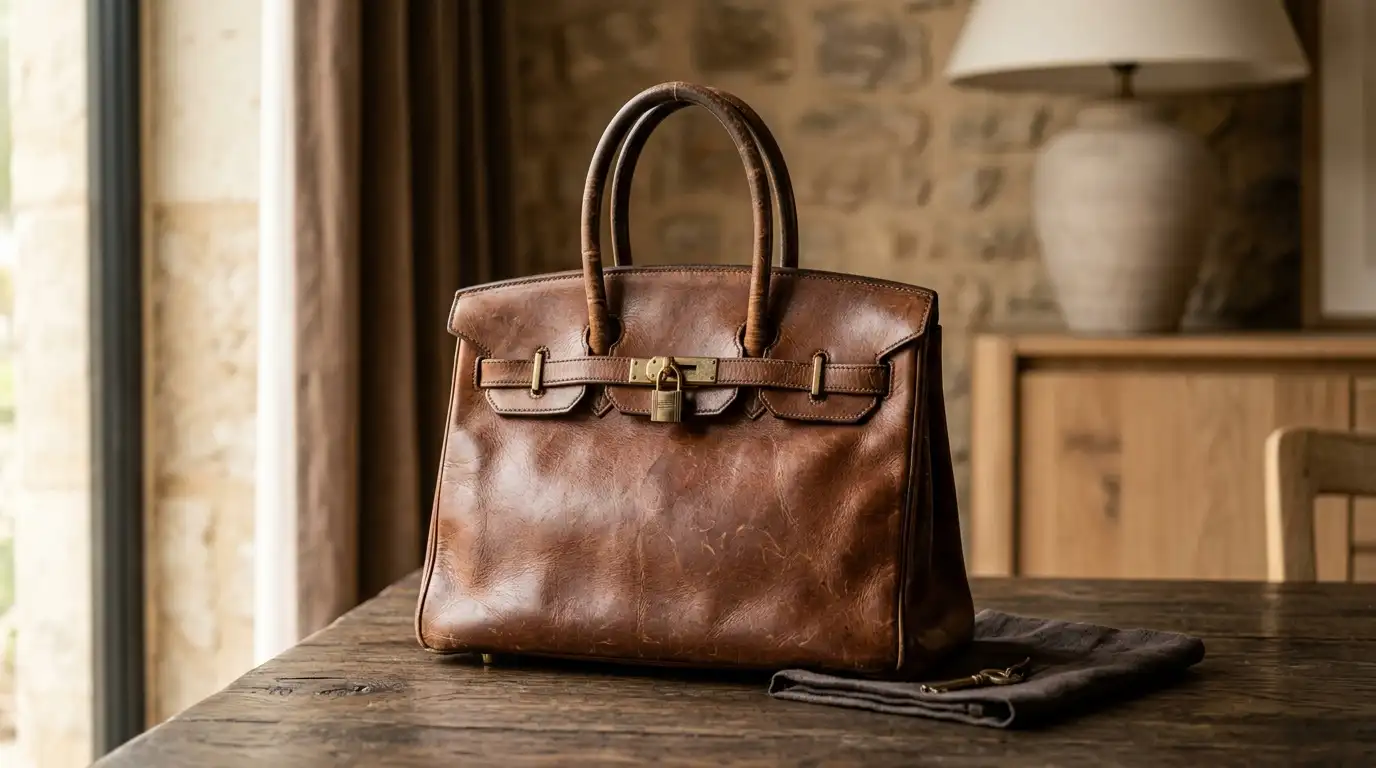

For decades, luxury handbags were presented as objects to protect. Owners stored them in dust bags, avoided rain, kept hardware wrapped in tissue, and treated every tiny mark as a problem to be repaired immediately. The goal was simple: preserve the pristine appearance and protect resale value.
That attitude is changing.
A growing appreciation for pre-owned luxury bags, vintage leather, natural patina, and visible signs of daily use is creating a different definition of desirability. A scratched corner, softened handle, faded finish, or beautifully developed leather surface can tell a story that a brand-new bag simply cannot.
The so-called “Beater Birkin” represents this shift perfectly. The idea is not to damage an expensive handbag deliberately. It is to use it without fear—to carry it to dinner, take it on trips, put it on a café table, and allow the leather to develop the character that comes from real life.
This approach fits naturally into the wider movement toward second-hand luxury fashion as a sustainable style choice. Instead of treating luxury as something that must remain untouched, we can view craftsmanship, longevity, repairability, and personal history as part of the value.
Table of Contents
What Is a “Beater Birkin”?
A “Beater Birkin” is an informal term for a luxury Birkin handbag that is used frequently rather than preserved as a pristine collector’s piece.
The word “beater” does not mean abused. It generally describes a bag that has become a reliable everyday companion. Scratches, softened leather, worn handles, corner marks, and other evidence of use may be accepted—or even appreciated.
The concept challenges the traditional idea that luxury must always look new.
A carefully maintained vintage bag with visible patina can communicate something very different from a flawless new purchase. It suggests that the owner values the object for its function and craftsmanship rather than simply treating it as a display piece.
This philosophy can apply beyond Hermès. Vintage Louis Vuitton, Chanel, Gucci, Prada, Dior, Fendi, and other high-end leather goods can develop distinctive character as they age.
Why Vintage Leather Patina Has Become So Desirable
Patina is one of the most recognizable signs of a leather item’s history.
Depending on the leather and finish, aging can produce changes in color, softness, texture, sheen, and surface character. Vegetable-tanned leather is particularly known for developing a deeper tone over time, while other finished leathers may show different aging patterns.
A natural patina is not the same thing as neglect.
Good aging usually reflects a combination of regular use, careful storage, appropriate handling, and the natural properties of the leather. A few superficial scratches can blend into the overall character of an older bag, while serious dryness, cracking, peeling, staining, or structural damage requires a different level of attention.
This distinction matters when shopping for pre-owned luxury.
A photograph showing “wear” does not automatically tell us whether the condition is desirable. We need to examine the type, location, severity, and reversibility of that wear.
How to Condition Vintage Leather Bag Patina
Anyone searching for how to condition vintage leather bag patina should begin with one important principle: conditioning should preserve the leather rather than attempt to erase its history.
The wrong product can darken leather, create uneven patches, soften a structured bag excessively, or interfere with an original finish.
1. Identify the Leather First
Before applying anything, determine the leather type whenever possible.
Different luxury leathers have very different finishes and care requirements. A smooth unfinished leather should not automatically receive the same treatment as heavily coated or textured leather.
When the original manufacturer provides specific care guidance, that information should take priority.
2. Remove Surface Dust Gently
Use a clean, soft cloth to remove loose dust and surface debris.
Avoid aggressive rubbing. Dirt trapped against leather can cause abrasion, so gentle cleaning is preferable to trying to achieve an instantly perfect surface.
3. Test Any Conditioner in an Inconspicuous Area
This step is essential.
Apply a very small amount to a hidden area and observe how the leather reacts after it dries. Watch for darkening, changes in texture, uneven absorption, stickiness, or changes to the finish.
If the test produces an undesirable result, stop there.
4. Use Less Product Than You Think You Need
Leather conditioner should not be treated like body lotion. More product does not necessarily mean better conditioning.
A thin, even application is generally safer than saturating the leather. Allow the material to absorb and dry naturally before deciding whether another application is necessary.
5. Let the Patina Remain Visible
The purpose of conditioning should not be to make an old bag look artificially new.
A vintage handbag’s character often comes from the combination of color variation, softness, minor scratches, and accumulated use. Over-cleaning can remove some of the visual qualities that make vintage leather appealing in the first place.
For expensive or particularly delicate handbags, professional leather restoration may be preferable to experimentation at home.
Scratches Are Not Always a Defect
The luxury resale market has traditionally placed considerable emphasis on condition. Mint, excellent, very good, and good condition categories can significantly influence how a pre-owned item is presented.
But not every scratch carries the same meaning.
A few superficial marks on an otherwise healthy vintage bag may be relatively insignificant. Deep cuts, exposed fibers, severe corner loss, cracking, and structural deformation are much more important.
The distinction is especially relevant when evaluating a bag described as having beautiful patina.
A seller may use attractive language to describe wear, but buyers should look beyond adjectives. High-resolution photographs of corners, handles, glazing, stitching, hardware, interior lining, and date or identification markings provide much more useful information.
The Pre-Owned Luxury Bag Authentication Checklist
Condition is only one part of buying vintage luxury. Authenticity should come first.
A useful pre owned luxury bag authentication checklist should examine the entire object rather than relying on a single feature.
Brand and Model Details
Confirm the exact model, approximate production period, size, color, material, and hardware configuration.
Compare those details against reliable references for the specific model and era.
Construction and Craftsmanship
Examine:
- Stitching consistency
- Seam construction
- Edge finishing
- Leather quality
- Hardware shape and weight
- Logo placement
- Engraving details
- Interior construction
- Lining materials
- Handle attachment
- Overall proportions
Authenticity is rarely established by one isolated detail. The bag should make sense as a complete object.
Serial Numbers, Date Codes, or Identification Features
Depending on the brand and production era, a handbag may contain a serial number, date code, microchip, authenticity feature, or other identifying element.
However, the presence of a number does not automatically prove authenticity. Counterfeit products can reproduce codes and other markings.
The code should be considered alongside construction, materials, typography, hardware, stitching, and provenance.
Hardware and Engravings
Look closely at zippers, clasps, feet, chains, rings, and other metal components.
Compare the shape, finish, engraving, placement, and construction with known examples from the same model and period.
Interior Condition
The inside of a bag can reveal details that are difficult to fake consistently.
Inspect pockets, lining, labels, stitching, seams, odor, and signs of alteration. Interior wear should also correspond logically with the bag’s reported age and condition.
Provenance and Seller Information
A credible purchase history can add useful context, but paperwork alone should not replace physical authentication.
For expensive purchases, an independent professional authentication service or qualified specialist can provide additional assurance.
Why Patina Can Add Personality to a Luxury Bag
There is an emotional element to vintage luxury that condition charts cannot completely capture.
Two identical handbags can begin with the same appearance and eventually become completely different objects. One may remain carefully stored, while the other travels through airports, restaurants, offices, weekends away, and everyday errands.
The second bag develops a history.
That history can become part of its appeal.
A softened handle may show years of carrying. A slightly darker leather surface may reflect repeated contact with the owner’s hands. Small scratches may mark ordinary moments that would otherwise disappear from memory.
In this context, wear becomes evidence of use rather than evidence of failure.
The “Old Money” Appeal Without the Need for Perfection
The growing interest in worn luxury also reflects a broader change in personal style.
Highly polished, logo-heavy fashion can sometimes feel predictable. Vintage pieces with understated wear can create a more individual appearance.
A decades-old handbag with natural patina can work with tailored clothing, denim, minimalist outfits, or contemporary accessories. Its appeal comes from the contrast between heritage craftsmanship and modern everyday styling.
The result is less about proving that something is expensive and more about demonstrating that it has been chosen, used, and kept.
Buying Vintage: Patina vs. Damage
Before purchasing a heavily worn luxury bag, separate desirable aging from expensive problems.
Potentially attractive signs of age include:
- Natural color development
- Softened leather
- Minor surface scratches
- Gentle hardware wear
- Handle darkening from use
- Subtle creasing
- Characteristic vintage texture
Warning signs include:
- Deep leather cracks
- Peeling or flaking
- Severe corner damage
- Broken hardware
- Detached stitching
- Major staining
- Strong persistent odors
- Extensive water damage
- Structural distortion
- Unclear alterations or repairs
A lower purchase price does not necessarily make serious damage economical. Restoration can become expensive, and some damage cannot be completely reversed.
Why the Beater Bag Fits the Second-Hand Luxury Movement
The attraction of the “beater” philosophy goes beyond aesthetics.
Buying pre-owned extends the useful life of products that have already been manufactured. It can give buyers access to older designs, discontinued colors, vintage materials, and established craftsmanship while keeping an existing item in circulation.
This makes the idea closely connected to second-hand luxury fashion and more intentional consumption.
Rather than asking whether a luxury bag looks untouched, we can ask different questions:
Was it well made?
Can it still be used for years?
Is the wear consistent with its age?
Can it be maintained or repaired?
Does the design still work with our wardrobe?
Those questions shift attention from perfection toward longevity.
How to Wear a Scratched Luxury Bag With Confidence
The easiest way to embrace vintage patina is to stop treating it as something that needs to be hidden.
Pair an aged leather handbag with clean, contemporary clothing. Let the bag provide contrast against a structured blazer, crisp shirt, simple knitwear, denim, or understated tailoring.
The goal is not to create an outfit where every piece looks old.
Instead, one beautifully aged luxury piece can become the element that gives an otherwise polished wardrobe personality.
That is the real appeal of the Beater Birkin concept. The bag does not have to remain frozen in the condition in which it was purchased. It can continue its life.
A New Definition of Luxury
Luxury does not necessarily become less valuable when it shows evidence of being lived with.
In some cases, the opposite happens.
A beautifully aged handbag can demonstrate craftsmanship through its ability to survive years of use. Its patina can make it more personal, its scratches can distinguish it from countless identical pieces, and its history can become part of its identity.
The most compelling vintage luxury bags are therefore not always the ones that look untouched. Sometimes they are the ones that have been used, maintained, repaired when necessary, and allowed to age naturally.
The Beater Birkin captures that idea in a memorable way: luxury can be valuable without being precious, beautiful without being perfect, and desirable without looking brand new.
When choosing pre-owned fashion, we can appreciate the marks that tell us an object has lived a life. Patina is not simply wear. On the right piece, it is history made visible.
