

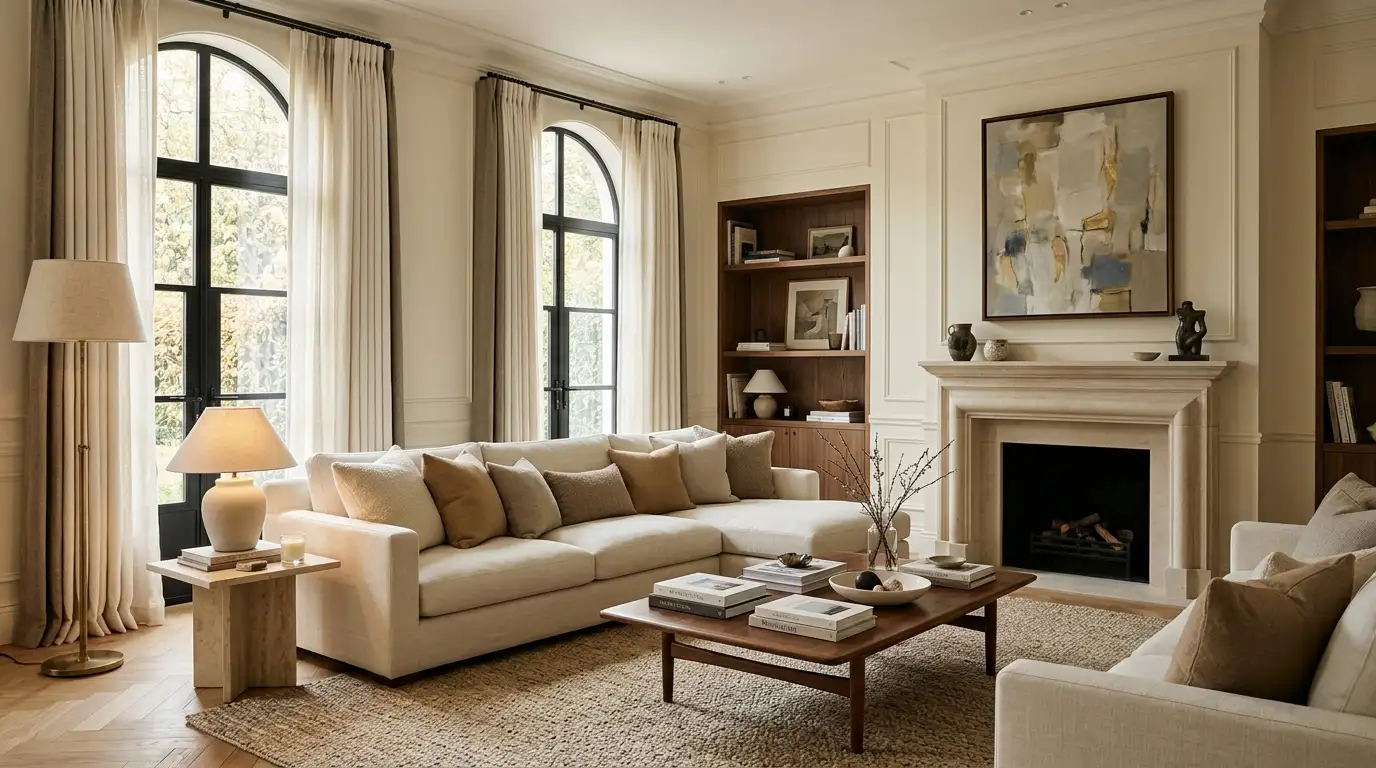

Quiet luxury interiors and home design are built around quality, restraint, natural materials, thoughtful proportions, and enduring comfort. The style creates rooms that feel expensive because of their architecture, craftsmanship, texture, and balance rather than obvious displays of wealth.
| Quiet Luxury Element | Best Choices | Desired Effect |
|---|---|---|
| Color palette | Ivory, taupe, stone, camel, walnut, soft gray | Calm and timeless |
| Furniture | Tailored sofas, solid wood tables, classic silhouettes | Refined comfort |
| Materials | Linen, wool, marble, oak, walnut, leather | Depth and tactility |
| Lighting | Layered lamps, sconces, sculptural fixtures | Warm atmosphere |
| Decor | Art, ceramics, books, restrained accessories | Personal character |
| Architecture | Paneling, molding, arches, quality flooring | Lasting visual appeal |
Table of Contents
What Is Quiet Luxury Interior Design?
Quiet luxury interior design focuses on the quality and character of a space. Rooms rely on excellent materials, carefully selected furniture, natural textures, classic forms, and subtle contrasts.
The result should feel comfortable enough for everyday life while retaining the polish associated with a beautifully designed boutique hotel, private residence, or sophisticated European apartment.
The visual language is usually restrained. Walls may be painted in warm white or muted beige. A sofa might be upholstered in natural linen. A walnut table introduces warmth, while aged brass lighting adds a small amount of shine.
Every major element has a purpose.
That sense of editing is one of the defining characteristics of the style.
The Quiet Luxury Color Palette
Color establishes the foundation for a quiet luxury home.
The most successful interiors usually begin with warm neutrals rather than highly saturated colors. Cream, ivory, oatmeal, mushroom, greige, taupe, sand, warm gray, and soft brown create a flexible backdrop for furniture and architectural details.
Warm White Walls
Pure, brilliant white can sometimes feel stark. Warm whites with subtle cream, beige, or stone undertones create a softer architectural backdrop.
This becomes particularly effective when paired with natural wood, linen curtains, wool rugs, and aged metal.
Taupe and Greige
Taupe sits comfortably between gray and brown, making it particularly useful in sophisticated living rooms and bedrooms.
Greige combines characteristics of gray and beige and works well when a room needs a contemporary foundation without becoming cold.
Deep Accent Colors
A quiet luxury palette can include darker shades.
Chocolate brown, espresso, charcoal, olive, deep navy, burgundy, and muted forest green can add depth through a single chair, cushion, artwork, rug, or painted cabinet.
The key is proportion. A dark accent should feel intentional rather than overwhelming.
Natural Materials Create the Sense of Quality
Material selection has a major effect on how a room feels.
Linen, wool, cotton, leather, oak, walnut, marble, limestone, travertine, and aged brass provide natural variation that gives neutral interiors visual depth.
A room covered in flat, identical surfaces can appear ordinary even when the color palette is beautiful.
A room containing several tactile materials feels considerably richer.
Consider a living room with:
- A linen sofa
- A walnut coffee table
- A wool rug
- Stone accessories
- Brushed or aged brass lighting
- Cotton or linen curtains
- A leather accent chair
The colors can remain restrained while the textures create interest.
Wood in Quiet Luxury Interiors
Wood brings warmth into neutral interiors.
Walnut creates a darker, more formal appearance. White oak feels lighter and more relaxed. Dark-stained oak can produce a dramatic library or traditional European effect.
Rather than filling every room with the same wood finish, we can vary tones carefully while maintaining a coherent palette.
A walnut dining table, oak flooring, and antique wooden cabinet can coexist beautifully when their undertones complement one another.
Stone and Marble
Natural stone works particularly well in kitchens, bathrooms, entryways, and fireplaces.
Marble provides movement through veining. Limestone offers a softer, more architectural appearance. Travertine introduces warm earthy variation.
Large stone surfaces can become the visual foundation of a room, allowing the surrounding furniture to remain comparatively simple.
Furniture for a Quiet Luxury Home
Furniture should combine comfort, proportion, craftsmanship, and longevity.
A quiet luxury living room doesn’t require dozens of pieces.
A well-proportioned sofa, substantial coffee table, two comfortable chairs, a quality rug, and appropriate lighting can create a complete composition.
Choose Classic Silhouettes
Furniture with simple, recognizable forms tends to age well.
Good choices include:
- Deep upholstered sofas
- Rounded lounge chairs
- Skirted or tailored occasional chairs
- Solid wood dining tables
- Upholstered dining chairs
- Marble or stone side tables
- Traditional writing desks
- Simple four-poster beds
- Low-profile upholstered beds
The proportions matter as much as the style.
An oversized room needs furniture with sufficient visual weight. A compact apartment benefits from pieces that provide comfort without blocking circulation.
Prioritize Upholstery
Upholstery is one of the easiest places to communicate quality.
Linen, cotton, wool, velvet, bouclé, and high-quality performance fabrics can each create a different interpretation of luxury.
For everyday family spaces, durable upholstery makes practical sense. Formal rooms can accommodate more delicate materials when the household allows it.
Architectural Details Matter
Quiet luxury becomes particularly convincing when the architecture carries part of the design.
Wall molding, paneling, ceiling details, substantial doors, fireplaces, built-in cabinetry, arched openings, and quality flooring can give even a relatively simple room a finished character.
Wall Paneling
Traditional panel molding adds rhythm to plain walls.
It can be painted the same color as the wall for a subtle architectural effect or contrasted slightly for greater definition.
Floor-to-ceiling paneling works particularly well in dining rooms, studies, bedrooms, and entry halls.
Built-In Cabinetry
Built-ins provide both storage and architectural structure.
A wall of walnut cabinetry can transform a living room. Painted cabinetry can create a more traditional appearance, while fluted or reeded details add texture.
Shelving should remain edited.
A few art books, ceramics, framed artwork, and meaningful objects usually create a more sophisticated result than densely packed shelves.
Lighting for Quiet Luxury Interiors
Lighting deserves careful planning because it changes the perception of every material in a room.
A single ceiling fixture rarely provides enough atmosphere.
Instead, we can create layers using:
- Ambient lighting for overall illumination.
- Task lighting for reading, cooking, working, or grooming.
- Accent lighting for artwork, architectural features, and decorative objects.
Table lamps are especially useful because their shades create soft pools of light.
Wall sconces can frame a bed, fireplace, mirror, hallway, or artwork.
Pendant fixtures and chandeliers provide architectural presence, while concealed lighting can softly illuminate cabinetry and shelving.
Warm light generally complements the materials associated with quiet luxury better than harsh, cool illumination.
Quiet Luxury Living Room Ideas
The living room is an ideal place to establish this design language.
Begin with a substantial sofa in linen, cotton, wool, or another tactile neutral fabric.
Add a coffee table with natural stone or solid wood. A large rug should define the seating arrangement rather than simply sit underneath the coffee table.
Curtains should generally extend generously around windows. Full-length fabric creates a softer vertical line and makes the room feel more considered.
Then introduce character through artwork, books, ceramics, vintage pieces, and a small number of decorative objects.
A room becomes more interesting when some pieces appear collected over time.
Quiet Luxury Bedroom Design
A quiet luxury bedroom should feel restful before it feels decorative.
Use a restrained palette of cream, taupe, oatmeal, warm gray, brown, or muted green.
Layer the bed with quality textiles:
- Linen sheets
- A textured duvet
- Wool or cashmere-style throws
- Multiple pillows
- A tailored upholstered headboard
Bedside lighting should be soft and symmetrical when the architecture allows.
A pair of matching nightstands can create order, while artwork above the bed or a single large piece opposite it adds personality.
The Importance of Bedding
Luxury is particularly noticeable in textiles we touch every day.
Crisp cotton creates a fresh hotel-inspired feeling. Linen offers a relaxed European character. Washed fabrics create softness and an intentionally lived-in appearance.
Layering different textures in similar colors can make a neutral bedroom feel rich without adding visual clutter.
Quiet Luxury Kitchen Design
A quiet luxury kitchen combines practical planning with refined materials.
Cabinetry often uses classic doors, painted finishes, natural wood, or a combination of both.
Hardware in aged brass, brushed metal, or another subdued finish can complement the cabinetry.
Countertops and backsplashes benefit from materials with natural variation.
A stone island can become the central architectural feature of the kitchen.
Open shelving should be used selectively. A few beautiful bowls, cutting boards, ceramics, and cookbooks can make a kitchen feel personal while maintaining visual order.
Quiet Luxury Bathroom Ideas
Bathrooms offer an excellent opportunity to use stone, brass, wood, and soft textiles.
Consider:
- Large-format natural stone
- Marble countertops
- A freestanding bathtub
- Traditional or understated faucets
- Framed mirrors
- Wall sconces
- Linen or cotton towels
- Wood cabinetry
- Handmade ceramics
The palette can remain extremely simple.
A warm stone bathroom with aged brass fixtures and soft lighting can feel luxurious without requiring excessive decoration.
Quiet Luxury Dining Room Design
A dining room benefits from strong furniture proportions.
A substantial wooden table creates an immediate foundation. Upholstered dining chairs soften the room and improve comfort during long meals.
A chandelier or pendant can establish a focal point above the table.
Artwork, a vintage mirror, or a large sideboard can complete the composition.
For formal interiors, darker wood and richer textiles create a more traditional atmosphere. For contemporary homes, pale oak, limestone, and neutral upholstery provide a lighter interpretation.
How to Mix Vintage and Modern Pieces
One of the most effective ways to make quiet luxury interiors feel authentic is to combine periods.
A contemporary sofa can sit beside an antique side table.
A modern dining table can work with vintage chairs.
A traditional Persian-style rug can anchor contemporary furniture.
An old mirror can introduce patina into a newly renovated bathroom or bedroom.
This mixture prevents the home from looking like every piece was purchased from the same showroom.
Art and Accessories
Accessories should reveal something about the people who live in the home.
Photography, paintings, sketches, ceramics, sculptures, books, collected objects, and travel finds can all contribute to the atmosphere.
Artwork doesn’t have to match the sofa.
In fact, slight tension between the artwork and surrounding furniture can make the room more compelling.
Frames also matter. Wood, aged metal, painted finishes, and simple black frames can each change the character of an artwork.
Quiet Luxury Curtains and Window Treatments
Window treatments are often overlooked despite their enormous visual impact.
Full-length curtains made from linen, cotton, wool blends, or textured fabric create softness around windows.
Mounting the curtain rod higher and wider than the window can create a taller, more generous appearance.
For bedrooms and living rooms, lined curtains can provide better privacy and light control.
Roman shades work beautifully in kitchens, studies, bathrooms, and smaller windows where full curtains may feel excessive.
Common Quiet Luxury Design Mistakes
Too Much Beige
A neutral palette needs texture and tonal variation.
Layer cream, oatmeal, taupe, brown, stone, and muted gray rather than using one beige across every surface.
Too Many Decorative Objects
Luxury benefits from breathing room.
Allow tables, shelves, and countertops to retain visible empty space.
Matching Everything
Identical furniture sets can make an interior feel predictable.
Mix materials, periods, and silhouettes while maintaining a consistent color story.
Ignoring Lighting
Even excellent furniture can look ordinary under flat overhead lighting.
Use lamps, sconces, pendants, and carefully positioned accent lights to create depth.
Buying for Appearance Alone
A beautiful chair that nobody wants to sit in has limited value in a home.
Comfort, construction, maintenance, and daily use should influence purchasing decisions.
How to Create Quiet Luxury on Different Budgets
Quiet luxury doesn’t depend entirely on expensive purchases.
A modest renovation can focus on paint, lighting, curtains, hardware, furniture placement, and decluttering.
Changing inexpensive cabinet hardware can alter a kitchen’s character.
Replacing short curtains with properly proportioned full-length panels can change an entire room.
A vintage wooden table can provide more character than a mass-produced dining set.
The strongest strategy is to spend selectively on pieces that receive heavy daily use.
A quality sofa, mattress, dining table, or lighting fixture may provide more long-term value than a room full of decorative purchases.
A Practical Quiet Luxury Design Formula
For a balanced room, we can use a simple formula:
60% foundation + 30% furniture and textiles + 10% personality.
The foundation includes walls, flooring, large architectural surfaces, and major built-ins.
Furniture and textiles establish comfort and visual character.
The final portion comes from artwork, books, ceramics, vintage objects, plants, and personal collections.
This creates a room that feels composed while leaving space for life to happen.
Key Takeaways
- Quiet luxury interiors begin with quality, proportion, and restraint.
- Warm neutrals create a flexible foundation for sophisticated rooms.
- Natural materials provide texture and visual depth.
- Classic furniture silhouettes tend to remain relevant for years.
- Architectural details such as molding, paneling, cabinetry, and fireplaces add character.
- Layered lighting makes natural materials and textiles feel richer.
- Vintage and contemporary pieces can work beautifully together.
- Personal artwork and collected objects give the home an authentic identity.
- Selective spending often produces better results than filling a room with expensive accessories.
- The strongest quiet luxury homes feel comfortable, personal, timeless, and beautifully considered.
Frequently Asked Questions
What is quiet luxury in interior design?
Quiet luxury in interior design uses quality materials, restrained colors, classic furniture, natural textures, thoughtful proportions, and limited decoration to create sophisticated and comfortable interiors.
What colors are best for quiet luxury interiors?
Warm white, ivory, cream, taupe, greige, beige, stone, camel, walnut brown, muted green, charcoal, and deep navy work particularly well.
What materials make a home look luxurious?
Natural stone, marble, limestone, travertine, walnut, oak, linen, wool, cotton, leather, and aged metals can give interiors a rich tactile quality.
Is quiet luxury interior design expensive?
It can be, but expensive furnishings aren’t required. Strong proportions, good lighting, quality textiles, natural materials, vintage furniture, and careful editing can create the look across a wide range of budgets.
How do we make a living room look quietly luxurious?
Start with a well-proportioned sofa, a quality rug, natural wood or stone furniture, layered lighting, full-length curtains, and a restrained selection of artwork and accessories.
What type of furniture works with quiet luxury?
Classic, comfortable silhouettes work best, including tailored sofas, upholstered chairs, solid wood tables, traditional cabinetry, upholstered beds, and well-made occasional tables.
Can quiet luxury work in a small apartment?
Yes. Small spaces benefit from the style’s restrained approach. Choose fewer, better-proportioned pieces, use layered lighting, maintain clear circulation, and rely on texture rather than excessive decoration.
How do we avoid making quiet luxury interiors feel boring?
Use contrast through texture, scale, material, age, and tone. Combine linen with wood, stone with metal, contemporary furniture with vintage pieces, and pale neutrals with carefully selected darker accents.