

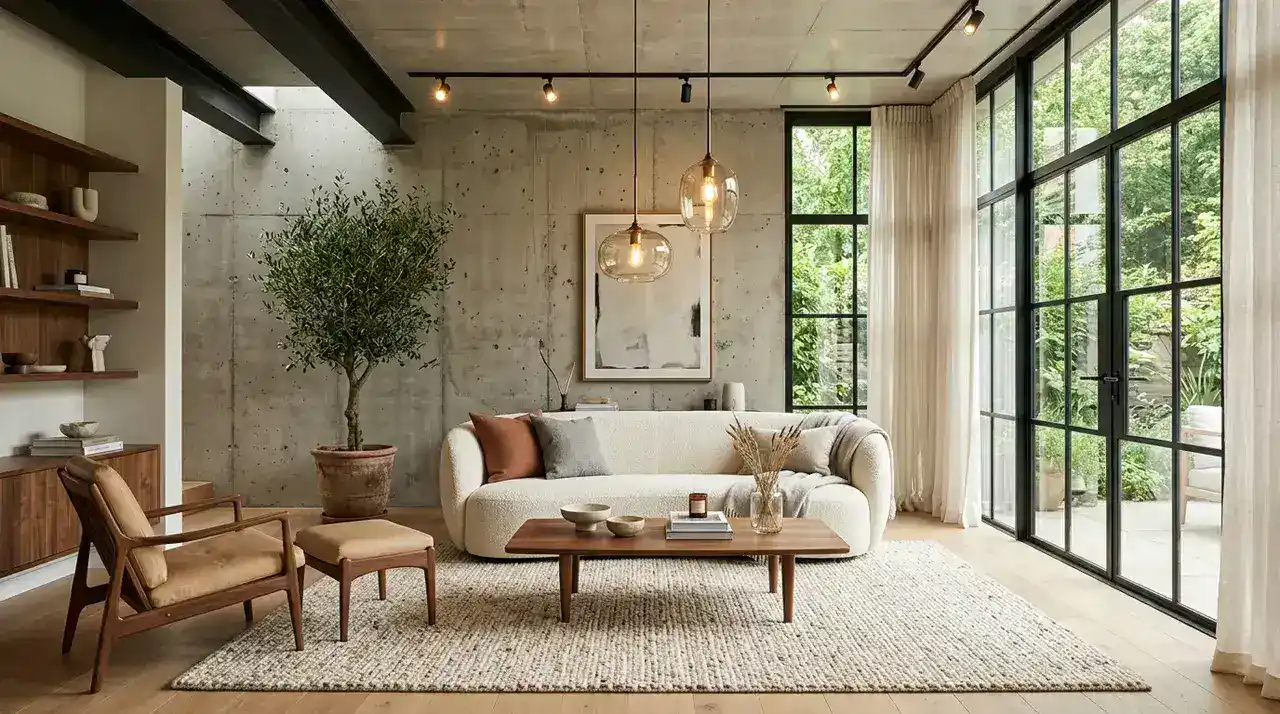

Raw concrete walls have become a defining feature of luxury minimalist, industrial, and contemporary interiors. Their authentic texture, architectural character, and understated elegance create a bold statement that many homeowners and designers love. Yet there’s one common challenge: concrete can easily make a room feel cold, harsh, or unfinished when it’s not balanced with the right materials.
Fortunately, warming up a concrete wall doesn’t mean hiding it. The secret is enhancing its natural beauty through thoughtful layering, warm materials, strategic lighting, and carefully chosen décor.
In this guide, you’ll discover how professional interior designers transform industrial concrete into sophisticated, welcoming living spaces.
Table of Contents
Why Concrete Walls Feel Cold
Concrete itself isn’t the problem. The feeling comes from how our brains interpret texture, color, and light.
The Psychology of Texture
Humans instinctively associate smooth grey surfaces with urban environments, stone, and winter landscapes. Because concrete reflects little warmth in color, our eyes perceive it as distant and cool.
Warm spaces typically contain:
- Organic textures
- Natural wood
- Soft fabrics
- Rounded shapes
- Warm lighting
- Earth-tone colors
Concrete lacks all of these by itself.
This is why a bare concrete wall in an empty room often feels sterile, while the exact same wall can feel luxurious when paired with rich textures.
Keep the Concrete Visible
One of the biggest mistakes homeowners make is covering concrete entirely.
Luxury interiors celebrate the material instead of hiding it.
Rather than painting over it:
- Highlight its natural imperfections
- Preserve subtle texture
- Seal it with a matte finish
- Use it as an architectural backdrop
The goal is balance—not camouflage.
Choose the Right Wood Undertones
Wood is the fastest way to warm industrial grey.
Not every wood species works equally well.
Best Wood Colors with Concrete
White Oak
White oak offers soft honey undertones without becoming too yellow.
Perfect for:
- Flooring
- Floating shelves
- Dining tables
- Wall panels
It creates a Scandinavian luxury feel.
Walnut
Walnut provides rich chocolate tones that dramatically soften concrete.
Ideal for:
- Media units
- Kitchen cabinetry
- Statement furniture
- Accent walls
The contrast feels refined rather than rustic.
Smoked Oak
Smoked oak delivers warmth while maintaining a contemporary aesthetic.
It works beautifully in:
- Luxury apartments
- Modern lofts
- Industrial homes
- Boutique hotel-inspired interiors
Avoid Orange Woods
Highly orange woods often compete with concrete instead of complementing it.
Avoid excessive use of:
- Honey pine
- Orange maple
- Bright cherry finishes
Instead, choose neutral or slightly warm wood tones.
Layer Multiple Natural Materials
Luxury spaces rarely rely on only one material.
Concrete becomes inviting when surrounded by varied textures.
Combine it with:
- Linen curtains
- Wool rugs
- Leather seating
- Bouclé chairs
- Stone accessories
- Oak furniture
- Natural woven baskets
Each material introduces visual warmth while allowing the concrete to remain the focal point.
Master Luxury Lighting
Lighting has the greatest impact on how concrete feels.
Even beautifully designed rooms appear cold under harsh white lighting.
Choose Warm LEDs
Use LEDs between:
2700K–3000K
Warm lighting creates:
- Softer shadows
- Richer wood tones
- More inviting evenings
- Greater depth in concrete texture
Cool white lighting above 4000K often makes concrete appear flat and sterile.
Use Layered Lighting
Luxury interiors never depend on one ceiling fixture.
Instead, combine:
- Floor lamps
- Table lamps
- Wall sconces
- Indirect LED strips
- Accent lighting
The different light sources eliminate harsh contrasts and create a welcoming atmosphere.
Diffused Track Lighting
Track lighting doesn’t have to feel commercial.
Modern diffused track systems provide:
- Soft illumination
- Adjustable beam angles
- Highlighted architectural features
- Reduced glare
Aim fixtures slightly across the wall rather than directly at it.
This technique emphasizes the concrete texture while avoiding harsh reflections.
Add Soft Textiles
Concrete needs softness nearby.
Large textiles immediately improve comfort.
Consider:
- Oversized linen curtains
- Thick area rugs
- Velvet cushions
- Wool throws
- Bouclé accent chairs
These tactile elements create visual balance and encourage relaxation.
Introduce Warm Color Accents
Grey works beautifully alongside earthy colors.
Luxury designers often use:
- Camel
- Terracotta
- Olive green
- Rust
- Taupe
- Warm beige
- Soft ivory
Instead of painting the concrete, introduce these colors through:
- Artwork
- Decorative pillows
- Upholstery
- Ceramic vases
- Area rugs
Use Black as an Accent—Not the Main Color
Industrial interiors often overuse black.
While black metal frames and fixtures look sophisticated, too much black makes concrete feel heavier.
Limit black to:
- Window frames
- Lighting fixtures
- Cabinet handles
- Coffee table legs
Balance it with lighter natural materials.
Decorate with Large Artwork
Concrete walls make exceptional gallery backdrops.
Choose oversized artwork featuring:
- Earth tones
- Abstract textures
- Organic forms
- Minimalist compositions
Large-scale pieces soften expansive grey surfaces while adding personality.
Bring Nature Indoors
Plants naturally balance hard architectural materials.
Excellent choices include:
- Olive trees
- Fiddle leaf figs
- Rubber plants
- Monstera
- Bird of paradise
Large greenery introduces movement, color, and softness against raw concrete.
Add Curved Furniture
Concrete is naturally angular.
Round furniture introduces harmony.
Look for:
- Curved sofas
- Circular coffee tables
- Rounded mirrors
- Sculptural armchairs
- Organic-shaped side tables
The contrast between hard walls and soft forms creates an upscale designer look.
Use Metallic Finishes Sparingly
Luxury industrial interiors often incorporate subtle metallic accents.
Choose finishes like:
- Brushed brass
- Satin bronze
- Antique gold
These metals reflect warm light and prevent the room from feeling overly monochromatic.
Avoid highly polished chrome, which can reinforce the cold aesthetic.
Common Mistakes to Avoid
Avoid these design choices if you want your concrete wall to feel warm and sophisticated:
- Using only grey furniture
- Installing cool white lighting
- Choosing glossy finishes everywhere
- Leaving the room underdecorated
- Pairing concrete with cold blue color palettes
- Ignoring textiles
- Overusing black accents
Luxury comes from thoughtful layering, not minimal decoration.
Final Thoughts
Concrete walls don’t have to feel cold or unfinished. In fact, they can become one of the most elegant design features in a modern home when paired with the right materials and lighting.
By combining warm wood undertones, layered textures, soft fabrics, diffused lighting, natural greenery, and carefully selected décor, you can transform raw concrete into a sophisticated backdrop that feels both inviting and timeless.
The most luxurious interiors aren’t defined by expensive finishes alone—they succeed because every material balances another. When concrete is complemented with warmth instead of competing elements, it creates a refined, contemporary atmosphere that is effortlessly stylish and comfortable.
Furniture & Textiles
For seating expertise, explore our Lounge Chair Guide, and maximize space with Smart Multi-Functional Furniture. Anchor your living room with an Elegant Luxury Coffee Table. For entryway style, see Scandinavian Black Entryway Table Decor. Soften your windows with Pure Luxury Linen Drapes and Pure Luxury Linen Curtains. Explore Arabic elegance via Modern Majlis Seating Ideas. For more decor inspiration, explore our full Home Decor collection.