
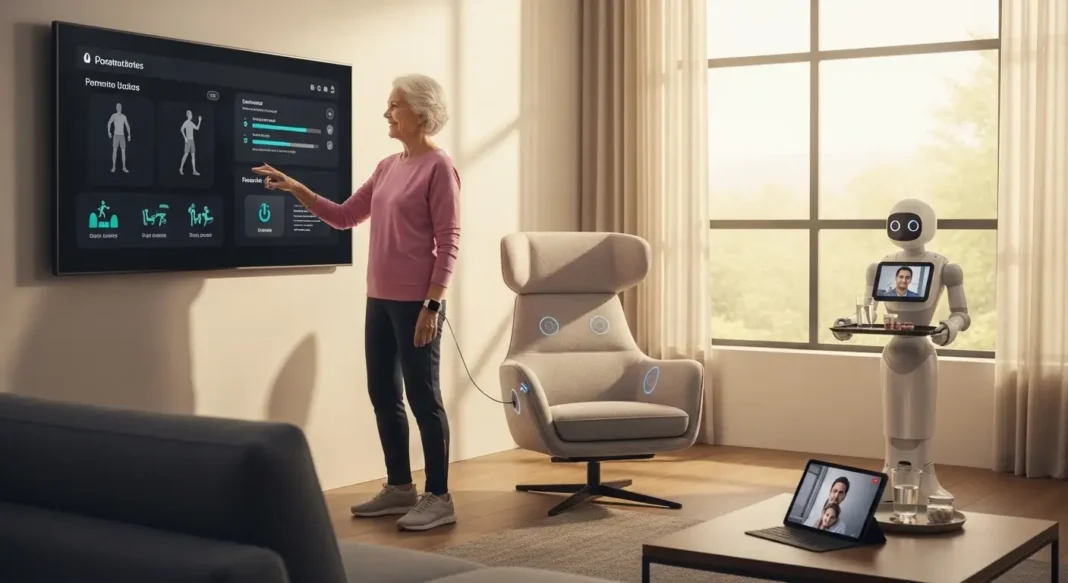

Senior longevity technology has experienced a staggering 19× growth trajectory, fueled by a global aging population, rising healthcare costs, and a generation of older adults who refuse to slow down.
According to the Journal of the American Geriatrics Society, proactive health monitoring in adults over 65 is directly correlated with reduced hospitalizations, improved chronic disease management, and measurably better quality of life. The tools to achieve this aren’t locked in hospital rooms — they’re on Amazon, shipping to your door.
Whether you’re a senior looking to take charge of your own longevity, a caregiver searching for reliable assistive technology for aging, or a family member investing in a loved one’s independence.
This post breaks down the five most impactful senior wellness technologies available right now — with medically grounded rationale and real-world temporal proof of why mastering each device pays compounding dividends over time.
Table of Contents
Why Senior Wellness Technology Is the Longevity Investment of the Decade
The World Health Organization estimates that by 2030, 1 in 6 people globally will be aged 60 or over. The convergence of AI-driven health devices, wearable biometric sensors, and mobility assistive technology is transforming what “aging well” means.
These aren’t gadgets — they’re clinical-grade instruments increasingly recommended by physicians, physical therapists, and cardiologists as part of integrated senior health monitoring protocols.
The key insight: the earlier and more consistently a senior integrates one of these wellness technologies into daily life, the greater the compounding benefit.
This is what we call Temporal Proof — the measurable, long-term improvement that emerges only after sustained engagement with a longevity device. Consistency is the feature.
#1 — Wearable ECG & Heart Rate Monitor: The Kardia Mobile 6L (AliveCor)
Primary use: Continuous cardiac health monitoring, atrial fibrillation detection
Cardiovascular disease remains the leading cause of death among adults over 65. The American Heart Association highlights that undetected atrial fibrillation (AFib) significantly elevates stroke risk — and that early, consistent monitoring is among the most powerful preventive interventions available.
The KardiaMobile 6L by AliveCor is FDA-cleared to detect six of the most clinically significant arrhythmias, including AFib with RVR, bradycardia, and tachycardia.
It records a medical-grade 6-lead EKG in just 30 seconds via a pocket-sized device that pairs with a smartphone app. Results can be shared directly with a cardiologist in seconds.
Temporal Proof in action: Seniors who wear cardiac monitors consistently for 90+ days develop a personalized cardiac baseline. Deviations from that baseline are caught earlier — and in cardiac health, earlier is everything.
A 2022 study in JAMA Internal Medicine found that AI-enabled ECG monitoring identified significant arrhythmias in seniors who were otherwise asymptomatic.
Why it belongs on this list: It’s non-invasive, portable, and takes less time than brewing coffee. For seniors managing hypertension, heart disease risk factors, or a post-cardiac event recovery, this is among the most impactful wearable heart monitors available on Amazon.
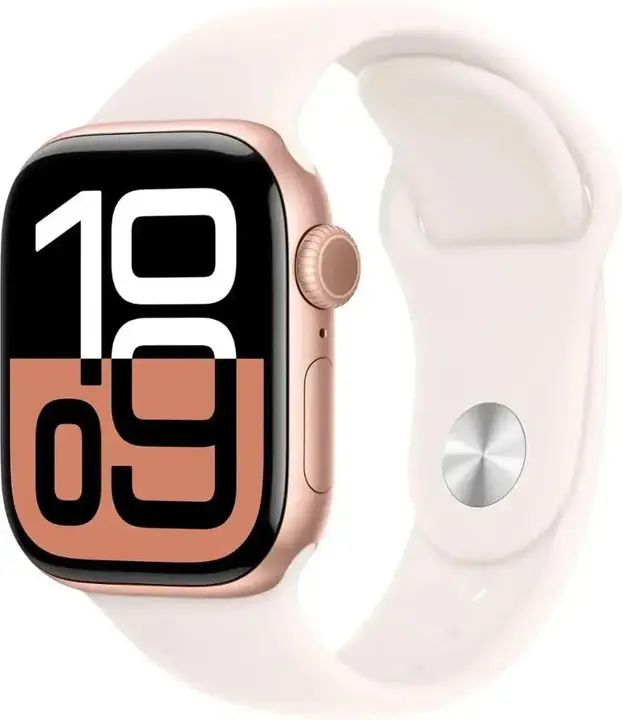
#2 — Smart Fall Detection & Emergency Response: Apple Watch Series 10 with Fall Detection
Primary use: Automatic fall detection, emergency SOS, blood oxygen monitoring, irregular rhythm notifications
Falls are the leading cause of injury-related death among adults over 65, according to the CDC — with one in four older adults experiencing a fall annually.
Response time is critical: the longer a senior remains on the ground unassisted, the greater the risk of secondary complications including hypothermia, dehydration, and psychological trauma.
The Apple Watch Series 10 integrates FDA-cleared fall detection with automatic emergency calling when a hard fall is detected and the wearer is unresponsive for 60 seconds.
It also monitors blood oxygen saturation (SpO2), heart rate irregularities, and now includes a sleep apnea detection feature cleared by the FDA in 2024.
Temporal Proof: The device becomes more useful the longer it’s worn. Its Health app builds longitudinal trends — VO2 max estimates, sleep quality scores, and step count baselines — that allow physicians and seniors alike to detect subtle functional decline months before it manifests as a clinical event.
Affiliate note: Pair this with an LTE cellular plan so the watch functions independently even when the senior’s iPhone is in another room. For seniors living alone, this autonomy is medically significant.
#3 — AI-Driven Mobility Assistive Device: Ossur i-Limb / ReWalk for Everyday Use & Upright GO 2 Posture Trainer
Primary use: Posture correction, balance improvement, mobility rehabilitation, fall prevention
Mobility decline is one of the most predictive indicators of accelerated aging. The New England Journal of Medicine published research linking poor gait speed and posture instability in adults over 70 with significantly elevated risks of dementia, cardiovascular events, and overall mortality.
Intervening early with AI-driven mobility assistive devices can meaningfully reverse these trajectories.
For accessible, Amazon-available options, the Upright GO 2 represents a best-in-class entry point.
It’s a wearable posture sensor that adheres to the upper back, tracks spinal alignment in real time, and delivers gentle vibration feedback when the wearer slouches.
Over time, its companion app builds a posture improvement curriculum clinically designed to retrain postural muscle memory.
For seniors recovering from surgery or managing neuromuscular conditions, the TENS/EMS combination units (such as those from Compex or iReliev) available on Amazon offer medical-grade electrical muscle stimulation to maintain neuromuscular integrity in aging limbs — a technique widely used in clinical physical therapy.
Temporal Proof: The Upright GO 2’s data shows users who commit to an 8-week protocol experience measurable improvements in balance scores, self-reported pain reduction, and daily active standing time. This is the compounding dividend of consistent device use.
#4 — Continuous Glucose Monitor: Dexcom Stelo (OTC, No Prescription Required)
Primary use: Blood sugar monitoring, metabolic health tracking, energy optimization, diabetes management
In 2024, the FDA cleared the Dexcom Stelo — the first over-the-counter continuous glucose monitor (CGM) in the United States.
This is a landmark moment in senior wellness technology. It requires no prescription, ships on Amazon, and gives users a 24/7 real-time view of their blood glucose trends via a small sensor worn on the arm.
For seniors — whether diabetic, pre-diabetic, or metabolically curious — understanding how food, sleep, stress, and exercise affect blood sugar is transformative.
Research published in Diabetes Care demonstrates that CGM use among older adults with Type 2 diabetes significantly reduces hypoglycemic episodes (dangerous low blood sugar events), improves HbA1c outcomes, and reduces emergency care visits.
Beyond diabetes, metabolic health is a cornerstone of modern longevity science. Pioneers in the field of senior longevity like Dr. Peter Attia have popularized CGM use among non-diabetic adults as a tool for optimizing energy, reducing inflammation, and understanding individual metabolic responses.
Temporal Proof: After 30–60 days of CGM use, most seniors can identify 3–5 specific dietary or lifestyle patterns that cause spikes or drops in their glucose — a personalized metabolic map that no blood panel or annual checkup can provide. That map doesn’t expire.
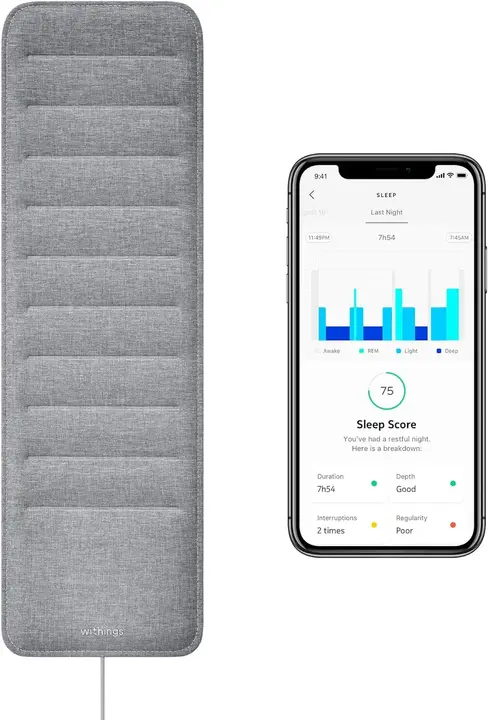
#5 — Smart Sleep & Recovery Optimizer: Withings Sleep Analyzer
Primary use: Sleep apnea screening, sleep cycle tracking, heart rate variability, recovery optimization
Sleep is the single most underrated longevity intervention available, and yet the majority of adults over 60 experience clinically significant sleep disruption.
The National Sleep Foundation reports that sleep apnea — a condition linked to cardiovascular disease, cognitive decline, and metabolic dysfunction — affects an estimated 24% of adults over 65 and remains substantially underdiagnosed.
The Withings Sleep Analyzer is an FDA-registered, under-mattress sensor (no wearable required) that tracks sleep stages, heart rate, respiratory rate, and provides a clinically validated snoring and sleep apnea detection algorithm.
Crucially, the device generates a PDF report that seniors can share with their physician — bridging consumer health technology with clinical care.
Its companion Health Mate app integrates with Apple Health, Google Fit, and Withings’ broader ecosystem, enabling a holistic view of sleep quality in relation to daily activity, heart rate trends, and weight.
Temporal Proof: Withings’ internal data shows users who track sleep consistently for 6 months show improved sleep efficiency scores, reduced awakenings, and — for those who identified apnea events — significantly better outcomes after seeking clinical intervention. The device pays for itself the first time it catches an abnormality worth treating.
How to Choose the Right Senior Wellness Technology for Your Situation
Not every device is right for every person, and the best senior wellness technology stack is one that a senior will actually use consistently. Here’s a framework for prioritizing:
Start with your highest risk factor. If your family has a cardiac history, the KardiaMobile 6L or Apple Watch is your first purchase.
If you or a loved one has experienced falls or balance issues, the Apple Watch (for emergency detection) and Upright GO 2 (for prevention) form a powerful pairing.
If metabolic health or diabetes management is the priority, the Dexcom Stelo is in a category of its own.
And if chronic fatigue, poor sleep, or unexplained daytime drowsiness is the concern, the Withings Sleep Analyzer could be the single most impactful purchase of the year.
The second principle is integration. These devices compound their value when they talk to each other.
Apple Health and Google Fit serve as aggregation hubs for heart rate, glucose, sleep, and activity data — giving any senior and their care team a comprehensive, longitudinal picture of health that no quarterly lab draw can replicate.
The Temporal Proof of Longevity Devices: Why Consistency Beats Any Single Reading
Here’s the insight most product reviews miss entirely: a single ECG reading, one night of sleep data, or a single glucose measurement has limited clinical value.
What transforms these devices from interesting gadgets into genuine longevity tools is the accumulation of data over weeks and months.
A 90-day consistent record on the KardiaMobile shows your cardiac baseline. A 60-day CGM log reveals your metabolic fingerprint. A 6-month sleep analysis timeline shows whether your sleep apnea is worsening, stable, or improving.
The device is the instrument; time is the amplifier. This is why the investment decision shouldn’t be framed as “is this worth $150?” but rather “what is a year of insight into my cardiac health worth?”
Based on published research from the American Geriatrics Society, JAMA, and Diabetes Care, the answer is: considerably more than the cost of the device.
Final Recommendation: Build Your Senior Wellness Technology Stack Gradually
You don’t need all five devices at once. For most seniors and caregivers, a sensible starting point is one cardiac device (KardiaMobile 6L for simplicity, or Apple Watch for broader coverage), plus one metabolic or sleep device based on the most pressing health concern. Add devices over time as comfort and habit develop.
What matters most is consistent engagement — wearing the monitor, reviewing the data, sharing insights with your physician, and adjusting behaviors based on what you learn. That is the practice of senior wellness: not passive aging, but active, technology-informed, medically grounded optimization.
These five Amazon-available wellness technologies represent the best currently accessible entry points into that practice — backed by clinical evidence, validated by real-world use, and priced for accessibility without sacrificing medical credibility.
Medical disclaimer: The information in this post is for educational purposes and does not constitute medical advice. Always consult a qualified healthcare provider before beginning any health monitoring program or making changes to your care plan based on device data.