
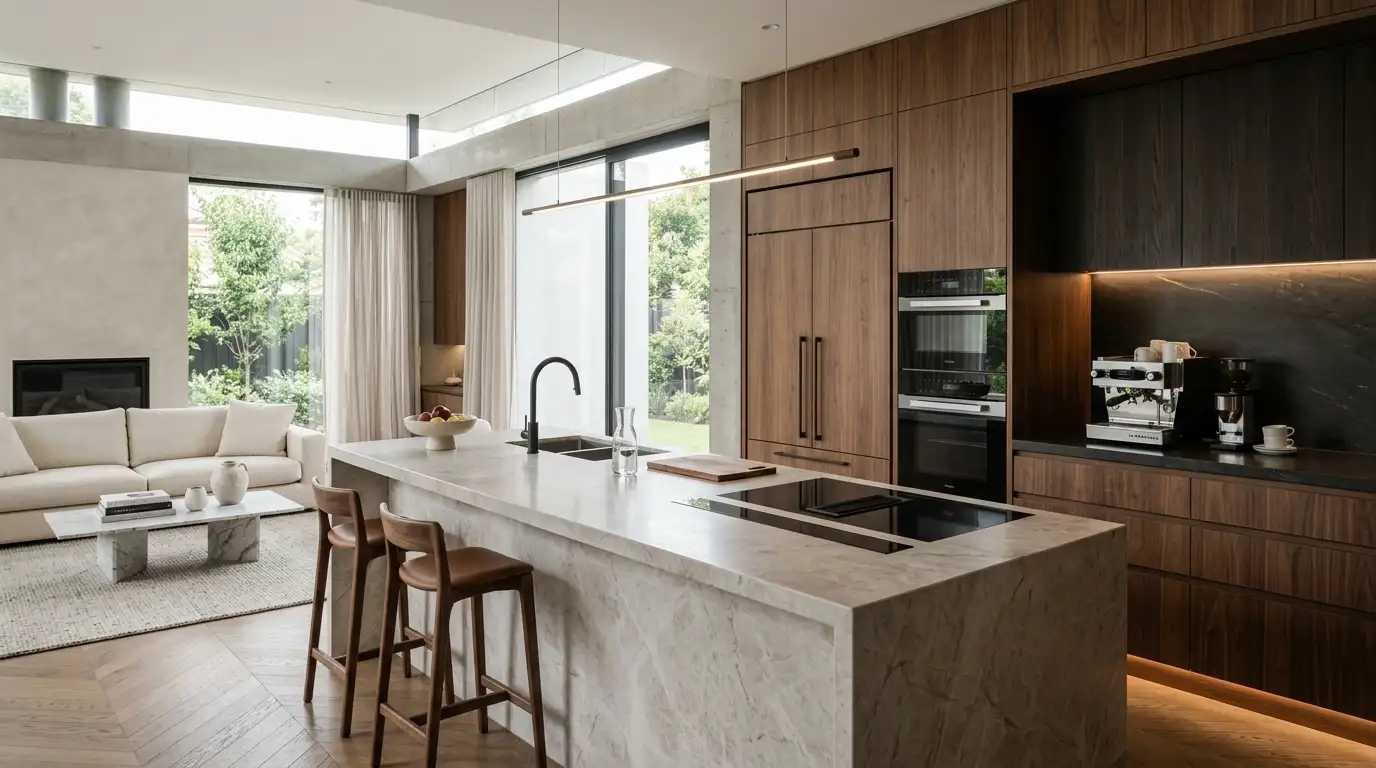

A beautifully designed home should work as well as it looks. The best sleek home tech and culinary appliances combine useful automation, polished finishes, smart controls, and practical cooking performance without making your rooms feel like showrooms for gadgets.
From built-in ovens and induction cooktops to smart refrigerators, compact coffee systems, countertop appliances, and discreet home automation, today’s technology can make everyday routines easier while preserving a refined interior.
The key is choosing technology that earns its place.
A luxury kitchen, for example, benefits from appliances that disappear into cabinetry, operate quietly, and perform consistently. The same principle applies throughout the home: smart lighting should create atmosphere, climate controls should stay out of sight, and connected appliances should simplify routines rather than create another collection of apps to manage.
This guide explains how to choose sleek home technology, which culinary appliances deserve attention, where smart features genuinely help, and how to create a sophisticated setup that feels intentional.
Table of Contents
What Are Sleek Home Tech and Culinary Appliances?
Sleek home tech and culinary appliances are modern household devices designed to combine useful technology, refined aesthetics, and everyday functionality. They include smart kitchen appliances, integrated cooking systems, connected lighting, automated climate controls, premium countertop appliances, and other technology designed to fit naturally into a sophisticated home.
The defining idea is restraint.
A sleek appliance usually has clean lines, limited visual clutter, thoughtful controls, and materials that complement the surrounding space. Stainless steel, matte finishes, glass, brushed metal, and integrated panels are common choices.
In a luxury home, appearance matters. Performance matters more.
The best choices bring both together.
Why Sleek Technology Works So Well in Luxury Interiors
Luxury interiors depend heavily on proportion, material quality, and visual calm.
A large collection of mismatched appliances can interrupt that feeling. A carefully selected collection can do the opposite.
Consider a kitchen with handleless cabinetry, stone countertops, warm wood, and concealed storage. A freestanding appliance covered with unnecessary buttons may dominate the room. An integrated refrigerator, flush-mounted oven, and minimalist induction cooktop can keep the same kitchen visually quiet.
Technology becomes part of the architecture.
This approach also makes sense beyond the kitchen. Smart thermostats, automated blinds, discreet speakers, connected lighting, and robotic cleaning devices can reduce daily work while keeping technology visually secondary.
The Luxury-Tech Formula
A useful way to judge any appliance is to consider five factors:
| Factor | What to look for |
|---|---|
| Design | Clean proportions and finishes suited to the room |
| Performance | Reliable results for the tasks you actually perform |
| Controls | Simple, responsive operation |
| Integration | Ability to fit cabinetry, counters, or existing systems |
| Maintenance | Easy cleaning, servicing, and replacement of consumables |
A beautiful appliance that frustrates you every morning won’t feel luxurious for long.
The Most Useful Sleek Culinary Appliances
The kitchen is where technology can have the greatest practical impact.
Cooking involves heat, timing, temperature control, ventilation, storage, cleaning, and food preparation. A well-selected appliance can improve several of these tasks at once.
1. Induction Cooktops
Induction cooking is particularly well suited to contemporary kitchens.
The surface stays relatively clean-looking, pans heat quickly, and precise temperature adjustment makes delicate cooking easier. Because the cooking surface itself doesn’t use a traditional exposed flame, the minimalist appearance works especially well with modern stone or composite countertops.
Look for:
- Flexible cooking zones
- Precise power adjustment
- Pan detection
- Timer functions
- Easy-to-clean glass surfaces
- Bridge zones for larger cookware
For a luxury kitchen, flush installation can create an especially polished appearance.
2. Built-In Smart Ovens
A built-in oven can become one of the most useful pieces of culinary technology in the home.
Modern models may offer multiple cooking modes, temperature probes, guided programs, remote monitoring, steam functions, self-cleaning cycles, and app connectivity.
Smart features become valuable when they solve a real problem.
A temperature probe, for example, can help you cook a roast to the desired internal temperature without repeatedly opening the oven. Remote notifications can tell you when a cooking cycle has finished.
Some households will use these features constantly. Others will prefer straightforward controls.
Choose according to your cooking habits.
3. Steam Ovens
Steam cooking has become increasingly attractive for people who want restaurant-style flexibility at home.
A steam oven can help cook vegetables, fish, grains, bread, and other foods while retaining moisture. Combination steam ovens can pair steam with conventional heat, giving you more options for baking and roasting.
They’re especially appealing when the kitchen is designed around frequent entertaining.
A combination unit can potentially replace several individual cooking functions while occupying a single built-in space.
4. Smart Refrigerators
The refrigerator has become a surprisingly technological appliance.
Depending on the model, smart refrigerators can offer internal cameras, temperature monitoring, adjustable compartments, door alerts, water and ice systems, and connectivity with household apps.
Some features are genuinely useful.
A door-left-open notification can prevent wasted energy. Internal cameras may help you check whether you need milk while shopping. Adjustable temperature zones can also make storage more flexible.
The main question is whether you’ll use those functions.
A sophisticated refrigerator with features you never touch adds complexity without adding much value.
5. Integrated Dishwashers
A dishwasher is one of the easiest appliances to integrate into a luxury kitchen because it can sit almost completely behind cabinetry.
Quiet operation matters here.
Open-plan kitchens, dining areas, and living spaces often share the same room, so a noisy dishwasher can quickly become irritating. Look for low operating noise, adjustable racks, efficient wash programs, and a layout that accommodates your usual cookware.
A discreet exterior combined with strong cleaning performance makes an integrated dishwasher one of the more sensible luxury upgrades.
Countertop Appliances Worth Keeping Visible
Not every appliance needs to disappear.
Some countertop appliances deserve a visible position because they’re used frequently and can contribute to the character of the kitchen.
Think about a sculptural espresso machine, premium stand mixer, minimalist toaster, electric kettle, or compact food processor.
The trick is creating a hierarchy.
Keep the appliances you use every day accessible. Store the occasional-use machines elsewhere.
A marble counter covered with eight appliances rarely looks refined, regardless of how expensive each one is.
Create a Daily Appliance Zone
A practical arrangement might include:
- Coffee machine
- Electric kettle
- Toaster
- Small tray for cups
- Storage for frequently used coffee accessories
Everything else can move into a cabinet or appliance garage.
This creates a kitchen that feels ready for breakfast in the morning while remaining visually calm throughout the day.
Smart Home Technology Beyond the Kitchen
Sleek home tech extends well beyond culinary appliances.
The most effective systems tend to handle repetitive tasks quietly in the background.
Smart Lighting
Lighting has an enormous effect on how a luxury interior feels.
Instead of controlling every light independently, create scenes around activities.
For example:
Morning: brighter, cooler lighting for getting ready.
Dinner: warmer, softer lighting around the dining area.
Evening: low ambient lighting throughout living spaces.
Entertaining: balanced illumination for guests without making the room feel overly bright.
Smart lighting becomes particularly useful when these scenes can be activated from one control.
Automated Blinds and Curtains
Motorized window treatments can add convenience without introducing visual clutter.
They can open gradually in the morning, close for privacy in the evening, or respond to programmed schedules.
In rooms with large windows, automation can also help manage sunlight and indoor temperature.
The best systems remain visually discreet. The hardware should complement the architecture rather than compete with it.
Smart Climate Control
Temperature control is another area where automation can make a noticeable difference.
A smart thermostat can allow scheduling, remote adjustment, and room-based temperature management depending on the system.
For a larger home, zoning can be particularly useful.
You may want a different temperature in a bedroom than in a sunny living room. A good system lets you make that distinction without constantly adjusting the entire house.
Discreet Smart Speakers
Audio technology doesn’t have to dominate an interior.
Architectural speakers, compact wireless speakers, and concealed audio systems can provide music throughout the home while preserving the room’s visual character.
Placement matters.
A speaker hidden within cabinetry or integrated into the architecture can be preferable to several large devices scattered across shelves.
How to Choose Technology Without Creating Clutter
The biggest mistake with smart home technology is buying individual devices without considering the entire room.
Start with the space.
Ask yourself:
- What tasks happen here every day?
- Which appliances are used most often?
- What should remain visible?
- What can be concealed?
- Which devices need to communicate with each other?
- How will everything be controlled?
- What happens if the internet connection fails?
That last question deserves more attention.
A good home should remain usable when Wi-Fi disappears.
An oven should still cook. A refrigerator should still refrigerate. Lights should have a practical fallback. Essential controls shouldn’t depend entirely on a phone application.
Built-In vs. Freestanding Appliances
The choice between built-in and freestanding appliances affects both function and appearance.
| Built-In | Freestanding |
|---|---|
| Creates a unified appearance | Easier to replace |
| Works well with custom cabinetry | Greater flexibility |
| Often gives a more architectural feel | Can become a design feature |
| Installation can be more involved | Usually simpler to install |
| Excellent for permanent kitchen designs | Useful for renters or flexible layouts |
Built-in appliances make particular sense when you’re renovating a kitchen from the ground up.
Freestanding appliances can be the better choice when you expect to change the layout or move within a few years.
Materials That Suit Sleek Home Technology
Technology looks better when its materials make sense alongside the room.
Common luxury-friendly finishes include:
Stainless Steel
Classic, durable, and easy to coordinate with professional-style kitchens.
Matte Black
Works well with dark cabinetry, stone surfaces, and contemporary interiors.
Glass
Glass control panels and doors can create a lighter appearance, although fingerprints and cleaning requirements should be considered.
Brushed Metal
A softer alternative to highly polished finishes, brushed metal can work beautifully with warm woods and natural stone.
Integrated Cabinet Panels
For refrigerators, dishwashers, and some other appliances, matching the cabinetry can make the technology almost disappear.
The right finish depends on the entire room.
Buying every appliance in the same material isn’t mandatory. Consistency matters more than uniformity.
The Role of Quiet Operation
Noise is one of the most overlooked parts of luxury.
A kitchen may look spectacular, but constant appliance noise can change how the room feels.
This becomes especially noticeable in open-plan homes.
When choosing refrigerators, dishwashers, ventilation systems, coffee machines, and other frequently used appliances, check their published noise ratings where available.
Think about when you’ll use them.
A dishwasher operating overnight near bedrooms deserves different consideration from one running during a busy daytime kitchen routine.
Quiet technology often feels more luxurious because you notice its absence.
Common Mistakes When Buying Smart Appliances
Buying Features Instead of Performance
A long feature list can look impressive.
Your cooking habits determine whether those features have value.
Prioritize heating performance, temperature control, capacity, cleaning, reliability, and ease of use before secondary smart functions.
Ignoring Appliance Dimensions
Measure the opening, surrounding cabinetry, ventilation requirements, door clearance, and electrical connections before ordering.
A premium appliance still has to fit.
Creating an App Collection
If every appliance requires a different application, daily life can become unnecessarily complicated.
Whenever possible, choose products that work within the same ecosystem or can be operated normally without an app.
Forgetting Maintenance
Water filters, descaling cycles, grease filters, cleaning programs, and replacement parts all affect ownership.
Before buying, find out what routine maintenance involves.
Overfilling the Kitchen
More appliances don’t automatically create a better kitchen.
A smaller collection of excellent tools usually produces a cleaner working environment.
A Practical Luxury Kitchen Technology Setup
For a refined kitchen, you could build the technology in layers.
Foundation:
Integrated refrigerator, induction cooktop, built-in oven, dishwasher, and effective ventilation.
Cooking upgrade:
Steam or combination oven, temperature probe, warming drawer, or specialty cooking appliance.
Countertop layer:
Coffee machine, kettle, stand mixer, and food processor selected according to your actual routine.
Smart layer:
Lighting controls, appliance notifications, energy monitoring, and selected connected functions.
Comfort layer:
Automated blinds, climate control, discreet audio, and scene-based lighting.
This approach keeps technology purposeful.
How to Future-Proof Your Home
Home technology changes quickly.
A refrigerator purchased today may remain in your kitchen for a decade or longer. Your phone and smart-home platform may change several times during that period.
For permanent installations, prioritize infrastructure over trends.
Good electrical planning, sufficient outlets, appropriate ventilation, reliable networking, and accessible service points can make future upgrades much easier.
When renovating, think about where technology might go later.
An extra outlet in the right cabinet can be far more valuable than a fashionable gadget that becomes obsolete after two years.
When Smart Features Are Actually Worth Paying For
A useful rule is simple: pay for features that save time, improve results, or solve a recurring inconvenience.
A temperature probe that prevents overcooked meat can be worthwhile.
A refrigerator camera may be useful for someone who frequently shops without a list.
Remote oven notifications can help busy households.
A voice-controlled light may be convenient when your hands are full.
A feature that you’ll use twice before forgetting about it belongs lower on the shopping list.
Luxury comes from thoughtful choices.
How to Build a Sleek Home Tech Collection on Any Budget
A sophisticated home doesn’t require replacing every appliance simultaneously.
Start with the items that have the greatest daily impact.
For the kitchen, that might mean upgrading the cooktop and oven first. For the rest of the home, lighting and climate control may deliver more noticeable benefits than decorative gadgets.
Then build gradually.
Choose finishes that will age well. Keep controls simple. Avoid buying technology solely because it has a large number of features.
Over time, the result will feel cohesive rather than assembled in a weekend.
Key Takeaways
- Sleek home tech and culinary appliances combine useful technology with refined design.
- Prioritize appliance performance, reliability, and ease of use before smart features.
- Induction cooktops and built-in ovens suit modern luxury kitchens particularly well.
- Quiet operation matters greatly in open-plan homes.
- Integrated refrigerators and dishwashers can reduce visual clutter.
- Keep frequently used countertop appliances accessible and store occasional-use equipment.
- Smart lighting, climate control, and automated blinds can improve everyday comfort without dominating the interior.
- Build your technology collection gradually around real household routines.
- Good infrastructure can make future technology upgrades much easier.
- The most luxurious setup is usually the one that works quietly in the background.
A refined home doesn’t need to announce how much technology it contains. The strongest design lets technology perform its job while the room remains calm, beautiful, and unmistakably yours.
Frequently Asked Questions
What are sleek home tech and culinary appliances?
Sleek home tech and culinary appliances are modern household devices that combine useful technology with refined design. They include integrated ovens, induction cooktops, smart refrigerators, connected lighting, climate controls, premium countertop appliances, and other technology designed for contemporary homes.
Which kitchen appliances are best for a luxury kitchen?
The best luxury kitchen appliances depend on cooking habits, but a strong foundation usually includes an induction cooktop, built-in oven, integrated refrigerator, quiet dishwasher, and effective ventilation. Specialty appliances such as steam ovens can be added when their functions match your routine.
Are smart kitchen appliances worth buying?
Smart kitchen appliances can be worthwhile when their connected features solve practical problems. Remote notifications, temperature monitoring, programmable functions, and diagnostics can be useful. Basic cooking performance should remain the primary buying consideration.
Are built-in appliances better than freestanding appliances?
Built-in appliances create a more integrated appearance and work particularly well with custom kitchens. Freestanding appliances provide greater flexibility and can be easier to replace. Neither option is universally better; the right choice depends on your kitchen design and future plans.
How can I make a smart home look luxurious?
Use technology selectively. Conceal appliances where practical, choose coordinated finishes, reduce visible cables, use consistent controls, and prioritize integrated lighting, climate, audio, and window systems. Visual restraint makes technology feel intentional.
What smart home features are most useful?
Smart lighting, climate control, automated window treatments, appliance notifications, and discreet audio systems tend to offer strong everyday value. Their usefulness depends on household routines and how well the systems work together.
How do I avoid smart-home clutter?
Start with your daily routines rather than shopping for devices individually. Choose a small number of useful systems, conceal hardware where possible, reduce duplicate apps, and keep frequently used countertop appliances limited to those you genuinely need.
Should luxury appliances always match?
They don’t have to match perfectly. Coordinated proportions, finishes, hardware, and materials usually create a more sophisticated result than forcing every appliance to look identical.