
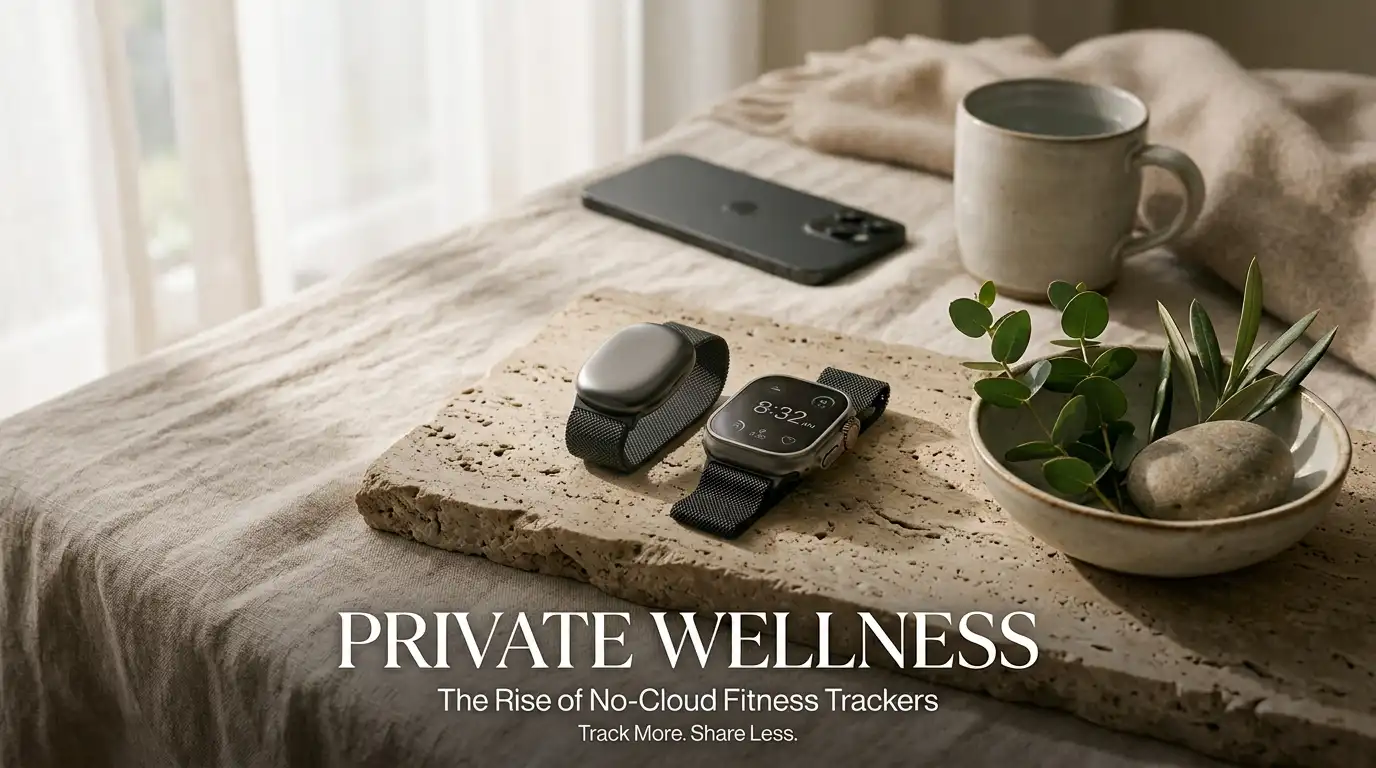

Luxury has traditionally been associated with what we can see: exceptional materials, private spaces, exclusive experiences, and products designed around personal comfort. Yet a quieter definition of luxury is emerging in the wellness world. It is the ability to live well without constantly being connected, monitored, interrupted, and measured.
As wearable technology becomes increasingly sophisticated, consumers can track heart rate, sleep stages, recovery, activity, stress indicators, workouts, and countless other metrics throughout the day. These capabilities can be useful, but continuous connectivity also introduces another consideration: where personal wellness data goes, who can access it, and how much digital noise accompanies it.
For privacy-conscious consumers, the next generation of wellness technology may therefore be less about adding connectivity and more about removing it.
This is the foundation of the quiet tech revolution: choosing technology that supports a healthier lifestyle without demanding permanent access to our attention or personal information.
Table of Contents
The Rise of Privacy-Conscious Wellness Technology
Modern wellness increasingly extends beyond nutrition, exercise, and sleep. Digital well-being has become part of physical and mental well-being.
A connected fitness tracker can provide impressive insights, but its convenience may come with a broader digital footprint. Depending on the device and its ecosystem, wellness information may be synchronized with smartphones, cloud platforms, applications, analytics systems, or third-party services.
That does not automatically make connected wearables undesirable. Cloud synchronization can enable useful features such as long-term trend analysis, automatic backups, personalized recommendations, device integration, and remote access to information.
However, there is a growing appreciation for choice.
Some consumers want to know that their wellness information remains primarily within their control. Others simply want a device that measures what matters without becoming another screen demanding attention throughout the day.
This is where offline fitness trackers and no-cloud fitness technology become particularly interesting.
What Are No-Cloud Fitness Trackers?
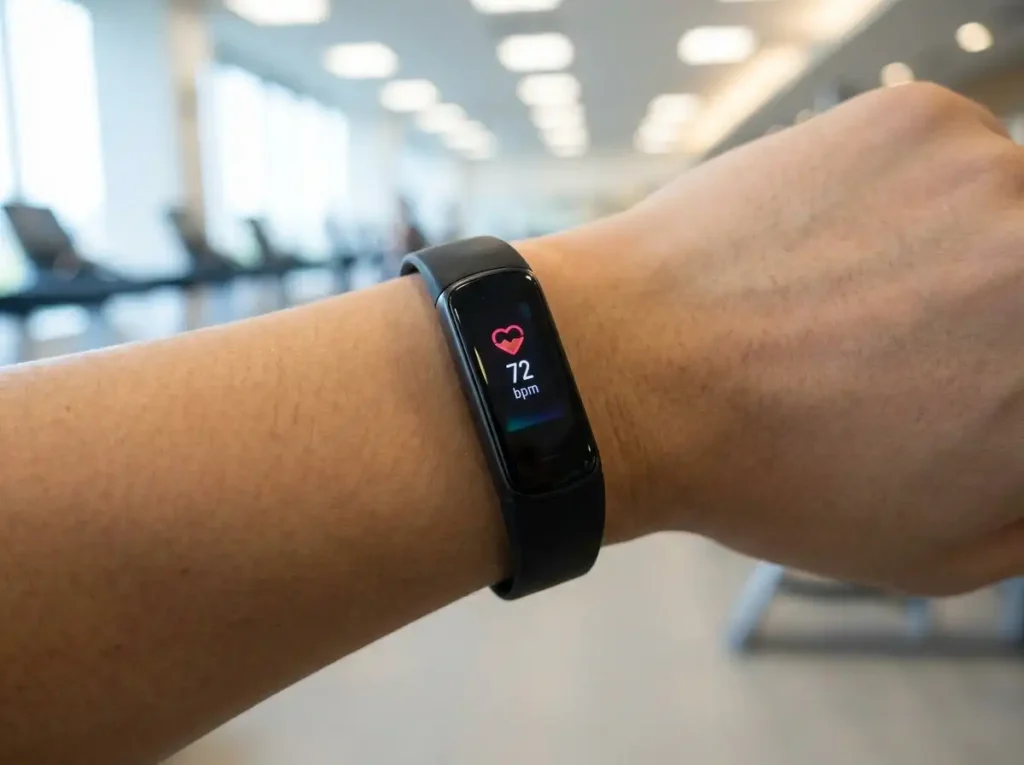
A no-cloud fitness tracker is designed around a fundamentally different approach to personal data.
Instead of automatically transmitting every measurement to remote servers, an offline-oriented device may store information locally or limit data transmission. Depending on the specific product, measurements can remain on the device until the user chooses to review, transfer, or delete them.
The exact privacy architecture varies considerably between manufacturers, so we should examine the specifications and privacy policies of individual devices rather than assuming that every “offline” tracker operates identically.
The important distinction is philosophical as much as technical: the device does not need to turn every wellness measurement into a continuously connected digital profile.
For consumers seeking simplicity, that distinction can be meaningful.
Data Privacy as a New Form of Wellness Luxury
True luxury is often about control.
A private residence gives us control over our environment. A tailored garment gives us control over fit and appearance. A private retreat gives us control over time and surroundings.
In the same way, private wellness technology can give us greater control over our personal information.
True well-being extends to digital peace of mind. Incorporating specialized no-cloud fitness trackers allows us to accurately measure recovery, sleep quality, and heart rate without broadcasting our personal biometric data to external servers.
The value is not necessarily in having fewer measurements. It is in having a more deliberate relationship with those measurements.
Instead of allowing technology to dictate our daily rhythm, we can decide when information deserves our attention.
Why Constant Connectivity Can Conflict With Intentional Living
Wearable technology was created to make health information more accessible. Yet accessibility can easily become overexposure.
A notification about a workout goal may be helpful. A reminder to stand may be useful. A sleep score can provide a valuable long-term perspective.
But when our wrist continually vibrates, our phone displays new metrics, and applications repeatedly encourage us to improve another statistic, wellness can begin to resemble another productivity project.
This is particularly relevant to an intentional lifestyle.
Wellness should not require us to monitor ourselves every minute.
There is value in taking a walk without checking calories burned, going to bed without worrying about a sleep score, or exercising without immediately reviewing a dashboard of performance metrics.
Offline technology supports this quieter approach by allowing measurement to become something we consult deliberately rather than something that continuously follows us.
The Appeal of Screen-Free Fitness Tracking
Screen-free or minimally interactive fitness devices represent another important direction in quiet technology.
The objective is simple: collect useful information without creating another digital destination that competes for attention.
A device may quietly record movement, heart rate, sleep patterns, or other measurements while keeping the experience largely invisible. We can then review information at a convenient time rather than interacting with a bright display throughout the day.
This approach fits naturally into environments designed for calm.
A minimalist bedroom does not need a glowing screen on every surface. A meditation space does not need constant notifications. A restorative evening routine does not necessarily benefit from checking five different wellness metrics.
Technology can still be present while remaining unobtrusive.
Offline Wellness Technology and Sleep Quality
Sleep is one of the clearest examples of the tension between useful data and excessive connectivity.
Sleep trackers can help us identify patterns in bedtime, wake time, movement, and other indicators. Over several weeks, these patterns may help us recognize habits that influence our rest.
However, the tracking experience itself should not become a source of anxiety.
A person who wakes during the night and immediately checks a sleep score may become more focused on the number than on how they actually feel.
A quieter approach is to collect information passively and review broader trends later.
Rather than asking, “Did we achieve the perfect sleep score last night?” we can ask more meaningful questions:
- Are we maintaining consistent sleep schedules?
- Are we waking feeling rested?
- Do certain evening habits correlate with better rest?
- Are our routines sustainable over time?
The technology becomes a tool for reflection rather than another source of pressure.
Heart Rate, Recovery, and the Value of Selective Measurement
Heart-rate tracking and recovery measurements can be valuable for people who exercise regularly. They can help us understand how our bodies respond to different training loads, rest periods, and routines.
Yet more data does not always mean better decisions.
The real value lies in context.
A single heart-rate reading tells us something. A consistent pattern can tell us considerably more. But neither should automatically replace how we feel or the broader circumstances surrounding exercise and recovery.
Privacy-conscious fitness technology allows us to retain the benefits of measurement while taking a more selective approach to data collection and sharing.
We can measure deliberately, review periodically, and avoid turning every physical sensation into a notification.
The Luxury of Digital Silence
There is a reason quiet spaces have become increasingly desirable in modern interiors and hospitality.
Noise has become abundant.
Notifications, advertisements, messages, emails, social platforms, reminders, recommendations, and automated alerts compete for our attention from morning until night.
Against this background, digital silence becomes a luxury.
A wellness device that does its job quietly can therefore offer something that is difficult to quantify: fewer interruptions.
The device does not need to dominate the experience. It can simply perform its function and disappear into the background.
This principle mirrors the broader movement toward quiet luxury in lifestyle design. The emphasis shifts away from conspicuous features and toward quality, discretion, longevity, privacy, and personal control.
Why Privacy Matters More as Wellness Data Becomes More Detailed
Fitness trackers are no longer limited to counting steps.
Modern wellness ecosystems can collect increasingly detailed information about our routines and physiological patterns. The more sophisticated these systems become, the more important it is to understand their privacy practices.
Before choosing a wearable, we should examine several factors:
Data Storage
We should determine whether information is stored locally, on a smartphone, on company servers, or across multiple locations.
Cloud Synchronization
Automatic cloud synchronization may be convenient, but privacy-conscious users should understand whether it can be disabled and what functionality is lost when it is turned off.
Third-Party Sharing
Privacy policies should be reviewed carefully to determine whether information may be shared with service providers, analytics companies, advertising partners, research organizations, or other third parties.
Account Requirements
Some devices require an online account before users can access core functions. Others provide more flexibility.
Data Deletion
A strong privacy approach should include a clear way to delete stored information when we no longer want it retained.
These considerations turn privacy from an abstract concern into a practical part of purchasing a wellness device.
A More Intentional Approach to Wearable Technology
The future of wellness technology does not have to be completely connected or completely offline.
There is room for a middle ground.
We can choose devices that synchronize only when necessary. We can disable unnecessary notifications. We can avoid sharing wellness information with services that provide little value in return. We can select products with transparent privacy policies and meaningful local-storage options.
Most importantly, we can decide what role technology should play in our routines.
The goal is not to reject technology. The goal is to make technology serve the lifestyle we want rather than allowing technology to define it.
This distinction is especially important for people who view wellness as a complete lifestyle rather than a collection of statistics.
The New Wellness Luxury: Control
The next evolution of luxury wellness may not be a more advanced screen, a larger collection of sensors, or another subscription-based dashboard.
It may be control.
Control over our information.
Control over our attention.
Control over when we measure ourselves.
Control over which companies receive our data.
Control over how connected we want our personal lives to be.
This perspective changes the way we evaluate fitness technology. Instead of asking only how many features a wearable offers, we can ask a more valuable question: Does this technology help us live better without demanding more of our attention and personal information than necessary?
For some consumers, the answer will be a highly connected ecosystem. For others, it will be an offline or no-cloud device that quietly records essential information and leaves the rest of life alone.
Both approaches have a place.
But as wellness becomes increasingly data-driven, privacy itself is becoming part of the experience.
Building a Quieter Digital Wellness Routine
A privacy-conscious wellness routine does not require abandoning every connected device.
We can begin with simple changes:
- Turn off unnecessary wearable notifications.
- Review app permissions regularly.
- Understand where fitness data is stored.
- Disable cloud synchronization when practical.
- Choose local-storage options when they meet our needs.
- Review wellness data at intentional times rather than constantly.
- Delete historical information that no longer serves a purpose.
- Read privacy policies before committing to a wellness ecosystem.
- Separate useful health insights from unnecessary digital noise.
- Give ourselves periods of genuine screen-free activity.
These steps transform wearable technology from an always-on presence into a controlled part of a broader wellness routine.
The Quiet Future of Luxury Wellness
The most sophisticated wellness lifestyle may ultimately be the one that knows when technology should step back.
We can appreciate accurate measurement without becoming obsessed with measurement. We can use intelligent devices without giving every device unrestricted access to our lives. We can collect useful information while maintaining boundaries around how that information is stored and shared.
That is the promise of the quiet tech revolution.
The future of wellness is not necessarily more data. It is better control over the data that matters.
As consumers become more conscious of digital privacy, offline fitness trackers, screen-free wearables, local data storage, and privacy-first wellness devices may become increasingly attractive. Their appeal extends beyond technical specifications. They represent a broader lifestyle philosophy centered on discretion, intentionality, and peace of mind.
In a world where almost everything wants our attention, choosing technology that knows when to remain silent can feel remarkably luxurious.
And perhaps that is the most modern definition of wellness luxury: having the information we need, without surrendering the privacy and peace we value.