


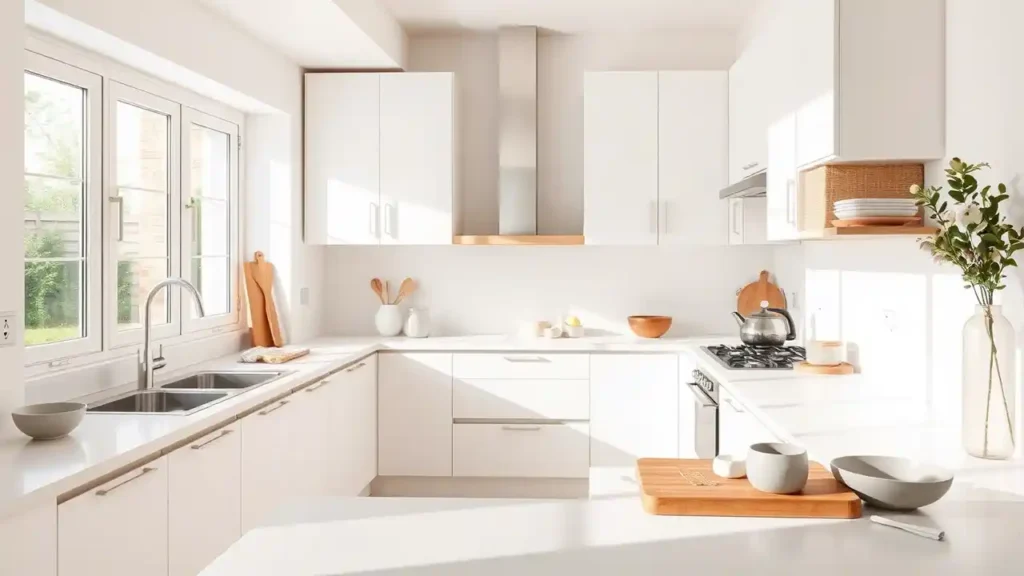
In a world increasingly dominated by excess and overconsumption, the minimalist kitchen stands as a sanctuary of calm and intention. Walking into a well-designed minimalist kitchen feels like taking a deep breath—everything has a purpose, nothing overwhelms the senses, and the space itself invites creativity rather than chaos.
Whether you’re preparing a simple breakfast or hosting an elaborate dinner party, a thoughtfully designed minimalist kitchen supports your culinary adventures without the distraction of unnecessary clutter.
The minimalist kitchen isn’t just about aesthetics; it’s a lifestyle choice that promotes mindfulness, efficiency, and sustainability. By curating a space filled only with items you truly need and love, you create room for what matters most—connection, creativity, and enjoyment of the present moment.
This comprehensive guide will walk you through transforming your kitchen into a minimalist haven that serves your unique needs while maintaining an atmosphere of serene sophistication.
Table of Contents
What Is a Minimalist Kitchen?
Definition and Philosophy
A minimalist kitchen embodies the core philosophy of “less is more.” Rather than stripping away personality or comfort, minimalism in kitchen design focuses on intentional curation—keeping only what serves a purpose or brings genuine joy.
The minimalist approach values quality over quantity, functionality over excess, and thoughtful design over trendy accumulation.
At its heart, kitchen minimalism isn’t about deprivation but liberation. By removing what doesn’t serve you, you create space—both physical and mental—to enjoy what truly matters.
A minimalist kitchen celebrates the beauty of negative space, allowing carefully selected elements to shine rather than compete for attention.
Key Characteristics of Minimalist Kitchen Design
Authentic minimalist kitchens share several defining characteristics:
- Clean lines and uncluttered surfaces: Countertops remain largely clear, with only essential, frequently-used items on display.
- Hidden storage solutions: Thoughtful cabinetry conceals necessary items without creating visual noise.
- Limited color palette: Most minimalist kitchens feature 2-3 complementary colors for a cohesive, calming effect.
- Quality materials: Investment in fewer, better-made elements that stand the test of time.
- Intentional lighting: Carefully considered illumination that enhances function and mood without ornate fixtures.
- Multifunctional elements: Pieces that serve multiple purposes to maximize utility while minimizing quantity.
- Negative space: Strategic “breathing room” that allows the eye to rest and appreciate key design elements.
Minimalist vs Modern vs Japandi Style
While often confused, minimalist, modern, and Japandi kitchen styles have distinct characteristics worth understanding:
Minimalist kitchen design focuses primarily on functionality, simplicity, and the elimination of excess. The aesthetic is clean and uncluttered, with a “less is more” approach that emphasizes quality over quantity. Color palettes tend toward neutrals and monochromatic schemes.
Modern kitchen design, while sharing minimalism’s clean lines, places greater emphasis on cutting-edge materials, technology integration, and bold design statements. Modern kitchens often feature more dramatic color contrasts and innovative materials like polished concrete or industrial metals.
Japandi kitchens blend Japanese minimalism with Scandinavian functionality, resulting in spaces that feel warm, natural, and serene. These kitchens incorporate natural materials like wood and stone, soft neutral colors, and handcrafted elements that showcase imperfect beauty (wabi-sabi).


Essential Elements of a Minimalist Kitchen
Minimalist Kitchen Essentials Checklist
Creating a truly functional minimalist kitchen requires careful consideration of what stays and what goes. This essentials checklist helps ensure you maintain everything you need without unnecessary excess:
Cookware:
- One high-quality chef’s knife
- One paring knife
- One serrated bread knife
- Cutting board (preferably wood)
- 10-12 inch skillet (preferably cast iron)
- Medium saucepan with lid
- Large pot for pasta/soup
- Sheet pan
- Glass baking dish
- Mixing bowls (nested set of 3)
- Measuring cups and spoons
Small Appliances:
- Multi-function food processor/blender
- Electric kettle
- Coffee maker of choice
- Toaster or toaster oven
Dishware:
- Simple, stackable plates and bowls for your household plus 2-4 guests
- Multipurpose glasses
- Basic set of flatware
- 2-3 serving pieces
Food Storage:
- Glass containers with lids in graduated sizes
- Reusable silicone bags
- Cloth produce bags
- Mason jars for pantry storage
This list represents the foundation of a functional kitchen—you may add specialty items based on your specific cooking habits, but approach each addition with intention.
Choosing Functional Over Fancy: Smart Product Picks
When building a minimalist kitchen, focus on versatile, high-quality items that can perform multiple functions:
- Immersion blender with attachments can replace bulky food processors, standard blenders, and even electric mixers for many tasks.
- Cast iron skillets work on stovetops, in ovens, under broilers, and even over campfires—making them incredibly versatile.
- High-quality chef’s knife can handle 90% of kitchen cutting tasks when properly maintained.
- Simple white dishware works for everyday use and elegant entertaining alike.
- Linen kitchen towels serve as napkins, produce bags, food covers, and cleaning tools.
The goal isn’t to own the fewest possible items but to ensure each possession earns its place through regular use and versatility.
Best Minimalist Kitchen Pots and Pans
Investing in the right cookware forms the foundation of a functional minimalist kitchen. Consider these options that balance quality, versatility, and aesthetic harmony:
- Lodge Cast Iron Skillet: This American-made classic develops a natural non-stick patina over time and can handle virtually any cooking technique.
- Le Creuset Enameled Dutch Oven: Though an investment, these colorful workhorses last generations while transitioning seamlessly from stovetop to oven to table.
- All-Clad Stainless Steel Saucepan: With proper care, high-quality stainless steel cookware performs beautifully for decades without deteriorating.
- GreenPan Ceramic Nonstick Skillet: For when non-stick is necessary, ceramic coatings offer better durability and safety than traditional PTFE options.
- Equal Parts The Essential Set: This streamlined collection includes perfectly sized nesting pots and pans designed specifically for minimal storage footprints.
The key with minimalist cookware is investing in fewer, better pieces rather than accumulating mediocre collections that require frequent replacement.
Space-Saving Small Appliance Ideas
Small appliances often create the most kitchen clutter. Consider these space-efficient options:
- Instant Pot: Replaces slow cookers, rice makers, pressure cookers, and yogurt makers in one vertically-oriented appliance.
- Vitamix Blender: Though expensive, its power and versatility eliminate the need for separate blenders, food processors, and specialty mixers.
- Breville Smart Oven Air Fryer: Combines toaster, convection oven, dehydrator, and air fryer functions in one countertop appliance.
- KitchenAid Stand Mixer with Attachments: With the right attachments, this classic serves as food processor, pasta maker, meat grinder, and more.
- Compact Coffee Makers: Consider streamlined options like the Chemex or Aeropress that require minimal counter space while producing excellent coffee.
When selecting appliances, prioritize those with multiple functions, neutral aesthetics, and dimensions that work with your storage plan.
Step-by-Step Minimalist Kitchen Decluttering Guide
Step 1: Cull Cooking Equipment
Begin your minimalist kitchen journey by taking inventory of your cooking equipment:
- Remove everything from cabinets and drawers.
- Sort items into categories (pots, pans, baking sheets, etc.).
- Identify duplicates and select only the highest quality version to keep.
- Question specialty items honestly—have you used that pasta machine in the past year?
- Test utensils and gadgets for functionality—discard anything broken or impossible to clean properly.
- Keep only what you use regularly, with rare exceptions for truly special-occasion items.
Remember, every item you keep requires cleaning, storage, and mental attention. Choose wisely what deserves this investment of your resources.
Step 2: Declutter Dishes and Glassware
Dishes and glassware often multiply mysteriously over time. Take a systematic approach:
- Consider how many people you typically serve at once.
- Keep enough settings for your household plus 2-4 guests.
- Choose one versatile style of drinkware rather than specialized glasses for every beverage.
- Select dishes that stack efficiently and can transition from everyday to special occasions.
- Donate mismatched, chipped, or unloved items.
- Consider if specialty serving pieces truly earn their storage space—could a simple white platter serve multiple functions?
By maintaining a cohesive collection of dishware, you’ll create visual calm while ensuring you have what you need for both daily life and entertaining.
Step 3: Minimize Pots and Pans
Most home cooks need far fewer cooking vessels than they own:
- Lay out all cookware and identify your most-used pieces.
- Select one high-quality option in each essential category:
- Large skillet (preferably cast iron or stainless steel)
- Small/medium skillet
- Large pot (for pasta, soups, stocks)
- Medium saucepan with lid
- Dutch oven or other heavy, oven-safe pot
- Sheet pan and baking dish
- Consider whether specialized items (woks, grill pans, etc.) truly justify their storage footprint.
- Assess the condition of remaining items—replace anything with damaged non-stick coatings or warped bottoms.
Quality cookware properly maintained can last decades, eliminating the waste cycle of replacing cheap options every few years.
Step 4: Simplify Knife and Utensil Collections
In most kitchens, a shocking percentage of utensils and tools go unused:
- Gather all knives, spatulas, spoons, and specialized tools.
- Keep only the knives you use regularly—typically a chef’s knife, paring knife, and bread knife.
- Select one type of each essential utensil (spatula, wooden spoon, tongs, whisk).
- Question single-purpose tools—do you really need a dedicated avocado slicer?
- Keep only measuring tools you actually use.
- Invest in a proper knife block or magnetic strip to store and protect quality knives.
Remember that quality tools require less effort to use, encouraging more cooking enjoyment with fewer implements.
Step 5: Tidy Food Storage Containers
Food storage creates some of the most frustrating kitchen clutter:
- Match all containers with their corresponding lids.
- Discard anything stained, warped, or missing parts.
- Choose one cohesive system—ideally glass containers with interchangeable lids.
- Select a variety of sizes that nest when empty.
- Keep only what fits in your designated storage container space.
- Consider replacing disposable plastic with more sustainable options like glass, silicone, or stainless steel.
An organized food storage system not only looks better but also reduces food waste by making leftovers visible and accessible.
Step 6: Streamline Small Appliances
Small appliances quickly consume valuable kitchen real estate:
- List all your small appliances and when you last used each one.
- Be honest about which functions you could accomplish with basic tools instead.
- Prioritize multi-functional appliances over single-purpose gadgets.
- Create a designated storage space and commit to keeping only what fits.
- Consider whether seasonal appliances (like ice cream makers) could be stored elsewhere.
- For appliances you keep, maintain user manuals and parts in labeled folders.
Many minimalists find that a good knife and cutting board can replace numerous electric gadgets with better results and less cleanup.
Step 7: Audit Pantry and Refrigerator
Food stores often harbor expired, forgotten items:
- Empty your pantry completely and wipe shelves clean.
- Check expiration dates and discard anything past its prime.
- Group similar items together to prevent future duplicate purchases.
- Transfer dry goods to uniform containers with labels.
- Use the same process for refrigerator and freezer.
- Create an “eat first” zone for items approaching expiration.
- Implement a “one in, one out” policy for specialty ingredients.
A well-organized food inventory reduces waste, saves money, and makes meal preparation more efficient.
Step 8: Keep Countertops Clear
Clear countertops represent the visual hallmark of minimalist kitchens:
- Remove everything from your countertops.
- Clean thoroughly, appreciating the expanded workspace.
- Return only items used daily (coffee maker, perhaps a knife block).
- Find homes inside cabinets for everything else.
- Create logical zones for different activities (food prep, coffee station, etc.).
- Maintain the habit of returning items to their homes after use.
Many minimalists keep only a cutting board and perhaps a bowl of fruit visible, storing everything else out of sight.
Step 9: Designate a Landing Strip
Every kitchen needs one small area to handle incoming items:
- Designate a small section of counter (preferably near the entrance) as your “landing strip.”
- Use this space for mail, keys, shopping lists, and other transitional items.
- Include a small tray or bowl to contain loose objects.
- Create a simple file system for papers requiring attention.
- Process these items regularly to prevent accumulation.
- Keep this area distinct from food preparation spaces.
This dedicated zone prevents clutter from spreading throughout your newly minimalist kitchen.
Minimalist Kitchen Design Ideas
All-White Kitchen Designs
The classic all-white minimalist kitchen creates an atmosphere of pristine simplicity:
- White cabinetry with simple hardware or touch-latch systems
- White quartz or marble countertops for a seamless look
- White subway tile backsplash for subtle texture
- Stainless steel or integrated appliances to maintain the monochromatic palette
- Strategic lighting that enhances the brightness without harsh glare
This timeless approach maximizes perceived space while providing a neutral backdrop for the colors of fresh food and cooking activities.
Warm Neutrals: Wood and Earth Tones
Not all minimalist kitchens must feel stark or cold:
- Natural wood cabinetry in light to medium tones
- Limestone or butcher block countertops that develop character with use
- Textured neutral backsplashes in clay, stone, or handmade tile
- Brass or copper fixtures that warm the overall palette
- Soft ambient lighting that enhances the cozy atmosphere
This approach brings warmth to minimalism without sacrificing simplicity or clean lines.
Scandinavian & Japandi Influences
Scandinavian and Japanese design principles create particularly harmonious minimalist kitchens:
- Pale wood elements like ash, maple, or bleached oak
- Contrasting black accents for architectural definition
- Open shelving displaying carefully curated essentials
- Natural material integration including stone, clay, and linen
- Indoor plants providing life and organic form
These styles emphasize craftsmanship, natural materials, and the beauty of functional objects thoughtfully arranged.
Coastal and Natural Light Concepts
Light-filled coastal minimalism creates airy, uplifting kitchen spaces:
- Reflective surfaces that maximize natural illumination
- Pale blue or seafoam accents reminiscent of ocean hues
- Open window treatments that welcome unfiltered daylight
- Natural fiber elements like jute, rattan, or sisal
- Strategic mirror placement to amplify available light
This approach works particularly well in smaller kitchens where maximizing perceived space is essential.
Black & White Contrast Kitchens
Dramatic without being overwhelming, black and white minimalist kitchens offer timeless appeal:
- White upper cabinetry paired with black lowers for grounding
- Black fixtures against white backgrounds for definition
- Marble or quartz with distinctive veining to bridge the contrasting elements
- Matte black appliances for sophisticated integration
- Carefully placed lighting that enhances the interplay of light and dark
This high-contrast approach creates visual interest while maintaining the clean simplicity of minimalist design.
Using Industrial or Mixed Materials
Industrial minimalism introduces character through material diversity:
- Concrete countertops with their subtle variations and durability
- Blackened steel elements adding urban sophistication
- Exposed brick sections providing textural interest
- Reclaimed wood accents that introduce history and warmth
- Utilitarian lighting fixtures that prioritize function while adding style
This approach celebrates the honest beauty of raw materials without unnecessary adornment.
Signature Pieces & Accent Elements
Even minimalist kitchens benefit from thoughtfully chosen focal points:
- One dramatic light fixture serving as functional sculpture
- A distinctive range hood as architectural centerpiece
- Unique open shelving displaying carefully edited collections
- Statement sink in hammered copper or carved stone
- Handcrafted tile feature limited to one strategic area
These signature elements create visual anchors in otherwise streamlined spaces.
Closed Storage vs Open Shelving
The debate between closed and open storage reflects different minimalist priorities:
Closed Storage Benefits:
- Creates visual calm by hiding necessary but potentially cluttered items
- Protects dishes and cookware from dust
- Provides defined spaces that discourage accumulation
- Creates clean, uninterrupted sight lines
Open Shelving Benefits:
- Forces intentional curation of visually pleasing collections
- Provides easy access to frequently used items
- Enhances spaciousness in small kitchens
- Offers opportunity to display beautiful everyday objects as decor
Many successful minimalist kitchens incorporate both approaches strategically.
Decorating a Minimalist Kitchen
Add Texture with Natural Materials
Texture provides essential visual interest in minimalist spaces:
- Hand-finished wood with visible grain patterns
- Honed stone surfaces that invite touch
- Woven baskets for practical storage with organic appeal
- Linen towels and napkins offering subtle textural variation
- Clay or ceramic vessels showcasing the beauty of imperfection
These textural elements create depth and warmth without cluttering the visual field.
Use One Accent Color
Strategic color use enlivens minimalist kitchens without overwhelming:
- Select one accent hue that resonates with you personally
- Introduce this color through small, replaceable elements like vases, towels, or fruit bowls
- Consider the psychological effect of your chosen color (blues soothe, yellows energize)
- Ensure the accent works harmoniously with your base palette
- Use varying shades and tones of your accent for subtle complexity
This restrained approach to color creates cohesion while allowing for seasonal refreshes.
Lighting Ideas: Clean and Subtle Fixtures
Thoughtful lighting transforms minimalist kitchens:
- Recessed lighting providing clean general illumination
- Simple pendant lights over islands or dining areas
- Under-cabinet LED strips for practical task lighting
- Discreet sconces adding gentle ambient glow
- Natural light maximization through uncluttered windows
Focus on fixtures that disappear into the architecture while providing perfect illumination for various activities.
Wall Backsplashes & Statement Hoods
Strategic statements can anchor minimalist kitchens:
- Floor-to-ceiling backsplash in subtle materials like handmade zellige tile
- Sculptural range hoods that serve as functional art
- Material contrast between countertops and backsplashes
- Extended countertop material continuing up the wall for seamless integration
- Hidden ventilation systems for those prioritizing absolute visual simplicity
These architectural elements add interest without introducing clutter.
Plants and Organic Accents
Living elements bring minimalist kitchens to life:
- Hardy herbs in simple pots providing both beauty and functionality
- Structured plants like snake plants or ZZ plants requiring minimal care
- Single dramatic specimen like a small olive tree or fiddle leaf fig
- Fresh flowers in simple vessels for occasional color
- Fruit displayed in a handcrafted bowl as nature’s edible art
These natural elements introduce vital energy while maintaining visual discipline.
Art & Decor: Less Is More
Curate art and decor with particular restraint:
- One significant artwork rather than gallery-style groupings
- Functional objects selected for both utility and beauty
- Empty space appreciation allowing walls and surfaces to breathe
- Quality over quantity in every decorative decision
- Personal meaning prioritized over trendy accessories
Remember that negative space itself functions as a design element in minimalist kitchens.
Small Minimalist Kitchen Ideas
Best Layouts for Small Spaces
Certain layouts maximize functionality in compact kitchens:
- Galley layouts making efficient use of parallel walls
- L-shaped configurations with continuous countertop flow
- One-wall kitchens with vertical storage maximization
- Peninsula additions creating dining space without walls
- Strategic work triangles ensuring efficient movement between sink, stove, and refrigerator
The most successful small kitchens prioritize workflow over arbitrary design conventions.
Storage Hacks for Small Kitchens


Innovative storage solutions transform tiny kitchens:
- Ceiling-height cabinetry capturing often-wasted vertical space
- Pull-out pantry systems between standard cabinets
- Door-mounted organizers for spices and small items
- Magnetic knife strips freeing drawer space
- Toe-kick drawers utilizing otherwise unused inches
- Corner solutions like revolving pull-outs maximizing awkward spaces
- Sink cover boards creating additional workspace when needed
These strategies help maintain minimalist aesthetics while accommodating necessary items.
Minimalist Cabinets & Floating Shelves
Cabinet and shelving choices significantly impact small kitchen functionality:
- Handleless cabinets reducing visual noise and physical obstacles
- Glass-front upper cabinets creating depth perception
- Floating shelves in strategic locations for frequently-used items
- Cabinet interiors optimized with custom dividers and organizers
- Uniform container systems creating visual calm in open storage
Focus on systems that accommodate your actual needs rather than conventional expectations.
Compact Furniture & Foldable Options
Adaptable furniture expands small kitchen capabilities:
- Drop-leaf or extendable tables adjusting to different needs
- Nesting stools that tuck completely under counters
- Rolling kitchen carts offering flexible additional workspace
- Wall-mounted drop-down tables for occasional dining
- Transforming furniture that serves multiple functions
These versatile solutions provide functionality without permanent spatial commitments.
Creating the Illusion of Space
Strategic design choices can make small kitchens feel larger:
- Continuous flooring flowing uninterrupted into adjacent areas
- Reflective surfaces bouncing light to enhance spaciousness
- Glass backsplashes creating depth perception
- Consistent color palette preventing visual fragmentation
- Under-cabinet lighting illuminating work surfaces without bulky fixtures
- Horizontal line emphasis in tile and paneling to suggest greater width
These visual tricks complement practical minimalism in tight quarters.
Frequently Asked Questions About Minimalist Kitchen
What does a minimalist kitchen look like?
A minimalist kitchen typically features clean lines, uncluttered countertops, a limited color palette (often whites, neutrals, or monochromatic schemes), and hidden storage solutions. The aesthetic prioritizes negative space, quality materials, and functional beauty.
While minimalist kitchens often incorporate flat-front cabinetry and integrated appliances, the specific style can range from warm and organic to crisp and architectural, depending on personal preference.
How do I start transitioning to a minimalist kitchen?
Begin your minimalist kitchen journey with these steps:
- Start with a thorough decluttering session, removing duplicates and rarely-used items.
- Establish clear homes for everything that remains, prioritizing function.
- Create systems that make maintaining order intuitive.
- Adopt the “one in, one out” rule for new acquisitions.
- Focus on quality over quantity when replacements become necessary.
- Develop daily habits that maintain clear countertops and organized storage.
The transition works best as an ongoing process rather than a one-time transformation.
Can I make a minimalist kitchen without renovating?
Absolutely! Consider these non-renovation approaches:
- Paint existing cabinets in a cohesive neutral palette.
- Replace ornate hardware with simple knobs or handles.
- Remove upper cabinet doors for an open shelving effect.
- Edit contents ruthlessly to reduce visual clutter.
- Install simple peel-and-stick backsplash over dated tile.
- Replace countertop small appliances with more streamlined versions.
- Use uniform containers for pantry storage.
- Maintain clear countertops as a daily practice.
These changes create significant impact without structural modifications.
What’s the difference between minimalist and modern?
While overlapping in some aspects, minimalist and modern kitchen designs have distinct characteristics:
Minimalist kitchens focus primarily on reducing visual noise, maintaining clean lines, and eliminating excess. They often feature neutral color schemes, hidden storage, and carefully curated negative space. The emphasis lies on function, simplicity, and the beauty of essential elements.
Modern kitchens incorporate contemporary materials, technology, and design innovations. While often clean-lined, they may feature bold color accents, industrial elements, or statement pieces. Modern interior design style typically emphasizes cutting-edge aesthetics alongside functionality.
Both approaches value intentionality, but minimalism more specifically targets reduction and essentialism.
What are the best storage ideas for a tiny minimalist kitchen?
Small minimalist kitchens require particularly thoughtful storage solutions:
- Drawer dividers custom-fitted to your specific utensils and tools
- Vertical dividers for baking sheets and cutting boards
- Pegboard systems allowing adjustable configurations
- Pull-out pantry shelves ensuring nothing gets lost in deep cabinets
- Stackable, uniform food containers maximizing space efficiency
- Cabinet door organizers utilizing otherwise wasted space
- Hanging systems for frequently used pots and utensils
- Magnetic strips for knife storage
- Multi-tier drawer organizers separating flatware and tools
- Under-sink optimization with stackable, washable containers
The key lies in customizing storage to your specific needs rather than adopting one-size-fits-all solutions.
Final Thoughts
Creating a minimalist kitchen transcends mere aesthetic choices—it represents a conscious decision to prioritize quality over quantity, function over accumulation, and intentionality over impulse.
The journey toward kitchen minimalism offers rewards beyond visual appeal: reduced cleaning time, more efficient meal preparation, decreased decision fatigue, and enhanced enjoyment of the cooking process.
Remember that minimalism looks different for everyone. The goal isn’t achieving some arbitrary standard of spartan perfection but rather creating a space that supports your unique lifestyle with maximum efficiency and minimum distraction.
Start with small steps, focus on progress rather than perfection, and notice how each simplification creates space for what matters most.
For those ready to embark on the minimalist kitchen journey, consider beginning with these approachable steps:
- Dedicate 15 minutes daily to decluttering one small area.
- Create a donation box for items you no longer need.
- Implement the “one in, one out” rule for new purchases.
- Practice returning items to their designated homes after each use.
- Periodically reassess your needs as habits and preferences evolve.
The most successful minimalist kitchens continue to evolve, balancing practical necessity with the liberating power of “enough.” By curating a kitchen filled only with items that serve your actual lifestyle, you create space for creativity, connection, and the simple joy of preparing and sharing food in a harmonious environment.
Kitchen Design
Understand the benchmarks first with What is Considered a High-End Kitchen?, then follow our Creating a Modern Luxury Kitchen design guide. Equip your space with the Best Luxury Kitchen Tool Set and Top 10 Premium Kitchen Tools. Explore color with Black and White Kitchen Ideas and Black Kitchen Ideas. Go continental with What is a European Kitchen Style? and Handleless Kitchen Cabinets. For tonal minimalism, see Monochrome Kitchen Ideas, or choose durability with Granite Worktop Kitchen. For more decor inspiration, explore our full Home Decor collection.
Frequently Asked Questions About Minimalist Kitchens
What is a minimalist kitchen?
A minimalist kitchen is a clean, clutter-free cooking space designed around simplicity, functionality, and intentional organization. It focuses on keeping only essential items while maintaining a calm and stylish atmosphere.
How can I make my kitchen look minimalist?
Start by decluttering countertops, using neutral colors, adding hidden storage, and choosing multifunctional kitchen tools. Keeping décor simple and organized instantly creates a minimalist feel.
What colors work best in a minimalist kitchen?
Popular minimalist kitchen colors include white, beige, soft gray, black, and natural wood tones. These shades create a bright, calm, and timeless appearance.
Are minimalist kitchens good for small spaces?
Yes. Minimalist kitchens are ideal for small spaces because they maximize storage, reduce visual clutter, and create the illusion of a larger, more open room.
What are the essential items in a minimalist kitchen?
A minimalist kitchen usually includes high-quality cookware, versatile utensils, stackable dishware, simple storage containers, and only the appliances used regularly.
Can I create a minimalist kitchen without remodeling?
Absolutely. You can achieve a minimalist kitchen by decluttering, reorganizing cabinets, using matching containers, simplifying décor, and keeping surfaces clean without doing a full renovation.
What is the difference between minimalist and modern kitchen design?
Minimalist kitchens focus on simplicity and reducing excess, while modern kitchens emphasize contemporary materials, technology, and bold design elements. Minimalism is more focused on clean functionality and intentional living.