


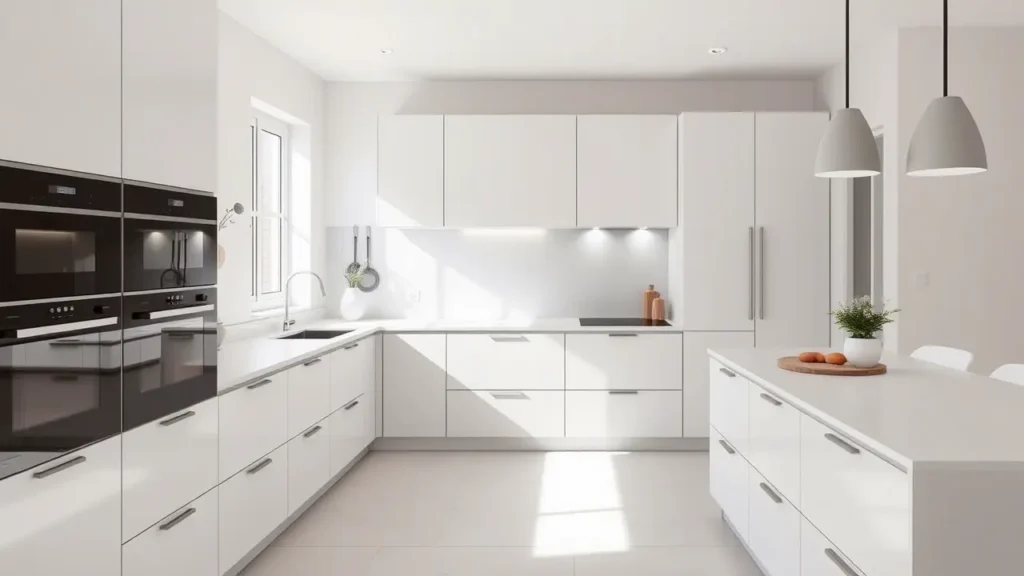
At the heart of this modern design revolution are handleless kitchen cabinets—a sophisticated choice that’s rapidly redefining kitchen aesthetics in homes across America.
The absence of visible hardware creates an uncluttered visual flow that architects and interior designers have embraced as the hallmark of modern kitchen design.
According to a 2024 survey by Kitchen & Bath Design News, handleless cabinetry has seen a 37% increase in installations over the past three years, making it one of the fastest-growing trends in kitchen renovation.
This surge in popularity isn’t simply about following fashion—it represents a fundamental shift toward spaces that seamlessly blend form and function while responding to our evolving lifestyles.
Whether you’re planning a complete kitchen overhaul or simply exploring options to refresh your space, understanding the nuances of handleless kitchen cabinets can help you make informed decisions that balance aesthetic appeal with practical considerations.
Let’s dive deeper into this elegant design solution that’s captivating homeowners and designers alike.
Table of Contents
What Are Handleless Kitchen Cabinets?
The Core Concept
Handleless kitchen cabinets are exactly what their name suggests—cabinetry designed to operate without traditional protruding handles or knobs.
Instead, these innovative storage solutions incorporate alternative opening mechanisms that maintain clean, uninterrupted front surfaces while still providing convenient access to your kitchen essentials.
“The beauty of handleless design lies in its deceptive simplicity,” explains Sarah Richardson, kitchen design specialist at Architectural Digest. “What appears to be a straightforward aesthetic choice actually requires precise engineering and thoughtful design considerations.”
Types of handleless kitchen cabinets Systems
Not all handleless kitchen cabinets are created equal. The market currently offers several distinct variations:
- True Handleless (Channel/Grip Profile Systems): These feature recessed channels, typically along the tops of drawers and doors, creating a subtle shadow line where fingers can grip to open the cabinet. The channel might be integrated directly into the cabinetry or created using separate profile pieces that contrast or complement the cabinet fronts.
- Push-to-Open Mechanisms: Utilizing spring-loaded mechanisms, these handleless kitchen cabinets open with a gentle push on the front panel. A light touch activates the hardware, causing the door or drawer to pop open slightly for easy grasping.
- J-Pull/Integrated Handles: While not truly “handleless,” these designs incorporate a groove or lip along the edge of doors and drawers, creating an integrated handhold that maintains a clean visual line.
- Electronic Systems: The ultimate in modern convenience, these cabinets open via touch-sensitive surfaces, remote controls, or even motion sensors—perfect for the tech-savvy homeowner embracing smart home integration.
Evolution of handleless kitchen cabinets Design
Handleless cabinetry isn’t actually new—its origins trace back to early 20th-century modernist movements, particularly the influential Bauhaus school that championed clean lines and functional minimalism.
However, it wasn’t until the early 2000s that technological advancements in materials and hardware made these designs both practical and affordable for average homeowners.
The European market, particularly German kitchen manufacturers, pioneered many of the innovations that made handleless kitchens viable for everyday use.
Their influence gradually spread globally, with North American homeowners increasingly adopting these sleek, contemporary aesthetics.
“What began as a niche design choice has evolved into a mainstream option that appeals across demographic groups,” notes Christopher Jenkins, market analyst at Kitchen Trends Quarterly.
“The handleless kitchen has transcended its ‘ultra-modern’ categorization to become a versatile design approach adaptable to various interior styles.”
Benefits of Handleless Kitchen Cabinets


Aesthetic Advantages
The most immediately apparent benefit of handleless kitchen cabinets is its visual appeal. The absence of protruding hardware creates:
- Clean, Uninterrupted Lines: Without handles breaking up cabinet fronts, the eye moves smoothly across the kitchen, creating a sense of spaciousness and order.
- Minimalist Elegance: The simplified aesthetic harmonizes perfectly with contemporary architecture and interior design principles.
- Design Flexibility: The neutral canvas of handleless cabinetry adapts beautifully to changing decor trends, potentially extending the visual lifespan of your kitchen.
- Customization Opportunities: The absence of hardware places greater emphasis on material choices, colors, and finishes, allowing for more personalized expression through these elements.
Lisa Montgomery of Contemporary Home magazine observes, “Handleless kitchens achieve that elusive design goal of making a bold statement through subtraction rather than addition.”
Practical Benefits
Beyond their obvious aesthetic appeal, handleless kitchen cabinets offer several functional advantages:
- Easier Cleaning: Without handles to navigate around, wiping down surfaces becomes quicker and more efficient. There are no nooks and crannies where dust and kitchen grime can accumulate.
- Improved Safety: The absence of protruding handles eliminates a common hazard—catching clothing, bumping hips, or children running into sharp handle edges.
- Enhanced Ergonomics: Well-designed handleless systems can actually improve accessibility, with channels positioned for optimal grip and push-open systems requiring minimal force to operate.
- Space Efficiency: In tight kitchen layouts, eliminating even the small protrusion of handles can make a noticeable difference in passageway clearance and overall movement flow.
Lifestyle Compatibility
The handleless aesthetic particularly resonates with certain lifestyle priorities:
- Open Concept Living: As walls between kitchens and living spaces disappear, handleless kitchen cabinets create visual cohesion between functional and social areas.
- Busy Households: For families constantly moving through the kitchen, the smooth surfaces reduce collision points and create a more fluid traffic pattern.
- Aging in Place: Some handleless mechanisms can be easier for those with arthritis or limited dexterity, particularly when compared to small knobs that require precise grip strength.
According to a 2023 study in Housing & Design Quarterly, 78% of homeowners who chose handleless kitchen cabinets reported higher satisfaction with their kitchen’s functionality compared to their previous traditional cabinetry—suggesting the benefits extend well beyond mere appearances.
Popular Styles and Finishes for Handleless Cabinets
Material Selection
The absence of hardware places greater emphasis on cabinetry materials and finishes, making these choices particularly crucial in handleless kitchen design:
High-Gloss Lacquer
The reflective quality of high-gloss finishes creates a sophisticated, contemporary look that amplifies light and enhances spatial perception. This finish particularly excels in:
- Smaller kitchens needing visual expansion
- Modern, urban apartments
- Spaces with abundant natural light
However, fingerprints and smudges show more readily on these surfaces, requiring more frequent cleaning.
Matte Finishes
Growing increasingly popular, matte surfaces offer:
- Reduced fingerprint visibility
- Subtle, understated elegance
- Tactile warmth that softens minimalist designs
“Matte finishes have surged in popularity precisely because they balance the sleek modernism of handleless designs with a more approachable, livable quality,” notes interior designer Michael Chen. “They’re particularly appealing to homeowners seeking warmth within contemporary aesthetics.”
Natural Wood Veneers
Wood brings organic texture to handleless designs:
- Creates visual warmth in minimalist spaces
- Connects contemporary designs with traditional materials
- Offers unique grain patterns for personalized expression
Oak, walnut, and ash remain the most popular species, with many designers using these materials to create striking contrasts against manufactured surfaces.
Innovative Materials
The handleless trend has encouraged experimentation with:
- Concrete-effect surfaces
- Metal finishes (including stainless steel, brass, and bronze)
- Ceramic and stone-effect panels
- Recycled and sustainable composites
Color Trends for Handleless Kitchens
Color choices for handleless kitchen cabinets tend to follow distinct patterns:
Monochromatic Schemes
Single-color approaches maximize the clean, uninterrupted aesthetic:
- White remains perennially popular for its brightness and versatility
- Charcoal and black create dramatic, sophisticated statements
- Mid-tone grays offer practical elegance that hides wear
Two-Tone Approaches
Contrasting colors define zones and add visual interest:
- Dark base cabinets with lighter upper cabinets visually ground the space
- Colored islands against neutral perimeter cabinetry create focal points
- Mixing materials (like wood and lacquer) in different zones
Color Psychology Considerations
Different hues create distinct kitchen atmospheres:
- Blues evoke calmness and cleanliness
- Greens connect to nature and wellness
- Earth tones create warmth and stability
- Blacks and charcoals convey sophistication
“Color selection for handleless kitchens isn’t just about aesthetics—it’s about creating the right emotional atmosphere,” explains color consultant Rebecca Williams.
“Without hardware to break up the expanses of color, the psychological impact of your color choices becomes significantly more pronounced.”
Design Ideas and Inspiration
Small Space Solutions
Contrary to popular belief, handleless kitchens aren’t just for sprawling, open-concept spaces. In fact, they can be particularly effective in smaller kitchens:
- Visual Expansion: The uninterrupted sightlines create a sense of spaciousness in constrained areas.
- Space Efficiency: Without handles protruding into walkways, even narrow kitchens maintain better clearance.
- Proportional Harmony: In compact kitchens, traditional handles can sometimes appear busy or overwhelming; handleless designs maintain visual calm.
Designer Tip: In small kitchens, consider vertical channel grips rather than horizontal ones—they create a heightening effect that makes ceilings appear taller.

Open-Plan Integration
Handleless cabinetry excels in open-concept spaces where kitchens blend with living areas:
- Visual Continuity: The clean lines allow kitchen cabinetry to resemble furniture, creating cohesion with adjoining spaces.
- Concealed Function: Push-to-open systems can hide utilitarian elements behind seamless panels, allowing the kitchen to “disappear” when not in use.
- Transitional Zoning: Using subtle material changes in handleless kitchen cabinets can delineate zones without erecting visual barriers.
“The beauty of handleless design in open floorplans is that it allows the kitchen to simultaneously assert its identity and recede into the background as needed,” notes architectural planner David Hoffman. “It’s the chameleon of kitchen design.”
Contemporary Classics
While often associated with ultra-modern spaces, handleless kitchen cabinets can adapt to more transitional or even traditional contexts:
- Shaker-Inspired Handleless: Frame profiles with recessed center panels maintain traditional proportions without handles.
- Textured Neutrals: Subtle woodgrains or textured laminates add warmth to the clean lines of handleless designs.
- Architectural Details: Crown molding and light rails can frame handleless cabinets, bridging contemporary function with traditional form.
Statement Islands
Islands offer perfect opportunities to showcase handleless design:
- Waterfall Edges: Continuing the cabinet material down the sides of islands creates sculptural statements.
- Floating Effects: Recessed bases with indirect lighting create the illusion of floating cabinetry.
- Material Contrasts: Using distinctive materials for island cabinetry highlights its status as the kitchen’s centerpiece.
Integration with Technology
The clean aesthetic of handleless design pairs naturally with technological integration:
- Hidden Charging Stations: Recessed areas with power outlets maintain the sleek appearance.
- Integrated Appliances: Handleless appliance doors create cohesive, unified walls of cabinetry.
- Smart Systems: Touch-activated opening mechanisms can connect with broader smart home ecosystems.
Cost Considerations
Investment Range
Handleless kitchen cabinets typically require a higher investment than traditional cabinetry, with several factors affecting the final price:
- Entry-Level Options: $8,000-$15,000 for a basic handleless kitchen
- Laminate finishes with simple channel systems
- Limited customization options
- Standard sizes and configurations
- Mid-Range Solutions: $15,000-$30,000 for a complete kitchen
- Higher quality materials and mechanism options
- Some customization capabilities
- Better warranties and service
- Premium Installations: $30,000-$75,000+
- Fully customized dimensions and features
- Luxury materials and finishes
- Advanced opening systems
- Designer collaboration
According to the National Kitchen & Bath Association, handleless cabinetry typically adds 15-30% to the cost of equivalent traditional cabinetry, depending on the opening mechanism selected.
Cost-Benefit Analysis
When evaluating the investment in handleless cabinetry, consider these value factors:
- Longevity: The timeless quality of minimalist kitchen design potentially extends the aesthetic lifespan of your kitchen, delaying the need for future renovations.
- Property Value: In urban and luxury markets, contemporary kitchen features like handleless cabinetry can enhance resale appeal and value.
- Reduced Hardware Costs: While the mechanisms cost more, eliminating dozens of individual handles (which can cost $5-$25+ each) offsets some of the expense.
- Maintenance Savings: Easier cleaning and fewer components to replace or repair can reduce long-term ownership costs.
Real estate appraiser Jonathan Miller notes, “In metropolitan markets and luxury properties, sophisticated kitchen design elements like handleless cabinetry increasingly function as value differentiators that buyers are willing to pay premiums for.”
Budget-Friendly Approaches
For those drawn to handleless aesthetics but working with limited budgets:
- Hybrid Solutions: Apply handleless design to select areas (like islands or upper cabinets) while using simple, minimal handles elsewhere.
- J-Pull Options: These integrated handle designs achieve a similar look at lower cost than true handleless systems.
- Phased Implementation: Install the appropriate cabinet boxes now with plans to upgrade fronts to handleless systems in the future.
Kitchen designer Elena Rodriguez suggests, “Starting with handleless drawers in your most-used prep areas can provide the clean aesthetic and improved functionality where it matters most while managing budget constraints.”
Maintenance and Longevity
Cleaning Techniques
Different handleless cabinet finishes require specific cleaning approaches:
High-Gloss Surfaces
- Use microfiber cloths to avoid micro-scratches
- Apply cleaners to the cloth, not directly to surfaces
- Special high-gloss cleaners help reduce static that attracts dust
- Weekly polishing maintains the reflective quality
Matte Finishes
- Gentle dish soap solutions work for most cleaning
- Avoid abrasive cleaners that can burnish the surface
- For stubborn fingerprints, specialized matte cleaners preserve the finish
- Less frequent cleaning generally required than with gloss
Wood Veneers
- Damp cleaning only—never saturate with water
- Occasional treatment with appropriate wood conditioners maintains appearance
- Avoid ammonia-based products that damage finishes
Channel Maintenance
- Vacuum channels regularly to remove dust and crumbs
- Detailing with cotton swabs reaches corners and crevices
- For metal channels, occasional polishing prevents tarnishing
Wear Patterns and Solutions
Even with proper care, certain issues may emerge over time:
Touch Points
Areas where fingers repeatedly contact surfaces (especially around push-to-open zones) may show premature wear. Solutions include:
- Periodic rotation of frequently used items to distribute wear
- Transparent protective films for high-traffic cabinets
- Touch-up kits from manufacturers for minor repairs
Mechanical Systems
Push-to-open and soft-close mechanisms require occasional attention:
- Annual adjustment maintains optimal tension
- Lubrication per manufacturer specifications prevents binding
- Replacement parts are generally available for quality systems
Edge Wear
Cabinet edges can show wear before faces:
- Edge banding can be professionally replaced if damaged
- Some materials offer through-color construction that minimizes appearance of chips
- Specially designed edge protectors can be installed in high-risk areas
“The key to handleless cabinet longevity is addressing minor issues before they escalate,” advises maintenance specialist Thomas Grant. “Annual inspection of mechanisms and touch points can extend their practical lifespan by years.”
FAQs About Handleless Kitchen Cabinets
Are handleless cabinets practical for everyday use?
Absolutely. Many homeowners actually find handleless kitchen cabinets more practical than traditional options once they adjust to the different opening motion.
Modern mechanisms have been engineered for reliability, with quality systems rated for 50,000+ opening cycles—equivalent to decades of normal use.
The reduced cleaning requirements and elimination of protruding obstacles often outweigh any initial adaptation period.
That said, certain considerations can enhance practicality:
- Choose appropriate mechanisms for different cabinet types (heavier doors benefit from stronger systems)
- Consider finger space requirements when planning adjacent cabinets
- Test opening systems before committing, particularly for household members with dexterity limitations
Can existing cabinets be converted to handleless designs?
Converting existing cabinetry to true handleless systems is challenging but not impossible. Options include:
- Retrofitting push-to-open mechanisms to existing doors (most feasible option)
- Replacing door fronts while keeping cabinet boxes (moderate complexity)
- Adding J-pull edge details to compatible doors (requires specialized equipment)
Most professionals recommend saving comprehensive handleless conversions for full renovations rather than retrofits, as the precision required for proper functioning often necessitates new cabinet construction.
How do handleless cabinets perform in households with children?
Handleless cabinets offer several advantages in family settings:
- No protruding handles for children to bump into
- Cleaner surfaces that show less evidence of sticky fingerprints (especially with matte finishes)
- Reduced risk of clothing catching on handles
However, some considerations apply:
- Very young children may find push mechanisms difficult to operate
- Channel grips may collect crumbs and require more frequent cleaning
- Child locks require specialized solutions compatible with handleless systems
Most families find that the benefits outweigh these minor considerations, particularly as children grow.
What’s the environmental impact of handleless cabinetry?
The environmental profile of handleless kitchen cabinets depends largely on material choices rather than the handleless design itself. Potential sustainability advantages include:
- Reduced metal usage compared to traditional handle systems
- Longer aesthetic lifespan potentially reducing replacement frequency
- Availability in sustainable materials (bamboo, recycled composites, FSC-certified woods)
To maximize environmental benefits, look for:
- Locally manufactured cabinetry to reduce transportation impact
- Water-based finishes with low VOC emissions
- Manufacturers with verified sustainable practices
- Cabinet construction that allows for eventual recycling or biodegradation
Are handleless cabinets suitable for traditional home styles?
While most commonly associated with contemporary designs, thoughtfully executed handleless cabinetry can work beautifully in more traditional contexts:
- Frame-style cabinet fronts without handles offer a transitional aesthetic
- Natural wood finishes bridge modern functionality with traditional warmth
- Traditional architectural elements (crown molding, raised panels) can complement the clean lines
Designer Katherine Wong notes, “The key to successful handleless integration in traditional homes is creating balance—using classic materials and architectural details while embracing the functional benefits of modern opening systems.”
Conclusion
Handleless kitchen cabinets represent much more than a passing trend—they reflect a broader evolution in how we think about our living spaces.
By eliminating visual clutter and unnecessary elements, these designs distill kitchens to their essence: clean, functional environments that support both culinary activities and social connection.
Whether you’re drawn to the sleek aesthetics, practical benefits, or forward-thinking design philosophy, handleless cabinetry offers compelling advantages worth considering for your next kitchen project.
The initial investment typically returns dividends in daily usability, reduced maintenance, and enduring appeal that transcends short-lived design fads.
As kitchen spaces increasingly serve as the heart of the contemporary home, handleless designs provide the perfect canvas for creating environments that feel simultaneously sophisticated and welcoming—spaces where the focus remains on people and experiences rather than unnecessary ornamentation.
Kitchen Design
Understand the benchmarks first with What is Considered a High-End Kitchen?, then follow our Creating a Modern Luxury Kitchen design guide. Equip your space with the Best Luxury Kitchen Tool Set and Top 10 Premium Kitchen Tools. Go continental with What is a European Kitchen Style?. Embrace minimalism via Minimalist Kitchen Ideas and Monochrome Kitchen Ideas, or choose durability with Granite Worktop Kitchen. For more decor inspiration, explore our full Home Decor collection.