
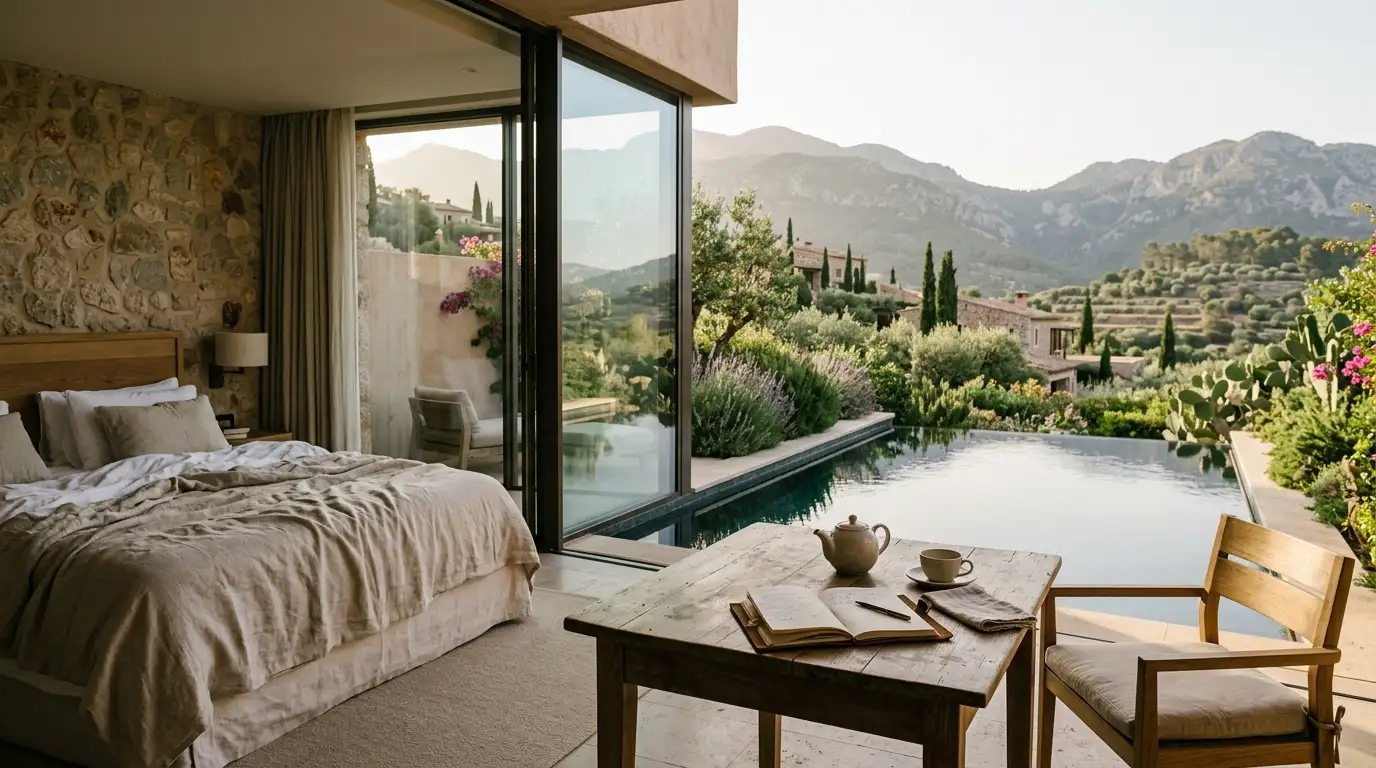

Burnout can make even a beautiful vacation feel exhausting. When your mind is still answering emails at breakfast and your body never quite leaves work mode, a few days beside a hotel pool may not create the reset you’re looking for.
Holistic wellness retreats for burnout offer a more intentional escape, combining peaceful surroundings, restorative treatments, nourishing food, movement, sleep-focused routines, and time away from daily demands. For luxury travelers, the experience can go further: private accommodation, personalized wellness programs, exceptional cuisine, discreet service, and destinations designed around genuine rest.
The finest retreats treat time, privacy, silence, and personal attention as luxuries in their own right.
Quick answer: The best luxury wellness retreats for burnout combine quiet surroundings, personalized wellness sessions, quality sleep, nourishing cuisine, spa treatments, gentle movement, and freedom from digital distractions. Choose a retreat based on the kind of exhaustion you’re experiencing and the level of privacy and professional support you want.
Table of Contents
What Is a Luxury Wellness Retreat for Burnout?
A luxury wellness retreat for burnout is a dedicated stay designed to give you space to rest, reflect, and rebuild healthier daily habits.
A traditional luxury vacation often revolves around sightseeing, dining, entertainment, or simply enjoying an exceptional hotel. A wellness retreat gives the trip a different purpose. Your schedule may include meditation, yoga, massage, nature walks, nutritious meals, sleep-focused routines, journaling, breathwork, or one-to-one wellness consultations.
The setting matters just as much.
A secluded villa in the mountains creates a very different experience from a crowded city hotel. A private beachfront property can make switching off easier than a resort packed with activities. A countryside retreat surrounded by forests may encourage long walks and early nights without requiring much effort.
Luxury adds another layer: comfort removes unnecessary friction from the recovery process.
Think quiet suites, beautiful natural surroundings, thoughtful meals, high-quality bedding, private treatment rooms, and staff who understand that some guests need space rather than constant interaction.
Why Burnout Calls for a Different Kind of Luxury
Burnout often develops gradually.
A demanding career, family responsibilities, constant notifications, travel, financial pressure, and an endless stream of decisions can leave little room for genuine recovery. Eventually, even leisure can begin to feel like another task.
A luxury retreat creates physical distance from those routines.
You wake up somewhere quiet. Your meals are already planned. Someone else handles the housekeeping. Your phone can stay in the room. Your calendar suddenly has empty spaces.
That simplicity can feel surprisingly luxurious.
For high-achieving travelers, the biggest indulgence may be several uninterrupted hours with nothing that needs an immediate response.
7 Features to Look for in a Luxury Burnout Retreat
Not every wellness retreat is equally suited to burnout. The right property should match your needs, personality, and preferred pace.
1. Peace and Privacy
Privacy should be high on the list.
Look for secluded properties, private villas, adults-focused environments, small guest numbers, or accommodation positioned away from busy communal areas.
If you’re already mentally overloaded, a retreat filled with scheduled group activities and social events may feel like another obligation.
A quiet terrace, private garden, shaded pool, or balcony overlooking nature can be more valuable than an impressive list of activities.
2. Personalized Wellness Programs
A strong retreat gives you choices.
Your ideal schedule might include a morning yoga session, a massage, a healthy lunch, an afternoon nap, and a quiet walk. Another guest might prefer fitness training, meditation, nutritional guidance, and structured coaching.
Personalization allows the experience to fit the person rather than forcing every guest through the same timetable.
3. Sleep-Focused Accommodation
Sleep deserves serious attention when choosing a retreat.
Look for:
- Quiet rooms away from entertainment areas
- Comfortable mattresses and quality bedding
- Blackout curtains
- Natural ventilation
- Relaxed evening routines
- Low-noise surroundings
- Minimal nighttime distractions
Some luxury wellness properties also offer sleep consultations and programs designed around improving nighttime habits.
4. Nourishing Cuisine
Food should support the experience rather than become another source of stress.
Look for restaurants or retreat programs offering fresh ingredients, balanced menus, plant-forward choices, quality proteins, seasonal produce, and accommodations for dietary preferences.
Luxury dining can still be part of wellness.
A beautifully prepared Mediterranean lunch overlooking the sea can feel every bit as indulgent as a formal tasting menu.
The difference is that the meal contributes to the pace and atmosphere of the retreat.
5. Spa and Body Treatments
Massage, hydrotherapy, thermal experiences, facials, body treatments, and other spa services can add a sensory component to a restorative stay.
Consider the treatment menu carefully.
If you’re specifically seeking rest, prioritize treatments designed around relaxation rather than choosing a property simply because it has the largest spa.
6. Nature
Nature can become part of your daily rhythm.
A mountain retreat may encourage hiking and long walks. A coastal property might offer sunrise meditation and time beside the water. A countryside estate can create opportunities for slow mornings outdoors.
The best setting depends on your personality.
Some people recover through solitude in the mountains. Others relax immediately when they hear waves outside their bedroom.
7. Space for Digital Disconnection
Your retreat can’t create much breathing room if your phone follows you everywhere.
Some properties actively encourage digital detox periods. Others provide quiet lounges, device-free activities, or rooms designed to make technology less prominent.
You don’t necessarily need to surrender your phone for the entire stay.
A simple rule can work surprisingly well: check messages once in the morning and once in the afternoon, then leave the device alone.
Luxury Retreat Styles for Different Types of Burnout
Your reason for needing a retreat should influence your destination.
| If you’re experiencing… | Consider a retreat focused on… | Ideal setting |
|---|---|---|
| Work-related exhaustion | Sleep, relaxation and stress management | Mountains or countryside |
| Digital overload | Digital detox and meditation | Secluded nature |
| Constant mental stimulation | Silence, mindfulness and slow routines | Remote resort |
| Physical fatigue | Spa, sleep and gentle movement | Beach or thermal destination |
| High-pressure career stress | Private wellness programming | Luxury resort or villa |
| Lifestyle overload | Nutrition, movement and daily routines | Wellness estate |
| Need for reflection | Meditation, journaling and nature | Mountains, forest or desert |
The goal is to choose a retreat that removes the sources of stimulation you most need a break from.
The Most Luxurious Wellness Experiences Around the World
Luxury wellness travel has expanded far beyond conventional spa resorts. Travelers can now find retreat experiences built around sleep, meditation, fitness, nutrition, thermal bathing, nature, mindfulness, and personal transformation.
Switzerland: Alpine Quiet
The Swiss Alps are a natural fit for travelers who want dramatic scenery and peaceful surroundings.
Mountain air, long walking routes, thermal facilities, minimalist interiors, and exceptional hospitality create an environment suited to slower days.
An Alpine retreat can be especially appealing when your ideal reset involves early mornings, beautiful views, spa treatments, and very little noise.
Bali: Tropical Restoration
Bali offers a different approach.
Lush landscapes, rice terraces, tropical gardens, yoga traditions, meditation, spa rituals, and wellness-focused cuisine make the island a popular destination for travelers seeking a slower rhythm.
For a luxury experience, look for private villas and properties surrounded by greenery rather than busy tourist districts.
Thailand: Spa and Serenity
Thailand combines hospitality with a long-established wellness culture.
Luxury retreats can include massage, meditation, yoga, nutritious cuisine, fitness sessions, and peaceful accommodation.
A private pool villa surrounded by tropical gardens can provide the kind of separation that’s difficult to create during an ordinary city break.
Portugal: European Wellness by the Coast
Portugal works beautifully for travelers who want wellness combined with refined European travel.
Coastal landscapes, excellent food, mild weather, countryside estates, and sophisticated resorts create plenty of options for a slower escape.
The appeal is especially strong for travelers who want wellness without giving up beautiful architecture, culture, and exceptional dining.
Italy: Slow Living With a Luxury Touch
Italy offers an effortless setting for slowing down.
Imagine a countryside estate, long lunches, thermal waters, olive groves, quiet gardens, and evenings spent without a packed itinerary.
A Tuscan or Umbrian retreat can work particularly well for someone who wants wellness woven into an elegant travel experience rather than a rigid program.
Morocco: Desert Silence and Sensory Escape
Morocco offers an entirely different kind of retreat experience.
Luxury desert camps, secluded riads, hammam rituals, mountain landscapes, and beautifully designed resorts can create a powerful change of scenery.
For someone accustomed to a busy urban environment, several quiet days surrounded by desert landscapes can provide a striking sense of distance from everyday routines.
How Long Should You Stay at a Burnout Retreat?
The ideal length depends on your schedule, needs, and the structure of the retreat.
A three-night stay can provide a short reset when you have limited time.
A five- to seven-night retreat gives you more room to settle into a different rhythm. The first day or two can be used simply to decompress before you begin taking full advantage of the program.
A two-week stay may suit travelers looking for a deeper lifestyle reset, especially when the retreat includes structured wellness sessions and follow-up guidance.
Don’t pack every day with activities.
A common mistake is creating a luxury wellness itinerary that looks like a business conference agenda.
Leave room for doing nothing.
What a Luxury Burnout Retreat Day Could Look Like
One of the pleasures of a well-designed retreat is having a rhythm without having a packed schedule.
A day might look something like this:
7:00 a.m. — Wake naturally
Open the curtains, drink water, and spend a few quiet minutes outside.
8:00 a.m. — Breakfast
Fresh fruit, eggs, yogurt, whole grains, coffee or tea, and a relaxed meal without checking work messages.
9:30 a.m. — Gentle movement
Yoga, swimming, walking, stretching, or a private fitness session.
11:00 a.m. — Spa treatment
A massage or another treatment focused on relaxation.
12:30 p.m. — Lunch
A fresh, balanced meal followed by time to sit outdoors.
2:00 p.m. — Unscheduled time
Read. Nap. Walk. Sit beside the pool. Do absolutely nothing.
4:00 p.m. — Mindfulness or reflection
Meditation, breathwork, journaling, or a private wellness consultation.
6:30 p.m. — Dinner
A relaxed meal without rushing to the next appointment.
8:00 p.m. — Digital shutdown
Phone away. Lights low. No work.
10:00 p.m. — Sleep
A quiet room, comfortable bedding, and a morning with nowhere urgent to be.
That final part may be the most valuable.
Luxury Wellness Retreat vs. Luxury Vacation
Both can be wonderful, but they serve different purposes.
| Luxury vacation | Luxury wellness retreat |
|---|---|
| Exploration is often the priority | Recovery is the priority |
| More sightseeing and activities | More rest and intentional downtime |
| Dining and entertainment may dominate | Wellness and nourishment are central |
| Flexible itinerary | Structured or semi-structured schedule |
| Social experiences are common | Privacy and quiet may be prioritized |
| Designed around enjoyment | Designed around restoration |
You can also combine both.
For example, spend five nights at a wellness retreat followed by several days exploring a destination at a slower pace.
That approach gives you a chance to decompress before returning to sightseeing, shopping, restaurants, or cultural experiences.
How to Choose the Right Retreat
Before booking, ask yourself five questions.
What am I actually tired of?
Work? Screens? People? Noise? Travel? Decision-making?
Your answer should influence the destination.
Do I want structure or freedom?
Some travelers feel better when every detail is organized. Others need an almost completely empty schedule.
Choose accordingly.
How much privacy do I need?
A large resort can provide outstanding facilities, while a small retreat or private villa may provide more peace.
What comforts matter most?
For some travelers, it’s exceptional food. For others, it’s a private pool, spa access, a spectacular view, or a silent bedroom.
Know your priorities before comparing properties.
What happens after I return home?
A retreat works best when it gives you ideas you can continue using afterward.
Look for programs that discuss sleep, movement, nutrition, boundaries, mindfulness, or sustainable daily routines rather than focusing entirely on the retreat itself.
Common Mistakes When Booking a Burnout Retreat
Choosing the most impressive property
The most expensive retreat isn’t automatically the right retreat.
A spectacular resort packed with restaurants, activities, nightlife, and entertainment may provide an unforgettable vacation while giving you very little quiet.
Building an aggressive itinerary
Five treatments, two fitness classes, meditation, excursions, and a cooking class can quickly turn rest into another schedule.
Leave blank spaces.
Ignoring location
A retreat located beside a busy airport or nightlife district may undermine the experience.
Study the surroundings before booking.
Staying connected to work
A luxury suite won’t create much separation if your laptop remains open on the desk.
Set boundaries before leaving home.
Treating the retreat as a quick fix
A retreat can provide space for rest and reflection. Long-term burnout may require broader changes to workload, boundaries, sleep, relationships, or professional support.
If burnout feels severe or persistent, consider speaking with a qualified healthcare or mental-health professional alongside any wellness travel.
How to Bring the Luxury Retreat Feeling Home
The real value of a retreat may become clearer after you return.
You don’t need a private villa to recreate every part of the experience.
Start small.
Create a phone-free first hour in the morning. Protect your bedtime. Schedule one genuinely quiet evening each week. Keep healthy food available. Walk without headphones. Take occasional afternoons with no appointments.
Even your home can have a small retreat ritual.
Dim the lights. Make tea. Put your phone in another room. Take a long shower or bath. Read something unrelated to work.
Luxury can be a feeling of having enough time.
Key Takeaways
- Holistic wellness retreats for burnout can combine rest, movement, nutrition, spa treatments, sleep, and reflection in one focused escape.
- Luxury is especially valuable when it provides privacy, quiet, comfort, and personal attention.
- Choose your retreat based on the source of your exhaustion.
- Nature can make it easier to slow down and step away from daily stimulation.
- A five- to seven-night stay can provide enough time to settle into a different rhythm.
- Avoid filling every day with activities.
- Digital boundaries are part of the retreat experience.
- The best retreat is one that gives you habits and perspective you can carry home.
- For persistent or severe burnout, pair wellness travel with appropriate professional support.
Final Thoughts: The New Meaning of Luxury
Luxury has always been associated with beautiful places, exceptional service, fine dining, and extraordinary comfort.
There is another form of luxury that becomes increasingly valuable when life gets crowded: time without demands.
A quiet morning. A phone left untouched. A long walk with nowhere to be. A beautifully prepared meal eaten slowly. Eight uninterrupted hours of sleep.
Those moments don’t need to be extravagant to feel extraordinary.
The finest wellness retreat simply creates the conditions for them to happen.
For the traveler dealing with burnout, that may be the most meaningful luxury of all.
Frequently Asked Questions
What are holistic wellness retreats for burnout?
Holistic wellness retreats for burnout are dedicated stays that combine rest, wellness practices, healthy food, movement, spa treatments, reflection, and supportive routines. Luxury properties add privacy, premium accommodation, personalized programs, and high-end hospitality.
Are luxury wellness retreats worth the cost?
They can be worthwhile when the environment, privacy, programming, and level of service genuinely match your needs. The best value comes from choosing the right experience rather than simply choosing the most expensive property.
How long should I stay at a burnout retreat?
Three nights can provide a short reset, while five to seven nights gives you more time to settle into a slower routine. Longer stays may suit travelers seeking a more structured lifestyle reset.
What should I look for in a burnout retreat?
Prioritize quiet accommodation, quality sleep, personalized wellness options, nutritious food, nature, spa services, reasonable schedules, and opportunities to disconnect from work and digital distractions.
Are wellness retreats suitable for severe burnout?
A retreat can provide rest and a change of environment, but severe or persistent burnout may require professional assessment and broader lifestyle or workplace changes. Wellness travel should complement appropriate professional care when needed.
What is the difference between a spa resort and a wellness retreat?
A spa resort generally offers treatments as part of a broader luxury vacation. A wellness retreat usually gives wellness a central role through scheduled practices, nutrition, movement, reflection, sleep routines, or personalized programs.
Can I take a luxury wellness retreat alone?
Absolutely. Solo travel can provide greater privacy and freedom to follow your own schedule. Many luxury wellness properties are well suited to solo travelers seeking quiet and personal space.
Where are the best luxury wellness retreat destinations?
Popular choices include Switzerland, Bali, Thailand, Portugal, Italy, and Morocco. The best destination depends on whether you prefer mountains, beaches, countryside, thermal experiences, tropical surroundings, or desert solitude.