
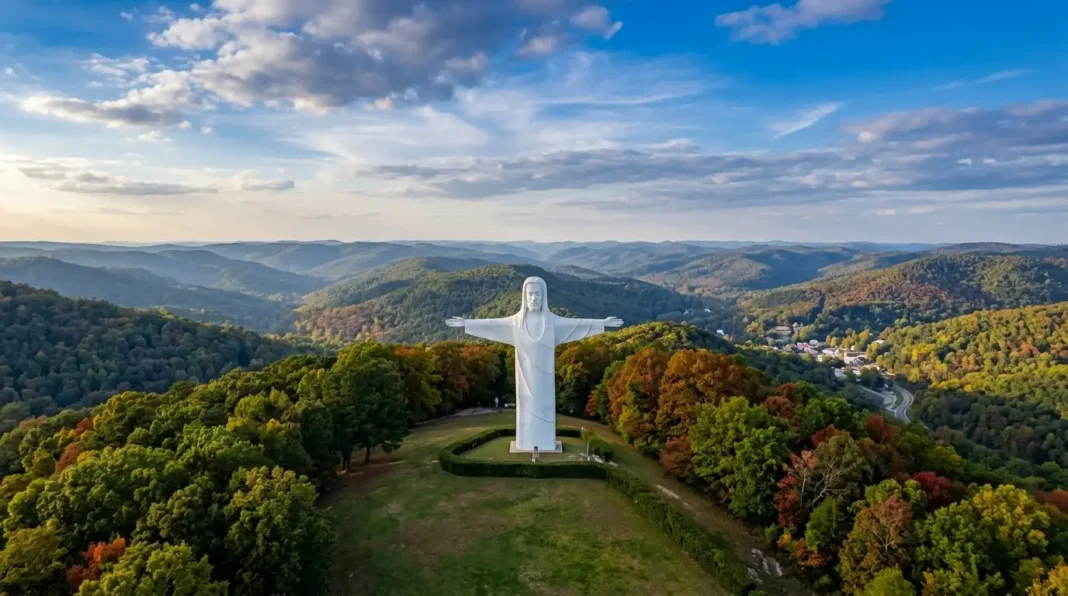

The Christ of the Ozarks statue stands as one of the most recognizable landmarks in the Ozark Mountains and remains one of the top attractions in Eureka Springs, Arkansas. Towering above the surrounding forest from the summit of Magnetic Mountain, this monumental sculpture welcomes visitors from around the world with its outstretched arms, offering breathtaking views, spiritual significance, and easy access to several nearby attractions.
Whether we are planning a day trip, a weekend getaway, or a scenic road adventure through the Ozarks, visiting the Christ of the Ozarks provides an unforgettable experience that combines history, architecture, natural beauty, and faith.
Table of Contents
What Is the Christ of the Ozarks Statue?
The Christ of the Ozarks is a monumental white concrete statue depicting Jesus Christ with extended arms overlooking the hills of Northwest Arkansas. Standing approximately 67 feet (20 meters) tall, it dominates the skyline above Eureka Springs and has become one of the state’s most photographed attractions.
Located within the Great Passion Play grounds, the statue serves as both a religious symbol and a major tourism destination. Every year, hundreds of thousands of visitors explore the site, admire the panoramic scenery, and attend performances and exhibits located throughout the expansive campus.
The monument is visible from miles away, making it a defining feature of the Eureka Springs landscape.
History of the Christ of the Ozarks Statue
Construction of the statue began in the mid-1960s under the vision of Gerald L. K. Smith, who wanted to establish a monumental Christian landmark in the Ozarks.
The sculpture was designed by Emmet Sullivan, an American sculptor known for creating large public monuments. After years of planning and construction, the statue was officially dedicated in 1966.
Since its completion, the Christ of the Ozarks has become one of Arkansas’ most iconic landmarks, attracting pilgrims, photographers, architecture enthusiasts, and travelers from across the United States.
Today, it continues to symbolize peace, hope, and faith while serving as the centerpiece of one of the state’s most visited religious attractions.
Where Is the Christ of the Ozarks Located?
The statue sits atop Magnetic Mountain in Eureka Springs, Arkansas, approximately:
- 50 miles from Branson, Missouri
- 75 miles from Fayetteville
- About 3 hours from Little Rock
- Within easy driving distance of Northwest Arkansas attractions
Its elevated location offers impressive panoramic views over the surrounding Ozark Mountains.
The site is easily accessible by car with free parking available nearby.
How Tall Is the Christ of the Ozarks Statue?
One of the most frequently asked questions concerns its size.
The statue measures approximately:
- 67 feet tall
- Built primarily from reinforced concrete
- Weighs several million pounds
- Positioned on an elevated mountain summit
Although not among the tallest Christ statues worldwide, its elevated location makes it appear even more imposing against the Ozark skyline.
Architectural Design and Construction
Unlike many classical sculptures featuring intricate anatomical details, the Christ of the Ozarks embraces a bold, minimalist architectural style.
Key design features include:
- Massive geometric robes
- Broad symmetrical proportions
- Extended welcoming arms
- Smooth white concrete finish
- Monumental vertical profile
The simplified design allows the monument to remain highly visible from great distances while creating a striking silhouette against blue skies and autumn foliage.
Why Is the Christ of the Ozarks Famous?
Several factors have contributed to the monument’s lasting popularity.
A Symbol of Faith
For many visitors, the statue represents peace, compassion, hope, and spiritual reflection.
Iconic Arkansas Landmark
The monument appears in countless travel guides, postcards, documentaries, and photography collections featuring Arkansas.
Spectacular Scenic Setting
Perched high above Eureka Springs, the location offers beautiful views of rolling forests throughout every season.
Part of a Larger Attraction
The statue anchors the expansive Great Passion Play campus, giving visitors much more than a single monument to explore.
The Great Passion Play Experience
One of the biggest reasons travelers visit the Christ of the Ozarks is its connection to The Great Passion Play, an outdoor theatrical production portraying the final week of Jesus Christ’s life.
The campus also includes numerous attractions such as:
- Bible Museum
- Sacred Arts Museum
- Holy Land Tour
- Gift shops
- Walking trails
- Educational exhibits
- Seasonal performances
Many visitors spend several hours exploring everything available on the property.
Best Time to Visit Christ of the Ozarks
Although open throughout much of the year, each season offers a unique experience.
Spring
Spring brings blooming dogwoods, mild temperatures, and lush green forests surrounding the monument.
Summer
Summer is ideal for combining the statue with other Eureka Springs attractions, though afternoons can become warm.
Autumn
Fall is considered one of the best times to visit. Brilliant red, orange, and golden foliage transforms the surrounding Ozark Mountains into one of Arkansas’ most scenic destinations.
Winter
Winter offers peaceful surroundings, fewer crowds, and occasional dramatic snow-covered landscapes.
Photography Tips for the Best Views
The Christ of the Ozarks provides outstanding photography opportunities.
For the best images:
- Visit shortly after sunrise.
- Arrive before sunset for warm golden lighting.
- Capture wide-angle shots from the lower viewing areas.
- Include surrounding forest scenery.
- Photograph during autumn for colorful foliage.
- Use cloudy skies for dramatic contrast against the bright white statue.
Nighttime illumination also creates impressive photo opportunities.
Nearby Attractions in Eureka Springs
A visit to the Christ of the Ozarks pairs perfectly with several nearby attractions.
Historic Downtown Eureka Springs
Explore Victorian architecture, charming boutiques, art galleries, restaurants, and winding hillside streets.
Thorncrown Chapel
One of America’s most celebrated architectural masterpieces, this glass chapel blends beautifully into the surrounding forest.
Turpentine Creek Wildlife Refuge
See rescued big cats including lions, tigers, and leopards while supporting wildlife conservation.
Lake Leatherwood City Park
Perfect for hiking, kayaking, mountain biking, fishing, and enjoying the natural beauty of the Ozarks.
Beaver Lake
A favorite destination for boating, swimming, paddleboarding, and lakeside relaxation.
Is There an Admission Fee?
Visitors can generally access the Christ of the Ozarks viewing area free of charge.
Some nearby museums, guided tours, performances, or seasonal attractions within the Great Passion Play campus may require admission.
Parking is typically free, making the monument one of the best-value attractions in the region.
Accessibility
The grounds are designed to accommodate many visitors.
Amenities include:
- Convenient parking
- Paved walkways
- Wheelchair-accessible areas
- Benches
- Restrooms nearby
- Visitor information
Comfortable walking shoes remain recommended for exploring the larger campus.
Tips for Visiting Christ of the Ozarks
To make the most of our visit:
- Arrive early to avoid crowds.
- Bring a camera.
- Allow several hours to explore nearby attractions.
- Wear comfortable shoes.
- Carry water during summer months.
- Check seasonal schedules for performances.
- Combine the visit with downtown Eureka Springs.
Interesting Facts About Christ of the Ozarks
- The statue has overlooked Eureka Springs since 1966.
- It stands approximately 67 feet tall.
- It is one of Arkansas’ most photographed landmarks.
- The monument overlooks the Ozark Mountains from Magnetic Mountain.
- It welcomes hundreds of thousands of visitors annually.
- The surrounding campus offers museums, walking tours, and live performances.
- The statue remains illuminated during many evenings, creating a striking nighttime landmark.
Why the Christ of the Ozarks Should Be on Every Arkansas Itinerary
Few landmarks combine history, architecture, faith, mountain scenery, and family-friendly attractions as successfully as the Christ of the Ozarks statue. Whether we are seeking spiritual inspiration, remarkable photography, scenic overlooks, or simply one of Arkansas’ most iconic destinations, this monument consistently delivers an unforgettable experience.
Its commanding presence above Eureka Springs has made it a symbol of the Ozarks for decades, while the surrounding attractions ensure there is something for visitors of every age and interest. A visit offers not only a chance to admire an impressive monument but also to experience the rich culture, natural beauty, and welcoming atmosphere that make Eureka Springs one of the region’s premier travel destinations.
Conclusion
The Christ of the Ozarks statue is far more than a towering monument—it is a cherished Arkansas landmark that blends inspiring mountain views, rich history, and meaningful cultural experiences.
Whether visiting for its spiritual significance, panoramic scenery, or proximity to the many attractions of Eureka Springs, this iconic destination deserves a place on every Ozarks travel itinerary. With free access, family-friendly amenities, and unforgettable views, it continues to be one of the most rewarding stops in Northwest Arkansas.
Frequently Asked Questions
How tall is the Christ of the Ozarks statue?
The statue stands approximately 67 feet (20 meters) tall.
Where is the Christ of the Ozarks located?
It is located on Magnetic Mountain in Eureka Springs, Arkansas, within the Great Passion Play grounds.
Is visiting the Christ of the Ozarks free?
Yes. Access to the statue and viewing area is generally free, although some nearby attractions on the campus may charge admission.
Can you visit year-round?
Yes, the monument is a popular destination throughout the year, with each season offering unique scenery.
How long should we plan for a visit?
Plan at least 1–3 hours to explore the statue and nearby attractions. If attending the Great Passion Play or visiting museums, consider spending half a day or more.