


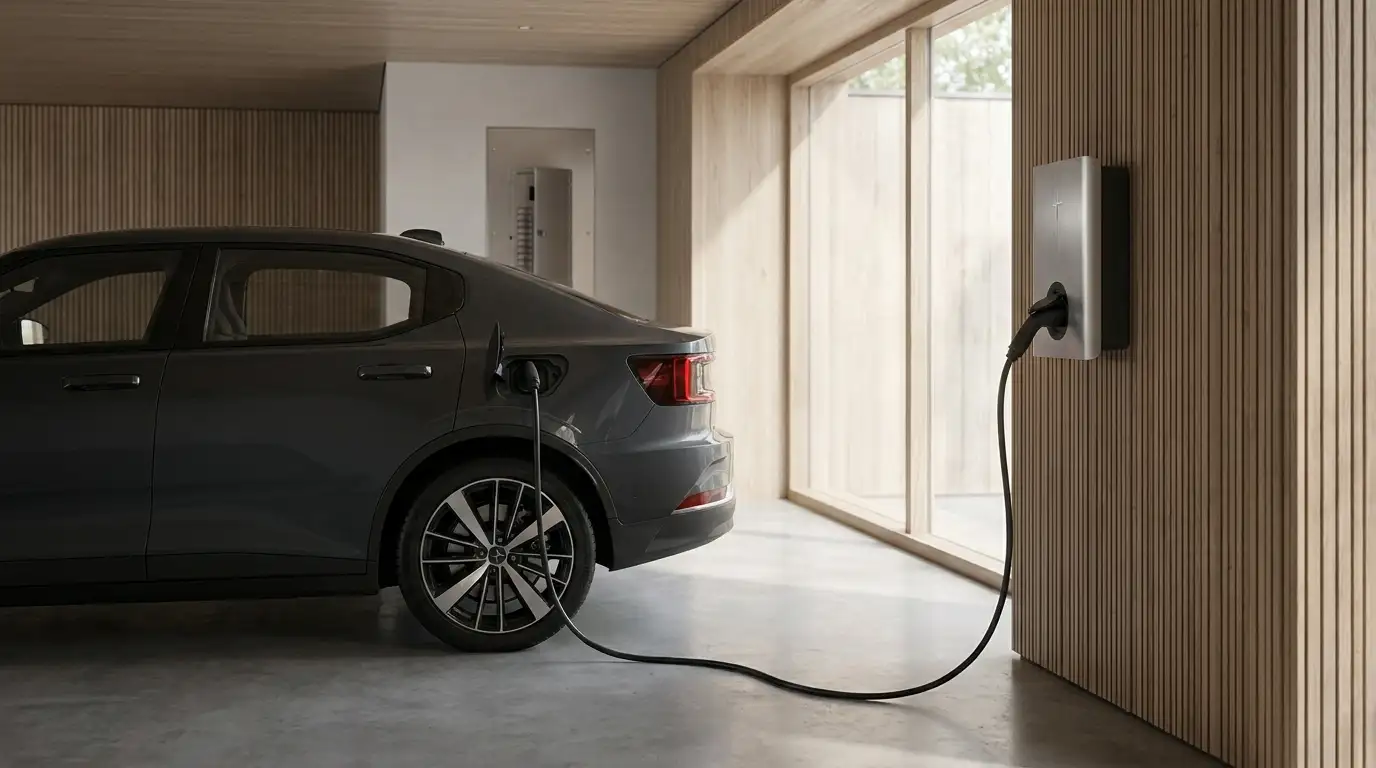
An EVSE Level 2 charger is an electric vehicle charging system that supplies AC electricity at typically 208 or 240 volts, providing substantially faster charging than Level 1 equipment. For many EV owners, a Level 2 EVSE is the practical choice for overnight home charging, workplace charging, and other locations where a vehicle remains parked for several hours.
Unlike a standard household outlet, Level 2 charging generally requires a dedicated electrical circuit and appropriate charging equipment. Depending on the EV, charger, circuit capacity, and charging conditions, Level 2 equipment can deliver considerably more energy per hour than Level 1 charging.
If you’re deciding whether to install one, the key isn’t simply choosing the charger with the highest advertised amperage. Your vehicle’s onboard charger, home’s electrical capacity, connector type, installation requirements, and charging habits all matter.
Table of Contents
What Is an EVSE Level 2 Charger?
EVSE stands for Electric Vehicle Supply Equipment. A Level 2 EVSE supplies alternating-current electricity to an electric vehicle, while the vehicle’s onboard charger converts that AC electricity into DC electricity for the battery.
Level 2 equipment typically operates from a 208- or 240-volt electrical supply. Residential installations commonly use 240 volts, while 208 volts is also common in commercial environments. The U.S. Department of Energy’s Alternative Fuels Data Center describes Level 2 equipment as ranging from relatively modest power levels to as much as 19.2 kW, depending on the installation and equipment.
In practical terms, a Level 2 EVSE can make daily EV charging much easier because you can recover a meaningful amount of driving range during the hours your vehicle is parked.
EVSE vs. EV Charger: What’s the Difference?
The terms EV charger and EVSE are often used interchangeably, but technically they’re not exactly the same.
The EVSE controls and safely delivers electrical power from the electrical system to the vehicle. The vehicle’s onboard charger performs the AC-to-DC conversion needed to charge the battery.
That’s why a wall-mounted Level 2 unit isn’t technically the component that directly converts AC electricity into battery DC power.
For everyday discussions, however, calling the entire setup a Level 2 EV charger is perfectly common.
How Fast Is Level 2 EV Charging?
A common benchmark is approximately 25 miles of driving range per hour of Level 2 charging, although actual results vary significantly by vehicle and charging conditions. The DOE notes that Level 2 equipment can range from approximately 2.9 to 19.2 kW, so there is no single charging speed that applies to every Level 2 charger.
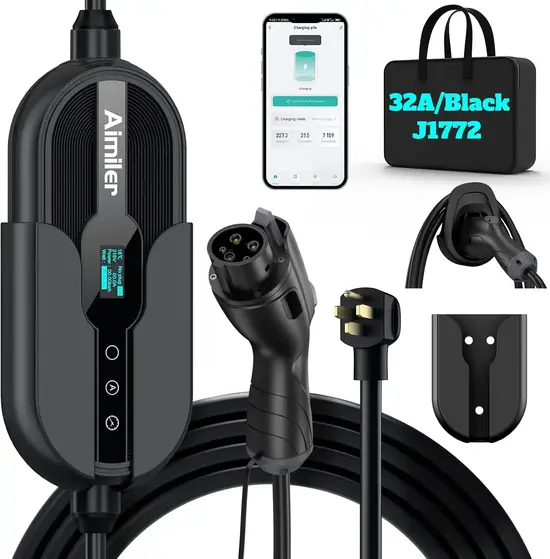
Several factors determine the actual charging rate:
- EV battery size
- Vehicle’s onboard AC charging capacity
- EVSE power output
- Available circuit capacity
- Battery state of charge
- Battery temperature
- Charging settings
- Electrical installation
- Vehicle-specific charging limits
For example, buying a 12 kW EVSE doesn’t necessarily mean your vehicle will accept 12 kW. If the car’s onboard charger is limited to a lower rate, the vehicle will determine the maximum charging power.
Level 1 vs. Level 2 vs. DC Fast Charging
| Charging Type | Typical Voltage | Typical Use | Relative Speed |
|---|---|---|---|
| Level 1 | 120V | Basic home charging | Slow |
| Level 2 | 208–240V | Home, workplace, public charging | Faster |
| DC Fast Charging | Usually much higher-power DC | Road trips and rapid charging | Fastest |
Level 1 typically uses a standard 120-volt outlet, while Level 2 uses approximately 208 or 240 volts. DC fast charging is fundamentally different because it supplies DC power directly through the fast-charging system rather than relying on the vehicle’s onboard AC charger.
For most drivers, Level 2 sits in the sweet spot between slow household charging and expensive, high-power DC fast charging.
Why Choose an EVSE Level 2 Charger?
A Level 2 charger can offer several advantages for EV owners.
1. Faster Daily Charging
The biggest benefit is simple: more energy delivered in less time.
If you drive regularly, Level 1 charging may struggle to replace your daily energy consumption quickly enough. Level 2 can replenish much more range during overnight parking.
For many households, that means plugging in after returning home and starting the next day with substantially more available range.
2. Convenient Overnight Charging
Level 2 charging is particularly well suited to home use.
The vehicle can remain connected for several hours while you’re sleeping, eliminating the need to make a special trip to a public charging station for routine charging.
The DOE specifically identifies overnight charging as an important use case for residential Level 2 equipment.
3. Useful for Larger EV Batteries
Modern EVs can have significantly larger batteries than early-generation electric vehicles.
A higher-power AC charging setup can make it easier to replenish a larger battery during normal parking periods.
4. Excellent for Workplace Charging
Level 2 EVSE is also widely suited to workplaces because vehicles often remain parked for several hours.
Employees don’t necessarily need extremely high charging power when their cars are stationary throughout a workday.
5. Suitable for Shared and Public Locations
Level 2 equipment is common beyond private homes.
It can be used at:
- Offices
- Hotels
- Apartment complexes
- Retail locations
- Parking garages
- Restaurants
- Fleet facilities
- Municipal parking areas
The DOE reports that Level 2 represents a substantial share of public charging infrastructure in the United States.
How Much Power Does a Level 2 EVSE Need?
This is one of the most important questions to answer before purchasing equipment.
Level 2 chargers can operate at different current levels. A residential installation might use a relatively moderate-power configuration, while commercial installations can support substantially higher power.
The DOE notes that Level 2 equipment can operate from approximately 2.9 kW to 19.2 kW, with actual output determined by the equipment and electrical installation.
A simplified relationship is:
Voltage × Amperage = Watts
For example:
240V × 32A = 7,680W, or approximately 7.7 kW.
However, electrical codes and continuous-load requirements mean you shouldn’t simply calculate the maximum theoretical current and assume your existing electrical panel can support it.
A qualified electrician should evaluate the installation.
What Electrical Circuit Does a Level 2 Charger Require?
A Level 2 EVSE generally requires a dedicated circuit.
For example, the DOE notes that many residential Level 2 installations use 240-volt service, and a typical 30-amp charging output may require a 40-amp circuit under applicable U.S. electrical-code requirements.
Your exact requirements depend on:
- EVSE amperage
- Continuous-load requirements
- Breaker rating
- Wiring
- Panel capacity
- Installation method
- Local electrical code
- Existing household loads
Do You Need a New Electrical Panel?
Not necessarily.
If your existing electrical service has sufficient capacity and an appropriate location is available in the panel, an electrician may be able to install a dedicated Level 2 circuit without upgrading the entire service.
But a service or panel upgrade may become necessary when the existing system doesn’t have enough capacity.
The DOE recommends evaluating electrical service and obtaining professional estimates before installing Level 2 EVSE, particularly when modifications to the electrical system may be necessary.
Don’t assume an unused breaker position means your electrical system has enough capacity.
Plug-In vs. Hardwired Level 2 EVSE
Level 2 chargers are available in different installation configurations.
Plug-In Level 2 Chargers
A plug-in unit connects to a suitable high-voltage receptacle.
Potential advantages include:
- Easier equipment replacement
- Greater portability
- Ability to remove the EVSE
- Potentially simpler installation
Portable Level 2 equipment can also be paired with appropriate 120/240V outlets in certain applications.
Hardwired Level 2 Chargers
A hardwired EVSE connects directly to the electrical system.
Potential advantages can include:
- Cleaner installation
- Reduced dependence on a receptacle
- Suitable for permanent installations
- Potentially better integration for certain outdoor installations
The best choice depends on the property, charger, local code, and how you intend to use the system.
J1772 vs. NACS: Which Connector Do You Need?
Connector compatibility is another major purchasing consideration.
In the United States, J1772 has traditionally been the standard AC connector for Level 1 and Level 2 charging. J3400, commonly known as NACS, is another connector standard used for EV charging and is associated with Tesla vehicles and an expanding range of vehicles and charging equipment.
Before purchasing a charger, check:
- Your vehicle’s charging port
- Whether the EVSE includes the required connector
- Whether an adapter is appropriate
- Your manufacturer’s compatibility guidance
- Future vehicles you may own
Connector compatibility is separate from charging power. A connector that physically fits doesn’t automatically mean the vehicle will accept every available power level.
Smart EVSE Level 2 Chargers
A basic Level 2 charger can simply provide electricity when the vehicle is connected.
A smart EVSE can add connectivity and charging-management features.
Depending on the model, smart charging may provide:
- Mobile-app control
- Charging schedules
- Energy monitoring
- Remote status monitoring
- Usage history
- Notifications
- Load management
- Demand management
- Network connectivity
The DOE notes that networked systems can provide information about charger use and support monitoring and analysis.
Is a Smart Charger Worth It?
For some drivers, absolutely.
Smart functionality can be particularly useful if you:
- Want scheduled charging
- Have time-of-use electricity rates
- Want to monitor electricity consumption
- Need remote control
- Manage multiple EVs
- Want future energy-management capabilities
If you simply plug in every evening and don’t need connectivity, paying extra for advanced networking may not provide much practical benefit.
What Should You Look for When Buying a Level 2 EVSE?
Don’t choose a charger based solely on its maximum amperage.
Use this checklist instead.
1. Vehicle Compatibility
Confirm that the EVSE works with your vehicle and charging connector.
2. Power Output
Choose a power level your vehicle can actually use.
More power isn’t automatically better if the vehicle cannot accept it.
3. Electrical Requirements
Check the required breaker, wiring, voltage, and installation configuration.
4. Indoor or Outdoor Installation
If the charger will be outside, confirm that the equipment is appropriately rated for outdoor use and environmental exposure.
5. Cable Length
A cable that’s too short can make everyday charging frustrating.
Measure the distance between the proposed installation location and the vehicle’s charging port.
6. Smart Features
Decide whether app connectivity, scheduling, energy monitoring, and load management are genuinely useful to you.
7. Safety Features
Look for equipment designed and certified for the intended application and installed according to applicable electrical requirements.
8. Warranty and Support
A portable electric car charger is an electrical appliance you’ll likely use frequently for years.
Consider:
- Warranty length
- Customer support
- Replacement availability
- Software support
- Firmware updates
9. Installation Cost
The price of the EVSE is only one part of the total project.
Installation may involve:
- Electrical labor
- Wiring
- Breaker
- Conduit
- Receptacle
- Permits
- Inspection
- Panel upgrades
How Much Does a Level 2 EVSE Installation Cost?
There isn’t one universal installation price.
The cost depends heavily on the electrical infrastructure already available at your property.
A straightforward installation close to the electrical panel can be relatively simple. A project requiring long cable runs, conduit, trenching, a new panel, or an electrical service upgrade can become considerably more expensive.
The DOE has emphasized that Level 2 installation costs vary considerably and that service upgrades can substantially increase the total cost.
Therefore, compare total installed cost, not just charger purchase price.
Common Level 2 EVSE Mistakes to Avoid
Buying the Highest-Amperage Charger
More amperage isn’t automatically better.
Your EV may have a lower onboard AC charging limit, making the additional capacity irrelevant for your current vehicle.
Ignoring the Electrical Panel
A charger purchase should come after evaluating the electrical installation—not before.
Choosing the Wrong Connector
Always verify your vehicle’s connector requirements.
Forgetting Cable Reach
A charger that can’t comfortably reach the vehicle can turn a convenient charging setup into a daily annoyance.
Installing Without Professional Evaluation
Level 2 charging involves higher electrical power than a standard household outlet. Installation should comply with applicable electrical codes and local requirements. Professional electrical assessment is especially important when modifications to the electrical system are required.
Paying for Features You Won’t Use
Smart features are useful, but not everyone needs Wi-Fi, apps, cloud services, or advanced energy-management functions.
Is a Level 2 Charger Worth It?
For many EV owners, yes—particularly when the vehicle is parked at home for several hours every day.
Level 2 makes the most sense when you:
- Drive significant daily mileage
- Own a battery-electric vehicle
- Want convenient overnight charging
- Have suitable electrical capacity
- Prefer charging at home
- Want to reduce dependence on public charging
Level 1 may be enough if your daily driving is low and your vehicle has plenty of time to charge.
DC fast charging makes more sense when rapid charging during road trips or short stops is the priority.
The best option isn’t necessarily the fastest charger. It’s the charger that matches your driving habits, vehicle, electrical system, and budget.
Level 2 EVSE Buying Decision Matrix
| Your Situation | Recommended Approach |
|---|---|
| Low daily mileage | Level 1 may be sufficient |
| Typical daily EV commuting | Level 2 is often a strong choice |
| Large EV battery | Consider higher-output Level 2 equipment |
| Limited electrical capacity | Evaluate load management or service capacity |
| Want app control | Consider smart Level 2 EVSE |
| Multiple EVs | Consider load-sharing capabilities |
| Frequent road trips | Level 2 at home + DC fast charging on trips |
| Rental property | Consider installation flexibility and portability |
Key Takeaways
- EVSE Level 2 chargers typically use 208V or 240V AC power.
- Level 2 is significantly faster than conventional Level 1 charging.
- A typical benchmark is about 25 miles of range per hour, but actual results vary.
- Your EV’s onboard charger determines how much AC power the vehicle can accept.
- Most residential installations require a dedicated circuit.
- Check your electrical panel before choosing the EVSE.
- J1772 and J3400/NACS are important connector standards to understand.
- Smart EVSE adds features such as scheduling and energy monitoring.
- Installation costs depend heavily on the existing electrical infrastructure.
- The highest-amperage EVSE isn’t automatically the best choice.
- A properly matched Level 2 charger can make home EV ownership considerably more convenient.
Frequently Asked Questions
What is an EVSE Level 2 charger?
An EVSE Level 2 charger is electric vehicle supply equipment that provides AC charging, typically at 208 or 240 volts. It delivers substantially more charging power than Level 1 equipment and is commonly used at homes, workplaces, and public charging locations.
How fast does a Level 2 EVSE charge an EV?
A common estimate is around 25 miles of range per hour, but actual charging speed varies according to the EV, EVSE power, battery conditions, and onboard charger.
Can I install a Level 2 charger myself?
Installation requirements vary, but Level 2 charging commonly requires a dedicated circuit and must comply with applicable electrical codes. Having a qualified electrician evaluate and install the circuit is the safer approach, particularly for new wiring or panel modifications.
Does Level 2 charging damage an EV battery?
Normal Level 2 AC charging is a standard charging method supported by modern EVs. Battery-management systems control charging according to the vehicle’s requirements. Battery longevity depends on many factors, including charging behavior, temperature, battery chemistry, and vehicle design.
Is 32-amp or 48-amp Level 2 charging better?
Neither is universally better. The appropriate choice depends on the vehicle’s maximum AC charging rate, electrical capacity, installation requirements, and desired charging speed.
Can a Level 2 charger work with Tesla vehicles?
Compatibility depends on the vehicle, connector, and EVSE. Tesla vehicles can use J3400/NACS charging, and Tesla vehicles have also been able to use J1772 Level 2 equipment with the appropriate adapter.
Do I need a 240V outlet for Level 2 charging?
Residential Level 2 charging commonly uses 240V service, although Level 2 equipment can also operate on 208V systems, particularly in commercial settings.
Should I buy a smart Level 2 EVSE?
A smart charger can be worthwhile if you want scheduling, energy monitoring, remote control, or other connected features. If you only need straightforward charging, a simpler EVSE may be sufficient.

