
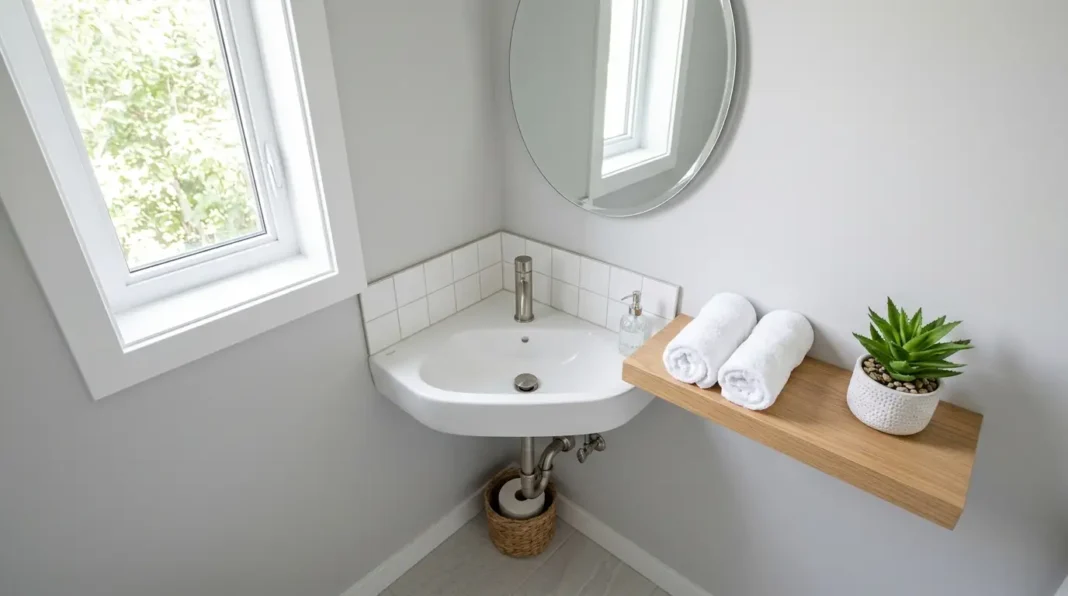

If you’ve ever stood in a cramped half-bath trying to figure out how a sink, a toilet, and your own elbows are supposed to fit in the same six square feet, you already know the struggle. That’s exactly where small corner sinks earn their keep. Instead of fighting for wall space, they slide diagonally into the one spot every bathroom has and nobody uses — the corner — and suddenly your tiny powder room actually breathes.
This guide walks through everything worth knowing about a small corner bathroom sink: the different styles, how to pick the right size, what installation actually involves, and how to make one look intentional instead of like an afterthought. Whether you’re renovating a guest bath, finishing a basement, or just trying to squeeze a second sink into a shared space, there’s a corner sink here that’ll fit.
Table of Contents
Why Small Corner Sinks Work So Well in Tight Bathrooms
Corners are dead space in most floor plans. A standard sink hogs a full run of wall, but a corner sink uses the two walls that meet at a 90-degree angle, which frees up everything in between for a towel bar, a hamper, or just room to turn around. That’s the whole appeal of small corner sinks — they solve a spatial problem without asking you to compromise on having a functional wash basin.
They’re especially popular in:
- Powder rooms and half-baths under 20 square feet
- Basement bathrooms with awkward framing or low headroom
- Tiny homes, RVs, and boat bathrooms
- Shared kids’ bathrooms where you need a second wash station
- Laundry rooms or mudrooms that double as a rinse-off spot
Because a small corner lavatory sink is built specifically for these tight footprints, it usually needs 30-40% less linear wall space than a standard vanity sink, which can be the difference between a bathroom that meets code minimums and one that feels genuinely usable.
The Main Types of Small Corner Sinks
Not all corner sinks are built the same way, and the style you choose affects both the look and how much storage you get underneath. Here are the four you’ll run into most often.
1. Pedestal Small Corner Sinks
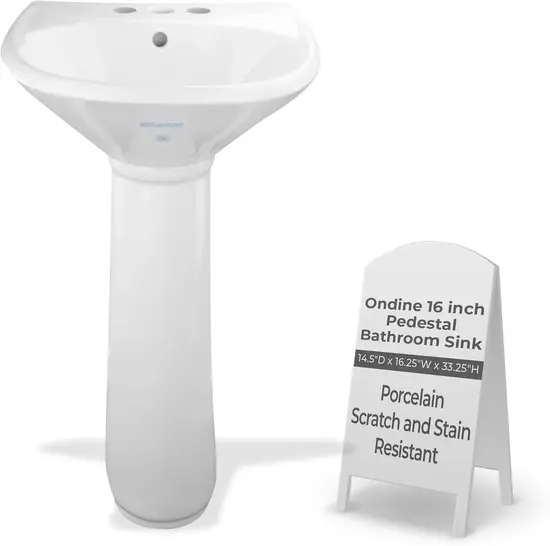
A small corner pedestal sink pairs a compact basin with a slim pedestal base that hides the plumbing and gives the eye a clean line from floor to counter. These are a favorite for anyone who wants a classic, almost vintage look without eating up visual space. They’re narrow by design, which makes them one of the easiest options to fit into a genuinely small corner. The tradeoff is storage — a pedestal base doesn’t leave room for a cabinet, so you’ll want a shelf or wall cabinet nearby for soap, hand towels, and everyday clutter.
2. Wall-Mounted Small Corner Sinks
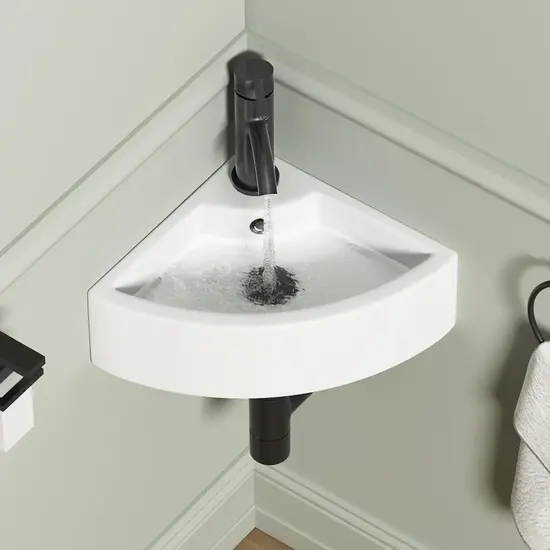
These skip the pedestal entirely and bolt straight into the wall studs at the corner seam. Wall-mounted corner sinks are the most minimalist option and tend to look great in modern or Scandinavian-style bathrooms. Because there’s no base at all, they also make a small bathroom feel more open — you can actually see the floor underneath, which tricks the eye into reading the room as bigger than it is.
3. Corner Vanity Sinks
If storage matters more to you than square footage, a orner vanity sink with a built-in basin gives you a small cabinet triangle tucked under the sink. It’s the least space-efficient of the group, but it solves the eternal “where do I put my toiletries” problem that pedestal and wall-mount styles can’t answer on their own.
4. Corner Lavatory Sinks (Drop-In or Semi-Recessed)
A small corner lavatory sink usually refers to a basin designed to drop into or sit semi-recessed on a custom corner countertop or shelf. These give you a bit of counter space on either side of the basin, which is genuinely useful in a bathroom two people share, even if that counter space is only a few inches deep.
5. Corner Sink vs Pedestal Sink
When comparing a Corner Sink vs Pedestal Sink, the best choice depends on your bathroom layout. A corner sink is designed to maximize unused corner space, making it ideal for powder rooms, guest bathrooms, and other compact layouts. A traditional pedestal sink, on the other hand, is installed against a flat wall and often requires more floor space.
If your goal is to make a tiny bathroom feel larger while maintaining functionality, a corner sink usually offers the better space-saving solution. However, if space isn’t a concern and you prefer a classic, symmetrical look, a pedestal sink remains a timeless option.
Choosing the Right Size and Dimensions
Understanding Corner Sink Dimensions is essential before buying a new fixture. Most compact corner sinks are designed to fit into tight spaces while still providing enough room for comfortable daily use.
Typical dimensions include:
- Width (diagonal): 15–21 inches
- Depth (front to back): 11–18 inches
- Height: 31–34 inches from the floor to the rim
- Recommended front clearance: At least 21 inches for comfortable use
- Corner angle: Most models are designed for standard 90-degree corners
For very small powder rooms or half baths, sinks measuring 15–18 inches diagonally are often the best choice. Larger models around 20–21 inches provide a more spacious basin while still saving significantly more floor space than a traditional vanity. Always measure your available corner and compare it with the manufacturer’s specifications before purchasing to ensure a proper fit.
Quick tip: Before buying anything, tape off the actual footprint of the sink on your bathroom floor with painter’s tape. It sounds basic, but it’s the fastest way to catch a sizing mistake before it becomes an expensive one.
Materials Worth Considering
Small corner sinks come in the same material range as any other bathroom basin, but a few options tend to perform better in tight, high-traffic corners:
- Vitreous china: the classic choice, easy to clean, holds up well, and comes in the widest range of shapes for corner-specific basins
- Fireclay: heavier and more durable, a good pick if the sink will get daily use from kids
- Solid surface (like Corian): lets you get a seamless integrated look if you’re pairing the basin with a custom corner counter
- Glass or vessel-style: striking for a powder room that’s more about design statement than daily durability
Making a Small Corner Sink Actually Look Good
A corner sink can look like a clever design choice or like a squeezed-in compromise, and the difference usually comes down to a handful of small decisions:
Mirror placement
Skip the rectangular mirror that was clearly designed for a straight-wall sink. A round or corner-shaped mirror mounted to follow the angle of the basin looks intentional and makes the whole setup feel custom-built rather than retrofitted.
Lighting
A single sconce mounted above one side of the corner, or a slim LED strip along the underside of a mirror, gives you even light without the visual clutter of a full fixture bar that doesn’t fit the space.
Faucet choice
Corner-specific faucets exist for a reason — their reach and handle angle are designed to clear the basin’s diagonal shape. A standard faucet can look and function awkwardly once it’s off-center.
Storage that doesn’t compete for space
Since most small corner bathroom sink setups skip a full vanity, lean on a slim wall shelf, a corner cabinet mounted higher on the wall, or a rolling cart tucked just outside the sink’s footprint.
Small Corner Sinks Installation: What to Actually Expect
Installing a corner sink is more involved than swapping a straight-wall basin, mostly because of the plumbing angle. Here’s the general process:
- Confirm rough-in dimensions — corner sinks often need the drain and supply lines positioned differently than a standard vanity, so this isn’t always a straight swap in an existing bathroom
- Reinforce the wall if you’re going wall-mounted, since the basin’s weight (especially once it’s full of water) needs to sit on blocking between the studs, not just drywall anchors
- Set the pedestal or bracket and level it carefully — corners are rarely perfectly square, so this step takes patience
- Connect the P-trap, which usually needs to be angled slightly differently than a standard installation
- Caulk the seam where the basin meets both walls to prevent water damage in a spot that’s easy to overlook
If your existing plumbing already runs into the corner, a DIY install is realistic for anyone comfortable with basic plumbing. If you’re relocating supply lines or drain pipes, it’s worth bringing in a licensed plumber — corner rough-ins are one of the more common places for costly mistakes.
Pros and Cons of Small Corner Sinks
Pros
- Frees up significant wall space in small bathrooms
- Makes tight rooms feel more open and usable
- Works in rooms where a standard vanity simply won’t fit
- Available in styles ranging from traditional pedestal to sleek modern wall-mount
Cons
- Generally less counter and storage space than a standard vanity sink
- Faucet and accessory options are more limited than for standard basins
- Plumbing rough-in can be more complex if you’re not working with existing corner lines
- Basin size is naturally smaller, which may not suit a primary bathroom used by multiple people daily
Small Corner Sinks Buying Guide: What to Check Before You Order
Before adding a small corner sink to your cart, run through this checklist:
- Measure your actual corner, not just the general room dimensions
- Check the required rough-in spacing against your existing plumbing
- Confirm the faucet is sold separately or included, and that its reach fits the basin
- Look at overflow drain inclusion — some budget corner basins skip this
- Read the mounting hardware requirements, especially for wall-mounted styles
- Check the warranty on the basin material, particularly for fireclay and solid surface options
Final Thoughts
A small corner sink isn’t just a workaround for a cramped bathroom — done right, it’s a genuinely smart design choice that opens up floor space, adds a bit of personality, and makes an awkward layout feel deliberate.
Whether you go with a classic corner pedestal sink, a minimalist wall-mounted basin, or a corner vanity with a bit of built-in storage, the key is measuring carefully, choosing hardware built for the angle, and not being afraid to let the corner be the star of the room instead of the problem you’re hiding.
Planning a small bathroom refresh? Start by taping off your corner footprint and comparing it against the basin sizes above — it’s the easiest way to shop with confidence instead of guessing.
Frequently Asked Questions
Are small corner sinks a good fit for a primary bathroom?
They work best as a secondary sink or in a powder room. For a primary bathroom used daily by more than one person, the smaller basin and limited counter space can feel restrictive over time.
Do small corner sinks cost more to install than standard sinks?
The basin itself is often priced similarly to a standard small sink. The cost difference usually comes from plumbing work if your existing rough-in isn’t already positioned for a corner installation.
Can I install a corner pedestal sink without moving my plumbing?
Only if your supply and drain lines are already positioned near the corner. Otherwise, you’re looking at rerouting, which is a job best left to a licensed plumber.
What’s the smallest corner sink available?
Some compact corner lavatory sinks measure as small as 13-15 inches diagonally, though anything under 15 inches starts to sacrifice usability for footprint.