


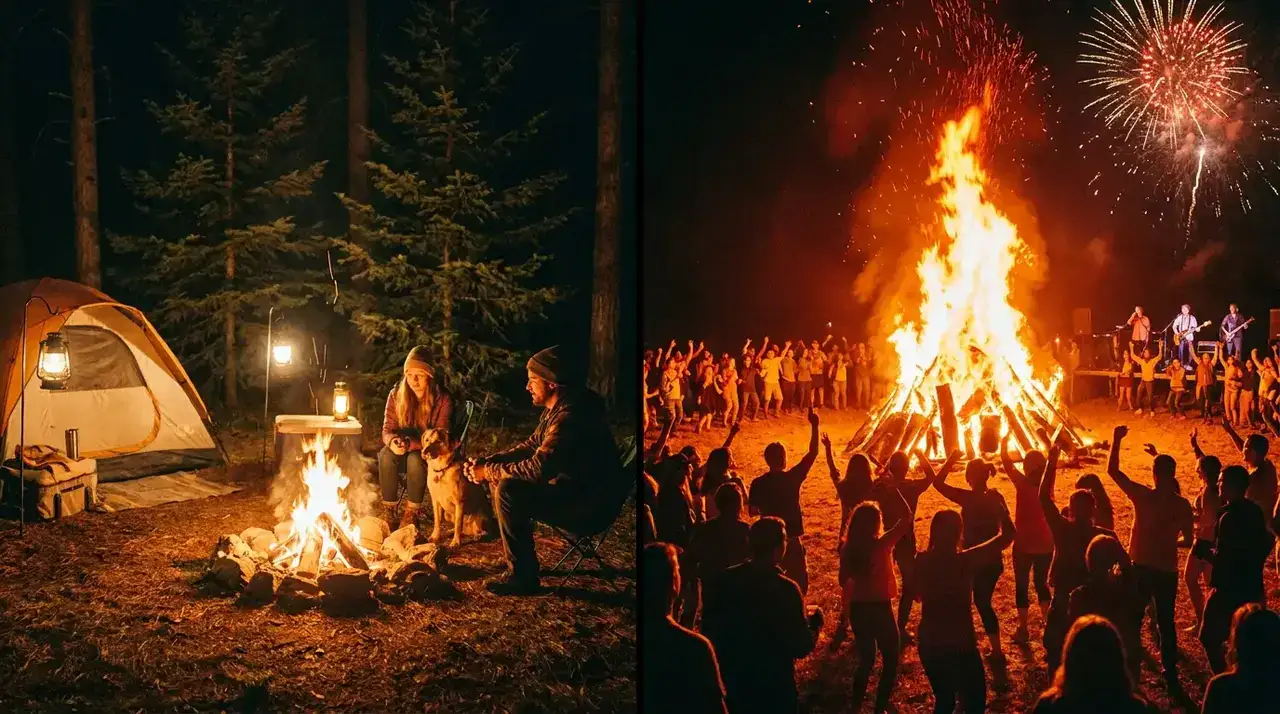
So you’re planning an outdoor fire and someone in your group inevitably asks — “wait, are we doing a bonfire or a campfire?” And then everyone kind of stares at each other like it’s a trick question. Sound familiar?
Here’s the thing: bonfire vs campfire isn’t just a matter of fire size. These two types of open fires are actually pretty different when it comes to purpose, safety rules, fuel, and where you can legally light one.
Whether you’re a seasoned camper, a backyard entertainer, or someone who just got a shiny new Solo Stove, knowing the difference can save you from a lot of headaches (and maybe a visit from the fire department).
Let’s break it all down in plain English — no fluff, just the good stuff.
Table of Contents
What Actually Is a Campfire?
A campfire is your classic, small-to-medium fire built specifically for functional camping use. Think cozy evenings around a fire pit, cooking your dinner over the flames, staying warm, or just vibing with friends under the stars. It’s intimate, controlled, and usually built inside a designated fire ring or pit.
Campfires are typically fueled by split firewood or small logs, and they’re designed to be manageable — something one person can tend to without needing a hose on standby. Most campsites and national parks have specific rules about campfire size, and for good reason.
Campfire characteristics at a glance:
- Small to medium size (usually under 3 feet high)
- Used for cooking, warmth, and ambiance
- Built inside a fire ring, pit, or portable fire bowl
- Easier to control and extinguish
- Common in campsites, backyards, and designated areas
And What About a Bonfire?
A bonfire is basically campfire’s bigger, louder, more chaotic cousin. We’re talking a large, open-air fire that’s built for celebration, events, or community gatherings — not really for toasting marshmallows (though honestly, who’s gonna stop you?).
Bonfires are significantly larger, often reaching heights of 6 to 10 feet or more, and they require a lot more open space, planning, and safety measures. They’re common at beach parties, Guy Fawkes Night celebrations, fall festivals, and anywhere people want to make a dramatic statement with fire.
Bonfire characteristics at a glance:
- Large to very large (often 6+ feet high)
- Built for social events, celebrations, or signaling
- Requires a wide open outdoor space away from structures
- Harder to control once burning
- May require a permit depending on your location
Bonfire vs Campfire: The 7 Big Differences
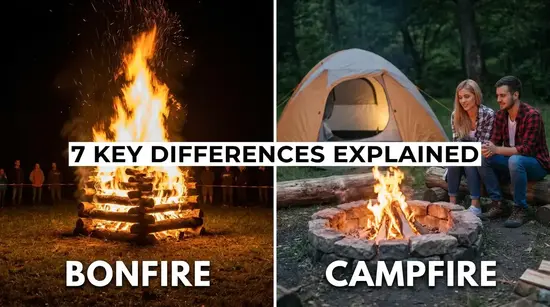
Let’s get into the actual comparison — because these two fire types are more different than most people realize.
1. Size and Scale
This is the most obvious one. A campfire is small and manageable. A bonfire? It’s a statement. Bonfires can be built using large logs, pallets, or even scrap wood and are meant to produce a massive, visible blaze. If people can see your fire from down the street, you’ve got a bonfire on your hands.
2. Purpose and Intent
Campfires serve a practical purpose — warmth, cooking, light. Bonfires are primarily ceremonial or social. They’re the life of the party, not a meal prep tool. That said, both can be used recreationally for gathering people together.
3. Location Requirements
Campfires are suited for contained, designated areas — fire rings at campsites, backyard fire pits, or portable fire bowls. Bonfires need wide-open spaces, well away from trees, buildings, fences, and anything flammable. Most local fire codes require bonfires to be at least 50 feet from any structure.
4. Fuel Type and Amount
A campfire runs efficiently on a small amount of split firewood, kindling, and tinder. A bonfire demands a much larger quantity of fuel — often whole logs, large branches, or construction pallets. The type of wood matters too (more on that in the FAQ section below).
5. Safety Considerations
Campfires are generally safer because they’re small and controllable. Bonfires carry a much higher risk of spreading, especially on windy days. A campfire can usually be put out with a bucket of water; a bonfire might need a garden hose or even fire department involvement.
6. Permits and Legality
In most places, campfires in designated areas don’t require a permit. Bonfires, however, often do — especially in residential areas or during dry seasons. Always check your local regulations before lighting a large outdoor fire. Seriously, the fine is never worth it.
7. Duration and Attendance
A campfire can burn quietly for hours with just a few people tending it. A bonfire is typically a one-time, high-intensity event that burns hot and fast and usually draws a crowd. You wouldn’t call a backyard gathering of 30 people a “campfire night” — that’s a bonfire situation.
Bonfire vs Campfire Which One Is Right for You?
Here’s a quick cheat sheet:
Choose a campfire if:
- You’re at a campsite or using a backyard fire pit
- You want to cook food over the fire
- You have a small group (2–10 people)
- You want a long, slow-burning, cozy fire
Choose a bonfire if:
- You’re hosting a large outdoor event
- You have a wide open space and proper clearance
- You’ve checked local fire ordinances and have a permit if needed
- You want maximum drama and atmosphere
And if you’ve got a Solo Stove, a fire pit, or a backyard chiminea? You’re firmly in campfire territory — and that’s a beautiful place to be.
FAQ: Bonfire vs Campfire Questions Answered
Q: Is a bonfire just a big campfire?
Not exactly. While they’re both open fires, a bonfire is built for different reasons and on a much larger scale. It’s more like comparing a kitchen knife to a machete — both are cutting tools, but the context and use are totally different.
Q: Do I need a permit for a bonfire?
In most cities and counties, yes — especially for fires larger than a certain size or those burning past certain hours. Check with your local fire authority or municipality before planning one.
Q: Can you cook on a bonfire?
Technically yes, but it’s not practical. Bonfires burn too hot and too big for safe, controlled cooking. Stick to a campfire or fire pit for cooking.
Q: What kind of wood should you burn in a Solo Stove?
What to burn in Solo Stove? is a great question — and a super common one! The Solo Stove is designed specifically for dry, seasoned hardwood. The best options are oak, hickory, cherry, maple, and birch — these burn clean, hot, and produce minimal smoke, which is exactly what the Solo Stove’s airflow system is optimized for.
Avoid burning green (unseasoned) wood, treated or painted wood, plywood, cardboard, trash, or any wood with heavy bark or moisture content.
These produce excessive smoke, creosote buildup, and harmful chemicals — none of which you want in your backyard hangout. Stick to small, split logs or high-quality firewood packs for the best burn experience.
Q: What’s the difference between a fire pit and a campfire?
A fire pit is the container — the bowl, ring, or pit structure. A campfire is the fire itself. You can have a campfire in a fire pit. You could technically have a small bonfire in a very large fire pit, but most fire pits are designed for campfire-sized flames.
Q: Are bonfires illegal?
Not inherently, but many areas have restrictions on open burning, especially during fire season, drought conditions, or in urban areas. Always check local ordinances — some areas ban all outdoor burning except in approved containers.
Final Sparks: The Takeaway
At the end of the day, both bonfires and campfires are pure magic. There’s something deeply human about gathering around a fire — whether it’s a small, crackling campfire with a cup of coffee or a blazing bonfire with a crowd of people dancing around it.
The key difference? Size, purpose, and safety. A campfire is your reliable, low-key companion for outdoor cooking and cozy evenings. A bonfire is your big, dramatic, occasion-worthy spectacle. Both deserve respect — and a healthy distance from dry grass.
So next time someone asks “bonfire vs campfire” — you’ll know exactly what to say. And more importantly, you’ll know how to do it safely, legally, and with maximum enjoyment.
Now go build that fire. 🔥
Have a favorite campfire recipe or bonfire memory? Drop it in the comments — we’d love to hear it!

