
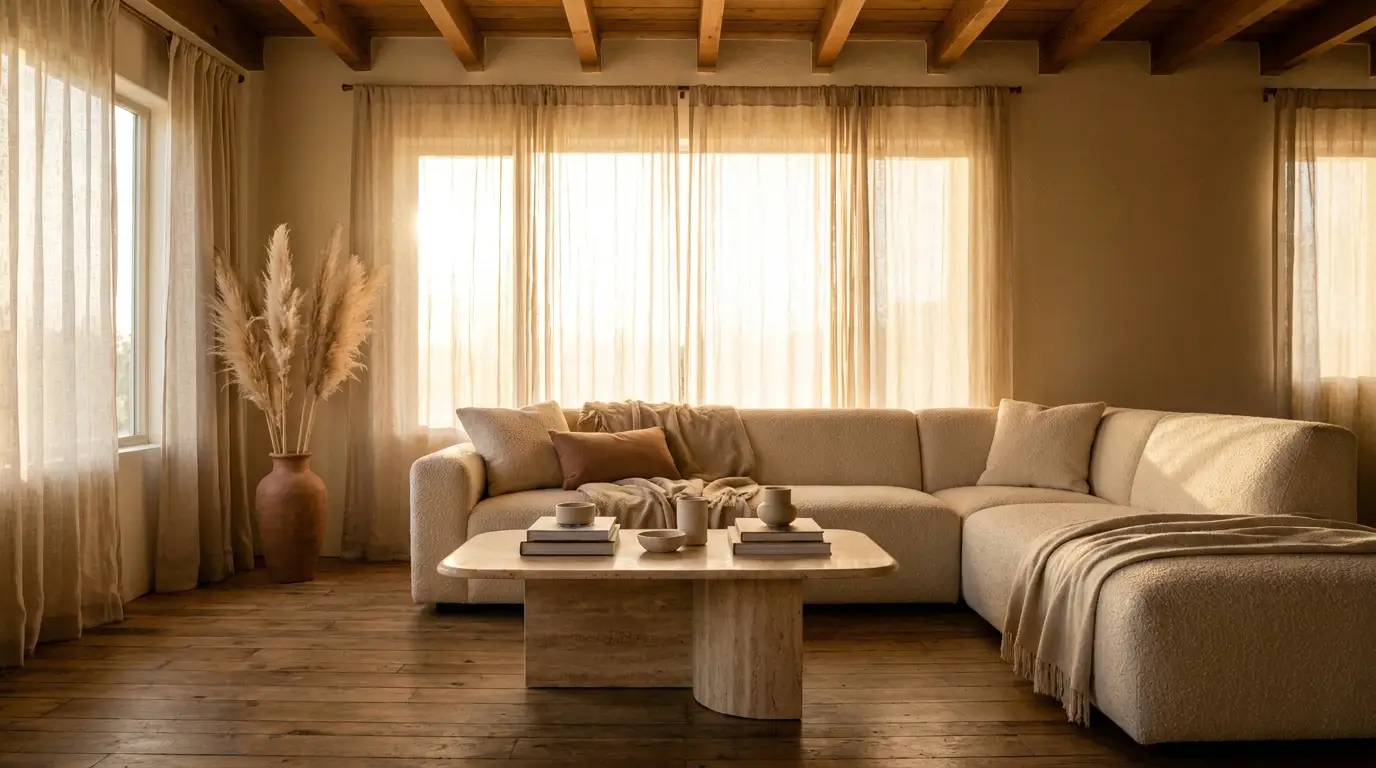

“If your home doesn’t feel like a five-star spa nestled inside an ancient Icelandic landscape, are you even decorating in 2026?” Okay, a little dramatic — but honestly? Not by much. The organic luxury home decor movement is here, and it’s glorious.”
Forget the era of cold, grey everything. The interior design world has pivoted hard toward something warmer, earthier, and way more satisfying to actually live in.
The organic luxury home decor trends for 2026 are all about raw natural materials, tactile textures you want to touch, and earth-toned palettes that feel like a deep breath.
Think travertine coffee tables, bouclé modular sofas, living walls, and a color story that reads “desert at golden hour” rather than “corporate lobby.”
Let’s break down exactly what’s shaping these gorgeous spaces — and more importantly, how you can bring this aesthetic into your own home without needing a designer on speed dial (though we won’t judge if you do).
Table of Contents
The Return of Travertine: The “It” Stone of the Decade
Okay, so travertine has technically been around since the Romans were literally building the Colosseum with it — but right now, in 2026, it is absolutely having its moment. And honestly? It deserves it.
Texture over shine: why matte, porous travertine is winning
Here’s the thing about polished marble — it’s beautiful, sure, but it’s also a little… try-hard? Travertine brings something totally different to the table (literally).
That matte, porous, naturally imperfect surface texture is exactly why organic luxury home decor enthusiasts are obsessed with it.
Every piece is unique. Every pit and vein tells a geological story that’s millions of years old. You can’t fake that kind of character.
It doesn’t scream “look at me!” It just sits there being quietly, confidently stunning. That’s the definition of quiet luxury right there.
Statement pieces: travertine as functional art
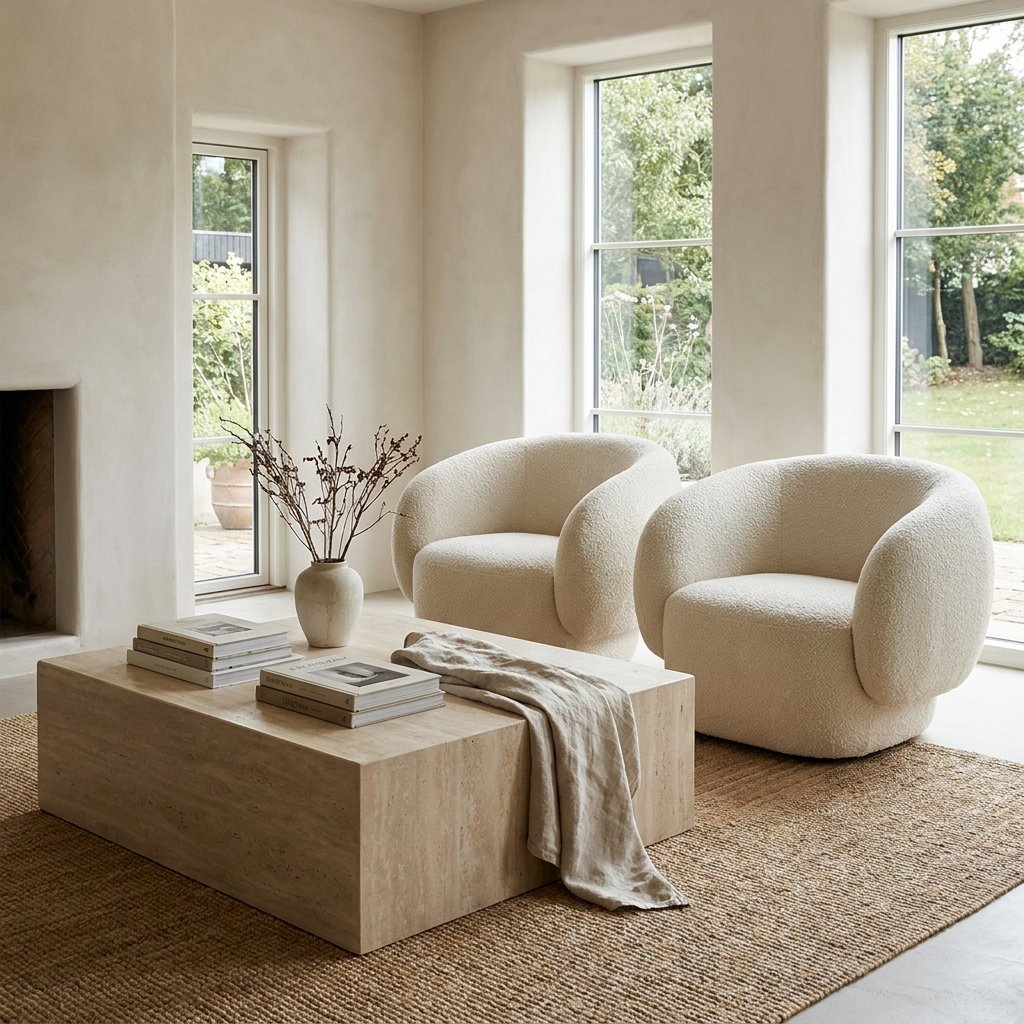
The real move in 2026? A monolithic travertine coffee table as the centerpiece of your living room. We’re talking chunky, sculptural blocks of raw stone that function as both conversation starters and actual places to rest your wine glass.
Travertine dining surfaces are having a similar moment — oversized slabs with live edges that make every dinner feel like you’re eating at an art gallery.
Pro styling tip Pair a raw travertine coffee table with low-profile furniture and keep accessories minimal — a single sculptural vase and a stack of art books is plenty. Let the stone do the talking.
Icelandic Turf House Inspiration: Bringing the Outdoors In
Ever stumbled across photos of Icelandic turf houses — those ancient, grass-roofed buildings that look like the earth literally grew a home? Yeah, that’s the vibe interior designers are chasing right now, and it is making spaces feel absolutely magical.
The philosophy: a home that feels like the landscape
The whole idea behind Icelandic-inspired design — and the broader organic luxury aesthetic — is that your home shouldn’t feel separate from nature.
It should feel like a continuation of it. Grass, stone, raw timber, living plants: these aren’t decorative afterthoughts in this design philosophy. They are the architecture.
It’s about creating spaces that are warm, grounded, and deeply connected to the natural world. And in a time when most of us spend 90% of our lives indoors, that pull toward nature feels genuinely important — not just pretty.
Modern application: luxury spaces with a wild soul
You don’t need to literally put a grass roof on your penthouse (though, respect if you do). Modern applications of Icelandic turf house architecture translate into living walls that cascade across an entire feature wall, internal garden courtyards that blur indoor and outdoor boundaries, and raw timber beams left exposed and untreated as a design feature rather than something to cover up.
Add in basalt stone accents, sheepskin throws, and earthy ceramic pieces, and you’ve got a space that channels that deep Nordic serenity without booking a flight to Reykjavik.
Living wall panels: Floor-to-ceiling moss or fern installations — instant biophilic impact.
Exposed raw timber: Leave ceiling beams untreated or with a natural oil finish only.
Basalt stone accents: Volcanic rock vessels, table bases, or bathroom feature walls.
Tactile Luxury: Bouclé, Wool, and Modular Comfort
If travertine is the star of 2026 home decor, bouclé is its co-star — and together they’re basically unstoppable.
Bouclé modular sofas have gone from “trendy niche choice” to “the standard” for luxury living rooms, and once you understand why, you’ll never look at a stiff sectional the same way again.
The modular sofa: flexible luxury on your terms
The beauty of a modular sofa in the organic luxury context is that it’s low-profile (keeping sightlines open and the space feeling airy), deeply comfortable (we’re talking “accidentally nap for three hours” comfortable), and adaptable.
Got a weird-shaped room? Rearranging for a dinner party? Moving to a new place? The modular sofa just… works.
In a bouclé finish — that gorgeous looped, textured weave that catches the light differently from every angle — these sofas become genuinely beautiful objects. Not just furniture. Objects.
Textural contrast: the rough and the soft
Here’s where organic luxury interior design gets really fun. The key to nailing this aesthetic is contrast.
You put the roughness of raw stone (travertine, basalt, unfinished plaster walls) next to the incredible softness of high-pile bouclé and mohair — and the combination creates this sensory richness that feels incredibly luxurious without being flashy about it.
The contrast formulaRaw + soft. Matte + warm light. Rough stone + cloud-like textiles. Organic shapes + geometric restraint. Play with opposites and let the tension do the work.
The Palette of 2026: Earth, Clay, and Sand
Say goodbye to Millennial Gray. We had a good run — well, actually it was kind of a depressing run — but it’s officially time to move on to something warmer, more human, and a lot more beautiful.
The earth-toned luxury palette of 2026 is grounded in the colors you find in nature at its most beautiful: warm terracotta, pale clay, sun-bleached sand, deep umber, dusty sage, and the kind of warm white that looks like linen left in the sun.
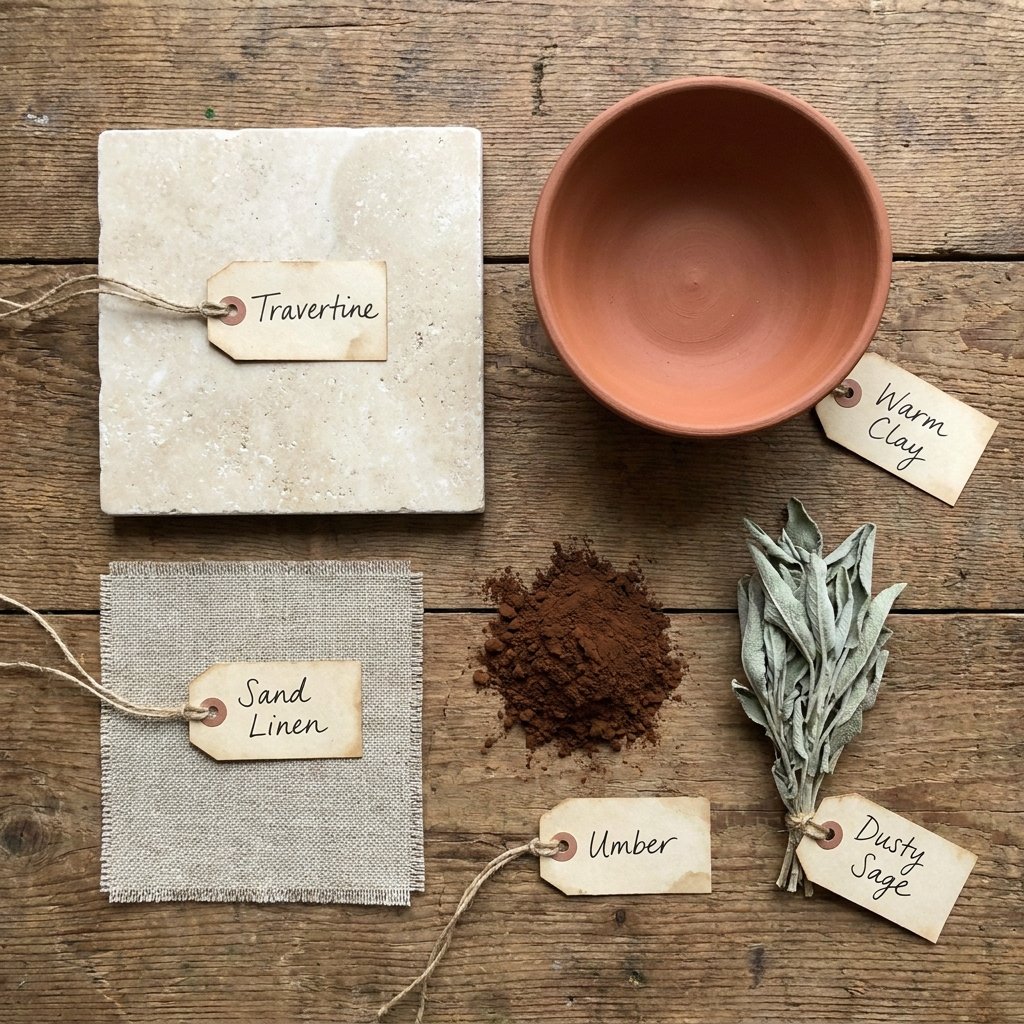
These aren’t just pretty colors. Research increasingly supports the idea that warm, natural tones promote calm, reduce anxiety, and make spaces feel genuinely restorative.
The trick with earth-toned luxury is layering shades from the same family rather than mixing too many competing hues.
Think a sand-colored wall with warm clay cushions, umber leather accents, and natural linen curtains. Cohesive, calm, and genuinely stunning.
Sustainable Luxury: Why “Natural” Means “Investment”
Here’s a conversation that doesn’t happen enough in the home decor world: the real cost of cheap, synthetic materials versus the long-term value of investing in raw natural materials. Spoiler: going natural almost always wins.
Longevity and the patina factor
Travertine, solid timber, natural stone, and quality wool textiles don’t just last longer than their synthetic alternatives — they actively get better with age.
That’s what designers call “the patina factor.” A travertine surface develops a richer character over decades. A solid oak floor deepens in color and warmth.
A quality bouclé sofa in natural wool holds its shape and texture in a way that polyester blends simply can’t replicate.
Compare that to a resin “marble effect” coffee table that chips after two years or a synthetic velvet sofa that pills and flattens by the third season — and suddenly the higher upfront cost of organic luxury home decor makes complete economic sense.
The sustainability argument
Beyond personal investment, there’s the bigger picture. Natural materials are biodegradable, often locally sourceable, and require far less processing than synthetic alternatives.
Choosing raw natural materials for your interior isn’t just an aesthetic decision — it’s increasingly an ethical one.
And in 2026, with consumers more conscious than ever about the environmental footprint of their spaces, this alignment between beauty and sustainability is a huge part of why the organic luxury movement has so much staying power.
Buy once, keep forever — a short checklist When investing in organic luxury pieces, look for: natural stone or solid timber (not veneer), undyed or naturally dyed textiles, traceable provenance where possible, and items designed to be repaired rather than replaced.
FAQ: Your Organic Luxury Questions, Answered
Is travertine still in style for 2026?
100%, yes. Travertine is arguably the defining stone of this decade. Its matte, porous texture and warm, natural tones align perfectly with the organic luxury aesthetic dominating interior design in 2026.
Far from fading, travertine is now being used in increasingly bold, sculptural ways — monolithic table bases, feature walls, and bathroom surfaces.
How do I style a bouclé sofa in a luxury home?
Keep the surrounding palette warm and neutral so the texture of the bouclé becomes the focal point. Pair it with raw stone elements (a travertine side table, stone floor tiles), natural fiber rugs in sand or warm ivory, and minimal sculptural accessories. Avoid too many competing textures — bouclé works best when it’s given room to breathe.
What are the characteristics of Icelandic-inspired interior design?
Icelandic-inspired design (inspired by turf house architecture and Nordic landscapes) is defined by a deep connection to nature, the use of raw materials like timber, stone, and wool, biophilic elements such as living walls and indoor plants, a palette drawn from volcanic landscapes (basalt black, moss green, warm grey, cream), and an emphasis on cozy, restorative warmth. Think: beautiful, ancient, and deeply human.
What is organic luxury in interior design?
Organic luxury is an interior design philosophy that combines the visual and tactile richness of natural, raw materials — stone, timber, wool, linen, clay — with a refined, considered aesthetic.
It prioritizes materials that are authentic, sustainably sourced, and designed to improve with age. The result is spaces that feel simultaneously elegant and deeply grounded: luxurious, but in a quiet, unpretentious way.
Final Thoughts
The organic luxury home decor movement isn’t a trend in the fleeting sense — it’s a recalibration. After years of interiors that prioritized polish over warmth and aesthetics over feeling, we’re collectively returning to something more honest.
Spaces built from real materials, in colors borrowed from the earth, that get better the longer you live in them.
Whether you start with a single travertine coffee table, re-cover your sofa in bouclé, or commit to the full Icelandic turf house fantasy (respect, truly), you’re investing in a home that will feel genuinely good to be in — not just look good on Instagram.
General Design Tips & Ideas
Start with trends via Interior Design Style: 7 Transformative Home Trends, and avoid costly mistakes with Interior Design Mistakes to Avoid. Browse 100 Interior Design Ideas That Look Expensive for visual inspiration. Get practical advice from Interior Design Tips and Home Decor Ideas to Transform Every Room. For more decor inspiration, explore our full Home Decor collection.
