


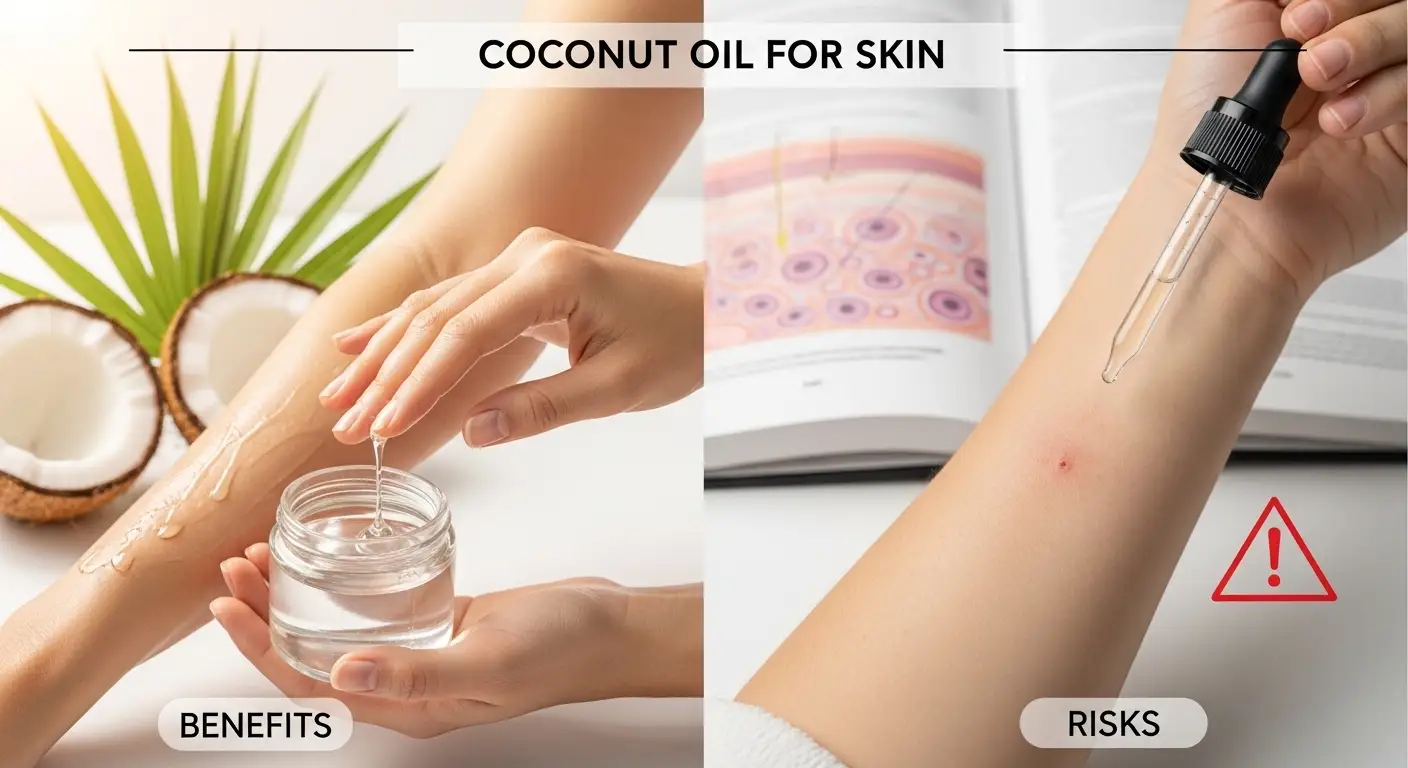
Coconut oil for skin has become a cornerstone in modern skincare routines, praised for its natural origin and powerful moisturizing properties.
Extracted from mature coconuts, this oil is rich in fatty acids and antioxidants that support skin health, enhance radiance, and protect against environmental damage.
Yet, despite its popularity, it is essential to understand both the advantages and the potential downsides to achieve optimal results.
Table of Contents
What Makes Coconut Oil Good for Skin
Coconut oil stands out due to its unique composition of medium-chain fatty acids, particularly lauric acid, capric acid, and caprylic acid. These components provide deep hydration while forming a protective barrier on the skin’s surface.
Unlike synthetic moisturizers, coconut oil penetrates the skin layers effectively, helping to restore moisture balance and improve elasticity. It also contains vitamin E, a powerful antioxidant known to combat free radicals and slow visible signs of aging.
Its natural antibacterial and antifungal properties make it a versatile solution for maintaining skin clarity. When applied correctly, it supports the skin’s microbiome, reinforcing its natural defense mechanisms.
Coconut Oil For Skin Key Benefits (Hydration, Glow, Protection)


Deep Hydration for Dry Skin
Coconut oil is an exceptional emollient. It locks in moisture, preventing transepidermal water loss and keeping the skin soft and supple. This makes it particularly effective for individuals with dry or flaky skin, especially during colder months.
Radiant, Natural Glow
Regular use of coconut oil enhances skin luminosity by smoothing rough texture and evening out tone. Its ability to nourish deeply gives the skin a healthy, dewy glow without the need for synthetic highlighters.
Skin Barrier Protection
The fatty acids in coconut oil form a thin protective layer that shields the skin from pollutants, dust, and harsh environmental conditions. This barrier function is essential for maintaining long-term skin resilience.
Anti-Inflammatory Properties
Coconut oil can help calm irritated skin. It is often used to soothe conditions like redness, mild inflammation, and sensitivity, making it a natural alternative for gentle skincare routines.
Antimicrobial Benefits
Lauric acid in coconut oil has proven antimicrobial effects, helping reduce harmful bacteria on the skin. This can support overall skin health when used in moderation and on suitable skin types.
Coconut Oil For Skin Risks (Clogged Pores, Acne)


Despite its many benefits, coconut oil is not universally suitable for all skin types.
Comedogenic Nature
Coconut oil ranks high on the comedogenic scale, meaning it can clog pores, especially for individuals with oily or acne-prone skin. This can lead to blackheads, whiteheads, and breakouts.
Potential for Acne Flare-Ups
For those already struggling with acne, coconut oil may worsen the condition by trapping bacteria beneath the skin’s surface. While it has antimicrobial properties, its occlusive nature can create an environment where acne thrives.
Heavy Texture
Its thick consistency can feel greasy and may not absorb quickly into certain skin types. This can be uncomfortable for daily facial use, particularly in humid climates.
Allergic Reactions
Although rare, some individuals may experience sensitivity or allergic reactions. It is always advisable to perform a patch test before full application.
Who Should Avoid Coconut Oil For Skin
Coconut oil is not a one-size-fits-all solution. Certain skin types should approach it with caution or avoid it entirely.
- Oily Skin Types: The heavy nature of coconut oil can exacerbate oil production and clog pores.
- Acne-Prone Individuals: Those prone to breakouts may experience worsening symptoms.
- Combination Skin: Applying coconut oil to certain areas may disrupt the balance of the skin.
- Sensitive Skin (in some cases): While generally gentle, it can trigger reactions in highly sensitive individuals.
For these skin types, exploring alternatives like lighter oils is recommended. Consider reading about the best carrier oils for skin to find options better suited to your needs.
How to Use Coconut Oil For Skin Safely


To maximize the benefits of coconut oil while minimizing risks, proper application is essential.
Use on the Body, Not Always the Face
Coconut oil works exceptionally well as a body moisturizer, particularly on dry areas like elbows, knees, and heels. For facial use, it should be applied sparingly and only if your skin tolerates it well.
Apply to Damp Skin
For better absorption, apply coconut oil to slightly damp skin. This helps lock in hydration and enhances its moisturizing effect.
Use as a Night Treatment
Due to its richness, coconut oil is best used at night. This allows it to deeply nourish the skin without interfering with daytime activities or makeup.
Patch Test First
Always perform a patch test before incorporating coconut oil into your routine. Apply a small amount to a discreet area and observe for any adverse reactions over 24 hours.
Choose High-Quality Oil
Opt for organic, cold-pressed, virgin coconut oil. This ensures maximum nutrient retention and purity, free from harmful additives.
DIY Tanning Lotion


Coconut oil is widely used in natural tanning solutions due to its moisturizing properties and ability to enhance skin glow.
Creating your own homemade tanning lotion with coconut oil allows you to control ingredients while achieving a sun-kissed look safely.
A simple blend includes coconut oil, cocoa powder for tint, and essential oils for fragrance. This combination not only hydrates the skin but also delivers a subtle bronzing effect without harmful chemicals.
Strategic Skincare Integration
Incorporating coconut oil into your skincare routine requires a balanced approach. It works best when combined with complementary products and tailored to your skin’s unique needs.
Use it as:
- A makeup remover for gentle cleansing
- A body oil after showers
- A lip balm for hydration
- A hair treatment for scalp and ends
Avoid overuse, especially on the face, and always monitor how your skin responds.
Final Thoughts
Coconut oil for skin offers powerful hydration, natural glow enhancement, and protective benefits when used correctly.
However, its comedogenic nature makes it unsuitable for everyone, particularly those with oily or acne-prone skin.
Understanding how to apply it strategically ensures you gain its advantages without triggering unwanted side effects.
Whether used alone or as part of a broader skincare regimen, coconut oil remains a versatile and valuable natural solution for achieving healthy, radiant skin.

