If mealtimes in your home feel more like a food fight than a peaceful family ritual, you’re not alone. Spilled milk, thrown spoons, and picky eating can turn even the most beautiful dining space into chaos.
The good news? Teaching toddlers table manners doesn’t require perfection—it just takes patience, consistency, and the right environment.
In this guide, you’ll learn exactly how to teach good manners in a way that feels natural, stress-free, and even enjoyable—for both you and your child.
Table of Contents
Why Teaching Toddlers Table Manners Matters
Teaching toddlers table manners goes beyond avoiding messes. It helps build lifelong habits that support social confidence, independence, and respect for others.
Here’s why it’s worth the effort:
- Builds social skills early
- Encourages independence and responsibility
- Creates calmer, more enjoyable family meals
- Supports healthy eating habits
When toddlers understand expectations, they feel more secure—and that leads to fewer mealtime battles.
When Should You Start Teaching Table Manners?
The short answer: as early as possible.
Most toddlers between 12–18 months are ready to begin learning simple behaviors like:
- Sitting while eating
- Using hands or utensils appropriately
- Waiting briefly before grabbing food
Don’t expect perfection. At this age, it’s about gentle exposure and repetition, not strict discipline.
Essential Table Manners Every Toddler Should Learn
1. Sitting at the Table
Start with short, manageable meals. A comfortable, properly sized chair or high chair makes a huge difference.
Tip: Look for seating with foot support—it helps toddlers stay focused longer.
2. Using Utensils (Even If It’s Messy)
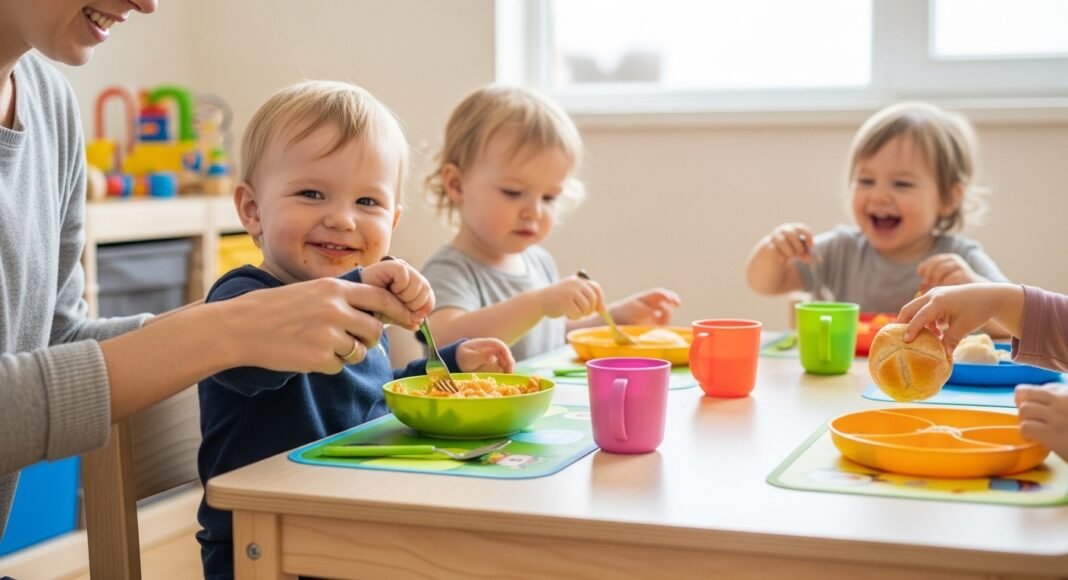
Toddlers learn by doing. Encourage them to try spoons and forks, even if it gets messy. Early attempts may be clumsy, but they’re an important part of building coordination and confidence.
Start with spoon grip basics—reinforce lessons using our visual guide to Proper Use of Utensils. This simple step can make a big difference in how quickly your toddler gains control and feels successful during meals.
Helpful products:
- Soft-grip toddler utensils
- Spill-proof bowls with suction bases
These tools reduce frustration and help toddlers feel successful.
3. No Throwing Food
Food throwing is common—but it’s also a behavior you can gently redirect.
What to do:
- Stay calm and consistent
- Say, “Food stays on the table”
- Remove food briefly if the behavior continues
Consistency is key here.
4. Saying “Please” and “Thank You”
Start modeling polite language early. Even if your toddler can’t speak clearly yet, they’ll begin to understand the rhythm of polite communication.
5. Waiting (Just a Little)
Toddlers struggle with patience, so keep expectations realistic.
Practice small moments of waiting:
- Before starting to eat
- Before getting seconds
Over time, this builds self-control.
How to Teach Table Manners Without Stress
Lead by Example
Toddlers copy everything. If you model good manners, they’ll naturally follow.
- Sit together as a family
- Use polite language
- Avoid distractions like phones
Keep It Positive
Avoid turning meals into power struggles.
Instead:
- Praise good behavior (“Great job using your spoon!”)
- Ignore minor messes
- Focus on progress, not perfection
Create a Toddler-Friendly Dining Space
Your home environment plays a huge role in teaching toddlers table manners.
A well-designed dining area can:
- Reduce distractions
- Encourage focus
- Make toddlers feel included
Simple upgrades that help:
- Easy-to-clean table surfaces
- Comfortable seating at the right height
- Neutral, calming decor
Even small design choices can transform mealtime behavior.
Must-Have Products That Make Teaching Easier
While you don’t need a lot of gear, the right tools can make teaching toddlers table manners much smoother.
1. Suction Plates and Bowls
These prevent spills and reduce frustration.
Why they work:
Toddlers can focus on eating instead of chasing their plate around.
2. Toddler-Sized Utensils
Look for ergonomic designs with soft grips.
Why they matter:
They help toddlers develop coordination faster.
3. Easy-Clean Placemats
Silicone or wipeable mats protect your table and reduce stress about mess.
4. Adjustable High Chairs or Booster Seats
A stable, comfortable seat keeps toddlers engaged longer.
What to look for:
- Footrest support
- Safety straps
- Easy cleaning
5. Spill-Proof Cups
Transitioning from bottles is easier with well-designed cups.
Bonus: Less cleanup for you.
Common Mistakes to Avoid
Expecting Too Much Too Soon
Toddlers are still learning. Keep expectations realistic and age-appropriate.
Punishing Messes
Mess is part of the learning process. Focus on teaching, not punishing.
Inconsistency
If rules change daily, toddlers get confused.
Stick to simple, consistent guidelines like:
- “Food stays on the table”
- “We sit while eating”
Overloading with Rules
Start small. Focus on 2–3 key behaviors at a time.
How Home Design Can Support Better Table Manners
Since your home decor blog focuses on lifestyle and design, this is where things get interesting.
Your dining setup can directly influence your toddler’s behavior.
Create a Calm, Inviting Dining Area
- Use soft, neutral colors
- Minimize clutter
- Add warm lighting
A calm environment helps toddlers stay focused and relaxed.
Use Child-Friendly Furniture
Low seating or booster options help toddlers feel included.
When children feel comfortable, they’re more likely to cooperate.
Keep Essentials Within Reach
Place napkins, cups, and utensils where toddlers can access them safely.
This encourages independence—a key part of good manners.
Teaching Toddlers Table Manners Through Routine
Consistency beats perfection every time.
Create a Simple Mealtime Routine
- Wash hands
- Sit at the table
- Eat together
- Clean up (even if it’s just helping a little)
Over time, this routine becomes second nature.
Use Gentle Reminders
Instead of scolding, use calm cues like:
- “Where does the food go?”
- “Can you show me how we use the spoon?”
This encourages learning instead of resistance.
FAQs About Teaching Toddlers Table Manners
How long does it take to teach toddlers table manners?
It varies, but expect gradual progress over several months. Consistency matters more than speed.
What if my toddler refuses to sit at the table?
Start with short meals and gradually increase time. Make the environment comfortable and engaging.
Should I use rewards?
Occasional praise works better than constant rewards. Focus on building habits, not dependency on treats.
How do I handle picky eating?
Avoid pressure. Offer a variety of foods and let your toddler explore at their own pace.
Is it okay to let toddlers eat with their hands?
Yes. It’s part of development. Encourage utensil use gradually without forcing it.
Subtle Ways to Make Mealtime Easier (and More Stylish)
You don’t have to sacrifice your home’s aesthetic for practicality.
Look for products that blend function and style:
- Minimalist silicone feeding sets
- Neutral-toned placemats
- Modern high chairs that match your decor
These small upgrades can elevate your dining space while making teaching toddlers table manners easier.
👉 If you’re updating your dining area, consider investing in easy-clean, toddler-friendly accessories that align with your home’s design. It’s a simple way to reduce stress and improve daily routines.
Final Thoughts: Progress Over Perfection
Teaching toddlers table manners isn’t about raising a perfectly behaved child overnight. It’s about creating a supportive environment where your toddler can learn, explore, and grow.
There will be messes. There will be setbacks. But with consistency, patience, and the right tools, mealtimes can become one of the most enjoyable parts of your day.
Start small. Stay consistent. And remember—every tiny improvement is a big win.