
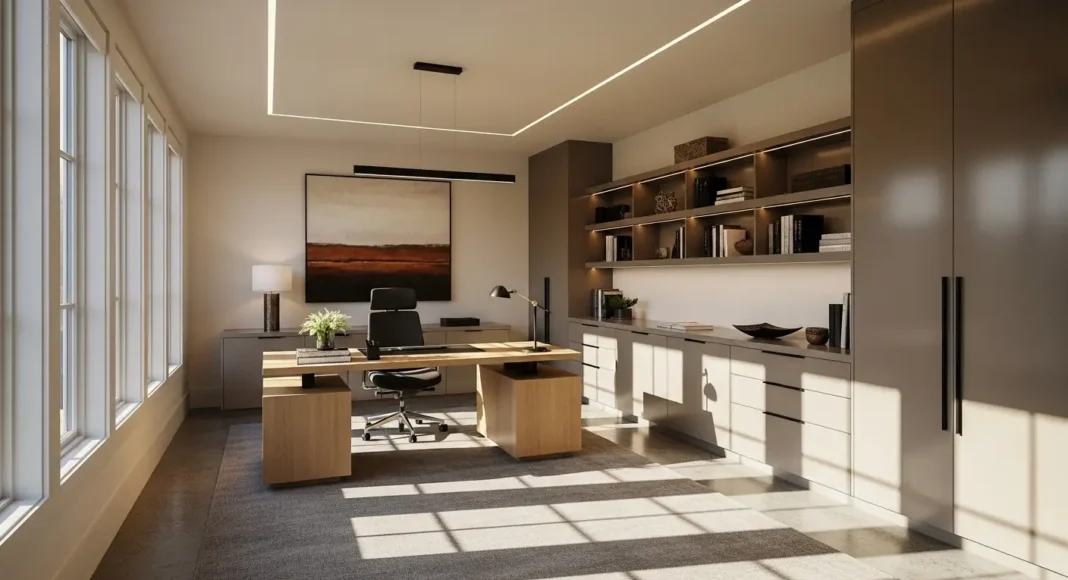
A garage home office is no longer a compromise. For many affluent homeowners, it has become a deliberate design choice—one that blends privacy, productivity, and long-term value.
As homes evolve to support flexible work, the garage stands out as a self-contained, adaptable space that can be transformed into a professional-grade office without disrupting the rest of the home.
We explore how to plan, design, and execute a garage conversion that feels intentional, elegant, and highly functional. This guide focuses on realistic decisions, thoughtful design, and practical comfort—without exaggeration or shortcuts.
Important note: A successful garage office is not about squeezing a desk into a cold concrete box. It is about creating a controlled environment that supports focus, comfort, and credibility.
Table of Contents
Why a Garage Home Office Appeals to High-End Homeowners
Separation Without Sacrifice
Affluent professionals value boundaries. A garage office creates a physical and mental separation between work and personal life while remaining on-site.
Key advantages include:
- Reduced household distractions
- A stronger sense of routine and structure
- The ability to “leave work” at the end of the day
Design Freedom
Unlike spare bedrooms, garages often start as blank canvases. This allows:
- Custom layouts
- Tailored lighting plans
- Built-in storage and architectural details
Property Value Considerations
A well-executed garage office conversion can enhance property appeal, especially when the design remains reversible or multi-functional.
Quote:
“The most successful garage offices are designed as flexible spaces first, offices second.”
Planning a Garage Home Office the Right Way
Assessing the Existing Space
Before design begins, we evaluate the garage honestly.
Consider:
- Ceiling height
- Natural light availability
- Structural condition
- Access points
Not every garage is ideal, but most can be improved with thoughtful planning.
Zoning and Local Compliance
Some areas regulate garage conversions. It is essential to confirm:
- Zoning permissions
- Parking requirements
- Electrical and insulation standards
Important note: Always confirm local regulations before construction begins to avoid costly revisions.
Insulation, Climate, and Acoustic Comfort
Thermal Comfort Is Non-Negotiable
Garages are not built for daily occupancy. Proper insulation is critical.
Common upgrades include:
- Insulated wall panels
- Sealed doors or replacement walls
- Energy-efficient windows
Heating and Cooling Options
A ductless mini-split system is often the most practical solution, offering:
- Quiet operation
- Independent temperature control
- Clean wall integration
Sound Control for Professional Use
Noise affects performance. We recommend:
- Acoustic wall treatments
- Solid-core interior doors
- Weather stripping to reduce sound leakage
Designing a Garage Home Office That Feels Intentional
Layout That Supports Focus
A strong layout prioritizes:
- Desk placement with visual balance
- Clear circulation paths
- Defined zones for work, storage, and seating
Lighting Strategy
Lighting defines how the space feels and performs.
A layered approach works best:
- Ambient ceiling lighting
- Task lighting at the desk
- Accent lighting for depth
Quote:
“Lighting should support your work rhythm, not fight it.”
Material Choices That Elevate the Space
Flooring Options Compared
| Floor Type | Benefits | Considerations |
|---|---|---|
| Engineered Wood | Warm, professional look | Requires moisture control |
| Luxury Vinyl | Durable, quiet, versatile | Quality varies by brand |
| Polished Concrete | Modern, low maintenance | Can feel cold without rugs |
Walls and Finishes
Neutral tones dominate high-end garage offices:
- Soft whites
- Warm greiges
- Muted earth tones
These colors reflect light and reduce visual fatigue.
Furniture That Balances Comfort and Authority
Desk Selection
A desk anchors the room. Ideal desks offer:
- Solid construction
- Cable management
- Proportions that suit the room size
Seating Matters More Than Style
An ergonomic chair is not optional. Long-term comfort protects:
- Posture
- Focus
- Overall well-being
Technology and Infrastructure Essentials
Electrical Planning
A garage office often needs:
- Additional outlets
- Dedicated circuits
- Surge protection
Connectivity
Reliable internet is essential. Options include:
- Hardwired Ethernet
- Mesh Wi-Fi systems
Important note: Plan connectivity early. Retrofitting later is more disruptive.
Storage Without Visual Clutter
Built-in storage keeps the office refined:
- Wall-mounted cabinets
- Concealed shelving
- Minimalist drawer systems
A clean environment supports mental clarity.
Security and Privacy Considerations
A garage office may require:
- Reinforced entry doors
- Smart locks
- Window treatments for privacy
These features protect both equipment and peace of mind.
Sustainability and Long-Term Use
High-end homeowners often prioritize sustainability.
Smart choices include:
- Energy-efficient lighting
- Low-VOC finishes
- Durable materials with long lifespans
Common Mistakes to Avoid
- Ignoring insulation
- Underestimating lighting needs
- Overfurnishing the space
- Skipping professional assessments
Quote:
“A garage office should feel planned, not improvised.”
Final Thoughts: A Space Designed to Work as Hard as You Do
A garage home office is an investment in focus, productivity, and lifestyle balance. When designed with intention, it becomes more than a workspace—it becomes a controlled environment that supports high-level work without compromising comfort or style.
We believe the best garage offices are quietly impressive. They do not rely on trends or excess. They rely on clarity, quality, and thoughtful execution.