


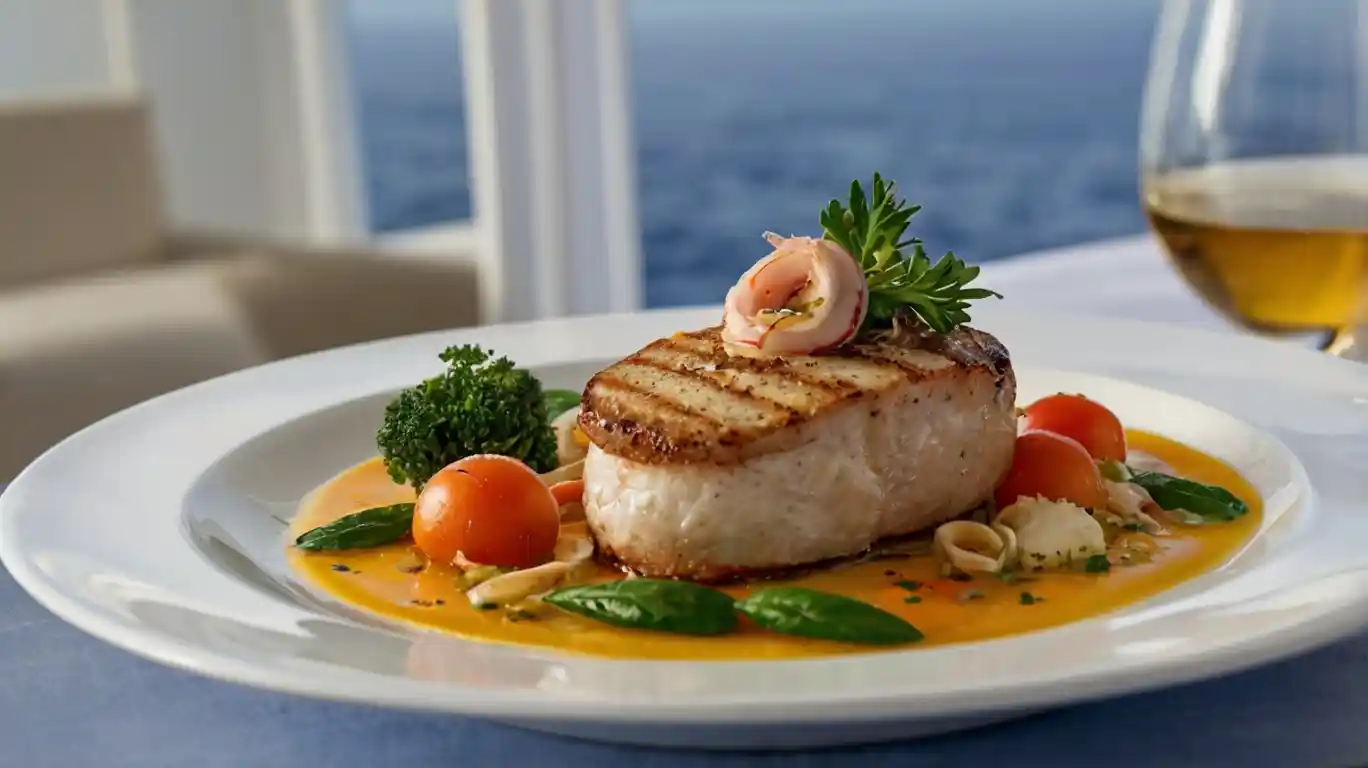

The gentle sway of the ocean beneath you, the shimmer of moonlight dancing across endless waves, and a perfectly seared Wagyu tenderloin melting on your palate—this is gourmet dining at sea in its most magnificent form.
Gone are the days when cruise cuisine meant uninspiring buffets and mediocre mass-produced meals.
Today’s luxury vessels have transformed into floating temples of gastronomy, where Michelin-starred chefs create unforgettable culinary journeys that rival—and sometimes surpass—the finest restaurants on land.
The marriage of spectacular ocean vistas with world-class cuisine has created a new paradigm in luxury travel, one where the dining experience becomes as memorable as the destinations themselves.
Table of Contents
The Evolution of Maritime Cuisine
Cruise dining has undergone nothing short of a revolution over the past two decades. Early passenger vessels viewed food as mere sustenance—functional fuel for travelers making their way across vast oceans.
Dining rooms were utilitarian spaces where passengers gathered not for culinary delight but for basic nourishment. The focus remained squarely on quantity rather than quality, with midnight buffets and all-you-can-eat extravaganzas serving as primary selling points well into the 1990s.
The sea change began when luxury cruise operators recognized that their increasingly sophisticated clientele demanded more.
These well-traveled passengers, accustomed to dining in world-class restaurants, were no longer satisfied with conventional cruise fare. Their expectations forced a fundamental reimagining of shipboard dining programs.
“The transformation represents one of the most significant evolutions in the cruise industry,” notes one veteran maritime hospitality consultant. “What was once an afterthought has become the centerpiece of the luxury cruise experience.”
From Buffets to Bespoke Experiences
Today’s luxury vessels offer unprecedented culinary variety. Gone are the days of a single main dining room and casual buffet.
Contemporary ships feature multiple specialty restaurants, each with distinct culinary identities, alongside intimate chef’s tables, wine-pairing dinners, and private dining experiences tailored to individual preferences.
The Ritz-Carlton Yacht Collection exemplifies this new approach, offering regionally-inspired cuisine that provides immersive experiences in the cultural traditions of visited locations.
Passengers can indulge in à la carte dining experiences designed by Chef Sven Elverfeld of Aqua, the three Michelin-starred restaurant at The Ritz-Carlton in Wolfsburg, or enjoy fresh catch al fresco while basking poolside.
World-Class Chefs Making Waves
The presence of culinary superstars has fundamentally elevated expectations for dining at sea. These accomplished chefs bring more than just their names—they bring visionary approaches to ingredients, techniques, and flavor combinations that transform maritime dining into something truly extraordinary.
The logistical challenges of creating haute cuisine at sea are formidable. Space constraints limit kitchen layouts, long voyages require ingenious approaches to ingredient storage and freshness, and the movement of the vessel creates unique challenges unknown in land-based establishments.
That these chefs overcome such obstacles while maintaining exceptional standards speaks to both their technical prowess and creative adaptability.
Oceania Cruises illustrates this commitment to culinary excellence with their newest ship, Allura, launching in July 2025.
The vessel’s Grand Dining Room will introduce an unprecedented selection of more than 270 new recipes, each crafted with precision, flavor, and innovation.
This extraordinary investment in menu development demonstrates how seriously luxury cruise lines now take their culinary reputations.
The Sensory Enhancement of Gourmet Dining at Sea
What elevates gourmet dining at sea beyond its land-based counterparts is the multisensory experience created by the marine environment.
The setting—surrounded by endless ocean horizons or breathtaking coastal panoramas—creates an ambiance impossible to replicate elsewhere. This sensory enhancement transforms even excellent cuisine into something truly transcendent.
Picture yourself dining on the Seine River in Paris, where a luxury dinner cruise pairs classic French cuisine with unparalleled views of illuminated landmarks like the Eiffel Tower and Notre-Dame Cathedral.
Or imagine savoring premium Australian seafood while gliding past the iconic Sydney Opera House and Harbour Bridge during a Sydney Harbour cruise.
These experiences combine culinary excellence with constantly changing visual spectacles, creating memories that endure long after the journey ends.
The gentle movement of the vessel adds another dimension entirely. While modern stabilization technology minimizes excessive motion, the subtle reminder that you’re dining on water adds an ineffable element of adventure to each meal.
This slight unpredictability—the knowledge that you’re experiencing something that couldn’t exist in a static, land-based setting—enhances the overall sensation of luxury and escapism.
Luxury Cruise Lines Leading the Culinary Revolution
The competitive landscape of luxury cruising has fueled an arms race in culinary excellence. Several standout companies now set new benchmarks for gourmet dining at sea.
Each brand brings a distinct philosophy to its dining programs. This variety gives discerning travelers increasingly refined and sophisticated choices.
The Ritz-Carlton Yacht Collection
Building on its renowned hospitality legacy, The Ritz-Carlton Yacht Collection has elevated cruise dining with world-class menus. These offerings blend locally sourced ingredients with globally inspired flavors.
The dining experience emphasizes understated, relaxed luxury. Contemporary interiors, open-air venues, and al fresco spaces invite guests to connect with the sea and daily destinations.
Passengers enjoy a range of specialty restaurants and intimate dining venues. Innovative menus ensure that every culinary preference is thoughtfully addressed.
À la carte dining is designed by Chef Sven Elverfeld of Aqua. This three Michelin-starred restaurant in Wolfsburg represents a rare level of culinary partnership at sea.
Explora Journeys
A newer player in the luxury cruise market, Explora Journeys distinguishes itself with nine unique dining experiences. Options include in-suite dining, Emporium Marketplace, Sakura, Marble & Co. Grill, Med Yacht Club, Fil Rouge, and Crema Café.
Sakura delivers an immersive Pan-Asian dining experience. The restaurant showcases refined Japanese, Thai, Vietnamese, and Malaysian flavors.
Named after the cherry blossom, Japan’s national flower, Sakura symbolizes renewal and optimism. The venue reflects this spirit through its thoughtful design and atmosphere.
The interior draws inspiration from Japanese cultural heritage. Dark wood frames, traditional ceiling details, and cherry blossom canopies create a warm and inviting setting enhanced by soft festoon lighting.
Authenticity continues in the kitchen. Chefs apply traditional techniques and rely on carefully sourced ingredients to ensure genuine flavors.
A dedicated sake sommelier elevates the experience further. Curated sakes, shōchū, Asian-inspired beverages, and contemporary Asian music complete the immersive atmosphere.
Oceania Cruises
Oceania Cruises remains synonymous with culinary excellence. The brand continues to push boundaries with its upcoming ship, Allura, launching in July 2025.
The Grand Dining Room will debut more than 270 new recipes. Each dish is crafted with precision, creativity, and balanced flavor.
This open-seating venue evolves throughout the day. Breakfast features over 30 reimagined recipes that blend comfort and innovation.
At lunch, the space transforms into La Brasserie. Parisian elegance defines the midday dining experience.
Evenings bring a refined blend of timeless classics and modern gourmet interpretations. This adaptability highlights how cruise lines are maximizing culinary creativity within a single venue.

Global Flavors and Authentic Regional Cuisine
One of the most exciting developments in luxury cruise dining is the embrace of regional cuisine that connects passengers to the destinations they visit.
Today’s sophisticated travelers seek authentic culinary experiences that provide deeper connections to the cultures they encounter during their journey.
The Ritz-Carlton Yacht Collection exemplifies this approach with regionally-inspired cuisine that provides immersive experiences in the cultural traditions of each location.
This commitment to authenticity requires extensive research and relationship-building with local food producers and culinary experts around the world.
Executing this vision requires extraordinary logistical coordination. Fresh ingredients are often sourced directly from upcoming ports, with local suppliers carefully vetted to ensure quality and sustainability.
Specialty items might be airfreighted to meet vessels at specific locations, ensuring passengers experience genuine flavors rather than approximations.
Exclusive Gourmet Dining at Sea Experiences and Private Celebrations
For passengers seeking the ultimate in personalized dining, luxury cruise lines offer extraordinary exclusive experiences that go beyond even their already exceptional standard offerings. These bespoke travel experiences options represent the pinnacle of gastronomic indulgence at sea.
Chef’s table experiences provide intimate access to the culinary team’s creative process. Limited to small groups, often in secluded areas of the main galley or in private dining rooms, these events typically feature extended tasting menus with personal explanations from the executive chef.
Wine pairings are customized for each course, often presented by the onboard sommelier, creating a comprehensive sensory journey that combines education with indulgence.
Melisa Sailing in Bonaire exemplifies the appeal of exclusive dining experiences at sea with their sunset dinner cruises.
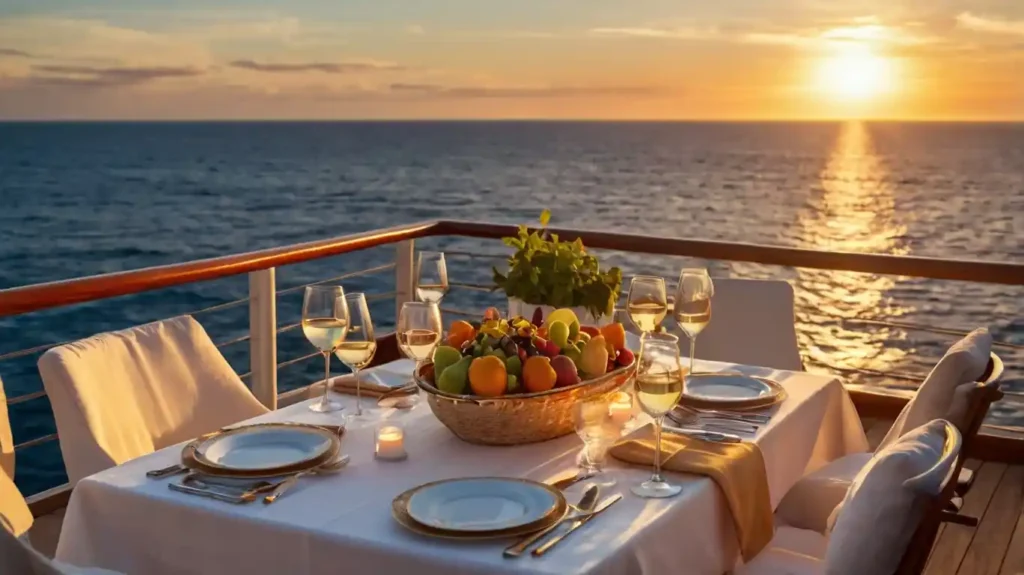
As the sun dips below the horizon, painting the sky in hues of pink and gold, guests enjoy delectable meals showcasing Caribbean cuisine while surrounded by breathtaking sea views.
This combination of natural beauty, personalized service, and excellent food creates memories that last long after the journey ends.
Wine and Spirits: Elevating the Experience
No discussion of gourmet dining at sea would be complete without acknowledging the equally refined beverage programs that accompany the cuisine.
Luxury cruise lines invest heavily in wine collections, premium spirits, and trained professionals who guide guests through memorable drinking experiences.
Onboard wine programs have reached impressive levels of sophistication. Many collections include thousands of bottles stored in temperature-controlled cellars.
Dedicated sommeliers curate these selections on many luxury vessels. Their focus includes both renowned producers and hidden gems from wine regions around the world.
These experts do more than recommend pairings. They also educate guests through tastings, food-pairing events, and informal conversations about each wine’s origin.
Explora Journeys’ Sakura restaurant highlights this commitment to beverage quality. It features a sake sommelier and Asian-inspired drinks, including curated sakes and shōchū.
Such specialized expertise shows how cruise lines elevate every aspect of dining. Exceptional beverages are treated as essential to memorable meals, not secondary additions.
The Future of Gourmet Dining at Sea
As luxury cruise lines continue to innovate, new trends are reshaping maritime dining.
These developments mirror broader movements in the culinary world. They also address the unique challenges of delivering exceptional food experiences at sea.
Sustainability has shifted from a marketing term to a core operating principle for many cruise lines.
This approach appears in multiple areas. Examples include local sourcing, seasonal menus, and reduced food waste through smarter inventory systems.
Some vessels now feature onboard gardens that grow herbs and microgreens. Others partner with sustainable fisheries and organic farms at ports of call.
This commitment appeals to environmentally conscious travelers. It also results in fresher, more flavorful meals.
Interactive dining experiences are becoming more popular with guests. Chef-led cooking classes and modern demonstration kitchens offer both education and entertainment.
Some luxury lines now provide tablet-based wine lists. These tools make extensive collections easier for passengers to explore.
Planning Your Gourmet Dining at Sea Adventure
Travelers seeking the finest maritime dining should choose their cruise carefully.
The culinary program deserves close attention. It should influence decisions alongside itinerary and accommodations.
When comparing options, research each cruise line’s culinary philosophy and partnerships. Collaborations with renowned chefs often lead to more distinctive experiences.
The Ritz-Carlton Yacht Collection partners with Chef Sven Elverfeld of the three-Michelin-starred Aqua restaurant. Oceania Cruises also demonstrates its commitment through hundreds of new recipes aboard its Allura ship.
Dining variety is another key factor. The most compelling cruises offer more than a single main dining room.
Specialty restaurants focused on different cuisines or concepts add depth to the experience.
Gourmet Dining at Sea Conclusion
Dining at sea has undergone one of the cruise industry’s most significant transformations in recent decades.
What was once secondary has become a defining feature. Luxury cruise lines now compete to deliver authentic and unforgettable culinary experiences.
For many passengers, food has become the highlight of the journey. In some cases, it rivals or surpasses the destinations themselves.
The combination of exceptional cuisine and ocean travel creates something truly special.
Enjoying a beautifully prepared meal against endless horizons or dramatic coastlines adds a sense of magic. The gentle motion of the ship reminds guests that this experience exists nowhere else on earth.