


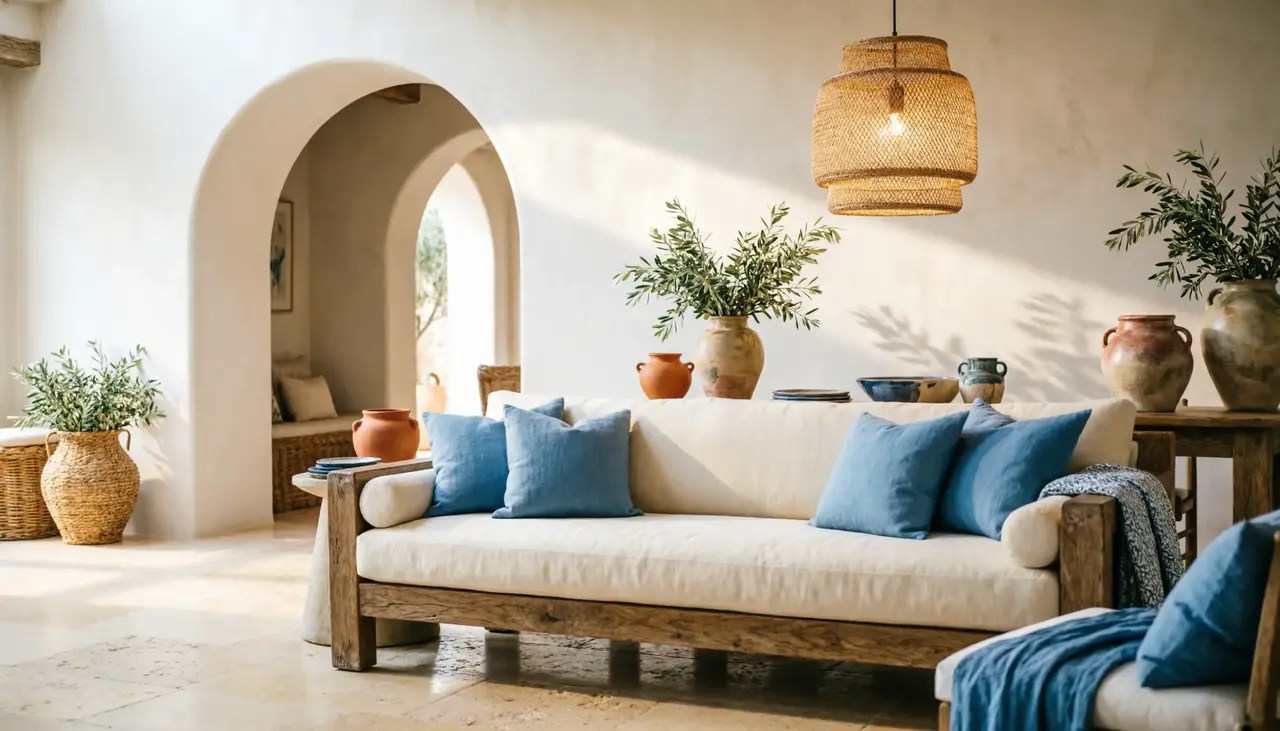
Mediterranean home decor brings the relaxed beauty of sun-washed coastal regions indoors through natural materials, earthy colors, handcrafted details, layered textures, and an easy sense of comfort. The style can feel rustic, refined, coastal, or contemporary depending on how you combine these elements.
The key is not to make every room look themed. Instead, Mediterranean design works best when you create a warm visual rhythm: textured walls, natural wood, stone, terracotta, linen, ceramics, soft lighting, and carefully chosen accents.
Whether you’re decorating an entire house or simply want to introduce Mediterranean character into one room, the ideas below will help you create a space that feels collected rather than overly decorated.
Table of Contents
What Is Mediterranean Home Decor?
Mediterranean home decor is an interior style inspired by the architecture, landscapes, materials, and relaxed lifestyle associated with Mediterranean regions, particularly Spain, Italy, Greece, and coastal areas of North Africa.
The aesthetic typically combines:
- Warm, earthy color palettes
- Natural stone and terracotta
- Whitewashed or textured walls
- Wood and wrought iron
- Linen and cotton fabrics
- Handmade ceramics
- Arched architectural details
- Layered lighting
- Indoor plants
- Comfortable, substantial furniture
- Connections between indoor and outdoor spaces
Rather than following one rigid formula, Mediterranean decor is a broad design language. A Greek-inspired room may emphasize white and blue, while an Italian-influenced interior might lean toward warm plaster, aged wood, and olive tones.
The common thread is natural beauty, craftsmanship, warmth, and effortless comfort.
The Core Principles of Mediterranean Interior Design
Before buying furniture or accessories, start with the principles behind the style. This makes it easier to create a cohesive room without filling it with obvious Mediterranean-themed objects.
1. Prioritize Natural Materials
Mediterranean interiors rely heavily on materials that look and feel organic.
Consider:
- Terracotta
- Limestone
- Travertine
- Natural wood
- Wrought iron
- Rattan
- Jute
- Linen
- Cotton
- Ceramic
- Hand-finished plaster
The goal isn’t perfect uniformity. Small variations in texture, color, and finish are part of what gives the style its character.
Expert tip: If your room already has modern architecture, introduce natural materials through flooring, a wood coffee table, woven lighting, ceramic accessories, or linen upholstery rather than attempting a complete renovation.
2. Build Around Warmth
Mediterranean design should feel comfortable before it feels decorative.
Warm whites, sand, cream, beige, terracotta, ochre, olive, and muted blue create a natural foundation. Deeper shades can then be introduced through furniture, artwork, rugs, or ceramics.
A useful approach is:
| Layer | Suggested colors |
|---|---|
| Base | Warm white, cream, sand |
| Secondary | Beige, taupe, olive |
| Warm accent | Terracotta, rust, ochre |
| Cool accent | Mediterranean blue, muted teal |
| Dark contrast | Espresso, charcoal, aged bronze |
This layered approach prevents the room from becoming either too beige or excessively colorful.
Mediterranean Color Palettes That Feel Sophisticated
Color is one of the easiest ways to introduce Mediterranean character, but restraint matters.
Warm White and Terracotta
This is one of the most recognizable combinations.
Use warm white for walls and larger surfaces, then introduce terracotta through:
- Floor tiles
- Pottery
- Cushions
- Vases
- Tableware
- Artwork
The result feels sun-baked and welcoming without becoming overly rustic.
Sand, Beige, and Olive
For a quieter interpretation, combine sandy neutrals with olive green.
This palette works particularly well in:
- Living rooms
- Bedrooms
- Dining rooms
- Reading areas
Wood and woven textures add enough variation to keep neutral spaces from feeling flat.
White and Mediterranean Blue
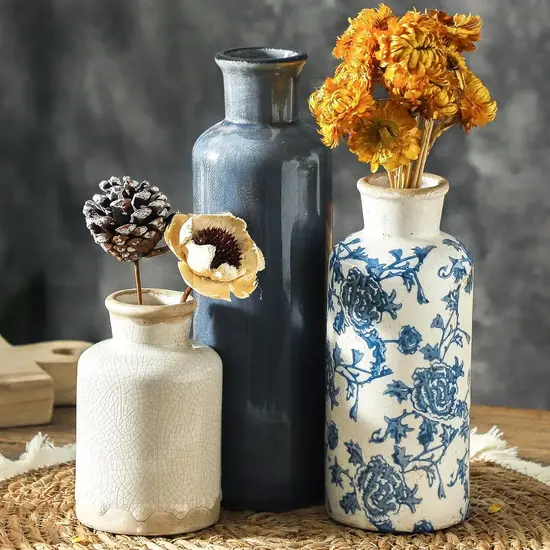
Blue can provide a refreshing coastal contrast.
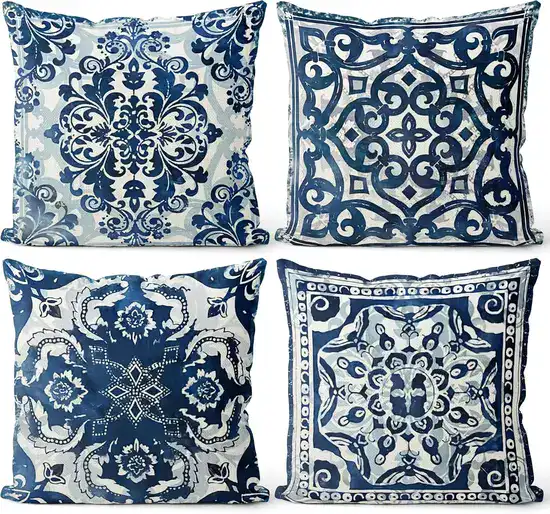
Instead of covering an entire room in bright blue, try:
- Blue ceramic lamps
- Patterned cushions
- Decorative tiles
- Artwork
- Painted cabinetry
- Accent chairs
The combination works especially well when paired with warm wood and natural stone.
Earthy Rust and Cream
For a more sophisticated, contemporary Mediterranean interior, use rust, clay, caramel, and cream.
This palette feels richer than a traditional blue-and-white scheme and works beautifully with brass, dark wood, and textured plaster.
10 Essential Mediterranean Home Decor Elements
If you’re starting from scratch, these are the elements worth considering first.
1. Terracotta
Terracotta instantly introduces warmth. Use it for flooring, planters, tableware, decorative objects, or accent tiles.
You don’t need an entire terracotta floor to achieve the effect.
2. Natural Stone
Stone creates the grounded quality associated with Mediterranean architecture.
Travertine, limestone, marble, and other natural stones can appear in:
- Flooring
- Coffee tables
- Countertops
- Fireplace surrounds
- Bathroom surfaces
- Decorative objects
3. Textured Walls
Smooth, perfectly uniform walls can make a Mediterranean room feel too contemporary.
Textured plaster, limewash-style finishes, and other tactile surfaces can introduce visual depth.
If you rent your home, achieve a similar effect with textured artwork, woven wall pieces, or large-scale natural-fiber decor.
4. Arches
Arches are strongly associated with Mediterranean architecture and can soften otherwise angular spaces.
You can incorporate them through:
- Doorways
- Alcoves
- Mirrors
- Shelving
- Headboards
- Wall niches
A simple arched mirror can create the visual effect without structural remodeling.
5. Rustic or Aged Wood
Choose furniture with visible grain and natural character.
Ideal pieces include:
- Reclaimed-looking dining tables
- Wooden benches
- Carved stools
- Oak cabinets
- Walnut accent furniture
Avoid making every wooden piece identical. A slightly collected appearance feels more authentic.
6. Handmade Ceramics
Ceramics are an easy way to add personality.
Look for:
- Irregular shapes
- Hand-painted patterns
- Matte finishes
- Earthy colors
- Blue-and-white pottery
- Oversized vessels
Display a few meaningful pieces rather than covering every surface.
7. Wrought Iron
Wrought iron provides contrast against soft plaster and natural fabrics.
It works particularly well for:
- Chandeliers
- Wall sconces
- Bed frames
- Console tables
- Mirrors
- Shelving
8. Linen
Linen adds softness while maintaining the relaxed character of Mediterranean design.
Use it for:
- Curtains
- Bedding
- Sofa cushions
- Dining textiles
- Upholstery
Natural wrinkles are part of the appeal.
9. Woven Textures
Rattan, jute, seagrass, cane, and woven fibers add another tactile layer.
Try woven pendant lights, baskets, rugs, or occasional chairs.
10. Greenery
Mediterranean-inspired interiors benefit from plants that reinforce the connection with nature.
Depending on your climate and indoor conditions, consider olive-inspired foliage, herbs, citrus plants, rosemary, lavender, or other suitable greenery.
How to Decorate a Mediterranean Living Room
The living room is where the relaxed character of Mediterranean decor can really shine.
Start with a comfortable sofa in cream, beige, oatmeal, or another warm neutral. Then introduce natural wood through the coffee table or side tables.
Layer the room with:
- A textured area rug
- Linen cushions
- Ceramic vessels
- Woven baskets
- Natural wood
- A large mirror
- Sculptural lighting
- Greenery
Instead of arranging everything symmetrically, create a comfortable conversation area.
A large coffee table can become the visual center of the room, while a ceramic bowl, books, and a simple branch arrangement provide understated decoration.
The design rule: Choose texture before ornament.
A room with beautiful plaster, linen, wood, stone, and ceramics often needs fewer decorative objects than you think.
Mediterranean Kitchen Decor Ideas
Mediterranean kitchens often feel practical and decorative at the same time.
Consider:
- Warm wood cabinetry
- Open shelving
- Handmade-looking tile
- Stone countertops
- Terracotta flooring
- Ceramic pendant lights
- Brass or aged-metal hardware
- Large wooden cutting boards
- Displayed ceramics
- Fresh herbs
Open shelving works particularly well because it allows beautiful everyday objects to become part of the decor.
However, don’t display everything.
Keep frequently used pieces accessible and group decorative objects in small collections. This creates visual interest without making the kitchen look cluttered.
Mediterranean Bedroom Decor
A Mediterranean bedroom should feel calm, tactile, and slightly imperfect.
Start with warm neutral walls and natural bedding.
Then add:
- Linen duvet covers
- Layered blankets
- A wooden or wrought-iron bed
- Ceramic bedside lamps
- Textured rugs
- Natural wood nightstands
- Arched mirrors
- Soft curtains
Avoid excessive matching.
A pair of identical nightstands is perfectly fine, but the room doesn’t need every piece of furniture to come from the same collection.
For more inspiration, explore Spanish mediterranean homes, particularly if you want to bring architectural character such as arches, terracotta, textured walls, and wrought iron into the bedroom.
Mediterranean Bathroom Decor
Bathrooms are particularly well suited to Mediterranean materials.
Think:
- Stone surfaces
- Terracotta-inspired tile
- Handmade-look ceramic tile
- Arched mirrors
- Plaster-style walls
- Brass fixtures
- Wooden stools
- Woven baskets
- Soft linen towels
A restrained palette of cream, sand, clay, and muted green can make a bathroom feel like a private retreat.
For a contemporary interpretation, combine traditional-looking materials with clean fixtures and minimal visual clutter.
Mediterranean Dining Room Ideas
Dining spaces should feel welcoming rather than formal.
A large natural-wood table can become the anchor. Surround it with simple upholstered or wooden chairs and add one strong lighting fixture overhead.
Complete the space with:
- Ceramic dinnerware
- Linen napkins
- Olive branches
- A stone or wood centerpiece
- Woven placemats
- A vintage-inspired sideboard
The best Mediterranean dining rooms suggest long meals and conversation rather than showroom perfection.
How to Make Mediterranean Decor Look Luxurious
Mediterranean style doesn’t require expensive furniture to look elevated.
Luxury comes primarily from material quality, proportion, restraint, and texture.
Use Fewer, Better Pieces
Instead of ten inexpensive accessories, choose three or four substantial pieces.
For example:
- One oversized ceramic vase
- One sculptural mirror
- One quality rug
- One distinctive light fixture
This creates a stronger visual impact.
Mix Old and New
A modern sofa can look beautiful beside an antique-style wooden table.
Likewise, contemporary artwork can work against a textured plaster wall.
This contrast prevents Mediterranean interiors from feeling like historical reproductions.
Pay Attention to Lighting
Lighting can completely change the mood.
Use multiple layers:
- Ambient ceiling lighting
- Wall sconces
- Table or floor lamps
- Accent lighting
- Candles where appropriate
Warm, diffused light generally works better than harsh overhead illumination when you’re trying to create a relaxed atmosphere.
Mediterranean Decor by Budget
You don’t need a full renovation to change the atmosphere of your home.
| Budget | High-impact changes |
|---|---|
| Low | Ceramics, linen cushions, woven baskets, plants |
| Moderate | Lighting, rugs, mirrors, accent furniture |
| Higher | Natural stone, custom cabinetry, flooring, plaster finishes |
| Renovation | Arched openings, tiled floors, built-ins, architectural details |
The smartest strategy is to begin with portable elements.
If the room still feels too contemporary after adding textiles, ceramics, lighting, and natural materials, then consider larger architectural changes.
Mediterranean Home Decor Mistakes to Avoid
Mediterranean style can easily become visually heavy if every recognizable element is used at once.
Mistake 1: Overusing Terracotta
Terracotta is beautiful, but an entire room filled with orange and red tones can feel dated.
Balance it with cream, stone, olive, or muted blue.
Mistake 2: Turning the Room Into a Theme
You don’t need seashells, anchors, blue stripes, and coastal artwork everywhere.
Mediterranean design is broader than coastal decor.
Mistake 3: Making Everything Rustic
Too much distressed wood and heavy furniture can make the space feel dark.
Balance rustic pieces with clean-lined furniture and contemporary lighting.
Mistake 4: Ignoring Scale
A tiny ceramic vase may disappear on a large dining table.
Conversely, oversized accessories can overwhelm a small room.
Choose decor according to the proportions of the space.
Mistake 5: Forgetting Negative Space
One of the most luxurious design choices is leaving some surfaces intentionally empty.
Don’t decorate every shelf, wall, and tabletop.
Modern Mediterranean vs. Traditional Mediterranean Decor
Modern Mediterranean interiors simplify the traditional aesthetic while preserving its warmth.
| Element | Traditional Mediterranean | Modern Mediterranean |
|---|---|---|
| Walls | Textured, decorative | Soft plaster or clean finishes |
| Furniture | Rustic and substantial | Streamlined with natural materials |
| Colors | Earthy and saturated | Warm neutrals with restrained accents |
| Accessories | Layered and collected | Curated and minimal |
| Lighting | Ornate iron fixtures | Sculptural contemporary fixtures |
| Overall mood | Old-world character | Relaxed luxury |
The modern approach is particularly useful for apartments and newly built homes where traditional architectural features may be limited.
For a broader look at how Mediterranean elements work alongside other contemporary aesthetics, mediterranean style home interior designs provides additional inspiration.
A Simple Mediterranean Decorating Formula
If you’re unsure where to start, use this five-step formula:
1. Choose a warm base.
Start with cream, warm white, beige, or sand.
2. Add one earthy accent.
Introduce terracotta, clay, rust, or ochre.
3. Bring in natural materials.
Use wood, stone, linen, rattan, or ceramics.
4. Add one architectural or sculptural feature.
Try an arched mirror, textured wall, oversized pendant, or statement fireplace.
5. Finish with restrained decoration.
Add plants, ceramics, books, artwork, and textiles—but stop before the room feels crowded.
This formula works because it creates visual cohesion without requiring every object to match.
A Mediterranean Home Decor Shopping Checklist
Before buying anything, ask whether the piece contributes to one of these categories:
- Texture: linen, wool, jute, plaster
- Material: wood, stone, ceramic, metal
- Color: cream, sand, terracotta, olive, blue
- Shape: arches, organic forms, rounded furniture
- Craftsmanship: handmade or artisanal-looking details
- Function: useful pieces that also look beautiful
If an item doesn’t contribute to the overall composition, you probably don’t need it.
Key Takeaways
- Mediterranean home decor is built around warmth, natural materials, texture, and relaxed comfort.
- Start with warm neutrals before introducing stronger colors.
- Terracotta, stone, wood, linen, ceramics, and wrought iron are foundational materials.
- Arched shapes can introduce Mediterranean character without major renovations.
- Handmade-looking ceramics add personality without overwhelming a room.
- Layered lighting is essential for creating warmth after sunset.
- Modern Mediterranean design works particularly well in contemporary homes.
- Avoid turning the style into a literal coastal or rustic theme.
- Luxury comes from quality, proportion, texture, and restraint rather than excessive decoration.
- The most successful Mediterranean interiors feel collected, comfortable, and connected to nature.
Conclusion
The beauty of Mediterranean home decor is that it doesn’t demand perfection. It celebrates texture, craftsmanship, natural materials, comfortable furniture, and the subtle variations that make a home feel lived in.
You don’t need to transform your entire house overnight. Begin with a warm color palette, introduce natural materials, add tactile textiles, and choose a few distinctive pieces that reflect the relaxed Mediterranean spirit.
The most successful result isn’t a home that looks like a themed villa. It’s a home that feels warm, timeless, personal, and effortlessly inviting.
Frequently Asked Questions
What is Mediterranean home decor?
Mediterranean home decor is an interior style inspired by the architecture and landscapes of Mediterranean regions. It uses warm colors, natural materials, textured surfaces, ceramics, wood, stone, linen, and relaxed furniture to create a welcoming atmosphere.
What colors are best for Mediterranean home decor?
Warm white, cream, beige, sand, terracotta, olive green, ochre, rust, and muted blue are excellent choices. A warm neutral foundation with carefully selected earthy accents usually creates the most balanced result.
How can I make my home look Mediterranean?
Start with warm neutral colors, natural wood, linen textiles, ceramic accessories, woven materials, plants, and warm lighting. An arched mirror or textured wall finish can add an especially strong Mediterranean reference.
Is Mediterranean decor still popular?
Yes. Its emphasis on natural materials, warm neutrals, craftsmanship, indoor-outdoor living, and comfortable spaces aligns well with contemporary preferences for more tactile and relaxed interiors.
Can Mediterranean decor work in a modern house?
Absolutely. Modern Mediterranean interiors can combine clean-lined furniture and contemporary lighting with plaster finishes, stone, terracotta, natural wood, linen, and handcrafted accessories.
What is the difference between Mediterranean and coastal decor?
Mediterranean decor is broader than coastal design. While both may use blue and natural materials, Mediterranean interiors typically emphasize earthy colors, stone, terracotta, wood, plaster, craftsmanship, and architectural details such as arches.
How do I make Mediterranean decor look luxurious?
Focus on high-quality materials, generous proportions, layered textures, warm lighting, and fewer but more distinctive accessories. A restrained palette often looks more sophisticated than a room filled with themed decorations.
Can I use Mediterranean decor in a small apartment?
Yes. Focus on portable elements such as linen curtains, ceramic pieces, warm lighting, woven textures, natural wood, plants, and an arched mirror. These can create the aesthetic without structural renovations.

