


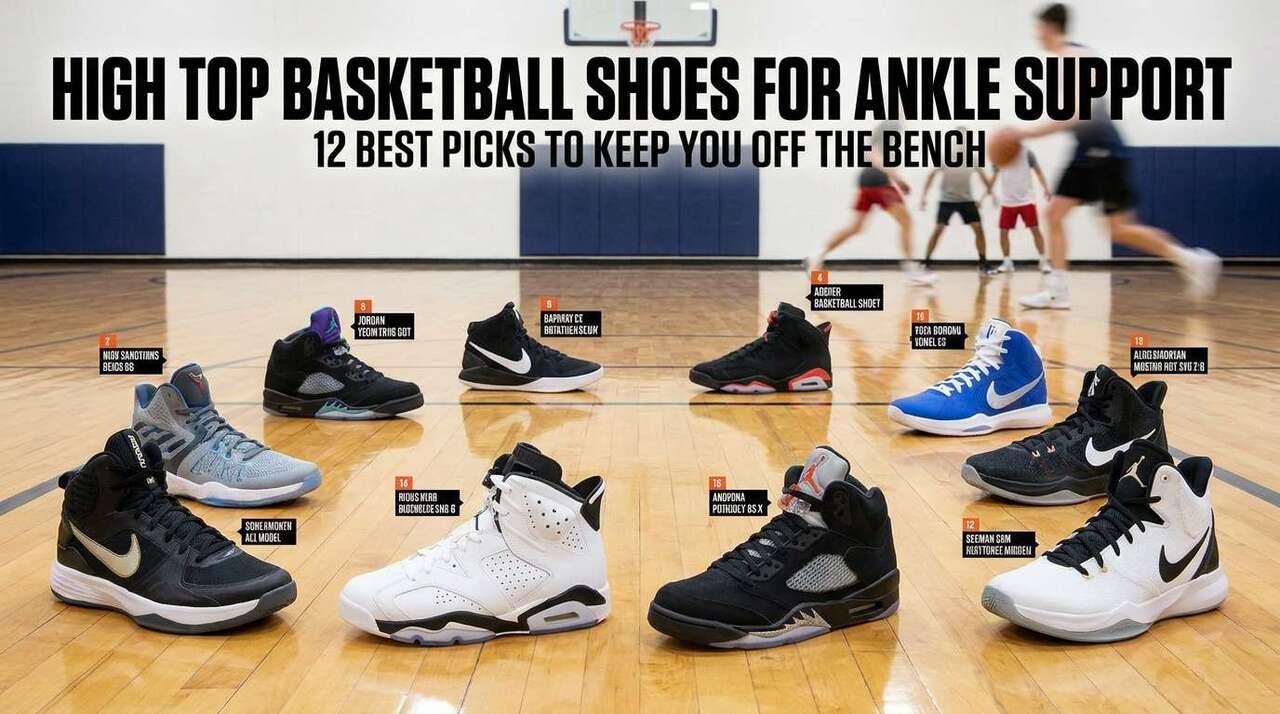
Let’s be real — nothing kills your game faster than rolling an ankle. One wrong step, one awkward landing, and suddenly you’re on the sideline icing your foot while your team plays on without you. Not fun.
That’s exactly why picking the right high top basketball shoes for ankle support is one of the most important decisions you’ll make as a baller — whether you’re grinding in the rec league or pushing for a scholarship.
I’ve spent years testing basketball shoes, talking to coaches, and reading the research on ankle injuries in sports.
In this guide, I’m breaking down everything you need to know — from how ankle support actually works in a shoe, to the best picks for men, women, guards, big men, and budget-conscious players. Let’s get into it.
Table of Contents
Why Ankle Support Matters More Than You Think
Ankle Injuries Are Basketball’s Biggest Villain
Ankle sprains account for roughly 40–45% of all basketball injuries, making them the single most common problem on the court. And it’s not hard to see why — basketball is all about explosive cuts, sudden stops, high jumps, and awkward landings. Your ankles are taking a beating every single play.
The most common culprits? Uneven court surfaces, landing on another player’s foot, and quick lateral movements without proper footwear. A lot of players think “it won’t happen to me,” until it does. Twice.
How High Top Basketball Shoes Actually Help
High top basketball shoes for ankle support work by extending the shoe’s collar — the upper part that wraps around your ankle — higher up your leg.
This does two big things: it physically limits the extreme inward roll (inversion) that causes most sprains, and it gives proprioceptive feedback, meaning your brain gets signals about your ankle position faster. Think of it as your shoe quietly whispering “hey, you’re tilting too much” before disaster strikes.
Who Should Really Prioritize Ankle Support
- Players with a history of sprains or chronic ankle instability
- Bigs (forwards and centers) who absorb heavy landings
- Aggressive cutters who change direction repeatedly
- Players returning from ankle injuries
- Anyone playing on outdoor courts (uneven surfaces = higher risk)
If you’re a guard who’s never had ankle issues and prioritizes speed above everything else, you might consider mid-tops. But honestly? Most players benefit from the added protection high tops provide.
Understanding Ankle Support Features in Basketball Shoes
High Top vs Mid Top vs Low Top: The Real Difference
| Type | Ankle Coverage | Mobility | Best For |
|---|---|---|---|
| High Top | Above the ankle | Moderate | Big men, injury-prone players |
| Mid Top | At the ankle | Good | All-around guards and forwards |
| Low Top | Below the ankle | Maximum | Speed-focused guards |
The Features That Actually Matter
Collar Height and Padding: The taller and more cushioned the collar, the better it cradles your ankle. Look for padded foam lining, not just fabric.
Heel Counter: This is the stiff cup at the back of the shoe that locks your heel in place. A solid heel counter is non-negotiable for ankle protection — without it, your foot shifts around inside the shoe and that leads to instability.
Lockdown Systems: Lacing systems, midfoot straps, and wrap-around designs all contribute to keeping your foot from sliding during lateral moves. Nike’s Flywire cables, Adidas’s LACE UP system, and UA’s BandageSystem are all solid examples.
Outsole Grip: Lateral herringbone patterns on the outsole help your foot grip the court during cuts instead of sliding out. This is underrated for ankle safety.
Cushioning: Technologies like Nike Zoom Air, Adidas Boost, and Under Armour HOVR absorb landing impact and reduce stress on your ankle joints. Less force = less injury risk.
Essential Buying Factors for the Best High Top Basketball Shoes
Fit Is Everything
A shoe that’s too loose lets your foot slide, which defeats the purpose of ankle support entirely. Too tight and you’ll cut off circulation and cause blistering.
Aim for a snug fit with about a thumb’s width of space at the toe. Always try shoes on later in the day when your feet are slightly swollen — that’s what they’ll feel like mid-game.
Know Your Foot Type
- Flat feet (overpronators): Need strong arch support and motion control
- High arches (underpronators): Need extra cushioning and flexibility
- Neutral arches: Most standard high tops will work fine
Weight vs. Stability Balance
Heavier shoes often offer better ankle support, but they can slow you down. Modern performance shoes have closed this gap significantly — brands like Nike and Adidas now offer high tops that weigh around 13–15 oz while still delivering excellent support.
Don’t sacrifice stability for a few ounces unless you’re an elite-level guard where speed is genuinely critical.
Durability: Indoor vs. Outdoor Courts
Outdoor courts are sandpaper for shoe soles. If you’re playing outside regularly, you need a thicker outsole with deeper tread. Gum rubber outsoles last longer outdoors. For indoor hardwood, herringbone patterns with thinner, tackier soles give better grip without wearing down fast.
Best High Top Basketball Shoes for Ankle Support — Top Picks
Best Overall for Maximum Ankle Stability
Nike LeBron NXXT Gen — The combination of a high-cut collar, full-length Air cushioning, and a stiff heel counter makes this one of the best ankle-supporting shoes on the market. It’s designed for power players who need stability on every possession.
Best for Elite Performance Players
Adidas Harden Vol. 8 — Designed for one of the quickest players in the game, these shoes balance support with responsiveness beautifully. The snug Lightstrike cushioning and ankle collar deliver excellent containment for all-around play.
Best for Guards Needing Quick Cuts and Support
Nike Kyrie Infinity — Kyrie’s signature line is all about traction and lateral containment. The multi-directional grip pattern and reinforced ankle collar make it a go-to for guards who love to slice through defenders.
Best for Forwards and Centers
Nike Air Zoom GT Jump 2 — Built for the paint, this shoe features a high ankle collar, maximum cushioning, and a wide base for stability on landings. If you’re catching lobs and blocking shots, this is your shoe.
Best Budget-Friendly High Top Basketball Shoes
Under Armour Spawn 6 — Great ankle support, solid traction, durable build — and it won’t drain your wallet. UA consistently delivers performance value at a lower price point than Nike or Adidas flagships.
Best Premium Performance Models
Nike Air Zoom G.T. Cut 3 — Premium price, premium protection. The articulated Zoom units and Dynamic Fit collar make this one of the most technically advanced basketball shoes for ankle Support available today.
Best Men’s High Top Basketball Shoes for Ankle Support
For Competitive Men’s Basketball
The Nike Air Max Impact 4 and Adidas D.O.N. Issue 5 are consistently top performers in competitive men’s rec and semi-pro leagues. Both offer above-ankle collars with solid heel lockdown.
Best for Wide Feet
New Balance TWO WXY v4 — New Balance is massively underrated in basketball. The TWO WXY fits wider feet naturally without needing to size up, and the ankle support is legitimate.
Best for Heavy Players (250+ lbs)
Nike LeBron Witness 8 — Built to handle LeBron’s power and weight, this shoe provides excellent impact absorption and lateral stability for bigger players. The wide, flat outsole base distributes weight evenly.
Best for Chronic Ankle Pain or Previous Injuries
Pair the Nike Air Force 1 High (yes, the classic) with a quality orthotic insole. The thick midsole and traditional high collar remain one of the most protective combos ever made — and there’s 40+ years of evidence to back that up.
Best Women’s High Top Basketball Shoes for Ankle Support
Women Need Basketball-Specific Fit
Women’s feet typically have a narrower heel, higher arch, and different weight distribution than men’s. Buying men’s shoes in a smaller size doesn’t cut it — proper women’s-specific construction makes a real difference for ankle alignment and injury prevention.
Best Women’s High Tops for Stability
Nike Air Zoom UNVRS FlyEase and Adidas Dame 8 (available in women’s sizing) both offer strong ankle collars with women’s-specific last construction. The Dame 8 in particular has been praised by female players for its snug, secure lockdown.
Best Lightweight Options for Female Guards
Nike Sabrina 1 — Sabrina Ionescu’s signature shoe is built for speed and agility while still maintaining respectable ankle support through a reinforced collar and strong midfoot strap. It’s also incredibly stylish, which is always a bonus.
Stylish Yet Supportive
Jordan Why Not .6 — Available in several women’s colorways, this shoe doesn’t compromise support for aesthetics. Solid collar, great traction, and it actually looks good off the court too.
Basketball Shoes with Ankle Support Beyond High Tops
Mid Top Alternatives Worth Considering
If full high tops feel restrictive, mid tops like the Adidas Trae Young 3 or Nike Zoom Freak 5 offer ankle-level collars with great lateral stability. They’re a solid compromise between mobility and protection.
Casual Hoopers and Cross-Training Options
For weekend warriors or gym sessions, the Nike React Infinity Run and New Balance Fresh Foam X weren’t designed for basketball but offer excellent ankle containment for casual play. Just don’t take them into a serious game.
Shoes for Bad Ankles Outside Basketball
For everyday life with ankle problems, the HOKA Bondi 8 and Brooks Adrenaline GTS 23 offer motion control and ankle stability that translates well beyond the basketball court.
Comparing Popular Basketball Shoe Brands for Ankle Protection
Nike
Nike dominates with technologies like Zoom Air, React foam, and Flywire cables that collectively deliver some of the best ankle containment in the game. Their Zoom GT line is specifically engineered for joint protection.
Adidas
Adidas’s Boost cushioning is phenomenal for impact absorption, and their recent models have significantly improved lockdown with better heel counters. The Harden and Dame lines are especially strong for guards.
Under Armour
UA’s HOVR technology and BandageSystem upper construction provide excellent ankle wrapping at a more accessible price point. Seriously underrated for the money.
New Balance and Emerging Brands
New Balance’s TWO WXY line is gaining serious respect in basketball circles. APL (Athletic Propulsion Labs) and Li-Ning are also pushing the boundaries — especially Li-Ning with their Way of Wade series.
High Top Basketball Shoes for Different Playing Styles
| Playing Style | Top Pick | Why It Works |
|---|---|---|
| Explosive Jumpers | Nike GT Jump 2 | Max cushioning absorbs landing impact |
| Defensive Specialists | Nike Kyrie Infinity | Grip-heavy outsole for lateral cuts |
| Fast Break Guards | Nike Zoom G.T. Cut 3 | Speed-oriented with strong collar |
| Post Players (Bigs) | Nike LeBron NXXT Gen | Wide base, max stability, great support |
Injury Prevention Beyond the Shoes
Braces vs. High Tops: Which Is Better?
Honestly? Both together is the best answer. Lace-up ankle braces like the ASO Ankle Stabilizer used inside a high top shoe create a layered protection system that outperforms either option alone. Studies show this combination reduces re-injury rates significantly for players with chronic ankle instability.
Insoles Can Be Game-Changers
Stock insoles in most shoes are mediocre at best. Upgrading to Superfeet GREEN or Currex RunPro insoles adds arch support and heel stability that the shoe’s stock insert simply can’t match. For players with flat feet or high arches, this is almost mandatory.
Strengthening Exercises for Weak Ankles
You can’t outsource all ankle protection to your shoes. Try these regularly:
- Single-leg balance drills — stand on one foot for 30–60 seconds, eyes closed for extra difficulty
- Resistance band eversion/inversion — strengthens the peroneal muscles that stabilize the ankle
- Calf raises — builds strength through the entire lower leg
- Lateral band walks — mimics the demands of basketball cuts
Lacing for Maximum Lockdown
The heel-lock lacing technique (also called “runner’s loop”) runs the last eyelet back through itself to create a heel anchor before tying. It takes 30 seconds and dramatically reduces heel lift during explosive movements. Look it up — it’s a game changer.
Common Mistakes When Choosing High Top Basketball Shoes
1. Prioritizing style over stability — I get it, colorways matter. But a shoe that looks great but fits poorly or has a weak collar is actively putting you at risk. Find the performance first, then pick the colorway.
2. Buying the wrong size — Half a size too big means your foot is moving inside the shoe. That gap is where ankle rolls happen.
3. Ignoring court surface — Outdoor shoes on indoor courts are slippery. Indoor shoes on outdoor courts wear out in weeks. Match the shoe to the surface.
4. Overlooking replacement timing — The cushioning in most basketball shoes breaks down after 300–500 miles of use or roughly one competitive season. Old cushioning means more impact reaches your joints. Replace on schedule.
How to Maintain High Top Basketball Shoes for Long-Term Support
Taking care of your investment means it takes care of your ankles longer.
- Clean after every session — Use a soft brush and mild soap on the upper. Remove insoles to dry separately.
- Monitor sole wear — Uneven wear patterns on the outsole signal alignment issues and reduced grip. Check the heel and lateral edges monthly.
- When to replace — If the midsole feels flat, the heel counter compresses too easily, or the upper is breaking down around the ankle, it’s time for a new pair. Don’t play on dead shoes.
- Storage tip — Keep shoes away from direct sunlight and heat. Both degrade foam cushioning and glue joints faster. A cool, dry shelf is ideal.
Expert Recommendations for Specific User Needs
| Player Type | Recommended Shoe | Notes |
|---|---|---|
| Beginners | Nike Precision 7 | Affordable, solid collar, easy to find |
| Recovering from Injury | Nike LeBron Witness 8 + ASO Brace | Layer protection during comeback |
| Teens / Youth Players | Adidas D.O.N. Issue 5 | Durable, supportive, reasonable price |
| Everyday Ankle Support | Nike Air Force 1 High | Classic collar, comfortable all-day |
Conclusion
Picking the right high top basketball shoes for ankle support isn’t just a gear decision — it’s a health decision. The right shoe can genuinely reduce your injury risk, extend your playing career, and keep you performing at your best.
Here’s the quick cheat sheet:
- Serious injury history? Go high top + ankle brace combo.
- Big man in the paint? Prioritize cushioning and a wide, stable base.
- Guard needing lateral quickness? Look for grip-forward designs with a solid collar.
- Budget tight? Under Armour Spawn 6 is your friend.
- Premium performance? Nike Zoom GT Cut 3 or LeBron NXXT Gen are worth every penny.
Match the shoe to your game, take care of your ankles off the court too, and replace your shoes before they give out on you mid-game. Your future self will thank you.
Frequently Asked Questions (FAQs)
Are high top basketball shoes better for ankle support?
Yes, in most cases. The extended collar limits extreme ankle inversion and provides proprioceptive feedback that helps prevent sprains. For players with previous ankle injuries or instability, the evidence strongly supports choosing high tops.
Can basketball shoes prevent ankle sprains completely?
No shoe can guarantee zero injuries — but the right high top significantly reduces your risk. Think of it as a seatbelt: it doesn’t make car accidents impossible, but it makes them a lot less damaging.
What are the best basketball shoes for weak ankles?
The Nike LeBron NXXT Gen, Nike Zoom GT Jump 2, and Under Armour Spawn 6 are consistently praised for ankle support. Pairing any of these with an ASO brace and a quality insole creates maximum protection.
Are women’s basketball shoes different from men’s for ankle support?
Yes — women’s-specific models have different last shapes (narrower heel, adjusted arch position) that provide better ankle alignment for female anatomy. Always buy women’s-specific shoes when available rather than sizing down in men’s.
Should I wear ankle braces with high top basketball shoes?
For players with chronic instability or a history of multiple sprains — absolutely yes. The combination outperforms either alone. For players without ankle history, it’s a personal choice.
How often should basketball shoes be replaced for proper support?
Every season for competitive players, or when you notice the midsole flattening and the heel counter softening. The ankle support built into a shoe degrades with wear even if the upper still looks fine.
What shoes are best for bad ankles outside basketball?
HOKA Bondi 8 for maximum daily cushioning, Brooks Adrenaline GTS for motion control, or the classic Nike Air Force 1 High for casual wear with solid ankle coverage. All three offer significantly better ankle containment than typical everyday shoes.

