


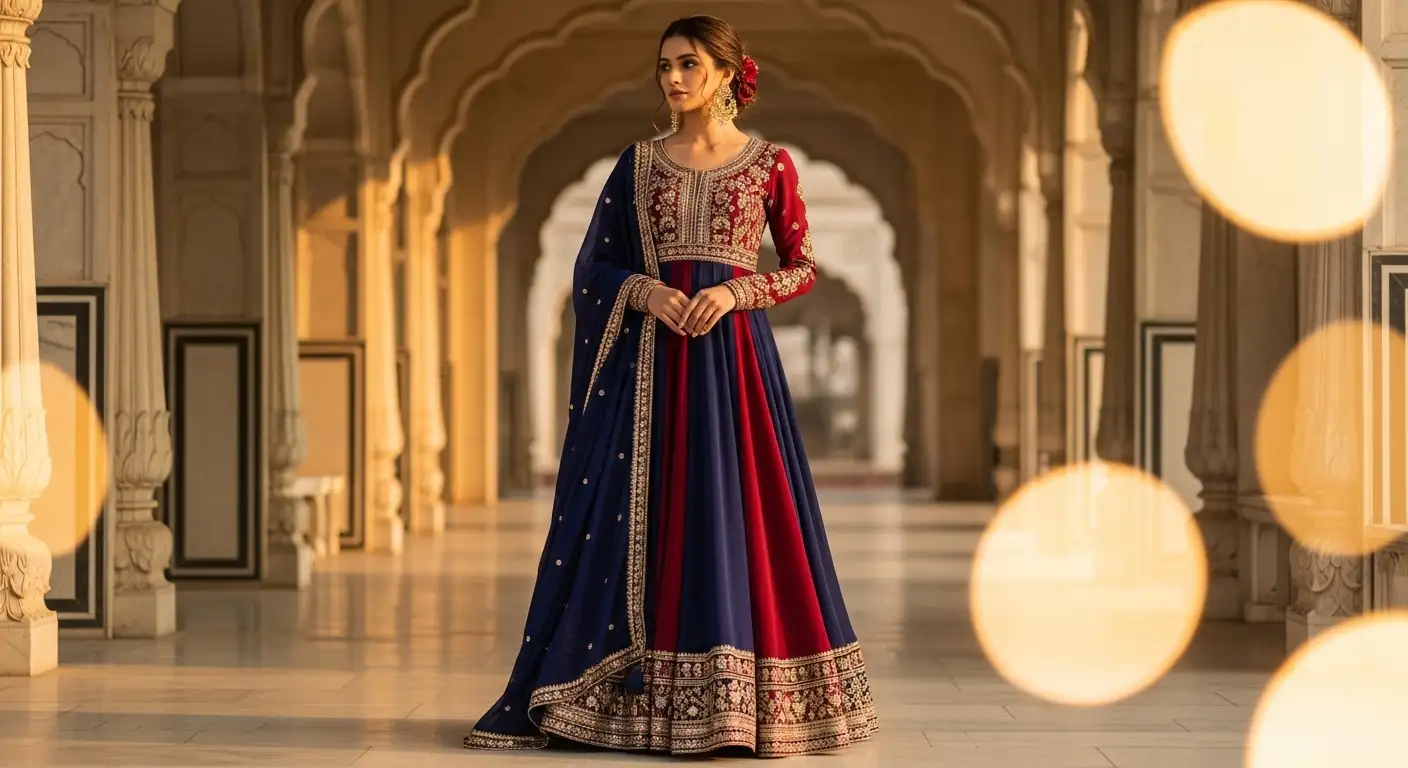
Let’s be real — if there’s one outfit that makes you feel like royalty without even trying, it’s the classic anarkali salwar suit.
Whether you’re heading to a wedding, a festive puja, or even a semi-formal dinner, this flowing, flared beauty does the heavy lifting for you. No wonder it’s been a favourite in South Asian fashion for centuries!
But here’s the thing — with so many anarkali suit designs flooding the market right now, it can get a little overwhelming to pick the right one.
Long or short? Embroidered or plain? Churidar or palazzo? Don’t stress — we’ve got you completely covered in this guide.
Table of Contents
What exactly is an anarkali salwar suit? (A quick history lesson, promise it’s fun)
The anarkali salwar suit gets its name from Anarkali, the legendary courtesan from the Mughal era — and honestly, the name fits perfectly.
It’s a long, flared kurta, usually paired with a fitted bottom like a churidar or palazzo pants, and topped off with a dupatta. Think: cinched waist, dramatic flare, effortless elegance.
What started as royal Mughal court attire has today become the backbone of ethnic wear for women across India, Pakistan, and beyond.
From Bollywood screens to real-life festive occasions, the anarkali has never really gone out of style — and there’s a very good reason for that.
💡 Fun fact: The anarkali silhouette gained massive global popularity after movies like “Mughal-e-Azam” (1960), and it’s been a red carpet staple in South Asian fashion weeks ever since.
7 stunning anarkali suit styles you should absolutely try
Here’s where it gets exciting. There isn’t just one type of anarkali salwar suit — there are loads of gorgeous variations, each with its own vibe. Here are the seven most popular ones right now:
Floor-length anarkali
Maximum drama, maximum elegance. Perfect for weddings and sangeet nights.
Churidar anarkali
Classic & fitted below the knee. Timeless for family functions and festivals.
Palazzo anarkali
Wide flared bottoms meet a flared kurta — comfort meets drama, always.
Jacket-style anarkali
A layered look with a fitted jacket on top. Very chic, very Bollywood.
Embroidered bridal anarkali
Heavy zardozi or thread embroidery. An alternative bridal statement piece.
Printed anarkali
Block prints, florals, digital prints — fun and casual everyday ethnic wear.
Pant-style anarkali
Paired with cigarette pants or straight trousers for a modern fusion look.
Picking the right anarkali suit design for your body type
Here’s the wonderful thing about anarkali suit designs — they work for literally everyone. But a few smart tweaks can make them look absolutely tailor-made for you.
Pear shape (wider hips)
Go for an A-line anarkali with embellishments on the neckline and shoulders. This draws the eye upward and balances your proportions beautifully. Avoid heavy work at the hem if you want a slimmer look below.
Apple shape (wider waist)
An empire-waist anarkali salwar suit is your best friend. It cinches just below the bust and then flows freely — flattering, forgiving, and fabulous all at once.
Petite frames
Stick to single-colour anarkalis or subtle prints. Avoid too many horizontal patterns, and opt for a slightly shorter hemline to create the illusion of longer legs. A medium flare works better than a heavy one.
Tall and slim frames
Lucky you — you can carry off practically any style! A floor-length churidar anarkali with heavy embroidery or bold prints looks absolutely stunning on taller women. Don’t be afraid to go dramatic.
💡 Quick tip: High heels + floor-length anarkali = instant royalty mode. But honestly, even flats work beautifully if the hemline is tailored right.
Occasion guide: which anarkali suit works when?
One of the best things about ethnic wear for women — specifically anarkalis — is how versatile they are. Here’s a quick cheat sheet:
- Weddings & receptions: Floor-length embroidered anarkali in silk, velvet, or georgette. Deep jewel tones — wine, royal blue, forest green.
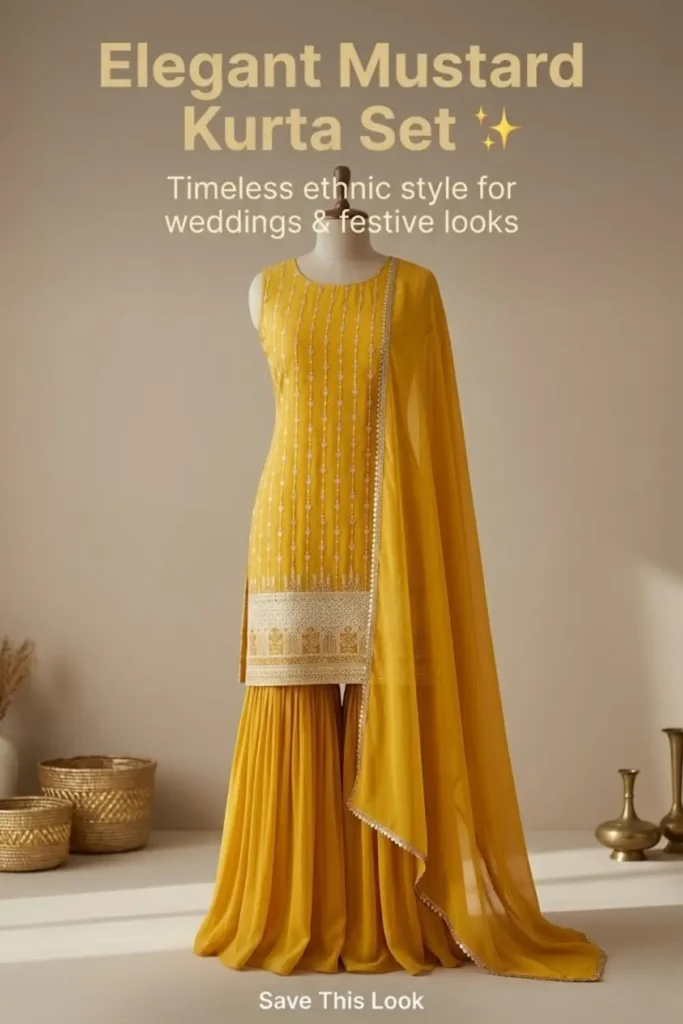
- Festive occasions (Eid, Diwali, Navratri): Semi-heavy anarkali with zari or mirror work. Bright colours like mustard, orange, or fuchsia are perfect.
- Office or semi-formal events: Pant-style or knee-length anarkali in subtle prints or pastel shades. Keep the silhouette clean and minimal.
- Casual outings or family gatherings: Light printed anarkalis in cotton or rayon. Comfortable, breezy, and still looking put-together.
- Bridal wear: A bridal anarkali salwar suit with heavy lehenga-style embroidery is a gorgeous alternative to a traditional lehenga choli — and far more comfortable!
Fabrics that make your anarkali look (and feel) amazing
The fabric choice can completely transform how an anarkali suit design looks and drapes. Here’s a quick breakdown:
Georgette
Light, flowy, and absolutely dreamy — georgette anarkalis have that effortless movement that just photographs so well. Great for festivals and parties.
Silk & raw silk
If you want something that screams occasion-wear, silk is your go-to. It holds embroidery beautifully and drapes with a gorgeous weight. A bit high-maintenance, but totally worth it.
Cotton & rayon
For everyday wear or summer festivals, you can’t beat a lightweight cotton or rayon anarkali salwar suit. Comfortable, breathable, and incredibly easy to style.
Velvet
Velvet anarkalis are having a serious moment right now — especially for winter weddings. They add richness and opulence without needing too much embellishment. A plain deep-coloured velvet anarkali is genuinely stunning.
Styling your anarkali suit: accessories & dupatta tips
An anarkali salwar suit is pretty much a complete look on its own, but the right accessories can take it from “lovely” to “absolutely unforgettable.” Here’s what works:
- Dupatta styling: Pin it over one shoulder for a dramatic Bollywood look, drape it across both shoulders for a traditional vibe, or toss it loosely for a relaxed, modern feel.
- Jewellery: Chandelier earrings with a simple anarkali, or a statement necklace with a plain neckline. Don’t layer both — let one element shine.
- Footwear: Embellished juttis, block heels, or strappy sandals all work brilliantly. For formal occasions, go heeled — for casual days, a nice pair of kolhapuris is perfection.
- Clutches & bags: Keep it small and embellished — a potli bag or a sequinned clutch is the ideal pairing with ethnic wear for women.
Frequently asked questions about anarkali salwar suits
What’s the difference between an anarkali suit and a regular salwar kameez?
Great question! A regular salwar kameez has a straight or slightly flared kurta, while an anarkali salwar suit features a dramatically flared, floor-grazing kurta cinched at the waist — much more flowy and festive in feel.
Can I wear an anarkali suit to a wedding as a guest?
Absolutely — it’s actually one of the most popular choices! Pick a semi-heavy anarkali in a rich colour, pair it with statement jewellery, and you’re completely wedding-ready without outshining the bride.
What makes a Pakistani anarkali suit different from an Indian one?
Pakistani suits tend to feature longer kurta lengths, lighter embroidery, and often include straight trouser bottoms. Indian anarkali designs tend to be heavier with more flare and richer embellishment — though these days, the styles overlap a lot!
Is an anarkali salwar suit suitable for casual wear?
Totally! A printed cotton or rayon anarkali with minimal embellishment is perfectly casual and super comfortable for everyday wear, family visits, or light festive occasions.
Ready to find your perfect anarkali?
Whether you’re dressing up for a big celebration or just want to bring some festive energy to an ordinary day — the anarkali salwar suit is never, ever the wrong choice.
It’s timeless, universally flattering, and endlessly stylish. Go ahead, find your silhouette, pick your fabric, and wear it like the royalty you are.

