
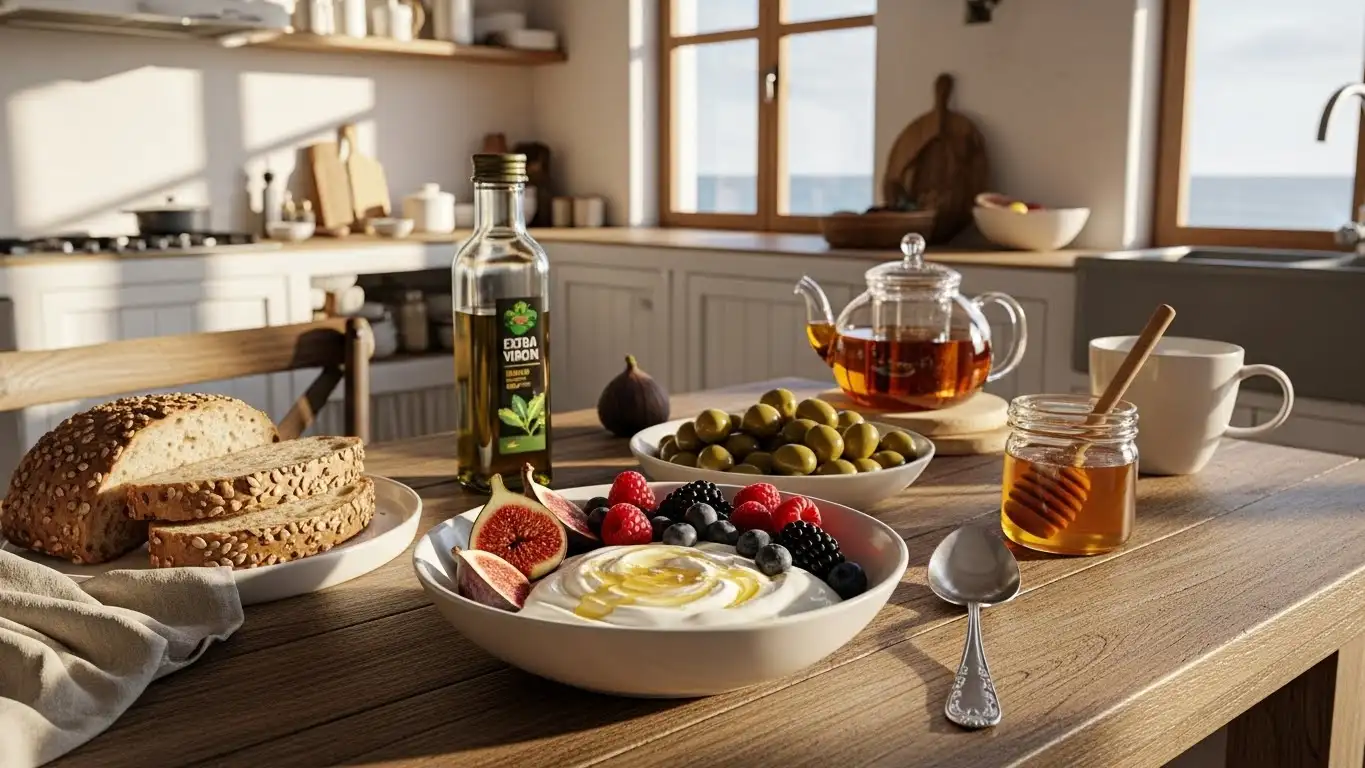

The core philosophy centers on nourishment rather than mere sustenance. Mediterranean-Inspired Breakfast typically feature minimally processed ingredients prepared simply to allow natural flavors to shine. This means drizzling quality olive oil over fresh tomatoes and crusty bread rather than reaching for sugary cereals, or enjoying creamy yogurt with honey and nuts instead of pastries laden with refined sugar.
Unlike the rushed, grab-and-go mentality that characterizes many Western breakfast routines, the Mediterranean approach encourages a more intentional start to the day. Even simple breakfasts are treated as moments worth savoring, whether enjoyed alone with a newspaper or shared with family around the table.
Table of Contents
Why Breakfast Matters in Mediterranean Cultures
In Mediterranean cultures, breakfast holds a distinctive place in the daily rhythm, though its importance varies by region. In some areas, breakfast is a modest affair—a quick espresso with a piece of bread—while in others, particularly Turkey and the Levant, it’s a substantial spread designed to fuel the day ahead.
What remains consistent across these cultures is the quality over quantity principle. Rather than loading plates with heavy, calorie-dense foods, mediterranean-inspired breakfast emphasize nutrient density and digestibility. The meal serves as an opportunity to incorporate vegetables, healthy fats, and whole grains early in the day, establishing eating patterns that support overall health.
Mediterranean-inspired breakfast also carries social significance. In many households, it’s the one meal when families reliably gather before dispersing for work and school.This communal aspect transforms breakfast from a biological necessity into a daily ritual that strengthens bonds and establishes a sense of routine and stability.
The Mediterranean approach also acknowledges the connection between morning nutrition and sustained energy. By emphasizing complex carbohydrates, protein, and healthy fats, these mediterranean-inspired breakfast provide steady fuel that prevents mid-morning energy crashes and reduces cravings for unhealthy snacks.
Foundations of the Mediterranean Diet
Key Principles of the Mediterranean Way of Eating
The Mediterranean diet, consistently ranked among the world’s healthiest eating patterns, rests on several foundational principles that extend naturally to breakfast:
Plant-forward eating:
Vegetables, fruits, whole grains, legumes, nuts, and seeds form the foundation of every meal. Even at breakfast, Mediterranean cultures find ways to incorporate fresh produce—tomatoes with eggs, fruit with yogurt, or vegetables alongside bread and cheese.
Healthy fats as the primary fat source:
Extra virgin olive oil replaces butter and other saturated fats, providing monounsaturated fatty acids linked to heart health and reduced inflammation. This extends to breakfast through olive oil drizzled on bread, used in cooking eggs, or blended into smoothies.
Moderate portions of dairy and eggs:
Rather than centerpieces, these protein sources serve as components of a varied mediterranean-inspired breakfast. A small portion of cheese, a dollop of yogurt, or a single egg accompanies vegetables and grains rather than dominating the plate.
Minimal red meat:
Breakfast in Mediterranean regions rarely features bacon, sausage, or other processed meats common in Western breakfasts. When meat appears, it’s typically in small amounts and often preserved through traditional methods.
Whole, minimally processed foods:
Fresh ingredients prepared simply take precedence over packaged, convenience foods. Bread comes from local bakeries, yogurt is plain rather than pre-sweetened, and fruits are eaten whole rather than juiced.
Herbs and spices for flavor:
Rather than relying on salt and sugar, Mediterranean cooking employs aromatic herbs and spices to enhance flavor, reducing the need for less healthy seasonings.
Regional Diversity Across Mediterranean Countries
While the Mediterranean diet shares common principles, breakfast traditions vary considerably across the region:
Greece:
Breakfasts often feature thick Greek yogurt with honey and walnuts, fresh bread with olive oil and tomatoes, or savory pies like spanakopita. The emphasis is on simplicity and quality ingredients.
Italy:
The classic Italian breakfast is intentionally light—espresso with biscotti, a cornetto (similar to a croissant but less buttery), or bread with jam. Italians traditionally reserve hearty eating for lunch and dinner.
Spain:
Mediterranean-inspired breakfast might include pan con tomate (bread rubbed with tomato and drizzled with olive oil), churros with chocolate on special occasions, or simply coffee with a pastry. Like Italy, Spain favors lighter mornings.
Turkey:
Turkish breakfast (kahvaltı) is one of the Mediterranean’s most elaborate, featuring an array of cheeses, olives, tomatoes, cucumbers, eggs, bread, honey, and jams—a true feast meant to be shared and savored.
Lebanon and the Levant:
Breakfast spreads include labneh (strained yogurt), za’atar with olive oil, fresh vegetables, olives, and flatbreads. The meal is social and unhurried, often accompanied by strong coffee or tea.
Morocco:
Breakfasts feature msemen (square-shaped flatbread), honey, jams, fresh bread, olive oil, and mint tea. The combination of sweet and savory creates a balanced start.Understanding this diversity helps us appreciate that there’s no single “Mediterranean breakfast” but rather a collection of traditions united by common principles of freshness, balance, and quality.
Nutritional Benefits of a Mediterranean-Inspired Breakfast
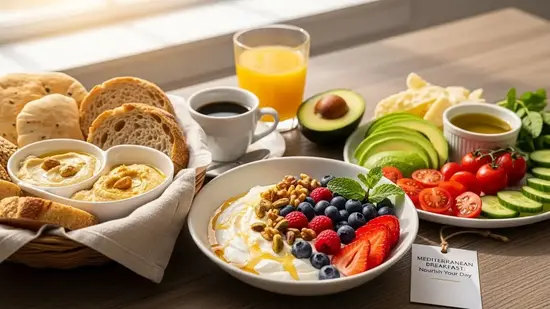
Balanced Macronutrients for Sustained Energy
One of the most significant advantages of a mediterranean-inspired breakfast is its macronutrient balance, which provides sustained energy throughout the morning without the spikes and crashes associated with high-sugar or refined-carbohydrate breakfasts.
Complex carbohydrates
from whole-grain bread, oats, or other grains provide glucose to fuel your brain and body. Unlike refined carbohydrates that digest quickly and cause blood sugar spikes, complex carbohydrates break down gradually, offering steady energy release over several hours.
Quality proteins
from eggs, yogurt, cheese, or nuts help maintain satiety and support muscle maintenance and repair. Protein slows digestion, further moderating blood sugar responses and helping you feel full longer.
Healthy fats
from olive oil, nuts, seeds, and avocados (in adapted versions) contribute to satiety while supporting the absorption of fat-soluble vitamins like A, D, E, and K found in breakfast vegetables and fruits. These fats also contribute to the rich, satisfying flavors characteristic of Mediterranean cuisine.
A typical Mediterranean-inspired breakfast might derive approximately 40-50% of calories from carbohydrates (primarily complex), 15-20% from protein, and 30-40% from fats (predominantly unsaturated). This balance contrasts sharply with typical Western breakfasts that often skew heavily toward either carbohydrates (cereal, bagels, pastries) or proteins and saturated fats (bacon, sausage, cheese-heavy omelets).
Role of Healthy Fats, Fiber, and Antioxidants
Beyond macronutrient balance, mediterranean-inspired breakfast excel in delivering specific nutrients linked to long-term health:
Monounsaturated fatty acids:
Extra virgin olive oil, the cornerstone of Mediterranean cooking, provides oleic acid, which research associates with reduced inflammation, improved cholesterol profiles, and better cardiovascular health. Starting your day with these healthy fats may help regulate appetite throughout the day.
Omega-3 fatty acids:
Walnuts, a common breakfast addition in Greece and other regions, provide alpha-linolenic acid (ALA), a plant-based omega-3 that supports brain health and reduces inflammation.
Dietary fiber:
Whole grains, fruits, vegetables, nuts, and seeds deliver both soluble and insoluble fiber. Soluble fiber helps moderate blood sugar and cholesterol levels, while insoluble fiber supports digestive health. Most Mediterranean breakfasts easily provide 5-10 grams of fiber—a substantial portion of the recommended daily intake.
Antioxidants and phytonutrients:
Fresh fruits, vegetables, herbs, and olive oil deliver a spectrum of antioxidants including polyphenols, flavonoids, and vitamins C and E. These compounds combat oxidative stress, which contributes to aging and chronic disease. The simple act of drizzling olive oil on tomatoes and bread delivers hydroxytyrosol and other polyphenols with powerful anti-inflammatory properties.
Probiotics:
Yogurt and fermented dairy products common in mediterranean-inspired breakfast provide beneficial bacteria that support gut health, immune function, and even mental health through the gut-brain axis.Research consistently links Mediterranean dietary patterns to reduced risks of cardiovascular disease, type 2 diabetes, certain cancers, cognitive decline, and overall mortality.
While no single meal creates these benefits, establishing a Mediterranean-inspired breakfast pattern contributes to the cumulative effects that generate long-term health advantages.
Essential Ingredients Pantry
Whole Grains and Breads
A well-stocked Mediterranean pantry begins with quality grains and breads that form the foundation of many mediterranean-inspired breakfast dishes:
- Whole-grain breads: Look for rustic loaves made with whole wheat, rye, or mixed grains. Traditional breads like Greek horiatiko psomi (village bread), Italian pane integrale, or Turkish köy ekmeği have hearty textures and rich flavors that complement simple toppings. Avoid bread with added sugars or unnecessary preservatives.
- Pita bread: This Middle Eastern staple works beautifully for breakfast, whether toasted and torn for dipping in olive oil or stuffed with vegetables and cheese.
- Whole-grain crackers: For quick breakfasts, keep high-quality whole-grain crackers that pair well with cheese, spreads, and vegetables.
- Oats: While not traditional in all Mediterranean regions, oats have been adopted in many areas and work well when prepared with Mediterranean ingredients like honey, nuts, and cinnamon.
- Farro, bulgur, and barley: These ancient grains can be prepared as warm breakfast porridges, offering alternatives to oats with distinctive flavors and textures.
Fresh Fruits and Vegetables
The Mediterranean approach emphasizes seasonal, locally-sourced produce:
- Tomatoes: Perhaps the most iconic Mediterranean breakfast vegetable, tomatoes should be ripe and flavorful. Keep cherry tomatoes for easy breakfast additions or larger varieties for slicing.
- Cucumbers: Crisp cucumbers add refreshing crunch to breakfast plates and pair beautifully with yogurt and cheese.
- Leafy greens: Spinach, arugula, and other greens can be quickly sautéed for egg dishes or served fresh alongside other breakfast components.
- Citrus fruits: Oranges, grapefruits, and lemons are Mediterranean staples, providing bright flavor and vitamin C.
- Figs and dates: When in season, fresh figs are a treasured breakfast fruit. Dried dates and figs provide year-round options for natural sweetness.
- Berries: Strawberries, blackberries, and other berries pair beautifully with yogurt and are rich in antioxidants.
- Melons: Watermelon and honeydew are refreshing breakfast options, particularly in warmer months.
Olive Oil, Herbs, and Spices
These ingredients create the distinctive flavors of Mediterranean cuisine:
- Extra virgin olive oil: Invest in quality olive oil—it’s the single most important ingredient in Mediterranean cooking. Look for oil that’s cold-pressed, stored in dark glass, and used within a year of harvest. Keep one bottle for cooking and another, more premium option for drizzling over finished dishes.
- Fresh herbs: Basil, mint, oregano, thyme, and parsley add brightness to mediterranean-inspired breakfast dishes. If you can’t access fresh herbs regularly, dried versions work well for cooked dishes.
- Za’atar: This Middle Eastern spice blend (typically containing dried thyme, oregano, marjoram, sumac, and sesame seeds) transforms simple bread and olive oil into a flavorful breakfast.
- Cinnamon: Used in both sweet and some savory breakfast dishes across the Mediterranean.
- Sumac: This tangy, lemony spice brightens eggs, vegetables, and yogurt dishes.
- Honey: Raw, unprocessed honey serves as the primary sweetener in Mediterranean breakfasts.
Dairy Staples: Yogurt and Cheese
Dairy products in Mediterranean-inspired breakfast tend to be fermented or aged, often more digestible than fresh milk:
- Greek yogurt: Thick, strained yogurt with a tangy flavor and high protein content. Choose plain varieties and add your own sweeteners and toppings.
- Labneh: An even more strained yogurt cheese common in the Levant, with a cream-cheese-like consistency perfect for spreading on bread.
- Feta cheese: This brined cheese from Greece adds salty, tangy flavor to breakfast plates. Look for authentic feta made from sheep’s or goat’s milk.
- Halloumi: A firm Cypriot cheese that can be grilled or pan-fried, making it perfect for warm breakfast dishes.
- Ricotta: This fresh Italian cheese works beautifully spread on toast with honey and fruit.
- Cottage cheese: While not traditionally Mediterranean, it serves as an accessible substitute for ricotta in many breakfast applications.
- Hard cheeses: Aged cheeses like Parmigiano-Reggiano, Pecorino Romano, or Spanish Manchego can be shaved or cubed for breakfast plates.
Traditional Mediterranean Breakfast Components
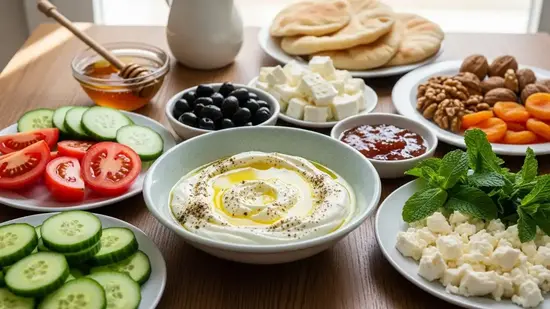
Simple Morning Meals vs. Elaborate Spreads
Mediterranean breakfast traditions fall along a spectrum from minimalist to abundant, with cultural and practical factors determining where each falls:
The Italian and Spanish approach
tends toward simplicity—a cup of strong coffee, perhaps with a small pastry or piece of bread. This light mediterranean-inspired breakfast reflects both climate (the heat can suppress morning appetite) and cultural meal patterns that place more emphasis on lunch as the main meal.
There’s an elegance to this minimalism: quality over quantity, with each element carefully chosen. A perfectly pulled espresso, a fresh cornetto from the local pasticceria, a moment of pause before the day begins.
The Turkish and Levantine approach
occupies the opposite end of the spectrum. A traditional Turkish kahvaltı or Lebanese breakfast spread might include a dozen or more components: several cheeses, olives in various preparations, fresh vegetables, eggs cooked multiple ways, bread, preserves, honey, cream, and more.
These elaborate breakfasts are inherently social, designed for sharing and lingering over. The variety ensures everyone finds something appealing, and the ritual of assembling your plate from the spread becomes part of the experience.
The Greek approach
often falls somewhere in between—more substantial than Italian breakfast but simpler than Turkish. A typical Greek breakfast might include fresh bread with olive oil, tomato, and feta, accompanied by Greek yogurt with honey and walnuts, and strong coffee.
Neither approach is superior; both reflect authentic Mediterranean traditions adapted to local contexts, climates, and lifestyles. The key lesson is that mediterranean-inspired breakfast culture values either thoughtful simplicity or generous abundance, but rarely the rushed, mechanical eating that characterizes many modern breakfast habits.
Savory Over Sweet: Cultural Preferences
One of the most distinctive features of Mediterranean breakfast traditions is the preference for savory over sweet, particularly in Eastern Mediterranean and Levantine cultures.While Western breakfasts often center on sweet items—pancakes, waffles, sweetened cereals, pastries, and even sweetened yogurts—Mediterranean breakfasts more commonly feature:
- Fresh vegetables like tomatoes, cucumbers, and peppers
- Brined or marinated olives
- Various cheeses with complex, savory flavors
- Eggs prepared in numerous ways
- Bread with olive oil rather than butter and jam
- Savory spreads and dips
This savory emphasis offers several advantages:
Blood sugar stability: Savory breakfasts typically contain less added sugar and more protein and healthy fats, promoting better blood sugar control and sustained energy.
Vegetable intake: Starting the day with vegetables helps many people meet recommended daily servings, as vegetables are less commonly featured at other meals in many modern diets.
Reduced sweet cravings: Beginning the day without a sugar spike may reduce cravings for sweets throughout the day.
Broader flavor education: For children, savory mediterranean-inspired breakfast expand palates beyond the sweet-centric foods often marketed to young people.
That said, Mediterranean-inspired breakfast aren’t devoid of sweet elements—honey, fresh and dried fruits, and occasional pastries appear regularly.
The difference is one of emphasis and approach: sweetness comes primarily from natural sources like fruit and honey rather than refined sugars, and sweet components complement rather than dominate the meal.
Mediterranean Breads and Grains
Rustic Breads (Pita, Focaccia, Whole-Grain Loaves)
Bread occupies a sacred place in Mediterranean food culture, and breakfast showcases bread’s versatility:
Pita bread:
This round, pocket-style bread from the Eastern Mediterranean is incredibly versatile. For breakfast, pita can be torn and used to scoop labneh or hummus, toasted and topped with za’atar and olive oil, or split and filled with eggs and vegetables. Whole wheat pita adds fiber and nutrients while maintaining the characteristic chewy texture.
Focaccia:
This Italian flatbread, dimpled and olive oil-rich, makes an exceptional mediterranean-inspired breakfast when served warm. Traditional focaccia may be topped with rosemary, olives, or tomatoes.
It can be served plain with olive oil for dipping, or split and filled like a sandwich with ricotta and greens.
Crusty country loaves:
Dense, chewy breads with thick crusts and complex flavors form the basis of many mediterranean-inspired breakfast. These breads, often made with sourdough starters, have superior nutritional profiles compared to mass-produced white bread and provide satisfying texture.
A thick slice of country bread, toasted, rubbed with garlic, and topped with grated tomato and olive oil creates the Spanish classic pan con tomate.
Whole-grain breads:
Many Mediterranean regions produce dense, seeded breads incorporating whole grains, seeds, and nuts. These nutrient-dense options provide sustained energy and pair beautifully with both sweet and savory toppings.
Flatbreads:
Beyond pita, various flatbreads appear in Mediterranean breakfasts—Turkish gözleme, Moroccan msemen, or simple flour tortillas in adapted versions. These thin breads work beautifully as wrappers for eggs, vegetables, and cheese.
When selecting bread, prioritize quality: short ingredient lists, visible whole grains, substantial texture, and ideally, bread from local bakeries that use traditional methods.
The difference in flavor and nutrition between artisanal whole-grain bread and mass-produced white bread is profound.
Grains and Porridges (Farro, Bulgur, Barley)
While porridge isn’t universal in Mediterranean breakfast traditions, ancient grains cooked into creamy, comforting bowls offer a nutritious breakfast option that honors Mediterranean principles:
Farro:
This ancient wheat variety, popular in Italy, has a pleasantly chewy texture and nutty flavor. Cooked farro can be served as a warm breakfast porridge with milk or a plant-based alternative, topped with honey, nuts, and dried fruits. Farro provides more protein and fiber than common wheat and has a lower glycemic index.
Bulgur:
A staple in Turkish and Levantine cuisines, bulgur is parboiled, dried, and cracked wheat. It cooks quickly and has a mild flavor that works well in both sweet and savory preparations. Try it as a hot cereal with cinnamon and honey, or in savory preparations similar to savory oatmeal.
Barley:
This ancient grain, used throughout the Mediterranean for millennia, creates wonderfully creamy porridges while retaining a slight chew.
Pearl barley is more processed but cooks faster; hulled barley is more nutritious but requires longer cooking. Barley is exceptionally high in beta-glucan, a type of soluble fiber linked to improved cholesterol levels.
Semolina:
Popular in North African breakfasts, semolina can be cooked into a creamy porridge and served with butter, honey, nuts, and cinnamon. While more refined than whole grains, it’s still less processed than many mediterranean-inspired breakfast options.
Preparation tips:
These grains benefit from soaking overnight to reduce cooking time. Cook them in water or milk with a pinch of salt, then dress them with Mediterranean flavors—olive oil and honey, toasted nuts, fresh or dried fruit, warm spices like cinnamon and cardamom, or even savory additions like olive oil, herbs, and a soft-cooked egg.
Fresh Fruits and Seasonal Produce
Citrus Fruits, Figs, Dates, and Berries
Mediterranean-inspired breakfast celebrate fruit in its natural state—ripe, seasonal, and minimally processed:
Citrus fruits:
The Mediterranean climate produces exceptional citrus, and breakfast often includes fresh orange or grapefruit segments. These fruits provide vitamin C, fiber, and hydration.
Squeeze fresh orange juice rather than buying processed versions, or better yet, eat whole fruit to retain beneficial fiber. Blood oranges, when in season, offer a spectacular visual and flavor experience.
Figs:
Fresh figs are one of summer’s great luxuries in Mediterranean regions. Their sweet, complex flavor and soft texture need no enhancement, though they pair beautifully with yogurt and honey. Dried figs extend the season and provide concentrated sweetness and fiber for year-round breakfasts.
Dates:
Particularly important in North African and Middle Eastern breakfasts, dates provide natural sweetness, quick energy, and substantial fiber. Medjool dates can be stuffed with nuts or cheese for an elegant mediterranean-inspired breakfast component, while chopped dates enhance yogurt or grain dishes.
Berries:
Strawberries grow abundantly around the Mediterranean, particularly in Greece and Spain. Wild berries have been gathered for centuries. Fresh berries with yogurt create a simple, antioxidant-rich breakfast. Berries also require minimal preparation, making them ideal for busy mornings.
Melons:
Watermelon and cantaloupe provide refreshing breakfast options, particularly in warm weather. Their high water content aids hydration, while natural sugars provide gentle energy.
Stone fruits:
Peaches, apricots, nectarines, and plums feature prominently in summer mediterranean-inspired breakfast. Fresh apricots, in particular, have a distinctive tangy sweetness that pairs well with creamy dairy products.
The key to Mediterranean fruit consumption is seasonality and simplicity. Rather than accessing all fruits year-round through global shipping, Mediterranean cultures celebrate each fruit’s season, enjoying it abundantly when fresh and locally available, then shifting to other fruits as seasons change.
Tomatoes, Cucumbers, and Leafy Greens
The inclusion of vegetables at breakfast distinguishes Mediterranean eating from many Western patterns:
Tomatoes:
Few ingredients are more emblematic of Mediterranean-inspired breakfast than the ripe tomato. Whether sliced on a plate with feta and olive oil, grated onto toast in the Spanish style, or chopped into eggs, tomatoes provide lycopene and vitamin C while adding juicy freshness to morning meals.
Choose tomatoes at peak ripeness—better to eat a perfectly ripe cherry tomato than a tasteless, out-of-season heirloom.
Cucumbers:
Crisp cucumbers appear on breakfast tables from Turkey to Lebanon to Greece. Their cool, refreshing crunch balances richer items like cheese and eggs.
Slice them simply, perhaps with a sprinkle of salt, or dice them into yogurt for a Turkish-style breakfast. Cucumbers hydrate while providing minimal calories and a satisfying crunch.
Peppers:
Bell peppers—red, yellow, orange, or green—add sweetness and crunch to breakfast plates. In some regions, mildly spicy peppers like padron or shishito might be quickly pan-fried as a breakfast side.
Leafy greens:
Spinach, arugula, parsley, and other greens frequently appear in mediterranean-inspired breakfast. Spinach might be wilted with eggs, arugula served fresh alongside cheese and bread, or parsley chopped abundantly over nearly everything as both garnish and nutritional boost.
Olives:
While technically fruits, olives function as vegetables in breakfast contexts. Their rich, briny flavor and healthy fats make them a staple of elaborate breakfast spreads, particularly in Turkey and Greece.
Different preparations—green or black, cracked or whole, marinated with herbs or preserved simply in brine—provide variety.
Including vegetables at breakfast requires minimal extra effort but significantly boosts nutrient intake. Simply washing and slicing a few vegetables while preparing coffee can transform breakfast’s nutritional profile.
Dairy and Protein Sources
Greek Yogurt and Labneh
Fermented dairy products form a cornerstone of mediterranean-inspired breakfast protein:
Greek yogurt:
Authentic Greek yogurt is strained to remove much of the whey, creating a thick, creamy product with roughly twice the protein of regular yogurt. This straining process concentrates nutrients while creating a luxurious texture that feels indulgent despite being relatively lean.
Traditional Greek yogurt is made from sheep’s or goat’s milk, though cow’s milk versions have become standard outside Greece.For mediterranean-inspired breakfast, Greek yogurt serves as both a base and a canvas. Enjoyed plain, it has a pleasant tanginess that pairs well with honey and nuts.
It can be topped with fresh fruit, granola, seeds, or even savory additions like cucumber, herbs, and olive oil. The versatility of Greek yogurt makes it one of the most practical Mediterranean-inspired breakfast ingredients for modern, busy lifestyles.Look for plain, whole-milk Greek yogurt without added sugars or thickeners. The ingredient list should read simply: milk and live active cultures.Full-fat versions provide satiety and help with absorption of fat-soluble vitamins, though low-fat versions work if fat intake is a concern.
Labneh:
This yogurt cheese, created by straining yogurt even further than Greek yogurt, has a cream cheese-like consistency and intensely tangy flavor. In Levantine breakfasts, labneh often appears as a spread for bread, drizzled with olive oil and sprinkled with za’atar. It can also be rolled into balls and preserved in olive oil with herbs.
Making labneh at home requires only yogurt, salt, and time: mix yogurt with salt, place in a cheesecloth-lined strainer over a bowl, and refrigerate for 12-24 hours until desired thickness is reached. The process is simple and economical, transforming inexpensive yogurt into a luxurious spread.Both Greek yogurt and labneh provide probiotics that support digestive health, along with substantial protein (typically 15-20 grams per cup of Greek yogurt) that promotes satiety and stable blood sugar.
Eggs in Mediterranean Cuisine
Eggs appear throughout mediterranean-inspired breakfast traditions, though preparation methods vary by region:
Soft-boiled eggs:
Perhaps the most common preparation in Turkish breakfast spreads, soft-boiled eggs with runny yolks are served in egg cups, to be eaten with a spoon or broken over bread.
Fried eggs:
Simple fried eggs in olive oil rather than butter offer a Mediterranean twist. Turkish cilbir features poached eggs over yogurt with a spiced butter drizzle. Israeli shakshuka simmers eggs in a spiced tomato sauce.
Scrambled eggs:
While less traditional, scrambled eggs fit Mediterranean patterns when prepared with olive oil and mixed with vegetables, herbs, and feta.
Omelets and frittatas:
Baked or folded egg dishes incorporating vegetables, herbs, and cheese appear across the region. Spanish tortilla, while more common at lunch, occasionally appears at breakfast—a thick potato and egg cake served at room temperature.
Eggs as component:
Rather than centerpieces, eggs often appear as one element among many in a Mediterranean breakfast spread. A single soft-boiled egg alongside vegetables, cheese, olives, and bread provides protein without overwhelming the meal.
The Mediterranean approach to eggs typically emphasizes quality over quantity—one or two eggs prepared well rather than three-egg omelets stuffed with cheese. This moderate portion aligns with contemporary nutrition guidance regarding dietary cholesterol and provides adequate protein without excess.
Cheese Varieties (Feta, Halloumi, Ricotta)
Cheese brings richness, protein, and complex flavors to Mediterranean-inspired breakfast:
Feta:
This brined white cheese, traditionally made from sheep’s milk or a mixture of sheep’s and goat’s milk, has protected designation of origin status for Greek feta. Its salty, tangy flavor complements sweet elements like watermelon or honey, while also pairing beautifully with tomatoes, cucumbers, and olives. Feta crumbles easily over eggs or vegetables, or can be sliced and eaten with bread.
Halloumi:
This Cypriot cheese has a high melting point, making it perfect for grilling or pan-frying. A few slices of golden, squeaky halloumi alongside vegetables and bread create a satisfying, protein-rich mediterranean-inspired breakfast. Halloumi’s salty intensity means a little goes a long way.
Ricotta:
This fresh Italian cheese, traditionally made from the whey left over from other cheese production, has a mild, slightly sweet flavor and creamy texture. Spread ricotta on toast and top with honey and figs, or blend it into scrambled eggs for extra creaminess.
Fresh cheeses:
Turkish beyaz peynir, Lebanese jibneh, and similar fresh white cheeses appear on breakfast tables throughout the Eastern Mediterranean. These mild, slightly salty cheeses have a consistency similar to feta but milder flavor.
Aged cheeses:
Small amounts of Parmigiano-Reggiano, Pecorino, Manchego, or other aged cheeses can appear on breakfast boards, providing intense flavor in small portions.
When incorporating cheese into breakfast, Mediterranean traditions typically emphasize variety over volume—a few cubes each of several cheeses rather than a large portion of one. This approach maximizes flavor diversity while moderating saturated fat and calorie intake.
Healthy Fats at Breakfast
Extra Virgin Olive Oil
If one ingredient could represent mediterranean-inspired breakfast, it would be extra virgin olive oil. This liquid gold transforms simple foods into something special while delivering profound health benefits:
Nutritional profile:
Extra virgin olive oil consists primarily of monounsaturated fatty acids, particularly oleic acid, which research associates with reduced inflammation and improved heart health. It also contains polyphenols and vitamin E—potent antioxidants that combat oxidative stress.
Breakfast applications: Mediterranean cultures use olive oil where others might use butter:
- Drizzled over fresh bread, perhaps with a sprinkle of salt
- Mixed with za’atar for a bread dip
- Dribbled over sliced tomatoes or fresh vegetables
- Used to cook eggs or sauté greens
- Whisked into yogurt with herbs for a savory preparation
- Drizzled over honey-topped yogurt for contrast
Quality matters:
Not all olive oils are created equal. Extra virgin olive oil—the highest quality category—comes from the first cold pressing of olives and contains no refined oil. Look for:
- Harvest date (fresher is better; use within 18 months of harvest)
- Dark glass bottles that protect from light exposure
- Designation of origin or single estate certification
- Peppery or bitter notes when tasted, indicating healthy polyphenols
How much?: Mediterranean diets typically include 2-4 tablespoons of olive oil daily. A tablespoon drizzled over morning toast or vegetables provides healthy fats without excess.
Remember that while olive oil is healthful, it’s calorie-dense (about 120 calories per tablespoon), so portions matter.
Cost considerations: Quality extra virgin olive oil costs more than refined oils, but a little goes a long way. For mediterranean-inspired breakfast purposes, where olive oil is often used raw, invest in the best quality you can afford.
Nuts and Seeds
Nuts and seeds provide protein, healthy fats, fiber, and satisfying crunch to Mediterranean breakfasts:
Walnuts:
Common in Greek breakfast traditions, walnuts complement honey-drizzled yogurt perfectly. They’re one of the best plant sources of omega-3 fatty acids and provide copper, manganese, and biotin. A small handful (about 7 whole walnuts or 14 halves) delivers substantial nutrition.
Almonds:
Ubiquitous throughout the Mediterranean, almonds appear raw, toasted, or sliced on yogurt, in grain porridges, or simply eaten alongside fresh fruit. They provide vitamin E, magnesium, and protein. Almond butter can spread on bread as an alternative to nut pieces.
Pine nuts:
These delicate nuts, while expensive, add richness to grain dishes and can be toasted and sprinkled over yogurt. They’re traditional in some Italian breakfast preparations.
Pistachios:
Popular in Turkish and Levantine breakfasts, pistachios provide color, flavor, and nutrition. They contain lutein and zeaxanthin, antioxidants that support eye health.
Hazelnuts:
These feature prominently in Turkish and Italian cuisines. Toasted hazelnuts enhance grain porridges or can be ground into a spread similar to chocolate hazelnut spreads but without refined sugar.
Sesame seeds:
A key ingredient in tahini, sesame seeds also appear toasted on bread or mixed into za’atar. They provide calcium, iron, and zinc—nutrients sometimes lacking in plant-forward diets.
Flax and chia seeds:
While not traditionally Mediterranean, these omega-3-rich seeds adapt well to Mediterranean-style preparations, adding fiber and nutrients to yogurt or grain dishes.
Portion guidance: A small handful of nuts (about 1 ounce or 28 grams) provides healthy fats and protein without excessive calories. Mixing different nuts provides varied nutrients and prevents monotony.
Olives and Spreads
Olives:
These brined fruits provide the healthy fats that characterize Mediterranean eating. Breakfast tables in Greece, Turkey, and the Levant often feature small bowls of olives—perhaps Kalamata olives from Greece, cracked green olives with herbs from Turkey, or oil-cured black olives from Morocco.
Olives deliver oleic acid, polyphenols, and vitamin E, plus their rich, satisfying flavor means a few go a long way.Different olive preparations provide variety: green olives tend to be firmer and more bitter, while black olives are softer and milder. Marinated olives with herbs, garlic, or citrus zest add complexity.
For mediterranean-inspired breakfast, five or six olives alongside other foods provide flavor and nutrition without excess sodium (though people managing blood pressure should moderate intake).
Tahini:
This sesame seed paste is a Levantine breakfast staple. Its rich, slightly bitter flavor pairs beautifully with honey or date syrup (silan) drizzled over yogurt or spread on bread. Tahini provides calcium, iron, and healthy fats. Mix it with a little water, lemon juice, and garlic for a savory spread.
Hummus:
While more commonly associated with lunch or snacks, hummus occasionally appears at breakfast in the Levant. A small portion with fresh vegetables and bread provides protein from chickpeas and healthy fats from tahini and olive oil.A small portion with fresh vegetables and bread provides protein from chickpeas and healthy fats from tahini and olive oil.
Olive tapenade:
This Provençal spread combines olives, capers, anchovies, and olive oil into an intense paste perfect for spreading on bread. A little provides big flavor.
These healthy fats serve multiple purposes: they provide satiety that helps prevent mid-morning snacking, support absorption of fat-soluble vitamins from breakfast vegetables and fruits, and contribute to the rich, satisfying flavors that make Mediterranean-inspired breakfast deeply enjoyable rather than merely nutritious.
Herbs, Spices, and Flavor Enhancers
Fresh Herbs: Oregano, Thyme, Basil, Mint
Fresh herbs transform breakfast from ordinary to extraordinary with minimal effort or calories:
Mint:
Perhaps the most versatile breakfast herb, mint appears in Turkish and Moroccan tea, chopped into yogurt, scattered over fruit, or mixed into salads. Its refreshing flavor wakes up the palate. Mint also aids digestion, making it particularly welcome at mediterranean-inspired breakfast. Add a handful of torn mint leaves to a fruit salad or steep fresh mint in hot water for caffeine-free morning tea.
Basil:
This quintessentially Italian herb pairs beautifully with tomatoes (think caprese-style breakfast plates), can be torn over eggs, or blended into yogurt with garlic for a savory preparation. Basil’s complex flavor—simultaneously sweet, peppery, and slightly anise-like—adds sophistication to simple dishes.
Oregano:
Dried oregano is more common than fresh in Mediterranean cooking, particularly Greek cuisine. Sprinkle it over eggs, tomatoes, or feta cheese. The dried form actually concentrates flavor better than fresh for this herb.
Thyme:
Both fresh and dried thyme add earthy, slightly minty notes to eggs, vegetables, and bread. Za’atar, the Levantine spice blend, features thyme prominently.
Parsley:
Flat-leaf (Italian) parsley appears abundantly in mediterranean-inspired breakfast, chopped and sprinkled over nearly everything. Rather than garnish, parsley should be considered an ingredient—use it generously for its fresh, green flavor and nutrients like vitamin K, vitamin C, and folate.
Dill:
Particularly popular in Turkish and Greek breakfasts, fresh dill complements eggs, yogurt, and cucumber beautifully.
Chives:
The mild onion flavor of chives enhances eggs and creamy cheeses without overwhelming other flavors.
Using fresh herbs:
Wash and dry herbs, then chop just before using to preserve their aromatic oils. Add delicate herbs like basil and mint at the end of cooking or raw as finishing touches. Hardier herbs like oregano and thyme can withstand more heat.
Spices and Condiments: Za’atar, Honey, Tahini
Za’atar:
This Levantine spice blend varies by region but typically includes dried thyme, oregano, marjoram, sumac, and toasted sesame seeds. Mixed with olive oil, it creates a paste perfect for dipping bread.
Sprinkled over labneh or mixed into yogurt, it adds complex flavor. Some families keep za’atar on the table like others keep salt and pepper. The sumac provides tangy brightness, the herbs offer earthy notes, and the sesame adds nuttiness—a complete flavor profile in one blend.
Sumac:
This deep red, tart spice made from ground sumac berries adds lemony brightness without liquid. Sprinkle it over eggs, yogurt, vegetables, or salads. Sumac is rich in antioxidants and adds visual appeal with its vibrant color.
Cinnamon:
Used across the Mediterranean, cinnamon sweetens without sugar. Dust it over yogurt, stir it into grain porridges, or sprinkle it on fruit. Cinnamon may help moderate blood sugar spikes, making it particularly valuable at breakfast.
Honey:
Raw, unprocessed honey serves as the primary sweetener in Mediterranean-inspired breakfast. Unlike refined sugar, honey contains trace minerals, enzymes, and antioxidants. Different honey varieties offer distinct flavors—Greek thyme honey, Turkish pine honey, or Spanish rosemary honey.Drizzle honey over yogurt, ricotta, or fresh fruit, or mix it with tahini for a classic Levantine combination.
Paprika and red pepper flakes:
These add warmth and color to eggs and vegetables. Turkish Aleppo pepper—fruity and moderately hot—is particularly prized.
Dukkah:
This Egyptian blend of nuts, seeds, and spices can be used as a dip with olive oil and bread, or sprinkled over eggs and vegetables.The key to using herbs and spices effectively is freshness and balance. Buy spices in small quantities and replace them when their aroma fades. Don’t be afraid to use generous amounts of fresh herbs—they’re flavor-packed without being calorie-dense.
Classic Mediterranean Breakfast Dishes
Greek-Style Yogurt Bowls
The Greek yogurt bowl represents mediterranean-inspired breakfast at its simplest and most elegant:
Basic preparation: Start with thick Greek yogurt (1-1.5 cups provides substantial protein). The yogurt should be plain, allowing you to control sweetness and flavors.
Whole-milk yogurt provides satiety and helps with absorption of fat-soluble vitamins, though low-fat works if preferred.
Traditional toppings: Drizzle with golden honey—Greek thyme honey offers distinctive herbal notes. Add a handful of walnuts for crunch and omega-3s.
This simple combination—yogurt, honey, walnuts—is the classic Greek breakfast preparation, offering protein, healthy fats, natural sweetness, and satisfying textures.
Variations:
- Add fresh figs when in season, quartered to reveal their beautiful interiors
- Scatter pomegranate arils for jewel-like bursts of tart juice
- Include a tablespoon of tahini for richness and sesame flavor
- Top with fresh berries and a sprinkle of cinnamon
- Add a spoonful of fruit preserves (fig jam is particularly Mediterranean)
- Sprinkle with granola (keep portions moderate as granola can be calorie-dense)
Savory yogurt bowls: For a completely different experience, try savory preparations:
- Dollop yogurt in a bowl, drizzle with olive oil, and sprinkle with za’atar
- Top with diced cucumber, tomato, and fresh mint
- Add a soft-boiled egg
- Garnish with olives and crumbled feta
Nutritional profile: A typical Greek yogurt bowl with honey and walnuts provides 20-25 grams of protein, healthy fats, calcium, probiotics, and natural sweetness—a balanced breakfast that takes minutes to assemble.
Spanish Pan Con Tomate
This Catalan classic (pa amb tomàquet) demonstrates how a few quality ingredients create something greater than the sum of their parts:
Traditional preparation:
- Toast thick slices of rustic bread until golden
- While warm, rub the toast vigorously with a cut clove of garlic (optional but traditional)
- Cut a ripe tomato in half and rub it over the bread, squeezing slightly to release juices
- The bread should become saturated with tomato pulp while the seeds and skin remain in your hand
- Drizzle generously with extra virgin olive oil
- Sprinkle with flaky sea salt
Tips for success:
- Use the ripest tomatoes available; the dish only works with flavorful tomatoes
- During winter, substitute by finely grating tomatoes and spreading the pulp
- The bread should be substantial enough to stand up to the tomato—avoid soft sandwich bread
- Don’t skimp on olive oil; its flavor is central to the dish
Variations and additions:
- Top with cured ham (jamón serrano) for protein
- Add sliced Manchego cheese
- Include sliced boiled egg
- Layer on sardines or anchovies
- For a more substantial meal, add avocado (not traditional but delicious)
Why it works: Pan con tomate provides complex carbohydrates from quality bread, lycopene and vitamins from tomato, healthy fats from olive oil, and allicin compounds from garlic. More importantly, it teaches an important lesson: great food doesn’t require complicated techniques or dozens of ingredients—just quality components treated with respect.
Italian Ricotta Toast
Italian breakfast tends toward simplicity, and ricotta toast exemplifies this approach:
Sweet version:
- Toast thick slices of whole-grain or sourdough bread
- Spread generously with fresh ricotta cheese (whole-milk ricotta is more flavorful)
- Drizzle with honey
- Top with sliced fresh figs, berries, or stone fruit
- Optional: add a sprinkle of cinnamon or a few chopped pistachios
Savory version:
- Toast bread as above
- Spread with ricotta
- Top with sautéed spinach or arugula
- Add a drizzle of olive oil
- Season with salt, pepper, and red pepper flakes
- Optional: shave Parmigiano-Reggiano over the top
Whipped ricotta variation: Blend ricotta with a touch of olive oil, lemon zest, and salt until fluffy and spreadable. This creates a lighter texture that’s easier to spread.
Ricotta with tomato: Spread ricotta on toast, top with cherry tomatoes (halved), fresh basil, olive oil, and balsamic reduction for a breakfast that tastes like a deconstructed caprese salad.
Nutritional benefits: Ricotta provides protein and calcium while being lower in fat than many cheeses. Whole-milk ricotta has about 9 grams of protein per half cup—a respectable amount for breakfast.
Turkish-Inspired Breakfast Plates
A traditional Turkish breakfast (kahvaltı) involves an abundant spread of small portions, creating variety and visual appeal:
Essential components:
- Several types of cheese (beyaz peynir, kaşar, tulum)
- Olives (both green and black, perhaps marinated with herbs)
- Sliced tomatoes and cucumbers
- Soft-boiled or fried egg
- Fresh bread or simit (sesame-encrusted bread rings)
- Honey, butter, and preserves (mulberry jam, rose petal jam)
- Kaymak (clotted cream) or süzme (strained yogurt)
- Fresh herbs (parsley, mint)
Optional additions:
- Menemen (scrambled eggs with tomatoes, peppers, and spices)
- Sigara böreği (cheese-filled phyllo cigars)
- Sucuk (spicy Turkish sausage)—though less healthy than other options
- Tahini and molasses (tahin-pekmez) for mixing and spreading
- Fresh fruit
- Çay (Turkish tea) served in characteristic tulip-shaped glasses
Adapted home version: You don’t need every component to create a Turkish-inspired breakfast. Focus on variety through small portions:
- Choose 2-3 cheeses (feta, halloumi, and ricotta work well)
- Include olives and sliced vegetables
- Add one egg dish
- Provide quality bread and olive oil
- Include a sweet element (honey, preserves, or fresh fruit)
The experience: Turkish breakfast philosophy emphasizes leisurely eating and conversation. Rather than eating quickly and moving on, this meal invites lingering over small bites, assembling each piece of bread with different combinations, trying cheeses with honey then switching to vegetables with cheese. This mindful approach to eating enhances both enjoyment and satiety.
Sweet Mediterranean-inspired breakfast Options
Honey-Drizzled Yogurt and Fruit
While mediterranean-inspired breakfast lean savory, sweet options abound—they simply derive sweetness from natural sources rather than refined sugar:
Classic combinations:
- Greek yogurt with thyme honey and chopped walnuts
- Yogurt with date syrup and toasted almonds
- Yogurt with fig jam and pistachios
- Yogurt with pomegranate molasses, pomegranate arils, and mint
Fruit-forward preparations:
- Layer yogurt with fresh berries and a sprinkle of granola
- Top yogurt with sliced peaches, honey, and basil (an underrated combination)
- Mix yogurt with chopped dates, cinnamon, and toasted coconut
- Create a parfait with alternating layers of yogurt, honey, and seasonal fruit
Fruit salads: Mediterranean fruit salads often involve unexpected combinations and interesting dressings:
- Watermelon with feta, mint, and a drizzle of balsamic reduction
- Orange segments with cinnamon, honey, and orange blossom water
- Melon with prosciutto (more commonly lunch, but can work for special breakfast occasions)
- Mixed berries with yogurt and honey on the side for dipping
Key principles:
- Let fruit ripeness determine your mediterranean-inspired breakfast; don’t fight the seasons
- Use honey sparingly—natural fruit sweetness often suffices
- Add herbs like mint or basil to fruit preparations for complexity
- Include some protein (yogurt, nuts) with fruit to balance blood sugar
Nut-Based Pastries and Cakes (In Moderation)
Mediterranean cultures do enjoy sweet baked goods at breakfast, though typically in moderation and special occasions:
Italian options:
- Biscotti: These twice-baked cookies, often studded with almonds, are traditionally dunked in espresso or cappuccino. Their dry, crunchy texture makes them satisfying in small portions.
- Crostata: This rustic tart might be filled with jam, ricotta, or fruit. A small slice alongside coffee provides a sweet mediterranean-inspired breakfast treat.
Greek options:
- Galaktoboureko: Custard-filled phyllo pastry with honey syrup. Rich and sweet, a small portion suffices.
- Koulouri: These sesame-covered bread rings have a slightly sweet flavor and chewy texture.
Middle Eastern options:
- Baklava: Layers of phyllo with nuts and honey syrup—intensely sweet and best enjoyed in small pieces.
- Ma’amoul: Date or nut-filled cookies traditional for celebrations.
Spanish options:
- Churros: Fried dough often served with thick hot chocolate for dipping. A special treat rather than everyday breakfast.
- Ensaimada: A spiral-shaped sweet pastry from Mallorca.
Healthier interpretations:
- Almond cakes made with ground almonds instead of flour (naturally gluten-free)
- Honey cakes sweetened primarily with honey and dates
- Olive oil cakes that showcase quality olive oil’s fruity notes
Balance and moderation: In traditional Mediterranean contexts, sweet pastries appear occasionally, perhaps on weekends or special occasions, rather than daily.
When enjoyed, they’re typically accompanied by unsweetened coffee or tea and perhaps some fruit or yogurt to add protein and balance.
A small pastry as part of a varied breakfast is different from making it the sole breakfast item.
Savory Mediterranean-inspired breakfast Options
Vegetable-Forward Egg Dishes
Eggs become Mediterranean when paired generously with vegetables, herbs, and olive oil:
Shakshuka: This North African dish has become internationally popular:
- Simmer a spiced tomato sauce with onions, peppers, and garlic
- Season with cumin, paprika, and cayenne
- Create wells in the sauce and crack eggs into them
- Cover and cook until eggs reach desired doneness
- Serve with crusty bread for dipping
- Variations include adding feta, olives, or leafy greens
Turkish Menemen:
- Similar to scrambled eggs but cooked with tomatoes and peppers
- Heat olive oil and sauté peppers (often both sweet and hot varieties)
- Add chopped tomatoes and cook until broken down
- Crack eggs into the pan and gently scramble
- Season with salt, pepper, and red pepper flakes
- Garnish with fresh parsley or dill
Greek-style omelet:
- Whisk eggs with crumbled feta and chopped fresh herbs
- Cook in olive oil until just set
- Add sautéed spinach, tomatoes, or zucchini
- Fold and serve with olive tapenade
Frittata preparations:
- These baked egg dishes accommodate countless vegetable combinations
- Try asparagus with feta and dill
- Tomato, basil, and mozzarella
- Zucchini, mint, and ricotta
- Potato, pepper, and onion (similar to Spanish tortilla)
- Frittatas can be made ahead and served at room temperature
Eggs with greens:
- Sauté spinach, Swiss chard, or kale in olive oil with garlic
- Create a nest in the greens and crack eggs into it
- Cover until eggs cook to preference
- Top with feta and serve with bread
The key to Mediterranean egg dishes is the supporting cast: generous vegetables, aromatic herbs, quality olive oil, and perhaps a touch of cheese transform simple eggs into something memorable.
Bread, Cheese, and Olive Combinations
Sometimes the simplest assemblies are most satisfying:
Classic combinations:
- Toasted whole-grain bread with olive tapenade and fresh tomato slices
- Pita with labneh, za’atar, and cucumber
- Crusty bread with ricotta, honey, and torn basil
- Toast with mashed avocado (not traditional but complementary), feta, and cherry tomatoes
- Bread with tahini, honey, and sliced banana
Mezze-style breakfast: Arrange small portions of multiple components:
- Several cheeses (feta, halloumi, fresh goat cheese)
- Varieties of olives
- Sliced vegetables (tomatoes, cucumbers, radishes, peppers)
- Spreads (hummus, baba ganoush, muhammara)
- Bread or pita
- Fresh herbs
This approach allows mixing and matching, creating different flavor combinations with each bite. The social aspect—everyone assembling their own bites—adds to the experience.
Warm preparations:
- Halloumi, grilled until golden, served with bread, tomatoes, and mint
- Bread topped with ricotta, then broiled with cherry tomatoes until tomatoes burst
- Grilled bread rubbed with garlic, topped with white beans, olive oil, and rosemary
Nutritional balance: These bread-based breakfasts provide carbohydrates for energy, protein from cheese, healthy fats from olives and olive oil, and vitamins from vegetables. Choose whole-grain bread to add fiber and increase nutrient density.
Beverages in a Mediterranean Morning
Coffee Traditions (Espresso, Turkish Coffee)
Coffee culture runs deep in Mediterranean societies, with distinctive preparation methods and rituals:
Italian espresso:
- Short, concentrated coffee extracted under pressure
- Typically consumed standing at a bar, quickly, often on the way to work
- Cappuccino (espresso with steamed milk) is a morning beverage; ordering it after 11 AM marks you as a tourist
- Quality beans, proper extraction, and thick crema define good espresso
- Often accompanied by a small pastry or biscotti
- The ritual is brief but intentional—a pause before the day begins
Turkish coffee:
- Finely ground coffee boiled with water in a cezve (small pot)
- Traditionally prepared with sugar added during brewing
- Served in small cups with grounds settling at the bottom
- Sipped slowly; drinking the grounds is avoided
- Often accompanied by a small sweet (Turkish delight or a piece of chocolate) and water
- The preparation itself is ritualistic, with attention to foam and temperature
- Coffee grounds remaining in the cup are sometimes used for fortune telling
Greek coffee: Nearly identical to Turkish coffee in preparation, served similarly in small cups with grounds
Spanish café con leche: Strong coffee mixed with hot milk in equal proportions, served in a large cup or glass
Cortado: Popular in Spain and Portugal, this is espresso with a small amount of warm milk
Coffee and health: Moderate coffee consumption (3-4 cups daily) is associated with various health benefits including reduced risks of type 2 diabetes, cardiovascular disease, and neurodegenerative conditions. Coffee provides antioxidants and may support cognitive function.
Considerations: Some people are sensitive to caffeine or find it affects anxiety, sleep, or digestive comfort. The strong Mediterranean coffees pack significant caffeine into small volumes. Those sensitive to caffeine might prefer herbal alternatives or decaf versions.
Herbal Teas and Fresh Juices
Herbal teas and tisanes:
- Mint tea: North African and Middle Eastern staple, often served very sweet. Fresh mint steeped in hot water provides a refreshing, caffeine-free option
- Sage tea: Greek mountain tea (sideritis) features dried sage-like herbs
- Chamomile tea: Consumed throughout the Mediterranean, calming and gentle
- Lemon verbena: Popular in Mediterranean countries, with a pleasant citrus flavor
- Fennel tea: Traditional digestive aid, with a mild anise flavor
Freshly squeezed juices:
- Orange juice: When oranges are in season, fresh-squeezed juice is incomparable. However, remember that juice lacks the fiber of whole fruit and concentrates sugars. A small glass (4-6 ounces) with a fiber-rich meal is reasonable, but whole fruit is nutritionally superior.
- Pomegranate juice: Rich in antioxidants but also high in natural sugars
- Citrus combinations: Grapefruit, orange, and lemon blended together
Water: Perhaps the most overlooked beverage, plain water accompanies many mediterranean-inspired breakfast. Starting the day with a glass of water aids hydration and digestion.
Beverage timing and purpose: In Mediterranean cultures, beverages serve specific purposes. Morning coffee is about alertness and ritual. Tea might be enjoyed more leisurely on weekends. Juices accompany food rather than replacing it. This intentionality contrasts with the constant sipping that characterizes some modern eating patterns.
Mediterranean-inspired breakfast for Different Lifestyles
Quick Weekday Breakfasts
Even the most elaborate mediterranean-inspired breakfast traditions acknowledge that weekdays require efficiency:
5-minute options:
- Greek yogurt with honey and a handful of walnuts
- Pita bread with labneh and za’atar
- Toast with tahini and honey
- Fresh fruit with cheese
- Hard-boiled egg (prepared ahead) with tomato and cucumber
10-minute options:
- Scrambled eggs with feta and spinach, served with toast
- Shakshuka using canned tomatoes for faster preparation
- Ricotta toast with fruit
- Menemen (Turkish-style eggs with tomatoes and peppers)
- Avocado toast Mediterranean-style: mashed avocado with feta, tomatoes, and olive oil on whole-grain bread
Preparation strategies:
- Hard-boil eggs in batches on weekends
- Pre-wash and portion vegetables for quick access
- Keep quality bread sliced and ready to toast
- Purchase pre-made hummus or labneh to save time
- Prep grain porridge bases in advance; reheat with added milk
Portable options for eating on-the-go:
- Yogurt in a jar with nuts and honey
- Cheese, olives, and whole-grain crackers
- Whole fruit (apple, orange, banana) with a handful of nuts
- Homemade breakfast wraps with eggs, vegetables, and feta in whole-wheat tortillas
- Overnight oats Mediterranean-style with yogurt, honey, and nuts
The key is preparation: keeping the right ingredients on hand and doing some advance work transforms a 30-minute breakfast into a 5-minute assembly.
Leisurely Weekend Spreads
Weekends allow for the more elaborate presentations that define mediterranean-inspired breakfast traditions:
Turkish-style breakfast spread: Allow 45-60 minutes for preparation and 1-2 hours for eating:
- Set out multiple cheeses on a platter
- Arrange olives in small bowls
- Slice fresh vegetables attractively
- Prepare menemen or boiled eggs
- Warm fresh bread or bake a quick flatbread
- Set out honey, jams, and tahini
- Brew Turkish tea or coffee
- Arrange everything on the table and invite family to graze
Greek weekend brunch:
- Prepare a larger batch of traditional Greek yogurt bowls with multiple topping options
- Make spanakopita (spinach pie) or other savory pastries
- Prepare a Greek-style frittata with feta and herbs
- Set out bread, olive oil, and tomatoes
- Brew strong coffee
- Include fresh fruit and honey
Spanish-inspired late breakfast:
- Pan con tomate as the centerpiece
- Spanish tortilla (prepare ahead and serve at room temperature)
- Manchego cheese with membrillo (quince paste)
- Chorizo (in moderation) with eggs
- Fresh fruit
- Café con leche
The ritual as much as the food: Weekend Mediterranean-inspired breakfast aren’t rushed. They involve lingering over multiple courses, reading the paper, conversing with family, perhaps eating outdoors if weather permits.
The meal blurs into late morning or early afternoon. This slower pace supports mindful eating and social connection—both important aspects of Mediterranean culture.
Adapting Mediterranean Breakfasts at Home
Ingredient Substitutions by Region
Not everyone has access to authentic Mediterranean ingredients, but the principles adapt well:
Dairy substitutions:
- Greek yogurt → Icelandic skyr or drained regular yogurt
- Feta → Fresh goat cheese or firm tofu marinated in brine for plant-based option
- Halloumi → Paneer or firm mozzarella
- Labneh → Cream cheese thinned with yogurt, or make your own by straining yogurt
Bread alternatives:
- Pita → Whole wheat tortillas or flatbreads
- Rustic Mediterranean bread → Sourdough or whole-grain artisan loaves from local bakeries
- Focaccia → Homemade using online recipes; easier than you’d think
Produce substitutions:
- If Mediterranean produce isn’t available, focus on what’s fresh and local in your area
- The principle of seasonal eating matters more than specific ingredients
- Cherry tomatoes year-round tend to have better flavor than large out-of-season tomatoes
Spice and herb alternatives:
- Za’atar → Make your own from dried thyme, oregano, sesame seeds, and sumac, or substitute with dried oregano and sesame seeds
- Sumac → Lemon zest provides similar brightness
- Fresh herbs → Grow your own on a windowsill; basil, mint, and parsley are easy starters
Oil substitutions:
- If quality olive oil is cost-prohibitive, use it raw (drizzled over finished dishes) where its flavor matters most
- Cook with less expensive olive oil or other neutral oils, reserving premium oil for finishing
The spirit matters more than exact ingredients: A breakfast of local whole-grain bread, seasonal fruit, quality yogurt, honey from a local beekeeper, and whatever fresh herbs grow in your area honors Mediterranean principles even if none of the ingredients come from the Mediterranean.
Budget-Friendly Adaptations
Mediterranean-inspired breakfast can be economical when approached strategically:
Cost-effective protein sources:
- Eggs are among the most affordable quality proteins
- Make your own yogurt from milk (far cheaper than buying yogurt)
- Dried beans for homemade hummus cost pennies per serving
- Buy blocks of cheese and slice/crumble yourself rather than purchasing pre-prepared
Seasonal and local produce:
- Shopping at farmers markets near closing time often yields deals
- Buy seasonal produce at its peak—both cheaper and tastier
- Grow herbs on a windowsill; seeds or small plants cost little but provide months of fresh herbs
Bulk purchasing:
- Nuts, seeds, dried fruits, whole grains, and dried legumes bought in bulk cost significantly less
- Store properly in airtight containers to maintain freshness
Batch preparation:
- Make large batches of labneh, hummus, or grain porridges
- Bake your own bread on weekends
- Hard-boil a dozen eggs at once
Simplification:
- A breakfast of homemade yogurt with honey costs under $1
- Eggs with toast and tomato costs about $1-2 per serving
- Pan con tomate costs pennies per serving
Skip costly shortcuts:
- Buying pre-cut vegetables, individual yogurt cups, or pre-made spreads adds significant cost
- A little time investment yields substantial savings
Mediterranean breakfasts align beautifully with budget eating because they emphasize simple, whole foods over processed convenience items. A basic mediterranean-inspired breakfast costs far less than typical Western grab-and-go options while providing superior nutrition.
Mediterranean-Inspired Breakfast for Special Diets
Vegetarian and Plant-Forward Options
Traditional mediterranean-inspired breakfast are naturally vegetarian-friendly, with many options containing no meat:
Complete vegetarian breakfasts:
- Greek yogurt with honey, walnuts, and fruit
- Pan con tomate with fresh tomato and olive oil
- Shakshuka with eggs in tomato sauce
- Menemen (eggs with tomatoes and peppers)
- Cheese and vegetable platters with bread
- Grain porridges with nuts and fruit
- Hummus with vegetables and pita
Protein considerations: Vegetarian mediterranean-inspired breakfast easily meet protein needs through:
- Eggs (if ovo-vegetarian)
- Greek yogurt and labneh
- Cheese varieties
- Nuts and seeds
- Legume-based spreads like hummus
Vegan adaptations: For those avoiding all animal products, mediterranean-inspired breakfast adapt well:
- Replace yogurt with plant-based alternatives (coconut, almond, or soy yogurt)
- Substitute tahini for cheese in many applications
- Use hummus as a protein-rich base
- Focus on grain porridges with nuts, seeds, and fruit
- Create avocado toast with Mediterranean toppings
- Enjoy bean-based dishes like ful medames (Egyptian fava bean dish)
Ensuring nutritional adequacy: Vegans should ensure adequate:
- Protein: Include legumes, nuts, seeds, and whole grains
- Calcium: Fortified plant milks, tahini, and leafy greens
- Vitamin B12: Fortified foods or supplements (no reliable plant sources)
- Iron: Legumes, seeds, and leafy greens; pair with vitamin C-rich foods for absorption
- Omega-3s: Walnuts, flaxseeds, chia seeds, or algae-based supplements
Gluten-Free Adaptations
While bread plays a central role in many mediterranean-inspired breakfast, gluten-free versions are achievable:
Naturally gluten-free options:
- Greek yogurt with honey and nuts
- Eggs prepared any style with vegetables
- Fresh fruit
- Cheese platters with vegetables
- Hummus and vegetables
- Shakshuka (without bread)
- Fruit salads
Gluten-free grain options:
- Corn-based products (polenta, corn tortillas)
- Rice cakes or rice crackers
- Quinoa porridges
- Buckwheat (despite the name, it’s gluten-free)
- Certified gluten-free oats
Bread substitutions:
- Gluten-free bread (quality varies widely; seek recommendations)
- Rice cakes topped Mediterranean-style
- Corn tortillas for wraps
- Lettuce wraps for truly grain-free options
Cross-contamination awareness:
- Ensure oats are certified gluten-free (regular oats are often cross-contaminated)
- Check labels on spice blends, which sometimes contain gluten-containing fillers
- Be aware that shared cooking surfaces and utensils can transfer gluten
Maintaining balance: Without bread, emphasize other complex carbohydrates like potatoes, sweet potatoes, quinoa, or rice to maintain energy throughout the morning.
Cultural Rituals and Social Aspects
Breakfast as a Shared Experience
In many Mediterranean cultures, breakfast transcends mere nutrition to become a social event:
The Turkish kahvaltı tradition: In Turkey, especially on weekends, families gather for extended breakfasts featuring numerous small dishes. The meal might last hours, with conversation flowing as freely as tea.
Children learn table manners and family stories. Adults catch up on each other’s lives. The abundance of small portions means everyone can try different combinations, sharing discoveries—”try the honey with this cheese” or “this olive pairs perfectly with that bread.”
Lebanese breakfast tables: Similarly elaborate, these spreads emphasize variety and sharing. The table becomes a place of negotiation and connection—”have you tried the labneh?” “pass the za’atar please.” Food serves as a vehicle for togetherness.
Greek family breakfasts: Even simpler Greek breakfasts, when shared, build family bonds. Parents and children eating together establish daily rhythms and create opportunities for conversation before everyone disperses for the day.
Benefits of shared meals:
- Psychological: Regular family meals are associated with better mental health outcomes in children and adolescents
- Educational: Children learn about food, culture, and conversation
- Behavioral: Family meals are linked with healthier eating patterns and reduced risk of disordered eating
- Cultural: Food traditions pass between generations at shared tables
Adapting to modern life: While traditional hours-long breakfast spreads may not fit weekday schedules, even 15-20 minutes of screen-free breakfast together provides benefits. Weekend breakfast might be when families prioritize this slower, more elaborate approach.
Mindful Eating and Slow Mornings
mediterranean-inspired breakfast culture embodies principles of mindful eating often lost in modern, rushed routines:
Attention to food: Rather than eating while driving, working, or scrolling phones, mediterranean-inspired breakfast traditions encourage focusing on food—its flavors, textures, aromas. This attention enhances both enjoyment and satiety signals.
Pace: Eating slowly allows your body to register fullness, reducing the likelihood of overeating. It also aids digestion and allows you to actually taste your food.
Gratitude and appreciation: Traditional cultures often express gratitude for food. Even without formal blessings, taking a moment to appreciate your breakfast—the hands that grew the olives, the bees that made the honey—creates a different relationship with food than viewing it merely as fuel.
morning space**: mediterranean-inspired breakfast invitation is to build a few extra minutes into your morning. Wake earlier if needed. Resist the urge to check email while eating. Sit at a table rather than standing at the counter. Use a real plate rather than eating from containers.
The counterintuitive productivity of slowing down: While it might seem that rushed breakfasts save time, mindful eating may actually enhance morning productivity by providing stable energy, reducing mid-morning snacking, and establishing a calm rather than frantic start to the day.
Practical mindfulness practices:
- Take three deep breaths before eating
- Put your fork down between bites
- Notice five distinct flavors, textures, or aromas in your meal
- Avoid screens during breakfast
- Express gratitude for one element of your breakfast
Common Mistakes to Avoid
Over-Sweetening or Over-Processing
Modern adaptations sometimes compromise mediterranean-inspired breakfast principles:
Excess sweetness: While honey appears in mediterranean-inspired breakfast, it’s used judiciously—a drizzle, not a flood. Common mistakes include:
- Drowning yogurt in honey or maple syrup
- Choosing pre-sweetened yogurts with added sugars
- Adding sugar to coffee beyond traditional small amounts
- Over-emphasizing sweet breakfast options while ignoring savory traditions
Solution: Start with less sweetener than you think you need. Let natural sweetness from ripe fruit shine. Gradually reduce added sugars; taste buds adapt within weeks.
Over-processing pitfalls:
- Replacing real Greek yogurt with sweetened, thickened “Greek-style” products
- Using processed cheese products instead of real feta or ricotta
- Choosing refined white bread over whole grain options
- Buying sweetened nut butters with added oils and sugars
- Selecting jarred spreads with excessive additives
Solution: Read ingredient lists. Real food has short ingredient lists—yogurt should contain milk and cultures; bread should have flour, water, yeast, salt, and perhaps a few other recognizable items.
Skipping vegetables: Some people adopt the yogurt and honey aspect of Mediterranean breakfast while ignoring the tomatoes, cucumbers, and leafy greens that provide crucial nutrients and fiber.
Solution: Commit to including at least one serving of vegetables at breakfast, whether cherry tomatoes alongside eggs, spinach in an omelet, or cucumber with yogurt.
Ignoring Balance and Portion Harmony
Oversized portions: While mediterranean-inspired breakfast can be abundant in variety, individual portions remain moderate. Common mistakes:
- Eating 2-3 cups of yogurt instead of 1-1.5 cups
- Using excessive amounts of olive oil (more isn’t always better; 1-2 tablespoons per meal is appropriate)
- Overfilling plates when presented with variety
- Treating Mediterranean-inspired breakfast as license to overindulge because “it’s healthy”
Solution: Remember that Mediterranean dietary patterns emphasize moderation. Use smaller plates, serve yourself once, and stop when satisfied rather than stuffed.
Imbalanced macronutrients:
- All carbohydrates (fruit, bread, honey) with no protein or fat for balance
- Excessive fat (cheese, nuts, olive oil) with insufficient vegetables or whole grains
- Too much protein (3-4 eggs, large portions of cheese) with inadequate carbohydrates
Solution: Include representatives from multiple categories—grain or bread, protein source (egg, yogurt, or cheese), healthy fat (olive oil, nuts, or avocado), and produce (fruit or vegetables).
Mistaking Mediterranean for universally low-calorie: While mediterranean-inspired breakfast are nutritious, ingredients like nuts, cheese, olive oil, and bread are calorie-dense. Those watching calorie intake need appropriate portions.
Solution: Be mindful of portions for calorie-dense foods. A small handful of nuts, not a bowl. A drizzle of olive oil, not a pool. A reasonable slice of bread, not half a loaf.
Sustainability and Seasonal Eating
Choosing Local, Seasonal Ingredients
Mediterranean food traditions emerged from necessity: people ate what grew nearby during its natural season. This approach offers both environmental and practical benefits:
Environmental advantages:
- Reduced transportation emissions when buying local
- Lower energy costs for storage and preservation
- Support for local agricultural systems and biodiversity
- Reduced packaging waste
Culinary advantages:
- Seasonal produce at its peak offers superior flavor and nutrition
- Local foods are fresher, often harvested within days of purchase
- Lower cost when buying seasonal abundance
How to eat seasonally:
- Spring: Strawberries, asparagus, peas, artichokes, spring greens
- Summer: Tomatoes, peaches, nectarines, figs, berries, cucumbers, peppers, melons
- Fall: Apples, pears, grapes, pomegranates, winter squash, nuts
- Winter: Citrus fruits, dates, stored apples, root vegetables, hardy greens
Adapting Mediterranean principles to your location: If you live nowhere near the Mediterranean, embrace the principle rather than the specific ingredients.
A mediterranean-inspired breakfast of local whole-grain bread, eggs from a nearby farm, yogurt from a regional dairy, and seasonal fruit from a farmers market honors Mediterranean values of locality, seasonality, and simplicity even if the ingredients differ.
Knowing your sources: Mediterranean food culture often involves personal relationships with food producers—knowing the baker, the cheese maker, the olive grower.
While this isn’t always possible in modern urban environments, farmers markets and CSA (Community Supported Agriculture) programs can recreate some of this connection.
Reducing Waste the Mediterranean Way
Traditional Mediterranean cultures wasted little food; scarcity made waste unthinkable:
Using everything:
- Stale bread becomes toast, breadcrumbs, or panzanella
- Vegetable scraps become broth
- Cheese rinds flavor soups
- Overripe fruit gets cooked into compotes or jams
- Leftover herbs are dried for future use
Proper storage extends freshness:
- Store olive oil in dark, cool places
- Keep bread in cloth bags or paper, not plastic
- Refrigerate nuts and seeds to prevent rancidity
- Store fresh herbs with stems in water like flowers
- Keep cheese wrapped in paper, not plastic, allowing it to breathe
Portion awareness: Traditional Mediterranean cultures served appropriate portions, reducing both waste and overconsumption. Taking only what you’ll eat, saving leftovers properly, and using them creatively prevents waste.
Composting: Unavoidable food scraps (vegetable peels, eggshells, coffee grounds) can become compost for gardens, completing a natural cycle.
Buying whole and preparing yourself: Purchasing whole foods and preparing them yourself typically generates less packaging waste than buying pre-prepared or individually packaged items.
Pairing Mediterranean-inspired breakfast with Wellness
Connection to Longevity and Heart Health
The Mediterranean diet consistently ranks among the world’s healthiest eating patterns, with research linking it to numerous health benefits:
Cardiovascular health: Multiple large studies associate Mediterranean dietary patterns with:
- Reduced risk of heart attack and stroke
- Improved cholesterol profiles (higher HDL, lower LDL)
- Reduced blood pressure
- Decreased inflammation markers
- Better blood vessel function
These benefits stem from the diet’s emphasis on:
- Monounsaturated fats from olive oil
- Omega-3 fatty acids from nuts and fish
- Fiber from whole grains, fruits, and vegetables
- Antioxidants from produce, herbs, and olive oil
- Minimal saturated fat and trans fat
Longevity: The Blue Zones—regions where people regularly live past 100—include Mediterranean areas like Sardinia and Ikaria. While genetics and lifestyle factors beyond diet contribute, traditional eating patterns appear protective. mediterranean-inspired breakfast patterns support longevity by:
- Providing stable energy that encourages physical activity
- Delivering nutrients that support cellular health and DNA repair
- Reducing chronic inflammation linked to aging and disease
- Supporting healthy gut microbiome through fermented foods and fiber
Metabolic health: mediterranean-inspired breakfast support stable blood sugar and healthy insulin function:
- Complex carbohydrates with fiber prevent blood sugar spikes
- Protein and healthy fats slow carbohydrate absorption
- The anti-inflammatory nature of the diet supports insulin sensitivity
- Natural whole foods avoid the blood sugar roller coaster of processed foods
Cognitive health: Research links Mediterranean dietary patterns with:
- Reduced risk of Alzheimer’s disease and dementia
- Better cognitive function in aging
- Potentially reduced depression risk
The brain benefits from omega-3 fatty acids, antioxidants, and steady glucose supply provided by Mediterranean breakfasts.
Supporting an Active, Balanced Lifestyle
Mediterranean breakfast patterns complement an active lifestyle:
Sustained energy: The balance of complex carbohydrates, protein, and healthy fats provides steady energy for morning activity. Unlike high-sugar breakfasts that cause energy crashes, Mediterranean breakfasts support consistent performance.
Pre-exercise timing: For morning exercise, timing and composition matter:
- Light breakfast 2-3 hours before: Yogurt with honey and fruit
- Quick pre-workout (30-60 minutes before): Small portion of fruit or toast with honey
- Post-workout: Eggs with vegetables and whole-grain toast to support recovery
Hydration support: Many Mediterranean breakfast foods have high water content—fruits, vegetables, yogurt—contributing to hydration alongside water and herbal tea.
Recovery nutrition: Mediterranean breakfast naturally provides post-exercise recovery needs:
- Protein for muscle repair (eggs, yogurt, cheese)
- Carbohydrates to replenish glycogen (bread, grains, fruit)
- Antioxidants to combat exercise-induced oxidative stress (fruits, vegetables, olive oil)
Mental wellness: Beyond physical health, mediterranean-inspired breakfast supports mental well-being:
- Stable blood sugar prevents mood swings
- Omega-3 fatty acids support brain health
- B vitamins from whole grains support nervous system function
- The ritual and social aspects of breakfast provide psychological benefits
- Taking time for breakfast sets a less stressed tone for the day
Work performance: Proper breakfast supports cognitive function throughout the morning:
- Glucose fuels brain function
- Protein provides amino acids for neurotransmitter production
- Avoiding blood sugar crashes maintains concentration
- Hydration supports alertness
Summary: Embracing the Mediterranean Morning
Key Takeaways and Lasting Benefits
Mediterranean-inspired breakfast offers a pathway to beginning each day with intention, nourishment, and pleasure:
Core principles to remember:
- Simplicity: Quality ingredients prepared simply
- Balance: Combining whole grains, protein, healthy fats, and produce
- Freshness: Emphasizing seasonal, minimally processed foods
- Moderation: Appropriate portions of nutrient-dense foods
- Variety: Mixing different flavors, textures, and food groups
- Mindfulness: Taking time to enjoy breakfast rather than rushing
- Flexibility: Adapting principles to your context and preferences
Practical starting points:
- Begin with one or two mediterranean-inspired breakfast ideas that appeal to you
- Stock your pantry with essentials: olive oil, yogurt, eggs, whole-grain bread, honey, nuts
- Add one vegetable to your current breakfast
- Try replacing sweet breakfast once or twice weekly with savory options
- Slow down: even five extra minutes makes breakfast feel less rushed
Long-term benefits of Mediterranean breakfast patterns:
- Improved nutrition: More fiber, healthy fats, vegetables, and whole foods
- Better energy: Stable blood sugar prevents mid-morning crashes
- Weight management: Satisfying breakfasts reduce unhealthy snacking
- Disease prevention: Patterns that support heart health, metabolic health, and longevity
- Enhanced enjoyment: Food becomes pleasure rather than merely fuel
- Cultural connection: Participating in food traditions spanning millennia
Making it sustainable: mediterranean-inspired breakfast isn’t a temporary diet but a template for lasting change. Its flexibility and deliciousness make it maintainable. You’re not adhering to rigid rules but learning principles that inform infinite variations.
As seasons change, your breakfast evolves. As your tastes develop, you discover new combinations. The approach grows with you rather than constraining you.
Beyond breakfast: The principles learned at breakfast—emphasizing whole foods, healthy fats, vegetables, and mindful eating—naturally extend to other meals. Many people find that starting the day this way creates momentum for healthier choices throughout the day.
The invitation: mediterranean-inspired breakfast invites you to reclaim morning as a time of nourishment rather than chaos, to choose food that serves both body and soul, and to begin each day with abundance—not of calories or processed foods, but of fresh flavors, quality ingredients, and perhaps, if you’re fortunate, good company.
Conclusion
Embracing Mediterranean-inspired breakfasts doesn’t require perfection or complete lifestyle transformation. It begins with small changes: adding a vegetable, switching to whole-grain bread, trying Greek yogurt with honey, or taking five extra minutes to eat mindfully.
These modest shifts compound over time, transforming not just breakfast but your relationship with food itself. The Mediterranean table welcomes you—pull up a chair, pour some olive oil, break some bread, and begin your morning the Mediterranean way.
Elegant Breakfast & Baking
For show-stopping celebrations, explore Minimalist Modern Truffle Birthday Cake Ideas. For quick elegance, see Easy But Fancy Breakfast Ideas. For chef-level mornings, explore Luxury Breakfast Recipes for Elegant Mornings. Master authentic techniques with French Cookbooks for Mastering Authentic Recipes. For more culinary inspiration, explore our full Food & Culinary collection.
Frequently Asked Questions (FAQs)
What defines a Mediterranean-inspired breakfast?
Whole, minimally processed foods: fruit, veg, whole grains, olive oil, nuts, yogurt, eggs, and herbs. Balanced, simple, seasonal, often savory-leaning.
Is a Mediterranean-inspired breakfast suitable for weight management?
Yes. High fiber, protein, and healthy fats improve satiety and help control calories. Portion control is key, especially for nuts, cheese, and olive oil.
Can Mediterranean-inspired breakfast be prepared quickly?
Yes. Many options take minutes: yogurt with fruit, toast with labneh, or eggs with vegetables. Keeping staples ready makes it fast and easy.
How does it differ from a typical Western breakfast?
More savory, whole foods, and healthy fats (olive oil, nuts) vs sugary cereals, refined grains, and processed meats. More vegetables and simpler preparation.
Are Mediterranean-inspired breakfast suitable for children?
Yes. Nutrient-rich and adaptable for kids. Start with familiar flavors, add variety, involve them in prep, and gradually introduce savory foods.
