
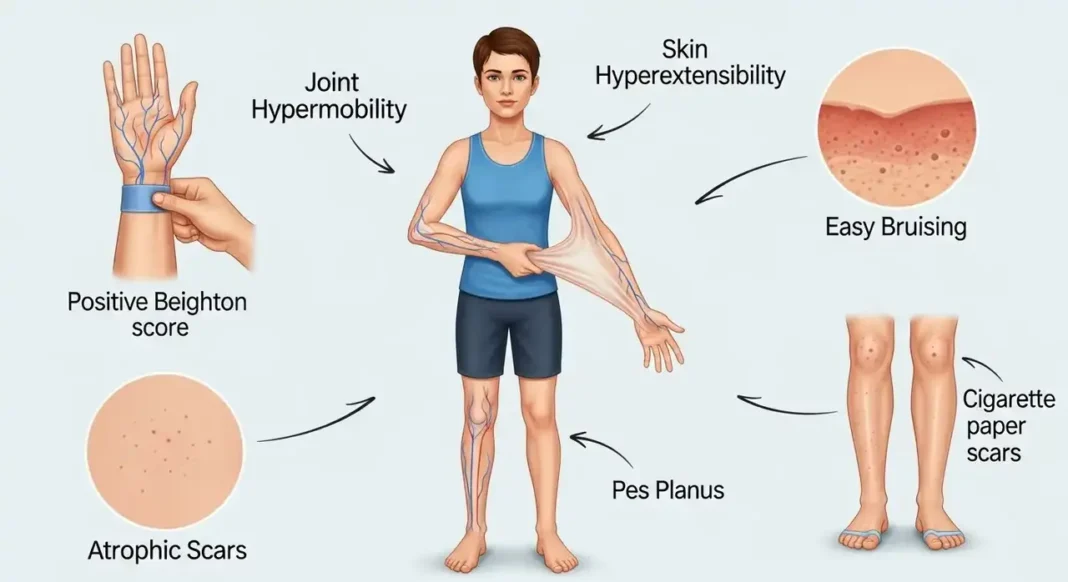

EDS can present with a wide range of symptoms, often making it challenging to diagnose, which is why understanding key Ehlers-Danlos Syndrome Signs is crucial.
Recognizing the early signs and characteristic features is essential for timely management and improved quality of life.
As specialists committed to delivering medically informed and authoritative insights, we outline the most reliable, evidence-based signs of Ehlers-Danlos Syndrome and what individuals, families, and healthcare professionals should look for.
Table of Contents
What Is Ehlers-Danlos Syndrome?
EDS represents a category of 13 identified subtypes, each defined by a specific genetic mutation affecting collagen production or structure.
Although the symptoms vary from type to type, they share several hallmark features related to joint hypermobility, skin abnormalities, and tissue fragility.
Understanding the signs early supports better medical care, effective pain management, and prevention of potential complications such as joint injuries or vascular issues.
Key Signs and Symptoms of Ehlers-Danlos Syndrome
1. Joint Hypermobility and Instability
One of the most recognizable signs of EDS is generalized joint hypermobility (GJH). This means that the joints move beyond their normal range due to loose or overly elastic connective tissue.
Common manifestations include:
- Frequent joint dislocations or subluxations
- Joint instability, especially in the shoulders, knees, fingers, and hips
- Early-onset osteoarthritis
- Chronic pain
- Difficulty maintaining posture or balance
The Beighton Score is often used to assess hypermobility and supports EDS evaluation.
2. Skin Hyperextensibility and Fragility
EDS affects the skin’s elasticity and durability.
Key signs include:
- Soft, velvety skin
- Excessively stretchy skin
- Fragile skin that tears easily
- Slow wound healing
- Wide, thin scars
These features are highly characteristic of the classical type of EDS.
3. Chronic Pain and Fatigue
Patients often experience persistent musculoskeletal pain and debilitating fatigue.
Indicators include:
- Constant joint or muscle aches
- Pain triggered by activity
- Sensitivity to touch
- Frequent headaches
Fatigue occurs because the body overworks to stabilize lax joints.
4. Vascular Abnormalities
Especially present in vascular EDS (vEDS).
Signs include:
- Thin, translucent skin
- Visible veins
- Easy bruising
- Risk of arterial rupture
5. Gastrointestinal Complications
Digestive involvement is common due to weak connective tissue.
Symptoms include:
- Acid reflux
- Constipation or diarrhea
- Abdominal pain
- Bloating
- Hernias
These often mimic other GI conditions before an EDS diagnosis is made.
6. Cardiovascular Concerns Beyond vEDS
Even non-vascular types may present heart-related symptoms.
Signs include:
- Mitral valve prolapse
- Aortic root dilation
- Low blood pressure
- Palpitations
Routine cardiac monitoring is recommended.
7. Delayed Wound Healing and Scar Formation
One of the defining signs of certain subtypes.
Indicators include:
- Wounds reopening
- Stretchy or thin scars
- “Cigarette-paper” scars
- Keloid formation
Specialized wound and surgical care is necessary.
8. Easy Bruising and Bleeding Tendencies
A frequent sign across multiple EDS types.
Common features:
- Frequent bruising
- Nosebleeds
- Delayed healing of bruises
- Gum bleeding
This results from fragile blood vessels and tissues.
9. Dental and Oral Health Signs
Collagen defects can also affect oral structures.
Signs include:
- Fragile gums
- High palate
- TMJ dysfunction
- Crowded teeth
- Weak enamel
Dental specialists familiar with connective tissue disorders are beneficial.
10.Neurological and Autonomic Symptoms
EDS often coexists with autonomic dysfunction.
Indicators include:
- Migraines
- Dizziness or fainting
- Numbness or tingling
- Temperature dysregulation
- Sleep challenges
These symptoms frequently affect daily life and require specialized care.
11.Muscle Weakness and Coordination Problems
Weak tissues lead to decreased muscle stability.
Common signs:
- Muscle spasms
- Poor coordination
- Frequent sprains
- Difficulty with physical activity
Physical therapy is a cornerstone of long-term management.
When to Seek Medical Evaluation
Anyone experiencing a combination of hypermobility, chronic pain, skin fragility, or systemic symptoms should seek medical evaluation. Diagnosis may require:
- Clinical examination
- Family history
- Genetic testing
- Imaging for joints and cardiovascular assessment
Early detection supports better long-term outcomes.
Final Thoughts
Recognizing the signs of Ehlers-Danlos Syndrome is crucial for early intervention, improved functioning, and prevention of serious complications.
Awareness empowers individuals to seek the right care, make informed decisions, and manage their condition with confidence.